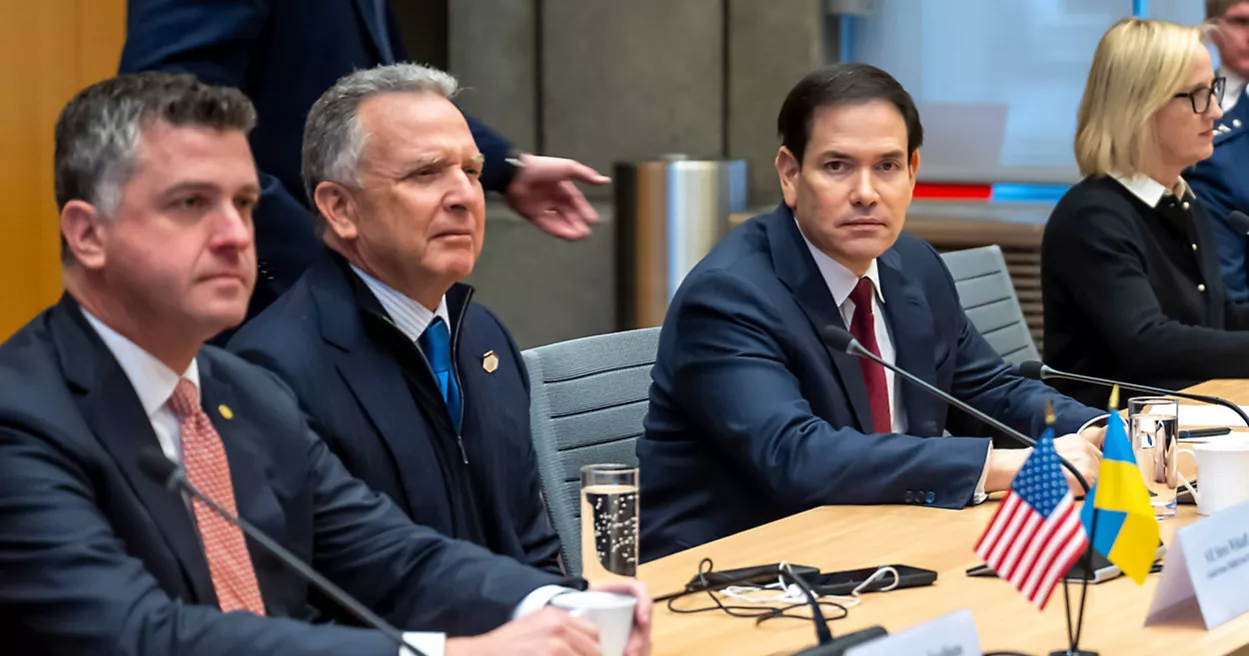
Senior U.S. and Ukrainian officials said on Sunday they made progress toward ending the Russia-Ukraine war during talks in Geneva, though both sides released few specifics about the U.S. peace proposal that has drawn unease among European allies for appearing too accommodating to Moscow.
U.S. Secretary of State Marco Rubio described the discussions as “very worthwhile” and the most productive in a long time, saying he was optimistic about possible breakthroughs. He declined, however, to detail what had been agreed and downplayed a Thursday deadline set by President Donald Trump for Ukraine to formally respond to the plan.
Rubio said parts of the proposal still required decisions at higher political levels, while others involved sensitive wording or more time. “This is a very delicate moment,” he said.
The 28-point U.S. outline, aimed at ending nearly four years of war, has raised concerns in Kyiv and major European capitals. Ukrainian President Volodymyr Zelenskyy has warned that his country faces a difficult choice between defending its sovereignty and preserving crucial American support, insisting that Ukraine “will always defend” its homeland.
The proposal includes concessions long rejected by Kyiv, including giving up substantial territory captured by Russia.
In a late-night statement, the White House said the Ukrainian delegation confirmed its key concerns — from security guarantees to sovereignty — had been addressed in the latest revisions. The administration said Kyiv’s feedback had been incorporated into “each component” of the emerging framework, producing mechanisms it described as credible safeguards for Ukraine’s long-term security.
The reassurances followed days of growing anxiety about the Trump-endorsed plan. U.S. senators revealed Saturday that Rubio had privately described the proposal as originating with Russia and resembling a “wish list” for Moscow — a claim that prompted swift pushback from European leaders.
German Chancellor Friedrich Merz said he pressed Trump on issues European partners could not accept, telling him that Ukraine’s sovereignty must not be compromised.
Rubio said the U.S. proposal remains a “living, breathing document” and will continue to evolve. Any final version, he noted, must eventually be put before Moscow. Ukrainian presidential chief of staff Andrii Yermak, who led Kyiv’s team, also said the talks had produced “very good progress” toward a just and lasting peace.
The upbeat tone contrasted with Trump’s own criticism hours earlier, when he accused Ukraine of showing insufficient gratitude for American support while avoiding criticism of Russia. Trump reiterated his Thursday deadline but suggested it could shift if meaningful progress continued.
Zelenskyy, responding later, thanked the United States and Trump personally, while stressing that Russia alone had started the war and that stopping it — and preventing future aggression — remained the overriding goal.
Ahead of the Geneva meeting, the Ukrainian delegation also consulted national security advisers from the U.K., France and Germany, who have urged revisions to the U.S. proposal. France’s deputy defense minister Alice Rufo said the plan’s restrictions on Ukraine’s military represented an unacceptable limit on sovereignty.
Zelenskyy said early reports from his team suggested the U.S. was now considering several Ukrainian priorities, though he did not specify which ones.
Confusion over the plan’s origins continued to reverberate. Polish Prime Minister Donald Tusk said Europe was ready to work with the U.S., Canada and Japan on the proposal but noted that allies still needed clarity on who drafted it. Some U.S. lawmakers said Rubio had portrayed it as a Russian-aligned document, a characterization the State Department called “blatantly false.” Rubio later suggested the senators had misunderstood him.
Sen. Mark Warner, the top Democrat on the Senate Intelligence Committee, said the proposal resembled a list of Russian talking points and had triggered “ferocious pushback” in Europe.
Meanwhile, Turkish President Recep Tayyip Erdogan announced he would speak with Russian President Vladimir Putin on Monday to push for the revival of a 2022 grain export deal that allowed Ukraine to ship food through the Black Sea. Putin withdrew from the agreement last year, claiming Russia’s own food and fertilizer exports continued to face barriers.
Erdogan said he would ask Putin to revisit the initiative, which Ankara once hoped could serve as a stepping stone to broader peace efforts.