
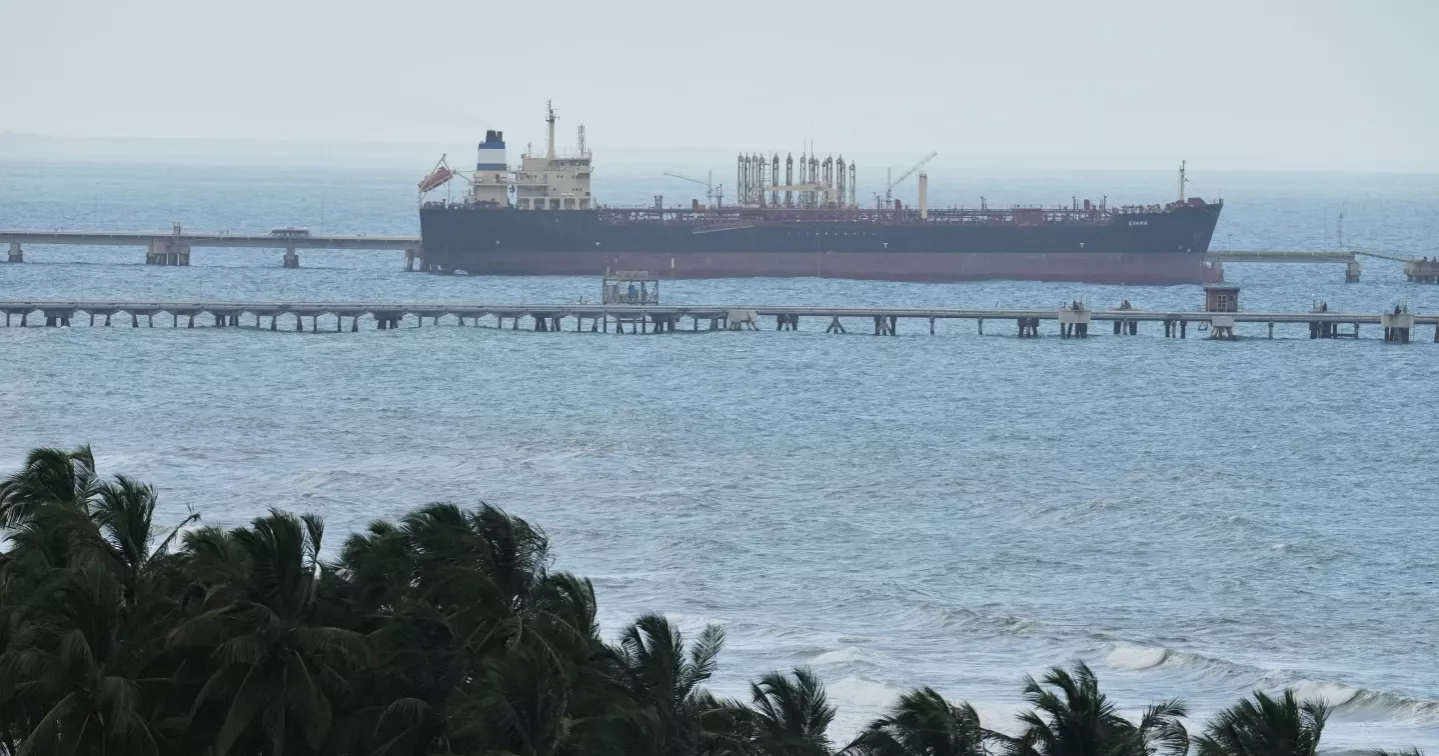
Venezuela’s parliament on Tuesday approved a measure that criminalizes a wide range of activities that disrupt navigation and commerce, including the seizure of oil tankers, in a move seen as a response to U.S. actions against the country.
The bill, debated and approved within two days in the National Assembly, follows this month’s U.S. seizures of two tankers carrying Venezuelan oil in international waters, part of President Donald Trump’s four-month campaign to pressure Venezuelan leader Nicolás Maduro. The U.S. has said the vessels are part of a fleet used by Venezuela to bypass economic sanctions.
Although the National Assembly, controlled by Maduro’s party, did not immediately publish the full text, the measure provides fines and prison sentences of up to 20 years for anyone who “promotes, requests, supports, finances or participates in acts of piracy, blockades or other international illegal acts” against commercial entities doing business with Venezuela.
The bill, awaiting Maduro’s signature, also directs the executive branch to develop “incentives and mechanisms for economic, commercial and other protections” for national or foreign entities affected by piracy, maritime blockades, or other unlawful acts.
Venezuela’s political opposition, including Nobel Peace laureate María Corina Machado, has expressed support for U.S. measures, saying Maduro’s days in power are numbered.
Earlier this month, the U.S. Coast Guard seized a Panama-flagged tanker, Centuries, and, with Navy support, another vessel, Skipper, alleging they were transporting sanctioned Venezuelan oil. Following the first seizure, Trump announced a “blockade” of Venezuela and demanded the return of assets previously seized from U.S. oil companies.
At a U.N. Security Council meeting called by Venezuela, U.S. Ambassador Mike Waltz described sanctioned tankers as Maduro’s primary economic lifeline, funding “narco-terrorist activities” and the Cartel de los Soles. Maduro was indicted in 2020 in the U.S. on narcoterrorism charges linked to the cartel, a network of high-ranking Venezuelan officials involved in drug and fuel trafficking.
Venezuela’s U.N. Ambassador Samuel Moncada accused the U.S. of acting outside international and domestic law, calling the seizures a “military act” aimed at crippling the country’s economy and social cohesion.
The move has raised concerns globally over potential violations of international maritime law, with most U.N. member states stressing the importance of respecting sovereignty and territorial integrity, though a few countries, including Panama and Argentina, have supported U.S. actions.