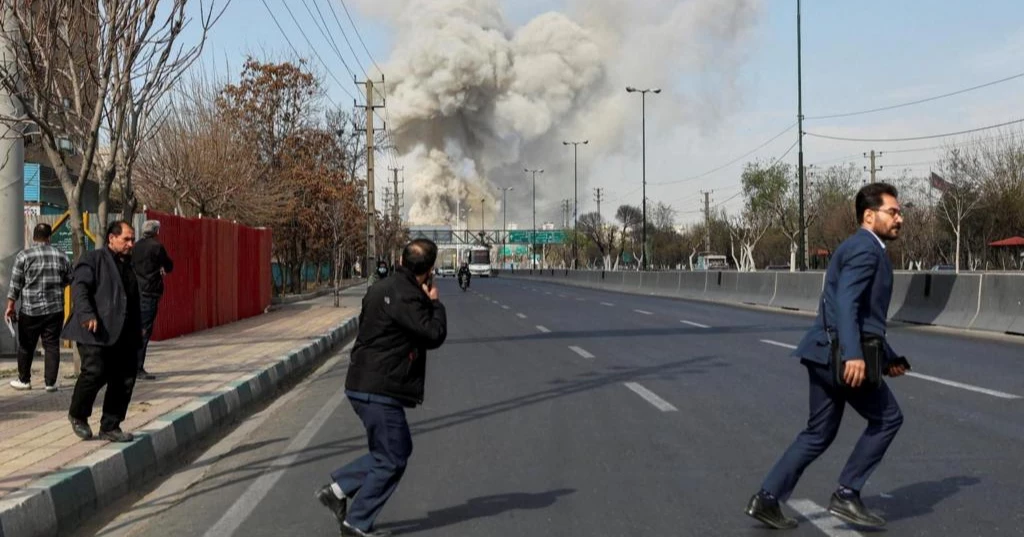
The conflict involving Iran, Israel and the United States has intensified across the Middle East, with fresh missile and drone attacks reported across several countries on Thursday as the war entered its sixth day.
Images from Tehran showed extensive damage to residential buildings after days of joint US and Israeli strikes on the Iranian capital. Explosions were also seen across the city as the bombardment continued.
Meanwhile, Israel’s military said it had detected another wave of missiles fired from Iran toward the country. The Israeli air defence system was activated and residents in affected areas were instructed to remain in protected shelters.
The conflict has increasingly spread beyond Iran and Israel, affecting several Gulf countries. The defence ministry of the United Arab Emirates said it intercepted six ballistic missiles and 131 drones launched from Iran on Thursday. However, one missile and six drones landed inside the country.
Authorities said three people—foreign nationals from Pakistan, Nepal and Bangladesh—have been killed since the attacks began, while at least 94 others were injured.
Explosions were also reported in Doha and Manama as Gulf states responded to Iranian strikes with air defence systems. Bahrain said it had intercepted dozens of Iranian missiles and drones targeting the country since the weekend.
Elsewhere, Azerbaijan reported that two Iranian drones struck its territory in the Nakhchivan region. One drone hit a terminal building at Nakhchivan International Airport while another landed near a school in Shakarabad village, injuring two civilians.
In the Gulf waters, a tanker was damaged after being struck, while Iranian media reported that the country’s navy had targeted a US ship in the region.
Satellite images analysed by BBC Verify also revealed damage to several Iranian military sites, including the headquarters of the Iranian Air Force in western Tehran. Missile installations near Garmdarah and Khorramabad were also hit, with infrastructure and tunnel entrances showing visible damage.
The economic impact of the conflict has begun to spread globally. Energy prices have surged, with gas prices rising about 80% compared with the start of the week and crude oil prices climbing more than 10%.
Energy infrastructure has also been affected. Qatar temporarily shut down operations at the Ras Laffan Industrial City, the world’s largest liquefied natural gas facility, raising concerns about global fuel supplies.
European countries are also increasing their military presence in the region. France, Italy, Spain and the Netherlands have announced plans to deploy naval assets to protect Cyprus after a drone attack targeted the British military base at RAF Akrotiri earlier this week.
Meanwhile, security alerts were issued in parts of Cyprus during a visit by UK Defence Secretary John Healey after a potential threat was detected near the base, though authorities later said no object was heading toward the site.
The conflict has also affected civilians across the region. In Beirut, residents returned to find a residential building destroyed following an overnight Israeli strike. Locals said they had evacuated earlier in the week due to security fears.
In northern Iraq, Kurdish Iranian opposition groups denied reports that their fighters had crossed into Iran to join the conflict. Representatives said their forces could not move without air protection and called for a no-fly zone.
Meanwhile, travel disruptions continue. A UK government charter flight scheduled to evacuate citizens from the region was delayed due to technical issues but is expected to depart from Muscat later on Thursday.
As fighting spreads across multiple countries, concerns are growing that the war could further destabilise the Middle East and threaten global energy supplies and regional security.
With inputs from BBC