
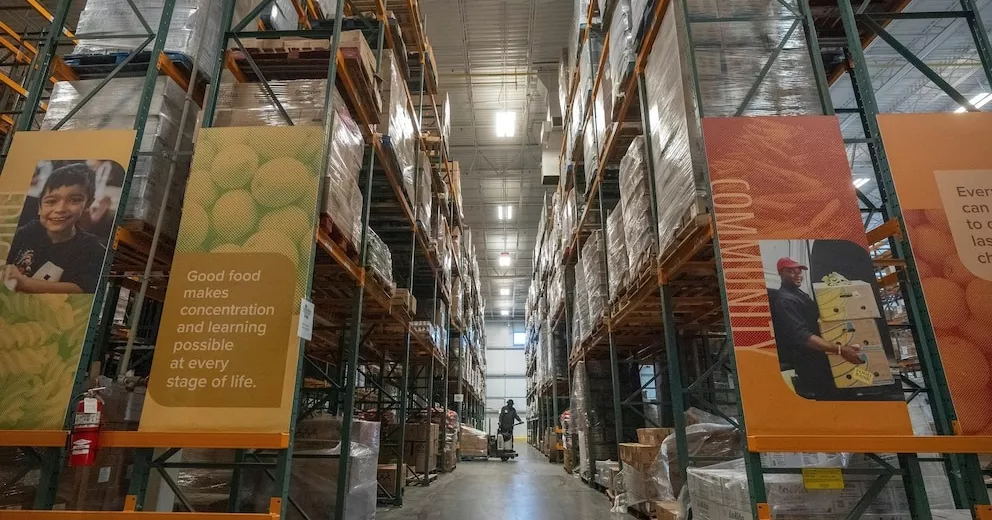
The nation’s capital is facing mounting economic strain from the ongoing government shutdown, mass layoffs of federal employees, and cuts to food aid programs. The Capital Area Food Bank, which supports more than 400 partner organizations in Washington, northern Virginia, and Maryland, says it must provide 8 million more meals this year — a 20% increase — as demand surges ahead of the holidays.
“This city has been hit especially hard by the sequence of events this year,” said Radha Muthiah, the food bank’s president. The shutdown, now the longest in U.S. history, has furloughed hundreds of thousands of workers and halted assistance payments, worsening an already fragile local economy.
Washington, home to about 150,000 federal workers, has seen transit ridership drop by a quarter and small businesses suffer major losses. Many restaurants, still recovering from earlier disruptions, now face sharp declines in sales. “We still had empty seats for a Premier League game — that never happens,” said Ryan Gordon, co-owner of The Queen Vic bar, noting business is down by half.
Economists warn the financial fallout could outlast the shutdown. “Missing paychecks is creating serious cash flow problems,” said Tracy Hadden Loh of Brookings Metro, noting rising risks of loan defaults and closures among small businesses reliant on federal workers’ spending.
For many, the crisis is forcing life changes. Thea Price, a former federal employee, lost her job in March and is relocating to Seattle after losing SNAP benefits. “We can’t afford to stay any longer,” she said.
At the Capital Area Food Bank, operations are running nonstop. “People are borrowing against their futures just to afford necessities,” Muthiah said.