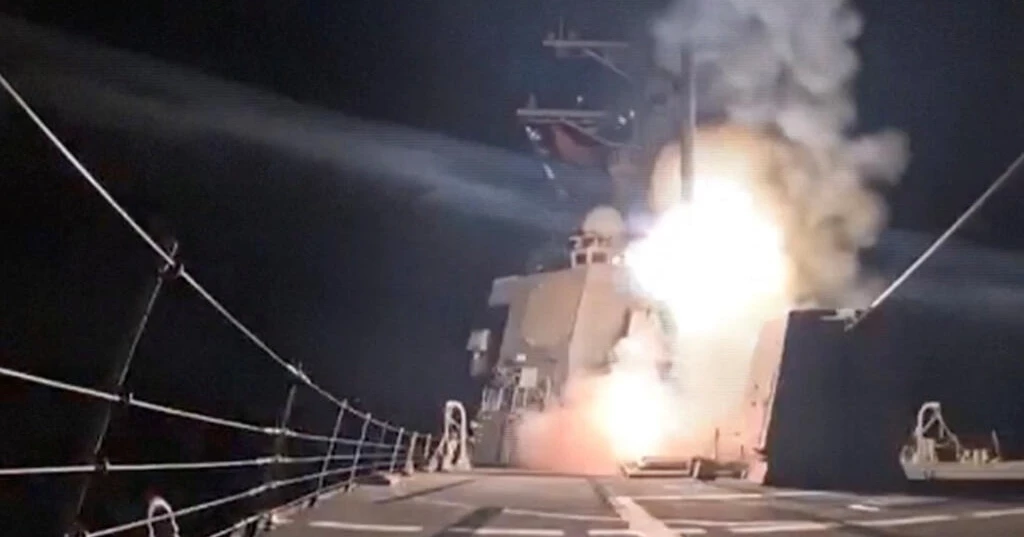
The United States carried out airstrikes on Thursday targeting Islamic State-affiliated militants in northwestern Nigeria, marking a significant escalation in the region’s ongoing security crisis.
US President Donald Trump described the strikes in Sokoto state as “powerful and deadly,” aimed at militants allegedly attacking primarily Christian communities. Nigerian officials said the strikes were part of coordinated intelligence-sharing between the two countries, though the full impact remains unverified.
Security analysts suggest the likely targets were members of the Islamic State Sahel Province (ISSP), locally known as Lakurawa, which has grown increasingly violent in Sokoto and Kebbi states. The group initially entered the region around 2017 at the invitation of traditional authorities to protect communities from banditry but later imposed a harsh interpretation of Sharia law and committed killings, kidnappings, armed robberies, and sexual assaults, alienating local populations. Some attacks in the area are also linked to militants crossing from Niger, as ISSP has expanded operations along the Niger-Nigeria border and toward Benin.
Experts note that Nigeria’s security challenges are deeply rooted in governance failures rather than purely military issues. Militants exploit weak state presence, poverty, and unemployment to recruit fighters and present themselves as alternative authorities. Nigeria’s Defense Minister Christopher Musa has emphasized that military action alone addresses only a fraction of the problem, with good governance being critical to long-term stability.
The U.S. strikes are viewed as vital support for Nigeria’s overstretched security forces, who face multiple armed groups across northern states. Despite ongoing airstrikes and new security recruitment, Nigerian forces struggle to sustain operations, as militants easily relocate via motorcycles through forests and use hostages, including schoolchildren, to complicate attacks. Analysts say the airstrikes provide much-needed assistance, but lasting security will require stronger governance and consistent military efforts.
These operations underline the complex interplay of local insurgencies, cross-border militant movements, and structural governance challenges in Nigeria’s northwest.