voting system
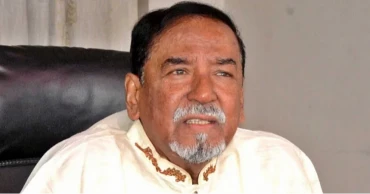
People in Bangladesh used to voting for individuals, not symbols: Hafizuddin
BNP Standing Committee Member Hafizuddin Ahmed has opposed the introduction of the Proportional Representation (PR) system in the upcoming national election, saying the people in Bangladesh have long been accustomed to voting for individuals rather than symbols.
Speaking at an event at the Jatiya Press Club, he said, “Voters want to elect a person they can trust... someone who will stand by them in their happiness and sorrow. In such a context, discussions over a symbol-centric PR election are irrelevant.”
Expressing confidence in the Election Commission, the BNP leader said the party is ready to contest the election under the current government and commission.
He hoped the upcoming polls would pave the way to end the “misrule” of the Hasina era.
“Through a credible election, the interim government should set an example,” he added.
Criticising Bangladesh Jamaat-e-Islami, Hafizuddin accused the party of spreading confusion to delay the polls.
“For a long time they were BNP’s allies. Now, ahead of the election, the issues they are raising are surprising,” he said.
“Jamaat has claimed that the July declaration did not emphasise the establishment of Pakistan. Those who remember history know that this same Jamaat opposed the creation of Pakistan in 1947, and later, in 1971, stood for Pakistan and opposed our Liberation War,” he added.
Hafizuddin alleged that several parties have already assumed they will lose their security deposits in national election, which is why they are supporting the PR system.
It’s painful to see 1971 sacrifices questioned, says BNP’s Hafizuddin
The BNP leader also said the current government should have carried out major reforms in the police force but failed to do so.
“The police turned into a partisan force during previous rule. It is doubtful how much law and order can be maintained during the election with such a police force,” he said.
On constitutional reforms, Hafizuddin said the current government has no mandate to amend the constitution, though it can provide an outline.
“The reforms will have to be done by an elected government,” he added.
Reiterating that BNP will accept any election result if the polls are fair, Hafizuddin said, “If anyone comes to power through a credible voting process, we will accept it. But it is the government’s responsibility to ensure a free and fair election.”
He, however, alleged that some quarters are still trying to foil the election.
While praising the Chief Adviser for attempting to work for the country’s welfare, he said many of the adviser’s associates have been overcome by a lust for power.
“They want to monopolise authority instead of walking the electoral path,” Hafizuddin claimed.
1 year ago
EC forms advisory team to finalise voting system for expatriates
Election Commissioner Abul Fazal Md Sanaullah on Wednesday said they are going to form an advisory team with experts to finalise the balloting system for expatriate Bangladeshis living in different countries throughout the world.
“This time, we will be able to bring the expatriates under the voting system, no matter whether it will be on a small scale or a large scale,” he told a press briefing at the Nirbachon Bhaban in the capital.
Md Sanaullah also raised the outcomes of a workshop arranged on Tuesday by the Election Commission to seek opinions from technical experts to determine suitable voting system for expatriate Bangladeshis.
He said experts suggested that adopting a single system will not be enough for Bangladesh rather it needs to go for a mixed system.
Sanaullah said every system – postal, online or proxy balloting system— has merits and demerits. Every system will require trial process or mock testing and even may require piloting before its introduction on a large scale, he added.
“We will form an advisory team with experts from among them (participants of the workshop). It will be formed today. This team will work to overcome the weaknesses of the three systems (postal, online and proxy balloting systems) and make them more robust in a realistic manner over the next 10 to 12 days,” said the Election Commissioner.
He said the Election Commissioner said the Chief Adviser first mentioned in his speech to ensure voting rights of the expatriates. Out of 178 countries in the world, 115 countries have made arrangements for their expatriate citizens to vote. The most followed method is manual system arranged at the embassy, followed by postal balloting system, and then online or proxy voting system, he added.
“We don’t single out or rule out any option,” said Md Sanaullah adding that the target of this commission is at least to introduce an arrangement so that the expatriates can vote.
He said now only postal balloting system is on operation for the expatriate Bangladeshis but it is ineffective.
Not a single expatriate voted in the 12th parliamentary election through the postal balloting system, he added.
1 year ago

How France's old-school voting system works
Paper ballots tucked in paper envelopes. No absentee voting, and no early voting either. French voters in Sunday’s presidential election are using and old-school system that has defied calls for more flexibility or modernization.
As France’s 48.8 million voters are invited to choose between President Emmanuel Macron and his far-right challenger Marine Le Pen, here is a look at how the French election works:
HOW DO THEY CAST BALLOTS?
Voters make their choices in a booth, with the curtains closed, then place their ballot in an envelope that is then put into a transparent ballot box. They must show photo identification and sign a document, next to their name, to complete the process.
Machine-voting has been allowed on an experimental basis, but the purchase of new machines has been frozen since 2008 due to security concerns. Only about 60 towns still use them, out of 35,000 municipalities in France.
Last year, Macron’s centrist government tried to pass an amendment to allow early voting by machine to encourage electoral participation amid the COVID-19 pandemic. The Senate, led by a conservative majority, rejected the measure, arguing it was announced with too little notice and wasn't solid enough legally.
Also read: In France’s election, a meaty issue unites Jews and Muslims
A nationwide effort to streamline voter rolls, notably to remove people who had died or changed addresses, led to some people being unable to vote in the first round presidential election April 10. The state statistics agency reported that about 3,100 voters who were removed by error were restored to voting lists in time for the second round.
ARE THERE OTHER OPTIONS?
Mail-in voting was banned in 1975 amid fears of potential fraud.
People who can’t go to the polls for various reasons can authorize someone else to vote for them.
To do so, a voter must fill out a form ahead of time and bring it to a police station. Up to 7% of people voted by proxy in the last presidential election five years ago. French people living abroad vote in embassies or consulates.
Local authorities can organize vans or buses to pick up older people from nursing homes to bring them to voting stations, and prisons set up voting stations inside their facilities.
Also read: In France, it's Macron vs. Le Pen, again, for presidency
HOW ARE THE BALLOTS COUNTED?
Volunteers count the ballots one by one, by hand. Officials then use state-run software to register and report results.
But legally only the paper counts. If a result is challenged, the paper ballots are recounted manually.
For towns using machines, the results are registered locally and then reported to the Interior Ministry, which oversees elections. The ministry said it received no reports of irregularities involving voting machines in the first-round vote on April 10.
WHAT ABOUT COVID-19?
Most pandemic restrictions have been lifted in the country. The number of cases is significantly lower than earlier this year, but there are still more than 80,000 new confirmed infections each day.
People who test positive for the virus can go to the polls. They are strongly advised to wear a mask and follow other health guidelines.
Voters can wash their hands at polling stations, which also have hand sanitizer available. Equipment is to be frequently cleaned. Each voting station lets fresh air in for at least 10 minutes every hour.
4 years ago