Planning Ministry
Energy crisis, inflation strain economy despite reserve gains: GED
The General Economics Division (GED) of the Planning Ministry has released its March 2026 economic update, highlighting mounting challenges from the energy crisis and persistent inflation, despite some improvement in foreign exchange reserves.
The report warns that the ongoing energy crisis is affecting fiscal balances, external accounts, and investment activities.
Although strong remittance inflows and recent reserve gains have provided temporary relief, elevated global energy prices are likely to increase import bills and widen the trade deficit, it said.
The GED noted that policymakers face difficult trade-offs. Maintaining exchange rate stability could strain reserves, while further depreciation of the taka may intensify inflationary pressures.
Similarly, energy subsidies continue to shield consumers but are adding to fiscal burdens, the report noted.
It recommends prioritising energy efficiency, rationalising pricing with targeted subsidies, and tightening external sector management to contain balance of payments risks.
Headline inflation climbed to 9.13% in February 2026, up from 8.58% in January, driven mainly by food prices. Food inflation rose to 9.30%, surpassing non-food inflation for the first time in recent months.
Rice prices, a major concern earlier, eased to 2.39%. However, rising prices of perishables – particularly vegetables and fish – offset this relief. Vegetables alone accounted for 29.13% of total food inflation.
The GED highlighted a widening gap between inflation and wage growth. While inflation reached 9.13%, wage growth remained subdued at 8.06$, intensifying real income pressures, especially for lower-income households.
Banking indicators showed slight moderation. Total deposits stood at Tk 1,967,907 crore in January, marginally lower than December levels.
Public sector credit remained elevated at Tk 611,258.6 crore, indicating continued reliance on domestic borrowing, while private sector credit growth was modest at 6.03%.
Revenue collection by the National Board of Revenue (NBR) fell significantly short of its February target.
Against a revised target of Tk 42,051 crore, collections reached Tk 30,559 crore – over 27% below the target. Although this marked an 8.15% increase year-on-year, revenue declined by 17.48% compared to January.
Implementation of the Annual Development Programme (ADP) weakened during the July-February period compared to the previous fiscal year, according to the report.
The GED attributed the slowdown to land acquisition delays, procurement inefficiencies, and rising project costs linked to the energy crisis.
A sharp increase in spending in February suggests “back-loaded implementation”, raising concerns about oversight and quality of expenditure.
Foreign exchange reserves rose to USD 35.11 billion in February (USD 30.36 billion under BPM6 standards), supported by strong remittance inflows exceeding USD 3 billion.
However, the GED cautioned that this stability remains fragile amid rising energy import costs.
Export performance weakened, with ready-made garment (RMG) exports falling to USD 2.81 billion in February from USD 3.61 billion in January, reflecting softer global demand and higher domestic production costs.
The exchange rate remained relatively stable at around Tk 122.3 per US dollar due to central bank interventions.
However, the Real Effective Exchange Rate (REER) declined slightly to 124.05, indicating a gradual depreciation in real terms.
While this may improve export competitiveness, the benefits are currently being offset by elevated energy-related production costs, the report noted.
6 months ago
Govt cuts Tk 12,000cr from top development projects over slow progress
The interim government is slashing allocations for several major development projects in the Revised Annual Development Programme (RADP), cutting over Tk 12,000 crore from eight of the top 10 priority projects due to slow progress and fiscal constraints.
According to planning ministry sources, allocations for the Rooppur Nuclear Power Plant project will remain unchanged, while funding for the Dhaka–Ashulia Elevated Expressway will be increased.
They, however, said allocations for the remaining eight major projects are being reduced.
The National Economic Council (NEC) is expected to approve the revised ADP at its meeting on Monday, to be chaired by Chief Adviser of the interim government Professor Muhammad Yunus.
Read more: Rangamati: IG goes where no govt has gone before, with water management initiative for Rangamati
A senior official at the Planning Ministry said large projects often receive high allocations at the start of the fiscal year, but full utilisation becomes difficult due to low implementation progress.
He added that weak revenue collection has also contributed to the need for budget cuts.
Projects facing reduced allocations include MRT Line-6, MRT Line-1, MRT Line-5 (North), the four-lane highway from Hatikumrul in Sirajganj to Rangpur, the Dhaka–Sylhet four-lane highway, Matarbari Port Development, expansion of Hazrat Shahjalal International Airport, and the Bus Rapid Transit (BRT) project from the airport to Gazipur.
Read more: A costly bridge in Manikganj waiting for roads
In the current ADP, Tk 8,631 crore was allocated for MRT Line-1. Under the revised ADP, the allocation is proposed to be reduced to Tk 801 crore, a cut of Tk 7,830 crore.
The allocation for the extension of MRT Line-6 from Motijheel to Kamalapur is being reduced from Tk 1,347 crore to Tk 1,023 crore. Funding for MRT Line-5 (North) is proposed to be lowered from Tk 1,490 crore to Tk 592 crore.
The allocation for the Matarbari Port Development Project is proposed to be reduced from Tk 4,086 crore to Tk 1,085 crore.
The Dhaka–Sylhet four-lane highway project will see a reduction of Tk 55 crore, with Tk 1,668 crore proposed in the revised ADP.
The expansion project of Hazrat Shahjalal International Airport will have its allocation reduced by Tk 733 crore to Tk 306 crore.
The BRT project from the airport to Gazipur will see its allocation reduced by Tk 256 crore to Tk 168 crore.
The four-lane highway project from Hatikumrul to Rangpur will have Tk 310 crore cut, with Tk 1,562 crore proposed in the revised ADP.
Speakers question government’s role amid rising violence and election security concerns
The Rooppur Nuclear Power Plant project will retain its original allocation of Tk 10,011 crore.
Meanwhile, the allocation for the Dhaka–Ashulia Elevated Expressway project is being increased by Tk 1,134 crore, bringing its total allocation to Tk 4,476 crore in the revised ADP.
Overall, about Tk 30,000 crore is being cut from the current fiscal year’s ADP. Planning ministry officials said the revised ADP size may be set at Tk 2 lakh crore, down from the original Tk 2.30 lakh crore.
Funding from domestic sources is proposed to be reduced from Tk 1.44 lakh crore to Tk 1.28 lakh crore, while project aid will be lowered from Tk 86,000 crore to Tk 72,000 crore.
The current ADP includes 1,171 projects.
Last year, the revised ADP was reduced by Tk 49,000 crore, bringing its size to Tk 2.16 lakh crore.
Read more: DWASA moves to set up Tk 721cr training, research academy
9 months ago
Bangladesh economy shows external stability despite internal challenges: Report
Bangladesh’s economic outlook for August 2025 shows signs of stabilisation on the external front but troubling weaknesses in domestic investment, revenue collection and development spending, according to a government report.
The latest monthly economic update by the General Economics Division (GED) under the Planning Ministry said inflation declined to 8.29 percent in August, the lowest since July 2022, after months of volatility that saw double-digit inflation from July to December 2024.
Non-food inflation dropped below 9 percent for the first time in 20 months, helping offset a marginal rise in food prices.
Food inflation stabilised at 7.6 percent for three consecutive months, a sharp improvement from the 14 percent peak in July 2024.
Rice remains the single largest driver of food inflation, contributing 48.37 percent in August. Government procurement of 1.7 million tons of Boro rice, imports of half a million tons duty-free and higher distribution under public food schemes are expected to ease prices in the coming months.
Still, GED noted that delays in real-time monitoring and policy response prevented earlier stabilisation.
The report highlighted a robust performance in the external sector. Export earnings consistently crossed the $4 billion mark, hitting $4.77 billion in July 2025.
The exchange rate remained stable at Tk 121–122 per USD, while foreign exchange reserves climbed from $24.86 billion in September 2024 to $31.17 billion in August 2025. This, according to GED, provided a solid cushion against trade shocks and debt obligations.
Despite positive external indicators, the domestic financial sector showed deep stress. Private sector credit growth plunged to 6.49 percent in June 2025 — the lowest on record and far short of Bangladesh Bank’s target.
Businesses remain reluctant to borrow amid high interest rates, political and economic uncertainty, and cautious bank lending.
Commerce Adviser stresses surplus economy for sustainable growth
By contrast, public sector credit rose sharply by 13.09 percent, driven by the government’s heavy reliance on bank borrowing to finance its fiscal deficit.
This trend, GED warned, is effectively “crowding out” the private sector and undermining future investment and job creation.
Revenue collection in August stood at Tk 27,162 crore, falling Tk 3,727 crore short of the target. While collections grew 17.6 percent year-on-year, the shortfall was mainly due to weaker import and income tax receipts.
Only VAT at the local level showed improvement. The report flagged persistent revenue gaps as a key challenge in meeting the ambitious annual target of Tk 4,99,000 crore.
Development spending remains another weak spot. ADP utilization dropped to 2.39 percent of allocation in the July–August period of FY26, down from 2.57 percent in the same period last year.
Although August utilisation improved slightly year-on-year (1.71 percent vs 1.52 percent), GED noted that such low early-year implementation reflects structural bottlenecks, bureaucratic delays, and poor fund release capacity, raising the risk of back-loaded spending and inefficiency.
While the decline in inflation and strengthening of reserves signal macroeconomic stability, GED cautioned that the domestic economy faces significant headwinds. Weak private investment, revenue shortfalls, and under-utilisation of development funds threaten to slow growth momentum.
“The economy is showing resilience externally but risks remain high domestically. Without urgent measures to stimulate private credit, enhance revenue collection, and accelerate ADP implementation, medium-term growth prospects may weaken,” the report said.
1 year ago
Economic recovery rides on favourable exports, remittances, stable exchange rate: Planning Ministry
The General Economics Division (GED) of the planning ministry has projected a gradual economic recovery for Bangladesh, buoyed by favourable trends in exports, remittances, a stable exchange rate, and easing inflationary pressures.
In its April 2025 Economic Update and Outlook, the GED noted that improved investor confidence—particularly following the successful Bangladesh Investment Summit 2025—along with a moderately tight but accommodative monetary policy, is expected to further support industrial growth.
The report highlighted the need to reduce commercial lending interest rates to stimulate investment. The GED emphasised the importance of tackling non-performing loans and boosting banking sector efficiency to improve access to credit.
It also stressed the government’s ongoing efforts toward fiscal consolidation, which are expected to strengthen fiscal accounts. “Enhancing efficiency in the selection of development projects—prioritising sustainability—will increase the prospects for quality growth,” the report added.
While inflation is expected to remain stable between 8.0% and 9.0% during April and May 2025, it remains a concern. Food inflation, which surged to 10.65% in FY2023-24, eased to 8.93% in March 2025 after the availability of winter vegetables improved supply.
Key contributors to overall inflation in March included rice (14.62%), fish (11.58%), and vegetables (6.08%). Notably, the prices of brinjal (17.12%), medium rice (16.73%), and hilsa (11.37%) drove up food costs—partly due to seasonal demand during Ramadan and the Bengali New Year.
However, rural areas continue to face higher inflation, highlighting the need for more efficient food supply chain management.
According to the report Bangladesh’s external sector showed signs of strength in March 2025, with remittances reaching a record $3.29 billion—up 65% year-on-year—boosted by Eid-related transfers and a shift to formal remittance channels following regulatory tightening.
From July 2024 to March 2025, total remittances climbed to $21.77 billion, compared to $16.69 billion during the same period the previous year. Foreign exchange reserves rose accordingly, now standing at approximately $25.62 billion.
Exports also saw an 11.44% year-on-year increase, reaching $4.25 billion, largely driven by the readymade garment sector. Bangladesh’s diplomatic engagement with the U.S. over reciprocal tariffs has resulted in a temporary reprieve, with the country agreeing to increase imports of American agricultural products.
The report noted that despite external gains, investment activity remains subdued. In February 2025, deposit growth slowed to 7.88%, while private sector credit growth was just 7.15%—among the lowest in recent years.
Reserves breach $22 bn-mark on back of strong currency, remittances
Contributing factors included high lending rates, political and economic uncertainty, and weakened bank health, with around 10 banks seeing diminished lending capacity due to irregularities. Increased government borrowing from commercial banks—up 60% year-on-year—has further strained private sector credit availability.
In March, the Taka traded within a narrow band of Tk 121.5755–121.9542 per U.S. dollar, reflecting relative exchange rate stability despite growing demand for LCs and foreign currency.
Remittances helped stabilize the currency, with the improved foreign reserve position enhancing the outlook for the external sector.
After a weak first quarter, with GDP growing just 1.96% due to industrial slowdown and floods affecting agriculture, the second quarter of FY2025 saw a rebound to 4.48%.
Growth was driven largely by the industrial sector, which grew 7.1% in Q2, led by manufacturing (8.49%), mining and quarrying (8.01%), and wholesale and retail trade (6.63%), said the report.
While the economic recovery is underway, the GED underscores the need for accelerated reforms, investment stimulation, and structural improvements to sustain the momentum.
1 year ago

Bangladesh’s economy to reach $1 trillion by 2040: Planning Ministry
The size of Bangladesh’s economy will be $1 trillion by 2040, if the current consecutive growth of over 6 percent continues while it will be achieved by 2030 if the growth goes over 8 percent, said an official document of the planning ministry.
The information has also been placed in the updated picture of the economy of Bangladesh presented by the ministry of planning in the meeting of the Executive Committee of the National Economic Council (ECNEC), on Tuesday.
The document stated that the average economic growth of Bangladesh has been 6.4 percent in the last six years. Even if this growth falls below 5 percent, the economy of Bangladesh will touch the milestone of trillion dollars by 2040.
Read more: Social stability now economy’s main challenge: Planning Minister
But if economic growth increases to 8 to 9 percent and internal stability is maintained, it will reach trillion dollars by 2030.
The Canadian online publication Visual Capitalist on December 29 published the statistics of the International Monetary Fund (IMF) showing the size of Bangladesh's economy at $465 billion. Bangladesh was ranked 35th among major economies last year.
3 years ago

Parliament body for waiving import duty of sports items
A relevant parliamentary committee on Wednesday recommended the National Board of Revenue (NBR) to take necessary steps for waiving import duty of sports items.
The Parliamentary Standing Committee on Youth and Sports Ministry made the recommendation in its 13th meeting in order to promote sports in the country.
The meeting was held with committee chairman Abdullah Al Islam Jakob at the Jatiya Sangsad Bhaban, said a handout of the parliament.
Also read: Cabinet purchase body nods import of 50,000MT rice
Suggestions were made to construct 178 Upazila Youth Training and Entertainment Centres in the first phase as part of the establishment of a centre in every upazila in line with the government’s electoral manifesto.
It also recommended the ministry to send a development project proforma (DPP) over construction of some buildings, including an administrative building of the Directorate of Sports on the campus of Physical Education College in the city’s Mohammadpur area and academic building of the college, to the Planning Ministry.
Also read: Purchase body okays 6 proposals including import of LNG, rice
The parliamentary committee asked for sending a letter to the Fisheries and Livestock Ministry for handing over its land to Sheikh Hasina National Youth Development Institute for construction of its structures to implement the plans of the institute.
Committee members Mahabub Ara Begum Gini (Gaibandha-2), Abdus Salam Murshedi (Khulna-4), Jewel Areng (Mymensingh-1), AM Naimur Rahman (Manikganj-1) and Zakia Tabassum attended the meeting.
5 years ago
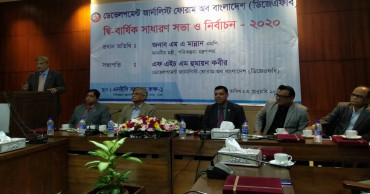
Media’s help needed to ensure good governance: Planning Minister
Planning Minister MA Mannan on Friday said the government’s goal is to ensure good governance in Bangladesh with the assistance of the media.
6 years ago