fuel shortage
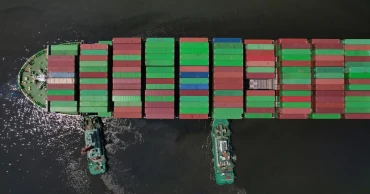
Iran war raises fears of bunker fuel shortage, higher shipping costs
The global shipping industry is facing growing concerns over fuel shortages after the war involving Iran disrupted supplies of bunker fuel, the heavy oil used to power most cargo ships.
The closure of the Strait of Hormuz, a key route for Middle Eastern oil exports, has sharply reduced supplies of bunker fuel to Asia, particularly to Singapore, the world’s largest refuelling hub for ships.
Bunker fuel is a thick, low-grade oil left over after crude oil is refined. Although dirtier than fuels used in cars and aircraft, it remains essential to global trade, helping transport around 80 percent of goods traded worldwide by sea.
Industry experts warn that a prolonged shortage could significantly increase shipping costs, push up consumer prices and hurt businesses around the world.
The impact is being felt most strongly in Asia, which depends heavily on Middle Eastern oil. Fuel reserves in Singapore are shrinking while prices continue to rise.
According to commodity analysts, bunker fuel prices in Singapore have surged from around $500 per metric ton before the conflict to more than $800 in early May.
Shipping companies are trying to cope by slowing vessel speeds, adjusting schedules and exploring ships that can use alternative fuels.
However, analysts say some smaller companies may struggle to survive if the crisis continues.
Henning Gloystein of consultancy Eurasia Group said the disruption will eventually spread beyond Asia and affect supply chains worldwide.
Asia adopts emergency energy measures
Countries across Asia have responded by increasing coal use, buying more oil from Russia and reconsidering nuclear power projects.
The region is bracing for further challenges as fuel stocks decline and government subsidies become harder to maintain.
More than half of global seaborne trade passed through Asian ports in 2024, according to the United Nations, meaning disruptions in the region could have worldwide consequences.
Higher costs likely to reach consumers
Shipping firms are absorbing most of the extra costs for now, but analysts say these increases are likely to be passed on to customers.
The European Federation for Transport and Environment estimates that the war is costing the global shipping industry about 340 million euros, or nearly $400 million, each day.
Risk consultancy Aon said bunker fuel shortages typically affect shipping costs faster than many other market pressures.
As transport costs rise, prices of goods ranging from food and electronics to clothing could also increase.
Consumers in Singapore are already feeling the impact, with ferry operators raising fares and cruise companies adding fuel surcharges.
Alternative fuels gain momentum
The crisis is also increasing interest in greener fuels such as liquefied natural gas (LNG).
Wärtsilä CEO Håkan Agnevall said rising fossil fuel prices are making cleaner alternatives more financially attractive.
The Caravel Group CEO Angad Banga said about one-third of the ships currently under construction under its management will be capable of using both conventional bunker fuel and alternatives such as LNG.
Although infrastructure for LNG-powered ships is still limited, industry leaders say investment is growing and progress is being made.
Banga said ship owners are increasingly willing to invest in fuel-flexible vessels, as the ability to switch fuels has become more valuable amid ongoing market uncertainty.
4 months ago
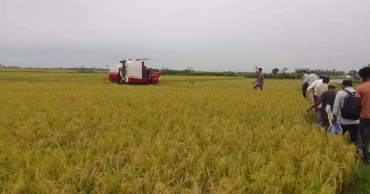
Fuel shortage, rains hit Boro harvest in Habiganj haors; paddy prices plunge
Boro cultivation in the haor areas of Habiganj is facing challenges due to a fuel crisis and excessive rainfall while a sharp fall in paddy prices has deepened farmers’ distress.
Besides, Boro paddy is currently selling at around Tk 700 per maund in local markets—less than half of the government-fixed rate, said farmers.
The government has set the procurement price at Tk 36 per kg, equivalent to Tk 1,440 per maund but farmers say they are being forced to sell at even lower prices in the field.
This season, heavy rain and hailstorms submerged vast tracts of Boro fields across the district. Water has yet to recede in many areas, while in some places it continues to rise, further complicating harvesting efforts.
The situation has been worsened by an acute shortage of fuel, disrupting mechanised harvesting.
In Baniachong upazila, the district’s main Boro-producing upazila, only 27 percent of paddy have been harvested as of April 23—15 percentage points lower than the same period last year.
Local trader Suman Ahmed, owner of Bismillah Store in Baniachong sadar, said they were buying paddy from small traders at Tk 700 per maund, while farmers were selling at even lower prices.
According to Department of Agricultural Extension (DAE) data, Boro was cultivated on 123,644 hectares of land across nine upazilas in the district this season, falling short of the target by 204 hectares.
Of the total, 46,954 hectares are in haor areas, with the highest 33,700 hectares in Baniachong alone.
Alok Kumar Chand, sub-assistant plant protection officer at the Baniachong upazila Agriculture Office, said there are 106 combine harvesters in the upazila.
While around 10,000 litres of fuel are required daily, only about 1,000 litres are being supplied, making it difficult to keep the machines operational, he said.
In many cases, harvesters cannot even enter fields due to standing water.
Farmers said they are unable to obtain fuel from filling stations despite having fuel cards, forcing them to buy at higher prices in open market.
Shahid Chowdhury, a farmer from Kumri village, said he was struggling to harvest his crop due to waterlogged fields and fuel shortages. “I didn’t get a single drop of fuel from the pump,” he said.
Authorities urged farmers in haor areas to harvest paddy quickly amid fears of flooding, but a shortage of labour has further compounded the crisis.
Government data shows that around 80 percent of haor paddy has been harvested using machines in recent years.
However, the ongoing fuel shortage and adverse weather have severely disrupted that process this season.
According to the Department of Agricultural Rehabilitation, significant areas of Boro crops in six upazilas have been damaged by rains.
These include 248 hectares in Baniachong, 154 hectares in Ajmiriganj, 90 hectares in Habiganj Sadar, 25 hectares in Lakhai, 20 hectares in Nabiganj and 19 hectares in Chunarughat.
Farmers fear that without urgent and effective measures, Boro production in the haor region could suffer major losses this season.
5 months ago

Fuel shortage casts shadow over jute farming in Faridpur
Faridpur, known as Bangladesh’ jute capital,is facing a looming setback in jute production as farmers struggle with an acute shortage of diesel during the crucial sowing season.
The shortfall in fuel coupled with irregular electricity supply, has disrupted irrigation activities across the district, raising fears that jute output may be affected this season.
However, agricultural officials remain cautiously optimistic, saying a couple of spells of heavy rainfall could ease the crisis.
According to the Department of Agricultural Extension (DAE) in Faridpur, the target for jute cultivation in the current Rabi season has been set at 87,000 hectares.
Farmers typically begin sowing jute seeds immediately after harvesting onions, relying heavily on irrigation to prepare the fields. So far, around 60 percent of the targeted land has already been brought under cultivation.
The ongoing Iran-Israel conflict has impacted global oil markets, leading to a fuel shortage in the country that is now affecting agricultural operations at the local level.
With diesel supplies falling short and power outages persisting, many growers are worried about meeting irrigation needs on time.
Local farmers from Saltha and Nagarkanda upazilas said timely irrigation is critical for jute cultivation. “The soil needs to retain some moisture during sowing so that the seeds can germinate properly. Without adequate water, germination is poor,” one farmer explained.
Jute growers in Boalmari including Paritosh Kittunia, Moniruzzaman and Mizanur Rahman, echoed similar concerns.
Frequent load-shedding, lack of fuel, falling groundwater levels, and fertiliser shortages — everything together has made farming extremely difficult,they said.
Sahida Begum, a model farmer in the district, said prolonged diesel crisis could reduce not only jute production but also output of other crops.
Shahduzzaman, deputy director of the DAE in Faridpur, said the department has introduced fuel cards to ensure diesel supply reaches genuine farmers. “We hope this will provide some relief. Moreover, a couple of heavy rainfall during the season could significantly reduce the current pressure,” he added.
Faridpur Deputy Commissioner Mohammad Kamal Hasan Molla said the administration has designated specific filling stations to facilitate easier access to diesel for farmers and intensified monitoring of fuel distribution across the district.
“We are prioritising jute farmers during this critical period to ensure irrigation activities continue uninterrupted,” he said.
Farmers said any prolonged disruption could severely affect crop production, leading to financial losses for growers and broader economic repercussions for the country.
5 months ago

No severe fuel shortage, supply down slightly: PM’s Adviser
Prime Minister’s Adviser on Information and Broadcasting Dr Zahed Ur Rahman on Tuesday said there is some disruption in fuel supply in the country though it is not significant.
Concerns have arisen among people over long queues at fuel stations, prompting questions about whether supply has dropped sharply, he said at a press conference at the Department of Information conference room at Secretariat.
Comparing March figures of 2025 and 2026, the adviser said diesel supply declined slightly from 396,098 metric tonnes in March 2025 to 363,512 metric tonnes this year.
Dr Zahed, who also serves as adviser to the Ministry of Cultural Affairs and is in charge of policy and strategy matters, said octane supply increased marginally to 37,439 metric tonnes in March 2026 from 36,982 metric tonnes in the same month last year.
However, petrol supply decreased from 46,371 metric tonnes in March 2025 to 39,998 metric tonnes this March.
“This means there is some supply-related problem, but not a significant drop,” he said, adding that a reduction of around 7,000 metric tonnes in petrol supply indicates a manageable situation rather than a crisis.
“There are indications that some individuals are hoarding fuel with ill intentions, possibly for smuggling or selling at higher prices,” he added.
He noted that higher stock levels in homes and facilities in border areas could signal potential smuggling activities.
At the same time, he said public anxiety about future shortages has led many to purchase and store fuel in excess.
Providing data from recent enforcement drives, Dr. Jahed said that as of April 6 morning, stockpiles included 1,14,122 metric tonnes of diesel, 10,151 metric tonnes of octane and 13,805 metric tonnes of petrol.
Highlighting the heavy subsidy burden in the power and energy sector, the adviser said, “When we assumed office, there was already a subsidy burden exceeding Tk 45,000 crore and it still continues. The government is increasing subsidies further to keep fuel prices stable.”
Outstanding dues in the power sector also remain high, including Tk 20,272 crore owed to independent power producers (IPPs), Tk 2,904 crore to Adani Power, Tk 6,434 crore to joint ventures, Tk 10,045 crore to Petrobangla, and Tk 7,303 crore to state-owned power companies.
“There is significant pressure from subsidies. The government is trying to manage it in a way that minimises the impact on the public, though some pressure will remain,” he said.
Despite rising global fuel prices, the government has decided not to increase domestic fuel prices for at least another month, he added.
“We want to wait and observe. If the situation worsens, we may have to take tougher decisions. It is important to clearly communicate to the public why such decisions are taken and what outcomes we expect,” he said.
6 months ago
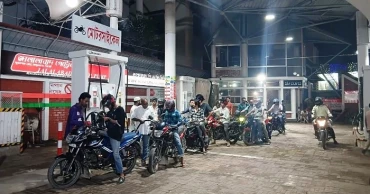
Reduced depot supply triggers fuel shortage at Sylhet filling stations
Concerns over fuel availability continue in Sylhet as filling stations in the city struggle to meet demand due to reduced supply from depots, prompting some pumps to suspend sales altogether.
Petrol pump owners said they are receiving less fuel than required from depots, leading to the shortage.
They expressed hope that the situation would ease once supply returns to normal.
6,000 litres of fuel seized in Jashore , three traders fined Tk 1.35 lakh
During a visit to several filling stations in the city on Sunday afternoon, it was found that some pumps were selling fuel in limited quantities while others had stopped sales citing lack of stock.
At Jalalabad Pump near Bandar Bazar, fuel sales remained suspended when the correspondent visited the station.
Milon, 28, a merchant agent of bKash who came to the filling station with his motorcycle to buy fuel, said he had been unable to get petrol since Saturday night.
“I haven’t been able to get fuel since last night. How will I manage my duty and travel?” he said.
Additional BGB members deployed along Benapole border to prevent fuel smuggling
At North East Petrol Pump in Pathantula, fuel was being sold in limited quantities in the evening, with motorcyclists receiving no more than Tk 200 worth of fuel.
A similar situation was observed at Jalalabad Petrol Pump in Ambarkhana where motorbikes were given fuel worth Tk 200 to Tk 300 at most.
Pump employees also said octane was unavailable when some customers requested it.
However, the pump’s manager or owner could not be reached for comment.
Filling station owners said the situation has continued since Friday after demand for fuel surged on Thursday, creating a shortfall.
Leaders of Filling Station Owners’ Association held a meeting with Sylhet Deputy Commissioner Mohammad Sarwar Alam on Sunday afternoon to discuss the matter.
After the meeting, the leaders said some stations in Sylhet are facing supply shortages due to new directives issued by the Bangladesh Petroleum Corporation (BPC).
They also submitted a memorandum to the deputy commissioner demanding measures to ensure adequate supply.
Riasad Azim, organising secretary of the Sylhet Petrol Pump Owners’ Association, said, “The problem is with the supply system. We are not getting fuel from the depot as per demand.”
He hoped that the issue would be resolved soon following discussions with the district administration.
Deputy Commissioner Mohammad Sarwar Alam said there is no actual fuel shortage in the country and sufficient stock remains available.
“However, the administration will work according to government instructions considering the possibility of a shortage. We are in contact with the ministry and hope the situation in Sylhet will improve within a couple of days,” he said.
Sylhet city BNP general secretary Emdad Hossain, who was present at the meeting, said panic buying by consumers after hearing about a possible shortage has contributed to the situation.
“People are buying 10 litres instead of the usual two litres after hearing about a possible crisis, which is creating an artificial shortage,” he said, urging the public not to stockpile fuel unnecessarily.
Amid the ongoing conflict in the Middle East, the Bangladesh Petroleum Corporation on Friday imposed restrictions on fuel purchase.
Under the directive, a motorcycle can receive a maximum of two litres of petrol or octane per day, while private cars are allowed up to 10 litres daily. SUVs, jeeps and microbuses can take 20–25 litres a day.
Pickups and local buses are allowed to buy 70–80 litres of diesel daily, while long-distance buses, trucks and covered vans can receive 200–220 litres per day.
7 months ago

Sri Lanka closes schools, limits work amid fuel shortage
Sri Lankan authorities on Friday closed schools and asked public officials not to come to work in a desperate move to prepare for an acute fuel shortage that is expected to last days amid the nation's worst economic crisis in decades.
The Public Administration Ministry asked the public officials — except for those who maintain essential services — not to come to work on Friday “in a view of current fuel shortage and issues in transport facilities” across the country.
Also read: Sri Lankan power family falls from grace as economy tanks
State- and government-approved private schools also closed Friday amid the worsening fuel shortage, with thousands of people waiting in queues at fuel stations across the country for days at a time.
Sri Lanka is now almost without gasoline and faces an acute shortage of other fuels as well.
The government has been struggling to find money to pay for the importation of fuel, gas and other essentials in recent months as the Indian Ocean island nation is on the brink of bankruptcy.
Its economic woes have brought on a political crisis, with the government facing widespread protests and unrest.
For months, Sri Lankans have endured long lines to buy those essentials, most of which come from abroad. Shortages of hard currency have also hindered imports of raw materials for manufacturing and worsened inflation.
Protesters blocked main roads to demand gas and fuel, and television stations showed people in some areas fighting over limited stocks.
Authorities have announced countrywide power cuts of up to four hours a day because they can’t supply enough fuel to power generating stations.
Sri Lanka has suspended repayment of about $7 billion in foreign loans due this year out of $25 billion to be repaid by 2026. The country’s total foreign debt is $51 billion. The finance ministry says the country currently has only $25 million in usable foreign reserves.
Also read: Ranil Wickremesinghe takes oath as Sri Lanka's PM
Protesters have occupied the entrance to the president’s office for more than a month, calling for President Gotabaya Rajapaksa to resign.
Months of anti-government rallies have led to the near-dismantling of the once-powerful ruling family, with one of the president’s brothers resigning as prime minister, and other siblings and a nephew leaving their Cabinet posts. Protesters accuse the Rajapaksas of triggering the crisis through corruption and misrule.
Sri Lanka's new Prime Minister Ranil Wickremesinghe said Monday that about $75 billion is needed urgently to help provide essential items, but the country’s treasury is struggling to find even $1 billion.
Attacks by Rajapaksa’s supporters on protesters last week sparked nationwide violence that left nine people — including a lawmaker — dead, and more than 200 injured. Homes of lawmakers and their supporters were burned down.
4 years ago