national mourning

Curtain falls on a political giant as Khaleda Zia passes into history
One of the iconic figures in Bangladesh’s political history, BNP Chairperson and three-time former Prime Minister Begum Khaleda Zia, known as an uncompromising leader, lifelong fighter and true patriot, passed away on Tuesday morning (December 30, 2025). She was 80.
Her long and turbulent political journey came to a solemn end at 6:00am on Tuesday at Evercare Hospital, where she had been receiving treatment for 37 days.
“The BNP Chairperson breathed her last at 6:00am,” AKM Wahiduzzaman, the party’s ICT Affairs Secretary, said early in the morning. Her death was later confirmed by the medical board and senior party leaders.
“It is with a heavy heart that we announce the passing of our esteemed Chairperson,” said BNP Secretary General Mirza Fakhrul, his voice choked with emotion.
Read more: Khaleda to be laid to rest beside Zia; Janaza at Parliament’s South Plaza
She is survived by her eldest son Tarique Rahman, three granddaughters, and millions of supporters and admirers. Her long political career has left a lasting mark on Bangladesh’s political landscape and inspired generations.
Shockwave in Winter Morning
Widow of slain President and BNP founder Ziaur Rahman, Khaleda Zia had long been woven into the fabric of Bangladesh’s political drama — its rises, ruptures, hopes, and hostilities. Her final months were marked by an unrelenting battle against pneumonia, chronic lung infections and persistent cardiac complications.
News of her death spread quickly through the city in the early hours, cutting through the cold winter morning and heavy fog. People across the country were stunned. Silence fell, while scenes of grief unfolded inside and outside the hospital.
A deep sense of grief swept across Bangladesh with condolence messages pouring in from leaders at home and abroad.
The BNP announced seven days of mourning over the death of its long-time leader. The government has declared three days of national mourning, including a general holiday on Wednesday.
As per the BNP Standing Committee’s decision, Khaleda Zia’s namaz-e-janaza will be held at 2:00pm on Wednesday at the South Plaza of the National Parliament and Manik Mia Avenue in the capital.
She will be buried with full state honours at Chandrima Udyan beside the grave of her husband, former President Ziaur Rahman, at 3:30pm.
Khaleda Zia led the BNP for 41 years and earned the title of the ‘uncompromising leader’ during the anti-autocracy movement of the 1990s. She served as a Member of Parliament five times -- Prime Minister three times and Leader of the Opposition twice.
Read more: Jaishankar to represent India to pay last respect to ex-PM Khaleda Wednesday
Starting her political journey as a homemaker, Khaleda spent much of her over four-decade political life on the streets, leading movements and facing arrests and imprisonment, but never leaving the country. She never lost an election she contested.
The BNP chief had been suffering from multiple chronic illnesses, including liver and kidney complications, heart disease, high blood pressure, diabetes, arthritis and infections.
She was admitted to Evercare Hospital on November 23. As her condition worsened, her elder son, BNP Acting Chairman Tarique Rahman, and other family members rushed to the hospital late Monday night.
Shortly after 2:00am, Khaleda Zia’s personal physician, AZM Zahid Hossain, told reporters that she was passing through an ‘extremely critical time’ and requested the nation to pray for her recovery. A few hours later, doctors declared her dead.
Family members, including Tarique Rahman, his wife Zubaida Rahman, their daughter Zaima Rahman, the family of her late son Arafat Rahman Koko, her siblings, and BNP Secretary General Mirza Fakhrul Islam Alamgir, were present at the hospital at the time.
Doctors, nurses and hospital staff were seen in tears as the news broke. The news spread rapidly on social media, with people from all walks of life expressing grief. BNP leaders, activists and supporters gathered outside the hospital in large numbers.
Read more: Khaleda Zia: 41 years at BNP’s helm - an uncompromising leader
At around 9am, the head of the medical board Prof Shahabuddin Talukder said with a choked voice that the medical team tried their best for more than a month, but Khaleda Zia was declared clinically dead at 6:00am.
BNP Secretary General Mirza Fakhrul Islam Alamgir said the loss is ‘irreparable’ and something the nation would never be able to overcome.
Govt’s Reactions
Fakhrul said Chief Adviser Muhammad Yunus had called him to express condolences. BNP Senior Joint Secretary General Ruhul Kabir Rizvi announced a seven-day mourning programme following the death of Khaleda.
As part of the programme, black flags will be hoisted at all party offices across the country for a week starting Tuesday while party leaders and activists will wear black badges and Quran khatam and prayers will be held nationwide during the period.
Condolence books were opened at BNP’s central office, Chairperson’s Gulshan office and other party offices across the country.
Read more: Top foreign dignitaries to attend Khaleda Zia’s funeral
An emergency meeting of the Advisory Council was held in the afternoon, where Mirza Fakhrul attended as a special guest. The meeting began with a minute’s silence, and decisions were taken regarding state mourning and funeral arrangements.
Law Adviser Asif Nazrul said Khaleda Zia’s contribution to the country would remain unforgettable.
The BNP Standing Committee also held an emergency meeting chaired by Tarique Rahman. BNP offices at Naya Paltan, Gulshan and elsewhere witnessed emotional scenes as leaders and supporters broke down in tears.
Tarique’s Tributes
Meanwhile, Tarique Rahman paid an emotional tribute to Khaleda, remembering her as a tender and loving mother who was also a steadfast guardian for her family and the nation.
“My mother, BNP Chairperson Begum Khaleda Zia, has responded to the call of Almighty Allah and left us today. Inna lillahi wa inna ilayhi raji'un (Indeed, we belong to Allah, and to Him we shall return),” he wrote in an emotional post on his verified Facebook page.
Read more: Vehicular movement to be restricted while Khaleda Zia’s body transported in city
To many, he said, she was the leader of the nation, an uncompromising leader, the ‘Mother of Democracy’, the ‘Mother of Bangladesh’.
“To me, Khaleda Zia was a tender and loving mother who devoted her entire life to the country and its people. Throughout her life, she stood firm against autocracy, fascism, and domination, leading the struggle for freedom, sovereignty, and the restoration of democracy,” he said.
Though her life was illuminated by sacrifice and struggle, Tarique said at home Khaleda was their truest guardian, a mother whose infinite love gave them strength in their darkest moments.
He said Khaleda endured repeated arrests, denial of medical care, and relentless persecution. “Yet even in pain, confinement, and uncertainty, she never stopped sheltering her family with courage and compassion. Her resilience was not loud, but it was unbreakable.”
For the country, Tarique said she lost her husband and lost her child. “In that loss, this nation and its people became her family, her purpose, her very soul. She leaves behind an unforgettable legacy of patriotism, sacrifice, and resistance, a legacy that will live on in the democratic conscience of Bangladesh.”
Khaleda’s Legacy
Khaleda Zia leaves behind a legacy as a steadfast leader, a symbol of resilience and patriotism, and one of the most influential states persons in Bangladesh’s history.
History rarely announces its chosen figures in advance. BNP Chairperson Khaleda Zia has proven it. Her life was a testament to resilience, determination and leadership, marked by an unwavering commitment to democracy and deep patriotism.
Read more: Tarique, other family members were by Khaleda’s side during her demise
Starting as a homemaker, she entered politics seven months after the assassination of her husband, late President and BNP founder Ziaur Rahman and rose to become Bangladesh’s first female Prime Minister in less than a decade.
Over a political career spanning nearly 43 years, she faced personal tragedies, imprisonment and political turbulence, yet remained a steadfast leader and a unifying symbol of democracy in Bangladesh.
She led the Bangladesh Nationalist Party (BNP) for 41 consecutive years as its chairperson, shaping not only her own remarkable political journey but also the course of the nation’s turbulent politics.
Khaleda Zia, who entered politics with no prior political experience following the assassination of her husband and BNP founder Ziaur Rahman in 1981, went on to shape a remarkable 43-year political journey.
Analysts describe her as a charismatic and uncompromising leader. She led a long struggle against military rule under HM Ershad, forming a seven-party alliance that played a key role in his fall.
Her political journey was not without hardships. She endured imprisonment, family tragedies—including the deaths of her husband and younger son, Arafat Rahman Koko—and repeated political harassment.
Read more: BNP to open condolence book for Khaleda Zia at Gulshan office
Even when the army-backed government in 2007 offered her opportunities to return to power or to go abroad, she firmly refused, saying that Bangladesh was her only home and the place where she wished to live until her death. Through this stance, she emerged as a symbol of resilience, integrity and national unity.
Khaleda Zia was also known for her pragmatic approach. She supported dialogue and compromise when necessary, including the introduction of a neutral caretaker government system into the constitution, even when initially opposed within her party.
She skillfully led BNP through multiple alliances, protests and elections, balancing strategic decisions with her principles.
From Putul to Unifying Figure
Born on August 15, 1945, as Khaleda Khan and nicknamed ‘Putul’ by her family, she married Ziaur Rahman in 1960 and became a widow at 36, raising her two sons, Tarique Rahman and Arafat Rahman, while gradually emerging as a decisive political leader.
Throughout her leadership of BNP, Khaleda Zia earned respect not only from her followers but also across political parties. Analysts describe her as a unifying figure, a champion of democracy, and a symbol of perseverance who transformed Bangladesh’s political landscape, paving the way for women to lead at the highest level.
Read more: Khaleda’s Death: Govt announces 3-day state mourning, general holiday Wednesday
Khaleda Zia was admitted to Evercare Hospital on November 23 due to heart and lung infections and passed away at 6:00 pm on Tuesday.
She was nominated for three constituencies—Dinajpur-3, Feni-1 and Bogura-7—for the upcoming 13th parliamentary election, although her party also fielded alternative candidates in view of her critical health condition.
9 months ago

Nepal begins national mourning after 68 killed in deadly plane crash
Nepal began a national day of mourning Monday, a day after a plane crashed while attempting to land at a newly opened airport, killing at least 68 of the 72 people aboard. Rescue workers rappelled down a 300-meter (984 feet) gorge to continue the search. Two more bodies have been found Monday morning.
The army, police and rescue workers are also scouring the debris for the flight data recorder. It remains unclear what caused the crash, the Himalayan country's deadliest airplane accident in three decades.
A witness who recorded footage of the plane’s descent from his balcony said he saw the plane flying low before it suddenly veered to its left. “I saw that and I was shocked… I thought that today everything will be finished here after it crashes, I will also be dead,” said Diwas Bohora. After it crashed, red flames erupted and the ground shook violently, like an earthquake, Bohora said. “I was scared. Seeing that scene, I was scared.”
Another witness said he saw the aircraft spinning violently in the air after it began descending to land, watching from the terrace of his house. Finally, Gaurav Gurung said, the plane fell nose-first towards its left and crashed into the gorge.
Nepal’s Civil Aviation Authority said the aircraft last made contact with the airport from near Seti Gorge at 10:50 a.m. before crashing.
Read more: Small plane crashes into Tanzania's Lake Victoria, 19 dead
The twin-engine ATR 72 aircraft, operated by Nepal’s Yeti Airlines, was competing the 27-minute flight from the capital, Kathmandu, to Pokhara, 200 kilometers (125 miles) west. It was carrying 68 passengers, including 15 foreign nationals, as well as four crew members, Nepal’s Civil Aviation Authority said in a statement. The foreigners included five Indians, four Russians, two South Koreans, and one each from Ireland, Australia, Argentina and France.
The bodies are being kept in the Pokhara Academy of Health and Science, Western Hospital. Gyan Khakda, a police spokesperson in the district, said 31 bodies have been identified and will be handed over to family after officials finish post mortem reports. The bodies of foreigners and those that are unrecognizable will be sent to Kathmandu for further investigation.
On Sunday, Twitter was awash with images that showed plumes of smoke billowing from the crash site, about 1.6 kilometers (nearly a mile) away from Pokhara International Airport. The aircraft’s fuselage was split into multiple parts that were scattered down the gorge.
Hours after dark, scores of onlookers remained crowded around the crash site near the airport in the resort town of Pokhara as rescue workers combed the wreckage on the edge of the cliff and in the ravine below.
Local resident Bishnu Tiwari, who rushed to the crash site near the Seti River to help search for bodies, said the rescue efforts were hampered by thick smoke and a raging fire.
“The flames were so hot that we couldn’t go near the wreckage. I heard a man crying for help, but because of the flames and smoke we couldn’t help him,” Tiwari said.
At Tribhuvan International Airport in Kathmandu, family members appeared distraught as they waited for information.
Prime Minister Pushpa Kamal Dahal rushed to the airport after the crash and set up a panel to investigate the accident.
”The incident was tragic. The full force of the Nepali army, police has been deployed for rescue,” he said.
South Korea’s Foreign Ministry said in a statement that it’s still trying to confirm the fate of two South Korean passengers and has sent staff to the scene. The Russian Ambassador to Nepal, Alexei Novikov, confirmed the death of four Russian citizens who were on board the plane.
Omar Gutiérrez, governor of Argentina’s Neuquen province, wrote on his official Twitter account that an Argentine passenger on the flight was Jannet Palavecino, from his province.
The Facebook page of Palavecino says she was manager of the Hotel Suizo in Neuquen city. She described herself as a lover of travel and adventure tourism.
Read more: 68 confirmed dead as passenger plane with 72 on board crashes near Pokhara airport
Pokhara is the gateway to the Annapurna Circuit, a popular hiking trail in the Himalayas. The city’s new international airport began operations only two weeks ago.
The type of plane involved, the ATR 72, has been used by airlines around the world for short regional flights. Introduced in the late 1980s by a French and Italian partnership, the aircraft model has been involved in several deadly accidents over the years.
In Taiwan two earlier accidents involving ATR 72-500 and ATR 72-600 aircrafts happened just months apart.
In July 2014, a TransAsia ATR 72-500 flight crashed while trying to land on the scenic Penghu archipelago between Taiwan and China, killing 48 people onboard. An ATR 72-600 operated by the same Taiwanese airline crashed shortly after takeoff in Taipei in February 2015 after one of its engines failed and the second was shut down, apparently by mistake.
The 2015 crash, captured in dramatic footage that showed the plane striking a taxi as it hurtled out of control, killed 43, and prompted authorities to ground all Taiwanese-registered ATR 72s for some time. TransAsia ceased all flights in 2016 and later went out of business.
ATR identified the plane involved in Sunday’s crash as an ATR 72-500 in a tweet. According to plane tracking data from flightradar24.com, the aircraft was 15 years old and “equipped with an old transponder with unreliable data.” It was previously flown by India’s Kingfisher Airlines and Thailand’s Nok Air before Yeti took it over in 2019, according to records on Airfleets.net.
Yeti Airlines has a fleet of six ATR72-500 planes, company spokesperson Sudarshan Bartaula said.
Nepal, home to eight of the world’s 14 highest mountains, including Mount Everest, has a history of air crashes. According to the Flight Safety Foundation’s Aviation Safety database, there have been 42 fatal plane crashes in Nepal since 1946.
According to a 2019 safety report from Nepal’s Civil Aviation Authority, the country’s “hostile topography” and “diverse weather patterns” were the major challenges surrounding aviation operations in the nation, also resulting in a “number of accidents” to small aircrafts. The report said such accidents happened at airports that had short strips of runway for takeoff and landing and most were due to pilot error.
The report added that 37% of all air crashes in Nepal between 2009 and 2018 were due to pilot error and 50% of all air crashes took place when the airplanes were in “en route phase of flying.” These crashes don’t include helicopters and recreational planes.
Sunday’s crash is Nepal’s deadliest since 1992, when all 167 people aboard a Pakistan International Airlines plane were killed when it plowed into a hill as it tried to land in Kathmandu.
The European Union has banned airlines from Nepal from flying into the 27-nation bloc since 2013, citing weak safety standards. In 2017, the International Civil Aviation Organization cited improvements in Nepal’s aviation sector, but the EU continues to demand administrative reforms.
3 years ago
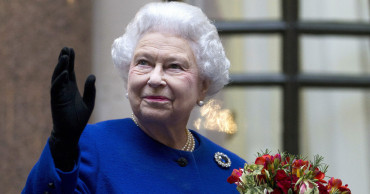
Bangladesh declares 3 days of mourning for Queen
Bangladesh on Friday declared three days of national mourning in memory of British Queen Elizabeth II who died on Thursday after 70 years on the throne.
From September 9 to September 11, the national flag will be kept at half-mast at all government, semi-government and autonomous organisations, educational institutions, non-government buildings and Bangladesh missions abroad, according to a notification issued by the Cabinet division.
Special prayers for the departed soul will also be arranged, as per the notification.
Also read: Queen Elizabeth II: Britain's longest reigning monarch, no more
Queen Elizabeth II, Britain's longest-reigning monarch died on Thursday afternoon at the age of 96.
The Buckingham Palace announced that she died at Balmoral Castle, her summer residence in Scotland, in the presence of members of the Royal Family.
4 years ago
.jpg)
India declares national mourning for ex-Japan PM Shinzo Abe
India on Friday declared a one-day national mourning on Saturday in memory of former Japanese Premier Shinzo Abe, as Prime Minister Narendra Modi expressed "shock" at the assassination of "one of my dearest friends".
"I am shocked and saddened beyond words at the tragic demise of one of my dearest friends, Shinzo Abe. He was a towering global statesman, an outstanding leader, and a remarkable administrator. He dedicated his life to make Japan and the world a better place," Modi tweeted.
Read: Japan ex-leader Shinzo Abe assassinated while giving speech
PM Modi also lauded 67-year-old Abe for his "immense contribution to elevating India-Japan relations to the level of a Special Strategic and Global Partnership".
"Today, whole India mourns with Japan and we stand in solidarity with our Japanese brothers and sisters in this difficult moment. As a mark of our deepest respect for former Prime Minister Abe Shinzo, a one day national mourning shall be observed on 9 July 2022," he wrote.
Recalling his association with Abe, Modi said that he had got to know him "during my tenure as Gujarat CM and our friendship continued after I became PM". "His sharp insights on economy and global affairs always made a deep impression on me."
Read: Japan ex-leader Shinzo Abe apparently shot, in heart failure
"During my recent visit to Japan, I had the opportunity to meet Mr. Abe again and discuss many issues. He was witty and insightful as always. Little did I know that this would be our last meeting. My heartfelt condolences to his family and the Japanese people," the Indian PM wrote.
The former Japanese PM was assassinated by a former Navy personnel while giving a campaign speech in the southern city of Nara. He was pronounced dead five hours later at a hospital where he was airlifted to.
4 years ago