Battery-run rickshaws
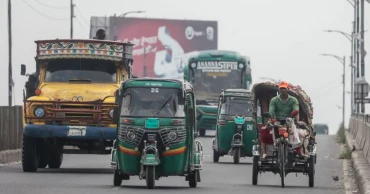
Battery-powered rickshaws now take over Bhulta Flyover
Battery-run rickshaws are increasingly operating on the Bhulta Flyover in Rupganj of Narayanganj, adding to growing concerns over the unsafe and unregulated movement of the three-wheelers on busy roads.
The vehicles have become a common sight on the flyover, despite their operation often being associated with traffic-rule violations and reckless driving, according to local commuters.
17 days ago

Dhaka’s battery rickshaw anarchy: Crackdown or compromise?
Unauthorised battery-powered rickshaws have flooded the streets of Dhaka, moving unchecked across flyovers, major roads and narrow lanes.
With no effective regulation or monitoring, these vehicles have created a state of disorder on the roads, worsening traffic congestion and increasing accident risks.
Although the exact figure is uncertain, the Bangladesh Road Transport Authority (BRTA) estimates that there are more than 60 lakh battery-powered rickshaws across the country, with 10 to 12 lakh of them operating in the capital alone.
A survey conducted by Dhaka North City Corporation (DNCC) revealed that 20 percent of road accidents in its jurisdiction are caused by these vehicles, with women and children being the worst affected.
Built without following safety standards, these rickshaws frequently mount pavements and are often involved in collisions due to their uncontrolled speed.
Tougher policy soon to regulate battery-run rickshaws in Bangladesh
Local residents and commuters are increasingly alarmed.
Mehdi Hasan of Malibagh said, “Auto-rickshaws should be banned at any cost. Each auto-rickshaw is practically an accident machine. Visit the orthopaedic hospital and others to see the damage.”
Md Rakib echoed the frustration, pointing to the influence of vested groups, “The administration cannot even touch the rickshaw syndicate. They routinely confiscate 10–15 rickshaws but do nothing meaningful. The government must take strict, decisive action.”
Private car driver Suman added that the problem has become unbearable for motorists. “The numbers have become so overwhelming that even driving at a normal speed is difficult. These drivers lack any basic knowledge of road safety and drive recklessly, making it hard for private car drivers like us to navigate," he said.
From the law enforcement side, Anisur Rahman, a police sergeant, admitted the challenge, “For every 100 battery rickshaws we confiscate, 500 more hit the streets. It’s time to shut down the workshops and stop importing parts altogether.”
A visit to different areas of the capital shows how deeply entrenched the industry has become.
Hundreds of small and large workshops in Mohammadpur, Bosila, Keraniganj, Beribadh, Old Dhaka, Jatrabari, Mugda, Manda and Mirpur are manufacturing battery-run rickshaws daily.
Battery-run rickshaws won’t be allowed on Dhaka's main roads: DNCC Administrator
Attempts by past governments to restrict their operation largely failed. Authorities are now trying to ban them from VIP roads, though with little success.
Booming Business
Battery-run rickshaws, or e-rickshaws, first appeared in Bangladesh in the late 2000s, when local innovators began retrofitting traditional cycle rickshaws with imported Chinese electric motors and lead-acid batteries.
Today, the industry is estimated at USD 871 million (2022), comprising 3 to 4 million vehicles that transport over 112 million people every day.
According to Professor Mohammed Ehsan of the Mechanical Engineering Department at BUET, profitability is the key driver behind their rapid growth.
“Compared to other businesses, the return on investment is huge. Owners earn at least Tk 500 a day by investing Tk 70,000 without ensuring any quality. The government must intervene to regulate quality and control their spread,” he said.
Don't ride battery-run rickshaws and buy anything from hawkers on footpaths:DNCC
Garage owners are reaping the benefits. Khokon Mia, who runs a garage in Dhaka, explained:
“I earn around Tk 200,000 a month from this business but I spend half of it on paying off police, local gangs, and thieves to keep operations running smoothly. This is an open secret. Everyone wants to invest in this business because of the quick profits.”
Corporation Initiative Yet to Take Off
In June, DNCC Administrator Mohammad Ejaz announced that newly designed battery-run e-rickshaws, developed by BUET, would be introduced on Dhaka’s streets by August. However, the initiative has yet to materialise.
According to the plan, the new vehicles will be launched in two zones on a trial basis. They will receive five-year licences with annual fitness checks, while monthly road permit fees will also be collected.
Drivers will be trained on road safety and vehicle handling, with a target to train 100,000 drivers. Importantly, these rickshaws will not be allowed on the city’s main roads.
Government Move
Beyond city-level initiatives, the government has prepared a draft policy to rein in the use of unregistered battery-operated three-wheelers – widely known as electric auto-rickshaws or easy bikes – across the country.
Control battery-run rickshaw movement to avoid accidents: National Committee
The proposed Electric Three-Wheeler Management Policy 2025, developed by the Road Transport and Highways Division under the Road Transport and Bridges Ministry, sets out strict requirements.
All vehicles must be registered with BRTA and drivers will be required to hold valid driving licences. Parts including motors, controllers, gearboxes, axles, wheels, brakes, headlights, shock absorbers, batteries and chargers must carry BSTI approval.
Manufacturers and assemblers will also need to be registered with the Bangladesh Investment Development Authority (BIDA).
Besides, only new vehicles and BSTI-approved parts may be imported, while charging stations must comply with guidelines issued by the Power Division in 2021.
1 year ago

Tougher policy soon to regulate battery-run rickshaws in Bangladesh
The government has taken a move to introduce a tougher new policy to regulate the rampant and risky movement of unregistered battery-operated three-wheelers, commonly known as electric auto-rickshaws or easy bikes across the country, including the capital.
The reckless movement of these vehicles has created chaos on city roads and highways, leading to worsening traffic congestion and increasing accident risks.
The government attempts to remove them from major roads in Dhaka failed to see success amid protests and movements by drivers and owners.
Although there is no definite count, the Bangladesh Road Transport Authority (BRTA) estimates that there are over 60 lakh battery-run rickshaws in the country with 10 to 12 lakh operating in Dhaka alone.
To bring discipline in their operation, the draft of the 'Electric Three-Wheeler Management Policy 2025' has been prepared by the Road Transport and Highways Division under the Road Transport and Bridges Ministry.
As per the draft policy, all battery-operated three-wheelers must be registered with the Bangladesh Road Transport Authority (BRTA) and drivers must obtain valid driving licenses.
The vehicles will be restricted to designated routes outside national highways with separate limits set for medium- and low-speed electric three-wheelers.
A passenger and goods transport committee formed under the Road Transport Act will determine how many vehicles can operate in an area.
Road Transport and Highways Division Secretary Ehsanul Haque told UNB that the uncontrolled growth of fitness-lacking battery-run rickshaws has disrupted traffic systems nationwide.
A draft for a news policy has been prepared to bring them under regulation and that stakeholder feedback is now being reviewed, he said.
Battery-run rickshaws won’t be allowed on Dhaka's main roads: DNCC Administrator
“We hope the policy will be approved very soon. Once implemented, it will end the ongoing disorder caused by unregulated electric rickshaws,” he added.
As per the draft, one person can own a maximum of three medium-speed and five low-speed rickshaws.
All rickshaws must be transformed into safe models within a year, according to the draft.
It says medium-speed rickshaws will be limited to a maximum speed of 50 km/h, and low-speed rickshaws to 30 km/h.
The vehicles must be constructed following BRTA-approved designs and only parts and components approved by the Bangladesh Standards and Testing Institution (BSTI) will be allowed.
All components such as motors, controllers, gearboxes, axles, wheels, brakes, headlights, shock absorbers, batteries and chargers must be BSTI-approved and manufacturers and assemblers must be registered with BIDA (Bangladesh Investment Development Authority).
All imported or locally assembled electric three-wheelers and parts must have BRTA approval and only new vehicles and new parts (BSTI-approved) can be imported.
Charging stations must comply with the 2021 guidelines issued by the Power Division.
BRTA will set fares for these vehicles.
Manufacturers must be listed by BRTA and cannot operate without being listed.
The vehicle must display the owner and driver's contact numbers visibly for passengers.
BRTA will arrange district-level training for drivers in consultation with local transport committees.
According to the draft, electric three-wheelers will not be allowed on national highways except in service lanes.
These will be allowed to operate in designated areas, including city corporations, ‘A’ category municipalities, district, upazila and union-level local roads.
Only local passengers and goods transport committees will determine the number and route allocations in these areas.
On the matter of penalties, the draft clearly states that violations will be addressed as per the Road Transport Act 2018, and necessary legal action will be taken against offenders.
Don't ride battery-run rickshaws and buy anything from hawkers on footpaths:DNCC
Regarding the timeline, all current unsafe low-speed vehicles must be converted to safe models within one year as per the Electric Motor Vehicle Registration and Operation Policy 2023.
After this deadline, unapproved vehicles will be subject to legal action.
The draft also stressed the need for a complete phase-out of unauthorised locally made vehicles such as diesel and petrol-engine vehicles used in agriculture and waterways.
Local transport committees are to replace them with approved alternatives.
1 year ago
Battery-run rickshaws won’t be allowed on Dhaka's main roads: DNCC Administrator
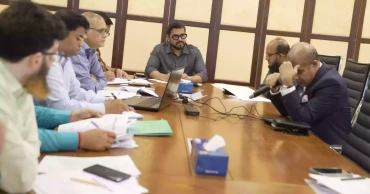
No battery-run rickshaws will be allowed to operate on the main roads of Dhaka city, said Dhaka North City Corporation (DNCC) Administrator Mohammad Ejaz on Tuesday.
The approved standard model auto-rickshaws will be allowed to run in the alleys of Dhaka city, he said while speaking at a meeting on “Update on progress and future actions regarding the Standard Model and Prototype Development of Battery-Powered Rickshaws (E-Rickshaws)," organised by DNCC.
Besides, a high level committee will be formed soon to prepare a standard model and regulatory framework for e-rickshaws, he said.
DNCC boss warns of impending crackdown on illegal auto-rickshaw workshops, charging stations
During the meeting, BUET's BIPRC (Bangladesh Integrated Public and Road Communication) e-bike project proposed a type-approval and registration process for a newly standardised, low-speed three-wheel e-rickshaw model.
Manufacturers were urged to develop prototypes based on the proposal.
1 year ago

Battery-run rickshaws continue to operate amid massive power cuts
Although the government resorted to some austerity measures to save electricity amid the ongoing energy crisis, a large number of battery-operated rickshaws continue to run across the country causing shortage of electricity.
Power Development Board (PDB) authorities in the district have identified some reasons for the rampant load shedding that’s crippling peoples’ lives in the district, among which battery-operated rickshaws have found a top spot.
According to Thakurgaon municipality, although the number of registered battery-run rickshaws in the municipality is 2,400, in reality around 4,000 such rickshaws are plying the streets.
These vehicles are consuming 330,00 units of electricity on average per day and 9,90,000 units of electricity per month, it said.
A household consumes around 300 units of electricity per month, which means that a total of 3,300 families can use this amount of electricity that is used for charging battery-run rickshaws.
Owners of charger stations in Thakurgaon municipality said that they take Tk 80 to Tk 100 for charging battery of the rickshaws. Besides, driver of a battery-powered rickshaw has to give Tk 300 to its owner per day.
Read: National Committee identifies 9 reasons for current power crisis
“A fully charged battery-run rickshaw can travel 200 kilometers. Sometimes charge diminishes within afternoon for plying longer distances. A driver of such rickshaws earns Tk 700 to Tk 800 per day,” said Md Kalam, an easybike driver, of the district.
Mohammad Mamunur Rashid, Executive Engineer of Thakurgaon Power Development Board (PDB), said that there are separate electricity rates for charging stations.
“Flat rate for charging battery-powered rickshaws is Tk 7.64, while off peak rate is Tk 6.88 and peak rate is Tk 9.55. Those who use double tariff meters pay their bills as per peak and off peak rates, while those with single tariff meters pay their bills in flat rate,” Mamunur said.
Following a high-level meeting at the prime minister's office on July18, Prime Minister's Energy Advisor Dr Tawfiq-e-Elahi Choedhury announced the Bangladesh government's plan to resort to two hours of power cuts daily in each zone to tackle the energy crisis affecting electricity generation in the country.
Later in the day, State Minister for Power, Energy and Mineral Resources Nasrul Hamid apprised reporters of the revised decision of one hour of load shedding daily.
Following the government's decision, different power distribution entities – Dhaka Power Distribution Company Limited and Dhaka Electric Supply Company Limited – published their area-wise outage plans.
The government also announced a slew of measures for saving electricity, including the closure of shopping malls and markets by 8pm and the restricted use of air-conditioners. Plans are afoot to limit office hours and keep fuel outlets closed one day every week.
4 years ago