World Cup 2026
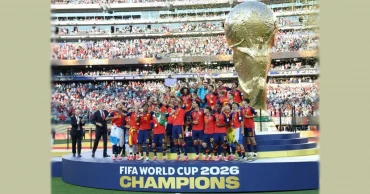
World Cup 2026: Novelty, controversy and farewell
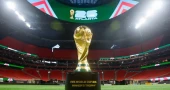
This was a World Cup that looked different from the outset. FIFA had already committed to an expanded 48-team format before it even chose a host, and when the joint bid from Canada, Mexico and the United States won that vote in 2018, the 2026 World Cup became the first to be staged in three countries.
Football's governing body later confirmed three other changes: an automatic red card for players who cover their mouths, mandatory hydration breaks in every match, and the awarding of corners to attacking teams when goalkeepers hold the ball too long.
STYLE IN CONTRAST
The larger tournament showcased a wide array of footballing philosophies and cultures. Structured, possession-based sides built around positional discipline were pitted against bold, higher-pressing teams willing to gamble on pace and flamboyance.
Europe itself split into two visibly different schools. France leaned heavily on its phalanx of attackers led by Kylian Mbappe, Ousmane Dembele and Michael Olise.
In contrast, Spain built its game plan on patience and containment. Its defense broke the World Cup record for consecutive clean sheets, reaching six in a row - a run that began in the 2022 World Cup - and goalkeeper Unai Simon's shutout streak extended to 609 minutes following the round of 16 win over Portugal.
Morocco headed Africa's hopes with its own model that combined positional awareness with speed and audacity, quicker to close down opponents than the deeper defensive block that characterized its run to the semifinals in 2022.
South American sides, meanwhile, showed moments of brilliance, even if several former winners from the region - namely Brazil and Uruguay - fell short of expectations.
NEW STARS EMERGE, VETERANS BOW OUT
The tournament served as a fertile testing ground for emerging players. A case in point was Morocco's Ayyoub Bouaddi. The 18-year-old, who plays for French Ligue 1 club Lille, represented France at youth level and only became available for the Atlas Lions in May when FIFA approved his allegiance switch.
He showed poise beyond his years with performances that have sparked the interest of Manchester City and Arsenal, among other clubs.
Cote d'Ivoire's Yan Diomande, 19, entered the tournament with big hopes and justified the hype as the African side reached the knockout rounds before falling to Norway via a late Erling Haaland goal.
Colombia's Gustavo Puerta was one of the quieter achievers. The Racing Santander midfielder's creativity and vast passing range proved crucial as Colombia progressed to the round of 16 before losing to Switzerland on penalties.
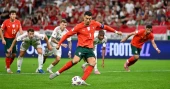
These arrivals were accompanied by some high-profile departures, with modern-day greats Cristiano Ronaldo, Luka Modric and Neymar all bidding farewell to football's biggest stage.
CONTROVERSY ON AND OFF THE PITCH
One of FIFA's newest laws made headlines in the group stage. Paraguay's Miguel Almiron became the first player sent off under a rule barring players from concealing their mouths during on-field confrontations.
The incident involving Türkiye defender Mert Muldur also earned the Atlanta United winger a one-match suspension that FIFA said was not subject to appeal, ruling him out of Paraguay's final group match against Australia.
An even more bizarre episode was the controversy surrounding Folarin Balogun. The United States forward was sent off for stepping on the ankle of an opponent during his team's last-32 win over Bosnia-Herzegovina, an event that triggered an automatic one-match suspension.
Days later, FIFA's disciplinary committee provisionally lifted the ban, fining Balogun 40,000 U.S. dollars and clearing him to face Belgium.
The Belgium federation duly contested the decision, but FIFA's appeals committee dismissed the challenge less than eight hours before kickoff. UEFA said the move "crossed a red line," calling it "unprecedented, incomprehensible and unjustifiable." Balogun himself later said he knew the reversal "would cause a lot of controversy."
CHINESE ELEMENTS: The BREAKFAST SHOW
For Chinese football fans, mornings became prime-time viewing. With most matches played in China's early hours, breakfast shops, cinemas and coffee chains turned the inconvenience into an opportunity.
In Wuhan, one noodle-shop owner brought forward opening hours to 4 a.m., selling up to 200 extra bowls of hot dry noodles a day as customers viewed matches on an oversized screen.
Searches for morning-tea restaurants - a Cantonese breakfast tradition - surged nearly ninefold year-on-year in Guangdong province while cinema chains staged more than 28,000 World Cup screenings nationwide to fill their normally quiet matinal slots.
The commercial ripple reached manufacturing too: Yiwu's wholesale markets, which supplied an estimated 70 percent of the world's World Cup merchandise, saw exporters shift from generic flag-printed jerseys to patented, team-licensed designs commanding a premium. Twelve time zones away, football had changed how a country starts its day.
Chinese companies and products had a visible presence throughout the competition.
Lenovo, FIFA's official technology partner, was ubiquitous with artificial intelligence increasingly integrated into areas ranging from match analysis to fan engagement. FIFA has said Lenovo's infrastructure and support services helped underpin key aspects of tournament operations.
Hisense also featured prominently through its longstanding partnership with FIFA. The Chinese electronics giant provided display technology for broadcast and officiating systems, highlighting the leading role of Chinese companies in major international sporting events.
The tournament crowned a golden generation of attacking players. Mbappe finished with 10 goals while eight-time Ballon d'Or winner Lionel Messi, playing in his sixth and likely last World Cup, scored eight times. Erling Haaland, Jude Bellingham, Harry Kane and Mikel Oyarzabal also vied for the Golden Boot award. Between them, they redefined what fans should expect from a forward at a major tournament.
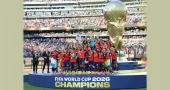
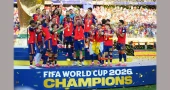
On Sunday, Spain achieved something even more transcendent. It denied Messi one last glorious chapter in an astonishing career and claimed the tournament's lasting story for itself.
2 months ago
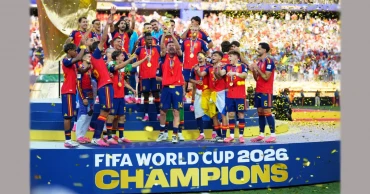
Spain claim 2nd World Cup title after beating Argentina
This is how good Spain was at the World Cup: Not even Lionel Messi had any answers.
And when it was over, Spain walked off with the trophy. Messi simply walked off in tears.
Spain is back atop the soccer world for a second time, after Ferran Torres’ first goal of this year's World Cup — unquestionably the goal of his life — gave his country a 1-0 win over now-dethroned champion Argentina in the final on Sunday.
“It was a goal scored by 47 million people,” Torres said, referring to Spain’s population.
Maybe not by them — but certainly for them.
The goal came with Argentina down to 10 men after Enzo Fernandez was sent off late in regulation following a reckless tackle. Tempers flared then, and flared again after the final whistle with Argentina coach Lionel Scaloni and players from both sides engaging in what appeared to be some pushing and shoving.
In the end, Spain denied Messi a second straight title in what he has indicated was his final World Cup match. Torres, a second-half substitute, pounced on a bouncing ball in the box and used his left foot to bury a shot just under the crossbar in the 106th minute.
From there, the airtight defense that dominated opponents throughout the tournament came through one final time. Spain — which also won the title in 2010 — allowed only one goal in eight matches in this World Cup run, setting a record for fewest goals allowed by a champion.
“I feel pride, to be honest,” said Spain coach Luis de la Fuente, who at 65 is now the oldest man to lead a team to a World Cup title. "Accompanying them on this journey is an honor.”
Spain gets a World Cup 1st
This title, combined with the Women's World Cup won by Spain in 2023, makes the European nation the first to hold both the men’s and women’s titles simultaneously. And in the streets of Madrid — probably many other places in Spain as well — countless people spilled into the streets, celebrating Sunday's victory long into the wee hours of Monday morning.
The score indicates this match was close, but only one team was in command.
Spain took the game’s first 20 shots on goal before Argentina — desperate for an equalizer — got its first attempt off in the second half of extra time. Spain took nine of the game’s first 10 corner kicks, and only a World Cup final-record 12 saves by Argentina goalkeeper Emiliano Martinez gave the 2022 champions a shot at going back-to-back.
“Dibu was nothing short of exceptional,” de la Fuente said, referring to Argentina's keeper by his nickname.
Spain is now unbeaten in its last 38 matches — 29 wins, nine draws — and is the outright holder of the longest such streak by any European men's team ever. Italy went 37 matches (28 wins, nine draws) from October 2018 through September 2021, before Spain ended that streak.
And for the last two-plus years, nobody has beaten Spain. Not even Messi. An Argentina team that was the kings of the late-game rally in this tournament had no answer this time.
“We lost the game, and we accept that,” Scaloni said. “That doesn’t mean that we will forget everything we’ve done so far, so I’d like to thank my people, my players and the country. I can tell them that we played our hearts out.”
Spain survives a late push
Messi took a corner kick with about four minutes left before the final whistle and the ball took a fortunate skip toward substitute Giuliano Simeone — who sent it high and over the crossbar, holding his head in disbelief afterward.
“When you have Messi on the other side, well, you are nervous,” Torres said. "At the end of the day, we always depended on us. We always come up with our football, and we showed it again.”
After the post-match scuffles, they also paid tribute to the former champions. Spain's players lined up to form an honor guard of sorts for Argentina's squad to walk through on its way to the stage for the runner-up medals from President Donald Trump and FIFA President Gianni Infantino.
“I think now I'm in a cloud,” said Spain midfielder Rodri, the Golden Ball winner as the tournament's best player.
Argentina was forced to finish the match down a man after Fernandez was sent off in second-half stoppage time after getting his second yellow card. Fernandez was whistled for a collision that sent Spain defender Pau Cubarsi cartwheeling into the air, and the card came out immediately.
Defense led Spain to a title
It was the 104th and last match of the biggest World Cup ever, a 48-team event that played out over the U.S., Canada and Mexico. Because there were more matches than any previous World Cup, it was no surprise that there were more goals than all other editions — more than 300, nearly three per match.
Except, of course, when Spain was involved. Spain's plan was simple and flawless: Hold the ball as much as possible, denying opponents any hint of chances.
It worked, all the way to the end.
Messi is 39 and the math certainly suggests that the Inter Miami star is at the end of his international career. There have been hints — such as Messi himself declaring that a home World Cup qualifying match against Venezuela last year would be his final competitive contest for Argentina on his nation’s soil.
“I experienced a lot of things on this pitch, good and not so good,” Messi said that night. “I’ll take the good with me.”
He retired from the national team after losing a Copa America final to Chile — in the same stadium he played in Sunday — a decade ago, then came back a few weeks later after changing his mind.
Good thing he did, because in that decade he went from superstar to absolute icon.
There was the World Cup title in 2022. There were two Copa America titles, the first in 2021 and the second in 2024. He won Argentina’s player of the year award 16 times in a span of 19 years, first winning it as a teenager and continuing to win it all the way into his late 30s.
He's a legend within the game and on all corners of the globe. But Spain was better Sunday.
“I spoke to my players, and they said: ‘Look, we’ve won everything, coach. We’ve won everything,'” de la Fuente said. “And that is beautiful.”
A final unlike any other
The spectacle was not limited to simply soccer.
Madonna, Justin Bieber, BTS and Shakira were all part of a halftime show that also featured Burna Boy, Jason Sudeikis in character as “Ted Lasso” and even some of the Muppets. Jennifer Hudson, Post Malone and Tom Cruise had roles in the closing ceremony, which actually preceded the match.
A slew of actors, athletes and other celebrities were there: Spain’s Javier Bardem left happy, Luciana Barroso Damon — the wife of actor Matt Damon — probably did not, considering she was wearing the colors of her native Argentina.
They all came to see a show. So did 80,000 other people, not to mention perhaps as many as 2 billion watching around the globe.
Spain didn't disappoint. No team has won back-to-back men's World Cups since Brazil in 1958 and 1962, and Spain kept Argentina from pulling off that repeat.
“As I told the lads before the game, we have to go for the game, we need to face them, we have to look to their eyes and say we want this game,” Rodri said. “And then, life gives you the World Cup or not.”
Spain took it instead.
2 months ago
The new rules behind World Cup decisions
It was another game-changing moment at the World Cup that had more to do with television replays in a room far away than a moment of brilliance on the field.
The sending off of Switzerland's Breel Embolo in Saturday's quarterfinal game against Argentina was the latest call that may have left fans scratching their heads, not least because of the confusing name of the newly implemented law that swung the match.
It is called the “mistaken identity” rule. Yet, technically, Embolo was not shown a second yellow card — resulting in a red — for a case of mistaken identity. It was because the referee Joao Pinheiro did not see in real time that the forward had simulated a foul under a challenge from Argentina's Leandro Paredes.
Paredes was initially shown a yellow card, which is a key factor. Under FIFA rules, because Paredes was shown a card, the video assistant referee (VAR) can intervene and recommend that the onfield official reviews the sideline monitor.
After review the referee deemed Embolo to have committed a “clear simulation” and showed him a second yellow card and sent him off.
The rules state that the VAR can assist when the referee penalizes the “wrong team for an offense that results in a red or yellow card being shown to the wrong player.”
It was a pivotal point in the match, coming five minutes after Switzerland had made it 1-1. Argentina won 3-1 after extra time.
“The referee made the wrong decision,” Switzerland coach Murat Yakin said. “I know they will protect their referee but this rule destroyed our game today, and it’s very painful, and to be eliminated in that way hurts a lot.”
It is not the first time at this World Cup that teams have hit out against new rules or technology.
Germany infuriated by disallowed goal
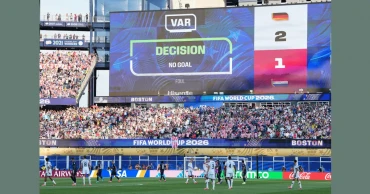
Newly tightened regulations contributed to Germany's shock elimination in the round of 32.
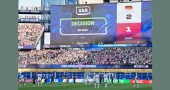
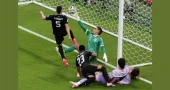
Defender Jonathan Tah’s potentially game-winning goal in extra time against Paraguay was ruled out after VAR review for a foul on goalkeeper Orlando Gill.
Replays showed Germany’s Waldemar Anton push Gill to the ground, but the minimal contact led to criticism of the decision. FIFA’s referees chief Pierluigi Collina said officials had been told to punish incidents when players try to block opponents and make no attempt to play the ball, especially where goalkeepers are concerned.
Germany went on to lose the game in a penalty shootout, with Tah firing a decisive spot kick over the bar.
Elimination could have a seismic effect on German soccer, with coach Julian Nagelsmann resigning and Jurgen Klopp expected to take over.
High tech ball costs Croatia
The words “connected ball technology” will likely haunt Luka Modric and Croatia for years to come.
The high-tech soccer ball fitted with “advanced sensors” used at this World Cup cost Croatia a dramatic late equalizer against Portugal in the round of 32.
Josko Gvardiol thought he'd scored in added time to make it 2-2, but the goal was ruled offside after VAR review because the in-ball sensors picked up the slightest of touches from Croatia's Igor Mantanovic in the buildup that was undetectable to the naked eye or even video replays.
FIFA said the in-ball sensors, which capture data 500 times per second, were so finely tuned to be “capable of determining any slight contact ... allowing officials an unprecedented level of data to make fast, accurate decisions.”
Croatia coach Zlatko Dalić, who has since stepped down, was not impressed.
“All these decisions take the joy out of football,” he said.
Egypt heartbroken against Argentina
It was shaping up to be one of the great World Cup upsets. Egypt led 2-0 against defending champion Argentina in the round of 16 and might have been 3-0 up if not for VAR.
With the score at 1-0 in the second half, Egypt's Mostafa Zico finished off a sweeping attack. But wild celebrations were cut short when a foul on Argentina's Lisandro Martinez earlier in the move was confirmed on video review and the goal was disallowed.
Argentina staged a spectacular late comeback to win 3-2.
Egypt coach Hossam Hassan launched a furious tirade.
"We have suffered injustice,” he said.
The Egyptian soccer federation went further.
“Several key incidents raised serious concerns and left profound questions about the consistency and fairness of decisions that directly influenced the course of the game,” it said.
Questions were raised about the amount time between the foul on Martinez, which happened deep in Egypt's half, and the goal at the other end of the field.
FIFA referees chief Collina responded to criticism to say there was "no defined limit regarding either the distance from goal or the amount of time between the incident and the goal.”
“Nobody can question the integrity of the FIFA World Cup match officials,” he added.
A double blow for Norway against England
The high tech sensor was called into action again as England beat Norway 2-1 in the quarterfinals.
Norway's players and staff were adamant the ball hit a cable that suspends overhead cameras in the buildup to Jude Bellingham's equalizing goal in the first half. If it had, play would have been stopped.
But FIFA insisted there was no contact, saying the sensor “showed no peak in the ‘heartbeat of the ball’ when in the air, and therefore no evidence that the ball touched the overhead wire.”
Norway also had a goal disallowed when the score was 1-1 after VAR spotted a foul by Erling Haaland on England's Elliot Anderson. The infringement came before the corner was taken and, under new rules to try to limit fouls by attacking teams during corner routines, VAR is allowed to intervene regarding incidents that happen even before the ball is kicked.
2 months ago
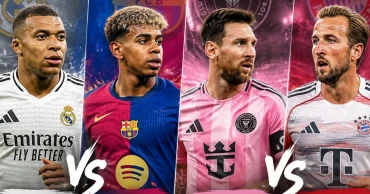
World Cup semifinals: Four previous champions, a bitter rivalry, Mbappé vs Yamal and Messi vs Kane
It's a World Cup semifinal lineup for the ages.
Four previous champions and the four top-ranking teams in the world. Five of the six top scorers, one GOAT and one of the bitterest rivalries in soccer.
Argentina, Spain, France and England went into the tournament as the top four in FIFA’s rankings and are two wins away from being crowned champion of the world again. It's just too close to call either semifinal matchup: France will play Spain in Arlington, Texas, on Tuesday and England will face Argentina in Atlanta on Wednesday.
Not since 1990 has the final four of a World Cup been made up entirely of previous winners. England and Argentina were involved then, although they didn't play each other. Then, like now, Argentina was the defending champion — after beating West Germany in the 1986 final in Mexico — and went on to lose to West Germany in the 1990 final.
And this year could also see a repeat final from 2022 if France and Argentina both advance.
England vs. Argentina: A bitter rivalry
Argentina must overcome England in a match that resumes a fierce rivalry that goes beyond the soccer field, with tensions also relating to the 1982 conflict over the Falklands Islands.
On the field there have been numerous flashpoints between the teams on the World Cup stage. Argentina captain Antonio Rattin, whose death was announced on Saturday, was sent off in a bad-tempered quarterfinal match against winner England in 1966. England manager Alf Ramsey tried to stop his players from swapping shirts with their opponents after a 1-0 victory.
Roll the clock forward 20 years and in 1986 Diego Maradona's infamous “Hand of God” goal helped Argentina to a 2-1 win against England in the quarterfinals on the way to lifting the trophy.
David Beckham was sent off in 1998 for kicking out at Argentina midfielder Diego Simeone, who was predictably criticized by the English media for his reaction to what appeared to be light contact. Argentina won the round of 16 match on penalties.
Beckham got his revenge four years later by scoring a penalty in a 1-0 win that contributed to Argentina being eliminated at the group stage.
France vs. Spain: A quick chance for French revenge
France and Spain meet again in the semifinals of a major tournament, just two years since going head-to-head at the European Championship.
Spain won 2-1 with a then-16-year-old Lamine Yamal on the score sheet and went on to lift the Euros by beating England in the final.
Kylian Mbappé's powers were diminished in that tournament after sustaining a broken nose, while emerging stars like Michael Olise and Désiré Doué were yet to break through.
Two years on and France is widely regarded to have been the most impressive team of this World Cup with a dizzying array of attacking talent and the joint leading scorer in Mbappé ahead of the semifinal on France's Bastille Day.
In contrast Spain had to contend with injuries to Yamal and fellow winger Nico Williams coming into the tournament and has relied on late goals from substitute Mikel Merino to edge past Portugal and Belgium in the last two rounds.
The nations have met on a number of occasions at the World Cup or Euros. France beat Spain in the final of Euro 84.
The race for the Golden Boot
It has become a thrilling competition within the tournament as many of the world's most lethal finishers have all turned up in peak form.
Erling Haaland may be out of the race, but five of the six top scorers are still standing and others could yet force their way into the race for the Golden Boot.
Mbappé and Lionel Messi lead the way with eight goals each. Haaland has seven, but he cannot add to that number after Norway was eliminated by England in the quarterfinals.
Jude Bellingham and Harry Kane have six each, while Ousmane Dembélé is on five.
Mikel Oyarzabal has four goals, so could yet challenge if Spain overcomes France in the semifinals.
There's also the contest for the all-time top scorer at World Cups overall with Messi on 21 goals and Mbappé on 20.
That man Messi
He is already considered by many to be the greatest of all time — the GOAT — and his performances at what is likely his last World Cup, aged 39, have only strengthened that argument. This will be Messi's first ever game against England.
If Messi can lead Argentina to the title, he would surpass the great Maradona by winning two World Cups for his country.
Argentina would also become the first back-to-back champion since Brazil in 1958 and 1962.
Soccer great Pelé was part of those Brazil teams and also went on to win a third World Cup in 1970.
2 months ago
Mexico first to reach World Cup knockouts after 1-0 win over South Korea
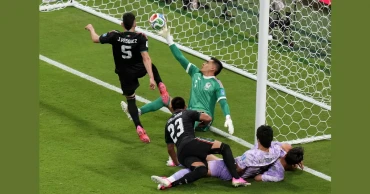
Mexico took advantage of a defensive blunder by South Korea to win 1-0 and become the first team to advance to the knockout stage of the World Cup on Thursday.
It marks a major triumph for a team that failed to get out of the group stage in 2022 and now has won twice on home soil in front of jubilant crowds. Mexico players celebrated at midfield and waved to the fans who cheered and sang from the packed stands at Estadio Akron.
Luis Romo scored in the 50th minute after South Korea goalkeeper Kim Seung-gyu collided with defender Lee Gi-hyuk and dropped the ball inside the area. Romo easily found the open net after picking up the loose ball.
The South Koreans nearly equalized in the 87th minute when Mexico goalkeeper Raúl Rangel stopped a header from close range by Cho Gue-sung, then made an even better save of Yang Hyun-jun's attempt on the rebound, extending his right arm to keep the ball from crossing the line.
“We've been doing very well,” Mexico coach Javier Aguirre said. “It wasn’t a great match, but I think that our opponent didn’t let us do too much. But we still were able to score, on that mistake, in addition to another two or three opportunities.”
Mexico won Group A with six points in two matches, three more than South Korea and five more than the Czech Republic and South Africa, who drew 1-1 earlier Thursday in Atlanta.
The top two teams from each group move on to the knockout stage, along with the best eight third-place teams. A round of 32 is being played for the first time at the World Cup after the tournament was expanded to 48 teams.
Mexico opened with a 2-0 win over South Africa, while South Korea rallied for a 2-1 victory over the Czechs.
Mexico closes group play on Wednesday against the Czech Republic in Mexico City, while South Korea takes on South Africa in Monterrey.
Mexico had never won a World Cup game on home soil outside Mexico City. Before 2026, all but one of its nine World Cup matches at home, spanning the 1970 and 1986 tournaments, had been played at Estadio Azteca, with five wins and three draws. When it played in Toluca in 1970, it lost 4-1 to Italy in the quarterfinals.
Thursday's match got off to a lackluster start, with neither team creating significant scoring opportunities and both squads getting loudly booed after the halftime whistle.
Mexico, ranked 13th, was eliminated in the group stage four years ago in Qatar. That followed seven straight eliminations in the round of the 16.
South Korea star Son Heung-min had another disappointing game and was substituted out in the 57th.
The 33-year-old Son is looking to become South Korea’s top goal scorer at the World Cup and the Asian player with the most goals in the tournament. The former Tottenham star, currently with Los Angeles FC, entered with three goals over three prior World Cups.
Kim kept Mexico from adding to the lead by coming up with a tough save off a close-range shot by Raúl Jiménez in the 75th.
The South Koreans pressed through the end but could not equalize.
South Korea, ranked 22nd, is making its 11th straight World Cup appearance and 12th overall, the most of any Asian country. Its best result was a fourth-place finish at the tournament it co-hosted with Japan in 2002. Since then, the South Koreans have never gone beyond the round of 16.
“The mistake that we made was unfortunate,” coach Hong Myung-bo said.
This time there were no empty seats in Guadalajara, contrary to what happened in the earlier match between South Korea and the Czech Republic. FIFA had blamed fans standing in the concourses for the empty seats. Thursday's crowd was announced at 45,522 for the 45,664-capacity stadium, which was hosting the national team for the first time.
3 months ago
Historic 48-team FIFA World Cup begins today
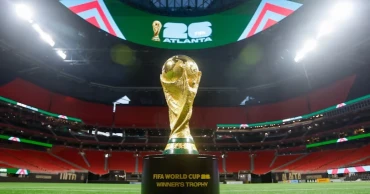
The FIFA World Cup, the largest edition in the tournament’s history, officially begins today as 48 national teams start their quest for football’s most coveted trophy across the United States, Canada and Mexico.
According to Associated Press reports, the opening day marks the start of a 39-day global football spectacle featuring 104 matches played across 16 stadiums in 16 cities, stretching from Mexico City to Vancouver and New York to Los Angeles.
The tournament is being staged for the first time across three countries, with Mexico hosting the opening match, Canada joining the schedule on the following day, and the United States hosting its first fixture shortly after.
FIFA has described the 2026 edition as a “new era” for the World Cup, expanding the format from 32 to 48 teams. The new structure allows more nations than ever before to participate, with teams divided into 12 groups. The top two teams from each group, along with the best third-placed sides, will advance to the knockout stage.
Opening-day matches are expected to draw global attention, with host nation Mexico taking the spotlight amid a festive ceremony in Mexico City. AP reports highlight that veteran players and emerging talents alike will feature in the opening fixtures, including teams returning after long absences and several World Cup debutants.
Security has been tightened across all three host nations, with authorities deploying large-scale operations to manage crowds, fan zones and international visitors expected to arrive in record numbers.
The final will be played on July 19 at MetLife Stadium in New Jersey, marking the culmination of the biggest World Cup ever staged.
FIFA officials say the expanded tournament is designed to bring the World Cup to a wider global audience, while boosting participation from emerging football nations.
With the opening whistle today, the world’s most-watched sporting event begins a new chapter in football history.
4 months ago
20 young players tipped to shine at World Cup 2026
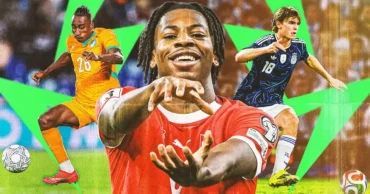
A group of 20 emerging football talents from around the world are expected to attract global attention at the 2026 FIFA World Cup, as the tournament prepares to feature an expanded format and a record number of debutants.
The World Cup, to be jointly hosted by the United States, Canada and Mexico, will include 48 teams for the first time, with 891 of the 1,248 selected players set to make their World Cup debut.
The expanded structure, which also introduces a round of 32, is expected to give young and lesser-known players a bigger platform to showcase their talent on the global stage.
Among the standout prospects is Ivory Coast winger Yan Diomande, 19, who has impressed in the Bundesliga with RB Leipzig through strong goal contributions and is regarded as one of Europe’s most promising young attackers.
Mexico’s Gilberto Mora, 17, is the youngest player on the list and already a rising star in his country. The Tijuana midfielder has made senior international appearances and featured in major youth tournaments under coach Javier Aguirre, making him one of the key home hopes.
Switzerland’s Johan Manzambi, 20, has also drawn attention after a strong season with Freiburg, where he impressed in both domestic and European competitions with his versatility and attacking impact.
For the United States, PSV Eindhoven striker Ricardo Pepi is expected to carry attacking responsibilities after a productive season in the Netherlands.
Argentina’s Nico Paz, now playing for Como in Italy, is another highly rated talent following a standout Serie A campaign under former Spain international Cesc Fabregas.
Morocco features strongly with Gessime Yassine and Ayyoub Bouaddi among the promising young midfield and wing options, while Algeria’s Mohamed Amoura and Ibrahim Maza are seen as key attacking prospects.
Australia’s next generation is represented by Lucas Herrington and Alessandro Circati, both defenders already gaining senior experience at a young age. Croatia’s Luka Vušković, currently on loan at Hamburg from Tottenham Hotspur, is also among the defensive prospects to watch.
Other notable names include Turkey’s Can Uzun, Mexico’s Armando González and Brian Gutiérrez, Colombia’s Luis Suárez (Sporting), Iraq’s Ali Jasim, Bosnia and Herzegovina’s Kerim Alajbegović, and Ivory Coast winger Bazoumana Touré.
Analysts say many of these players are already featuring in top European leagues or major youth competitions, while others are breaking through at international level. The expanded World Cup format is expected to accelerate their rise and provide a major stage for breakthrough performances.
Source: BBC
4 months ago
Messi, Ronaldo and Ochoa headline FIFA World Cup final squad lists
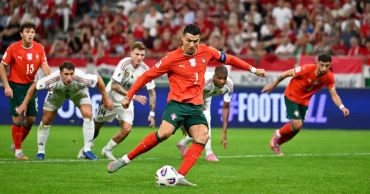
Argentina’s Lionel Messi, Portugal’s Cristiano Ronaldo and Mexico’s Guillermo Ochoa have been included in the final FIFA World Cup squad lists released on Tuesday, featuring a record 1,248 players from 48 nations.
The veteran trio are set to appear in the tournament for a record sixth time, according to FIFA.
Out of the total players named for the tournament, 357 have previous World Cup experience, while around 891 will be making their debut on football’s biggest stage.
The tournament, featuring 104 matches across Canada, the United States and Mexico, also highlights a significant age range among players. Scotland’s Craig Gordon is the oldest at 43 years and 162 days, while Mexico’s Gilberto Mora, aged 17 years and 240 days, is among 22 players under 20. Seven players in total are aged 40 or above.
Four countries- Cape Verde, Curaçao, Jordan and Uzbekistan — will be making their World Cup debut.
FIFA rules allow squad changes only in cases of serious injury or illness up to 24 hours before a team’s first match, with any exceptions requiring approval from the governing body.
4 months ago
Ecuador pins World Cup hopes amid rising violence at home
Ecuadorian football fans are holding on to hope that the national team can deliver a strong World Cup run, offering a rare moment of joy as the country grapples with worsening violence and instability.
Across the country, many provinces remain under a state of emergency. Security forces are deployed in large numbers to combat rising crime linked to drug trafficking. Night curfews are common, a fuel crisis has disrupted daily life, and tensions remain high along the border with Colombia.
Despite the turmoil, optimism around Ecuador’s national team, La Tri, remains strong.
The team qualified second in South America behind world champions Argentina, losing only twice in 18 matches, both narrow away defeats in Argentina and Brazil. Fans believe this squad has the potential to go further than ever before, possibly beyond their best performance of reaching the round of 16 in the 2006 World Cup in Germany.
“I bought a giant TV on credit so I could watch Ecuador win the World Cup,” said Mario Uquillas, a 43-year-old shopkeeper in downtown Guayaquil. “At the very least, I hope they reach the quarterfinals. This team deserves it.”
In markets like La Bahía in Guayaquil, merchants are cashing in on World Cup excitement, selling jerseys featuring stars such as Arsenal defender Piero Hincapié, Chelsea midfielder Moisés Caicedo, and Paris Saint-Germain defender Willian Pacho.
Hincapié recently drew attention after Arsenal won the Premier League title for the first time in 22 years, adding to national pride. Fans may soon see more success stories as Hincapié and Pacho prepare to meet in the Champions League final next weekend.
However, the backdrop to Ecuador’s football dream is a grim one.
Local football has not escaped the country’s violence. Five players were killed last year and three others died in separate attacks.
One of the most shocking incidents happened last December in northern Guayaquil, when gunmen killed Mario Pineida, a former national team player and defender for Barcelona SC. He was shot while at a butcher shop with his mother and partner. His partner died and his mother was injured. The motive remains unclear.
Guayaquil, located about 270 kilometers southwest of Quito, is ranked among the most violent cities in the Americas, according to Numbeo’s crime index. Ecuador recorded 9,216 violent deaths last year, with a rate of 50.1 per 100,000 people, according to the Ecuadorian Observatory of Organized Crime.
Rising insecurity has changed daily life, especially in poor neighborhoods where children once played freely in the streets but now often stay indoors after dark due to fear of shootings and robberies.
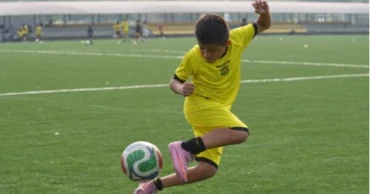
Still, football continues to offer hope, particularly through clubs like Barcelona SC, the country’s most popular team. Its youth academy provides a rare safe space for children, including nearly 300 trainees.
“My dream is to play for PSG or Real Madrid,” said 10-year-old Piero Ortega, who has trained at the academy for five years. “I want to become a professional footballer.”
Another young player, Washington Vera, also dreams of representing Ecuador internationally. “I want to play for the national team and score goals as a right winger,” he said.
Academy coordinator Enrique Benavides said insecurity has forced families to rely on such structured programs. “Fear has entered every community. Nobody feels safe anymore,” he said. “Now children can only train here, because playing in the streets is no longer possible.”
For many Ecuadorians, the World Cup represents more than football. It is a brief escape from daily fear and hardship.
“Earlier we only dreamed of qualifying. Now we hope for the quarterfinals or even semifinals,” said Guayaquil lawyer Daniel Sánchez.
Barcelona SC sporting director Matías Oyola also believes the national team can continue its strong form. “What they did in qualifying was excellent. The World Cup could be a continuation of that,” he said.
4 months ago
Mexico City airport races to complete $500m renovation as World Cup nears
With the 2026 FIFA World Cup less than a month away, authorities in Mexico are working around the clock to complete a $500 million renovation of Benito Juárez International Airport, the country’s busiest airport.
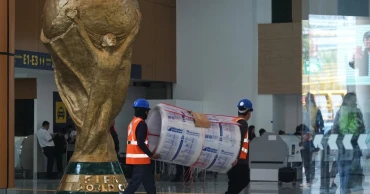
Passengers arriving at the airport are currently navigating through a large construction zone, with drilling, exposed pipes and unfinished floors. At the same time, banners and giant decorations promoting the World Cup are displayed throughout the terminals.
Airport authorities told The Associated Press that more than 3,000 workers are putting in up to 20 hours a day to finish one of the biggest renovation projects in the airport’s history.
Engineer Luis Ibarra, 28, said he does not mind the ongoing work, noting that the airport has long struggled with flooding, leaking roofs and severe overcrowding.
Adm. Juan José Padilla, the airport’s general director, said the first phase of the project is now more than 90% complete.
He said the work has been more difficult than expected because parts of the airport are over 50 years old and some original blueprints are missing.
“We are facing years of neglect,” Padilla said, referring to decades of underinvestment at the airport, which serves around 120,000 passengers every day.
The modernization project began in May 2025 and is being financed entirely by the airport, which has been operated by the Mexican Navy since 2023.
Project coordinator Capt. Arturo Flores said the upgrade includes new terminal exteriors, improved restrooms, renovated baggage claim areas and replacement of nearly 100,000 square meters of flooring and lighting.
The redesign has also created an additional 30,000 square meters of waiting space for passengers.
The second phase of the project is scheduled to start in August, after the World Cup, and continue through December.
Security is also being upgraded. The number of surveillance cameras will increase from 2,200 to more than 4,000, with artificial intelligence used to identify suspicious vehicles, luggage and individuals.
Padilla said an anti-drone system will also be installed soon.
Earlier this month, Mexico’s foreign ministry announced an agreement with the US Department of Transportation to enforce a 2015 bilateral aviation agreement.
Under the deal, Mexico will increase the number of landing and takeoff slots available to airlines. The number of slots had been reduced from 61 to 43 per hour during the previous administration and was later raised to 44.
Padilla said the number of slots for both domestic and international airlines will soon rise to 46 per hour.
The airport overhaul is one of the major infrastructure projects of Mexican President Claudia Sheinbaum.
The initiative follows a controversial effort by former President Andrés Manuel López Obrador to shift traffic from Mexico City to a newly built military-operated airport, a plan that failed to attract significant airline and passenger interest.
4 months ago