Consumers Association of Bangladesh

Power tariff hike to fuel inflation, hurt consumers, businesses: CAB
The Consumers Association of Bangladesh (CAB) on Wednesday expressed concern over the latest increase in electricity tariff, warning that the move could intensify inflationary pressures and raise the cost of living for ordinary people while increasing production costs across key sectors of the economy.
Reacting to the price hike, CAB Vice President SM Nazer Hossain said energy, including electricity and gas, is a fundamental driver of economic activity, and any increase in energy prices inevitably has widespread consequences.
“We have repeatedly said that electricity, gas and other forms of energy are the backbone of the economy. When energy prices increase, economic activities are naturally affected. The impact is felt not only in households but also in industries, agriculture, transport and other productive sectors,” he said.
According to the CAB, higher energy costs increase production expenses, which are ultimately passed on to consumers, affecting people from all walks of life and potentially fuelling inflation.
It said the tariff increase comes shortly after the new government assumed office, sending negative signal to consumers as well as those involved in industry, trade and commerce.
The CAB also criticised the process through which the electricity tariff was raised, noting that CAB and other stakeholders had repeatedly urged the authorities to address inefficiencies, irregularities, corruption, system losses and capacity charge-related issues before imposing additional burdens on consumers.
“Instead of taking effective measures to resolve these long-standing problems, the burden has once again been shifted onto small and marginal consumers. This is very unfortunate,” Nazer said.
He argued that while many countries are considering subsidies or bill relief for low-income consumers, reducing subsidies and increasing tariffs for small users is difficult to justify.
The CAB leader also expressed concern over the lack of visible progress in promoting renewable energy, despite a global shift towards cleaner energy sources. “Across the world, governments are prioritising renewable energy. We have yet to see comparable initiatives here. This could create long-term challenges for the economy.”
He further pointed to what he termed a significant disparity in electricity distribution between urban and rural areas, saying persistent power shortages in many rural regions are creating frustration among residents.
Although the Bangladesh Rural Electrification Board is responsible for distributing around 80 percent of the country’s electricity, the CAB alleged that mismanagement, irregularities and capacity constraints are hampering the government’s goal of ensuring universal access to electricity.
The CAB called for urgent measures to address these issues and improve the overall efficiency and reliability of the power sector.
4 months ago
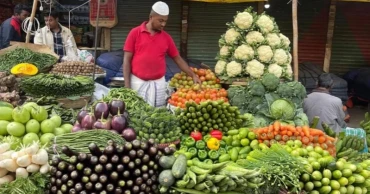
Plenty on fields: Why vegetables so expensive in Dhaka?
Winter has brought a bumper vegetable harvest across the country, supported by smooth transportation and abundant supply, yet Dhaka’s consumers are seeing little relief at the markets.
Visits to several city markets showed that vegetable prices remain stubbornly high, even as farmers complain they are barely recovering production costs, raising fresh questions about possible market manipulation and the role of middlemen in the supply chain.
Dhaka’s kitchen markets are actually awash with winter vegetables, but prices show little sign of easing even in what is traditionally the cheapest season of the year.
While consumers continue to pay inflated rates, farmers across producing districts say they are selling their produce at throwaway prices, pointing to a widening gap between farm-gate and retail prices driven largely by middlemen.
Major wholesale markets in the capital receive winter vegetables from Bogura, Naogaon, Chuadanga, Sirajganj, Rajshahi, Jashore and other districts.
Traders say more than 50 truckloads of vegetables arrive in Dhaka every day from Bogura alone during the peak season.
Despite ample supply, winter vegetables costly in Lalmonirhat
Wholesalers at Karwan Bazar said supply is higher than last year, yet prices have not come down. By late January, wholesale prices were on average Tk 20 per kg higher than the same period a year ago.
“Last year at this time, cauliflower sold at Tk 15–20 per kg wholesale. This year it is Tk 30–35,” said Latif Munshi, a vegetable trader at Karwan Bazar, adding, “We are buying at higher prices from upstream traders, so we have no option but to sell at higher rates to retailers.”
Anwar Mia, a trader at the Swarighat wholesale market, echoed the sentiment. “Prices of cabbage, tomato, cucumber, carrot, bottle gourd—almost all winter vegetables—are higher than last year. There is no supply shortage, but increased intermediary costs are pushing prices up.”
The picture is starkly different at the production level.
In Bogura’s Sherpur upazila, vegetable grower and trader Naim Meyajan said he cultivated cauliflower on nearly 10 bighas of land. While early varieties fetched good prices between September and November, prices collapsed once peak harvesting began in December.
“Wholesalers bought fields early at Tk 80,000 to Tk 100,000 per bigha against a production cost of around Tk 50,000. But when the main harvest started, there were no buyers for fields. I had to take cauliflowers to market where prices fell to Tk 5 per kg,” he said.
Farmers at Fulbari and Mohasthan haats in Bogura said prices of most vegetables started falling sharply by late December.
In many cases, they were forced to sell produce at an inflated ‘maund’ calculation—60 kg instead of the standard 40 kg—yet still failed to recover costs.
Early winter vegetable cultivation gains momentum across Khulna division
In Dhaka, however, prices moved in the opposite direction. Cauliflower that sold at Tk 25 per piece in late December is now priced at Tk 40–50 depending on size. At Shantinagar kitchen market, cabbage is selling at around Tk 50 per piece.
By contrast, in Sirajganj’s Ullapara upazila, farmer Bhobesh Ghoshal said he sold cabbage at Tk 6–10 per piece in January. “Those same cabbages are being sold in Dhaka at Tk 20 or more”.
A visit to the Jatrabari wholesale hub shows cabbage trading at Tk 25–30 per piece wholesale, before reaching consumers at Tk 50. For key winter vegetables, the price gap between farmers and consumers ranges from Tk 30 to Tk 40 per unit.
Tomato prices show an even sharper disparity. Early varieties arrive in Dhaka from Chattogram, while seasonal tomatoes mainly come from Rajshahi. In both phases, retail prices in Dhaka have ranged between Tk 100 and Tk 150 per kg.
In Rajshahi’s Godagari upazila, tomato farmer Moktar Hossain said he is currently selling tomatoes at Tk 40 per kg, down from Tk 50–80 during the early season. “Middlemen are selling those tomatoes in Dhaka at Tk 60 per kg, and prices keep rising along the chain.”
At wholesale markets in Dhaka, tomatoes are sold to retailers at Tk 80–90 per kg and finally reach consumers at Tk 100–120. The cumulative price difference from farm to table stands at Tk 50–70 per kg.
Radish prices, though relatively lower, reflect a similar pattern. In retail markets, radish sells at Tk 30–40 per kg. In Cumilla’s Gomti char area, farmer Sohrab said radish is sold in bundles rather than by weight.
“One bundle of 8–10 radishes sells for Tk 30, which is roughly Tk 10 per kg,” he said. “But consumers are paying at least Tk 20 more per kg in Dhaka.”
According to a study by the Food and Agriculture Organization (FAO), more than 700,000 kg of vegetables are sold daily in Dhaka. Even assuming a conservative price gap of Tk 20 per kg between farmers and consumers, the additional daily burden on consumers stands at around Tk 15 million—amounting to nearly Tk 500 million over January due to elevated prices.
Commenting on the situation, Consumers Association of Bangladesh (CAB) President AHM Shafiquzzaman blamed market syndicates and weak oversight.
“A group of traders is taking advantage of the pre-election period by forming syndicates and destabilising the vegetable market. Vegetables have been selling at high prices for nearly a month, but there is no effective monitoring. Extortion at different stages of the supply chain is also pushing prices up,” he said.
Shafiquzzaman warned that prices could rise further during Ramadan, expressing doubts about official assurances of market stability. “Government data is often unreliable,” he said.
Calling for decisive action, he urged the authorities to dismantle syndicates of middlemen, ensure fair prices for farmers and protect consumer rights through stricter market regulation.
Former Jahangirnagar University vice-chancellor and agricultural economist Abdul Bayes, however, advised that ensuring fair prices for both consumers and farmers in the agricultural market should not rely solely on government intervention; instead, marginal farmers must be empowered.
Vegetable prices soar in Manikganj amid inclement weather
Emphasising the formation of farmers’ cooperatives, Bayes said, “A single farmer from Bogura cannot bring 100 kilograms of cauliflower to Dhaka to sell. But if 100 farmers from the same area form a cooperative, they can collectively bypass middlemen and bring their produce directly to the market. This would allow farmers to secure better prices from wholesalers, while consumers would be able to buy vegetables at lower prices.”
He also noted that NGOs could play an important role by supporting farmers in forming such cooperatives.
Besides, Bayes said, if the government can dismantle syndicates in wholesale markets, foster competition, and curb extortion along supply chains, long-term market instability in the vegetable sector could be brought under control.
8 months ago
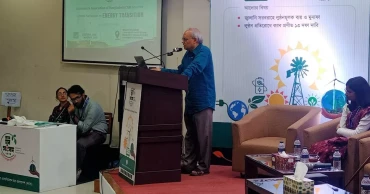
BNP to revoke power sector indemnity provision if voted to power: Rizvi
BNP Senior Joint Secretary General Ruhul Kabir Rizvi on Saturday said their party would abolish the indemnity provision in the power sector if it returns to power.
Speaking at the ‘CAB Youth Parliament 2025’ organised by the Consumers Association of Bangladesh (CAB) at Dhaka University, Rizvi said the indemnity law had legalised massive corruption in the power sector.
“During the fascist regime, hundreds of thousands of crores of taka were looted from the energy sector. Using the indemnity law as a tool, money was siphoned off abroad,” Rizvi alleged.
He said through rental and quick rental power projects, the previous government unleashed a wave of plunder in the energy sector, and the indemnity provision had paved the way for further large-scale corruption.
“BNP stands firmly against such looting. Once in power, BNP will definitely repeal the indemnity,” he affirmed.
Read more: Salahuddin slams ‘mismatch’ between July Charter and Commission report
Rizvi said investment in the energy sector had declined and stressed that Bangladesh must start focusing on renewable energy now.
“The previous government never thought about energy for people. Although the current interim government’s intentions regarding renewable energy seem right, their actions are not yet visible,” he observed.
The BNP leader said that the party’s 31-point reform agenda places special emphasis on renewable energy, adding that acting chairman Tarique Rahman has repeatedly highlighted the issue in his speeches.
“BNP has also pledged to plant 250 million trees across the country,” Rizvi said, adding that the party has always been serious about environmental issues. Apart from tree planting, our acting chairman has repeatedly talked about restoring the navigability of 20,000 km of canals, wetlands, and dead rivers,” he added.
On the country’s renewable energy potential, Rizvi said Bangladesh needs to explore more alternative sources beyond solar and wind power.
“Currently, only 4.71 percent of the national grid’s electricity comes from renewable sources. If Bangladesh can produce biofuel like Brazil—from sugarcane husks and other byproducts—it can make significant progress in this sector,” he said.
Rizvi identified investment as the major challenge in renewable energy, saying that foreign investments are often delayed or blocked due to bureaucratic hurdles. “Overcoming these challenges is crucial to take the renewable energy sector forward,” he added.
Read more: Fakhrul slams Jamaat for ‘spreading lies’ to mislead people ahead of election
11 months ago

Sale of beef, chicken, eggs at subsidised rates begins in Ctg
District administration and the district livestock office of Chattogram have started the sale of milk, eggs, and meat at subsidised rates ahead of the holy month of Ramadan, aiming to provide the protein items at affordable prices.Deputy Commissioner Farida Khanam inaugurated the sale programme at Metro Livestock Department in Kotwali on Sunday, according to a press release of Consumers Association of Bangladesh in Chattogram on Monday.
CAB demands postponement of gas price hike hearingIn line with the theme "Strength in Protein, Liberation in Protein," the sale program was launched, with prices set at Tk 700 for per kg beef, Tk 80 for per litre milk, and Tk 110 for per dozen eggs.
The sale is being conducted through mobile trucks stationed at key locations in Chattogram cit including Kotwali, Kazir Dewri, Ambagan (Zautla), and Chawkbazar.
CAB demands withdrawal of VAT, SD to ease inflation
The CAB Chattogram team expressed hope that the programme would continue throughout Ramadan, providing residents with affordable animal products and helping to mitigate the shortage of animal protein in the region.
1 year ago
Cost of living in Dhaka increased by 11.08 percent in 2022: CAB
The Consumers Association of Bangladesh (CAB) said that the cost of living in the capital Dhaka increased by 11.08 percent in 2022.
The report released on Saturday said that around 17 products have directly contributed to the rise in inflation as well as the cost of living last year.
The urban lower-income group of people has compromised their diet chart and lifestyle due to the increase in the prices of essential commodities, fish and meat.
The report was presented on behalf of CAB by Mahfuz Kabir, research director of the Bangladesh Institute of International and Strategic Studies (BIISS).
Read More: Inflation report could show another month of cooling prices
According to the report, the cost of living in the capital increased by 6.88 percent in 2020 and 6.5 percent in 2019.
Dr Kabir has prepared the result, which was collected from 11 markets across Dhaka (Dhaka North and South City Corporation). It has covered 141 food items, 49 non-food items and 25 services.
Rice, flour, pulses, bakery products, sugar, fish, eggs, domestic poultry, edible oil, imported fruits, tea and coffee, local and imported milk, washing and personal hygiene items, and transport costs are included in the CAB price monitoring.
The CAB has proposed policy recommendations in the analysis of inflation trends. In the recommendations, the association said the government has increased support under subsidised food aid and social protection to reduce inflationary pressure on the poor and disadvantaged.
But the government should extend social protection schemes in urban areas to protect low and middle-income consumers from rising inflationary pressures.
Read more: Keep essentials' prices within reach: CAB
The government has significantly increased OMS activities during Covid-19, which has been extended further in 2022 to protect these consumer groups from the economic slowdown and inflationary woes.
But there is an inadequacy of food supply through OMS against extremely high demand and a lack of proper monitoring to ensure equitable distribution of OMS food products among low-income people.
The CAB recommendation has also opposed the decision to increase gas and fuel oil prices at the retail level as the bulk price hike of gas and oil would affect lower-income people.
CAB President Golam Rahman. Vice President SM Najer Hossain, General Secretary Advocate Humayun Kabir Bhuiyan, joint secretary Dr. Md. Shahnewaz Chowdhury, and Md. Qazi Abdul Hannan were also present at the press conference held virtually.
Read more: CAB urges govt to readjust edible oil prices
3 years ago
.jpg)
Bangladesh needs a transparent, fair energy policy: Experts
Experts have urged the government to formulate a “fair and transparent policy” for Bangladesh’s energy sector to ensure energy rights for all the citizens of the country.
“Access to energy is now a very important right of citizens. So, environmental safety has to be ensured in energy transactions,” said Dr M Shamsul Alam, an adviser of Consumers Association of Bangladesh (CAB).
He was addressing a views-exchange programme organized by CAB at the University of Science and Technology, Chattogram (USTC) on Saturday.
Read: Deal signed to set up Bangladesh’s first-ever waste-to-energy project
USTC Vice Chancellor Dr Jahangir Alam, Prof Dr Tanzim Uddin Khan of Dhaka University, and former dean of Social Sciences Faculty of Chattagram University Dr Hossain Kabir also spoke at the programme held with CAB vice president SM Nazer Hossain in the chair.
Dr Shamsul Alam said an energy policy is needed to protect the interest of the people of the country, said a CAB media release.
4 years ago

Keep essentials' prices within reach: CAB
Protesting the relentless price hike of essential commodities and 'fare anarchy' in public transport, Consumers Association of Bangladesh (CAB) held a mass rally at Nayabazar Bishwa Road intersection in Halishahar on Friday.
General Secretary of CAB Advocate Jamal Hossain presided over the rally.
CAB leaders said the Department of Consumer Protection, Safe Food Authority and Bangladesh Competition Commission have taken various initiatives to keep the prices of daily commodities stable but it does not work. Passengers are not benefiting even though BRTA and public transport owners have fixed the bus fares.
Read: BNP launches 41-day programme against price hike of fuel, essentials
Businessmen and transport owners are increasing the prices and fares according to their will defying government directions. As a result, dissatisfaction is growing among the commoners.
In order to ensure the fare prices of daily essentials and stop the rent anarchy in the public transports, the Hon'ble Prime Minister and the policy makers of the government need to get the right information, the leaders said, according to a press release.
Speakers alleged that the prices of commodities are controlled by traders. As a result, though the prices of rice, soybean oil and gas have come down in the international market, it has not been reflected in the domestic market.
Read: Diesel price hike will not affect prices of essentials: Info Minister
The speakers also noted that despite the nationwide students' agitation demanding half fare in public transport, the owners have accepted the demand only for Dhaka.
In Covid situation, the price hike of fuel added misery to the common people. People want to get rid of this situation, they said.
4 years ago

‘Stop meddling in LPG price fixing process’
The consumer rights groups and business operators on Thursday demanded an end to the government’s interference in the price fixing process of liquified petroleum gas (LPG).
5 years ago
.jpg)
BERC seeks opinions for public hearing on LPG price on January 14-18
A press release, issued by the Ministry of Power, Energy and Mineral Resources, on Monday, said a public hearing of the BERC to re-fix the LPG price will be held on January 14-18. The time, format and location will be informed later.
“Interested individuals, firms or organizations are requested to send their pre-public hearing statements or opinions to the commission by January 4, 2021,” said the Ministry Press release.
It also
5 years ago
.jpg)
Electricity bills harassments: Postpaid consumers can turn to prepaid meters
The post-paid electricity bill payers will be able to replace their meters with pre-paid ones to escape harassment regarding bill payment, said Consumers Association of Bangladesh (CAB) on Saturday.
5 years ago