Public Administration
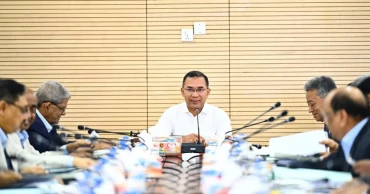
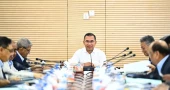
NICAR approves three new upazilas, one police station
The National Implementation Committee for Administrative Reorganisation (NICAR) on Wednesday approved the creation of three new upazilas and one new police station to improve public administration and service delivery.
The decision was taken at the 121st meeting of NICAR held at the Cabinet Division conference room at Secretariat with Prime Minister Tarique Rahman in the chair, said PM’s Deputy Press Secretary Hasan Shiplu.
"The meeting of the National Implementation Committee for Administrative Reorganisation (NICAR) chaired by Prime Minister Tarique Rahman approved the new upazilas and police station," Shiplu said.
He said the committee also decided to include the portions of Purbachal New Town Project under Narayanganj and Gazipur districts within Dhaka district for administrative purposes.
The three new upazilas are Fatikchhari North Upazila in Chattogram, Bangra Upazila in Cumilla and Dakkhin Gafargaon Upazila in Mymensignh.
According to the committee’s decision, Fatikchhari North Upazila will be formed with six unions carved out of Fatikchhari Upazila in Chattogram district, Bangra Upazila will be created by dividing Muradnagar Upazila in Cumilla district while Dakkhin Gafargaon Upazila will be formed with eight unions under Pagla Police Station in Gafargaon Upazila of Mymensingh district.
3 months ago
Two ministers get PSs, five state ministers appointed APSs
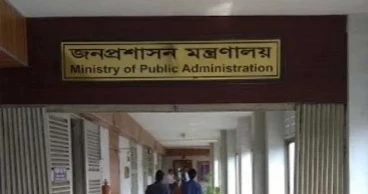
The government has appointed private secretaries (PSs) to two ministers and assistant private secretaries (APSs) to five state ministers, according to a gazette notification issued by the Ministry of Public Administration on Monday.
According to the notification, Md Moniruzzaman, a deputy secretary currently on OSD (officer on special duty), has been appointed PS to the minister of the Local Government, Rural Development and Cooperatives Ministry. The ministry is headed by Mirza Fakhrul Islam Alamgir.
Rabindra Chakma, deputy secretary and secretary of the Chattogram Development Authority, has been appointed PS to the minister of the Chittagong Hill Tracts Affairs Ministry.
Govt yet to appoint secretary to Public Administration Ministry
Among the state ministers, Md Ibrahim Khalil has been appointed APS to the state minister for the Youth and Sports Ministry, Md Aminul Haque.
Md Junaid has been appointed APS to the state minister for the Commerce; Textiles and Jute; and Industries ministries, which are overseen by Md Shariful Alam.
Md Al Mamun has been appointed APS to the state minister for the Health and Family Welfare Ministry, MA Muhit.
Md Shariful Islam has been appointed APS to the state minister for the Posts, Telecommunications and Information Technology Ministry as well as the Science and Technology Ministry. The portfolios are held by Fakir Mahbub Anam.
Public Administration Secretary Mokhlesur removed
Separately, Farhan Labib Jishan, assistant commissioner (land) of the Cantonment Revenue Circle, has been appointed PS to Mahadi Amin, adviser to the Prime Minister with the rank of state minister.
The notification said the APS appointments were made in line with the wishes of the respective state ministers.
The appointments will remain valid as long as the concerned state ministers hold office or wish to retain the officials in the APS positions, the notification added.
7 months ago

Delay in regular promotion in public administration sparks discontent
A prolonged delay in regular promotions has triggered a deep crisis within the public administration, leaving hundreds of officials in three tiers frustrated.
According to insiders, nearly 800 qualified officers are still waiting for promotion, including around 350 eligible for the rank of additional secretary, about 345 for joint secretary and at least 84 for deputy secretary.
Many of them say the prolonged delay has created widespread frustration and resentment within the civil service.
Senior officials and administration experts said uncertainty over promotions has intensified since the announcement of the schedule for the 13th parliamentary election although the election process itself poses no legal barrier to routine career advancement.
“If regular promotions are blocked, the country will be left with a frustrated and demoralised administration. That will inevitably slow down decision-making and day-to-day governance,” said former secretary AKM Abdul Awal Mazumdar.
The number of deprived officials at the deputy secretary and joint secretary levels is also rising.
Recently, 79 officers of the 30th BCS batch were denied promotion from senior assistant secretary to deputy secretary. Almost all of them have applied to the Ministry of Public Administration for a review.
Former additional secretary Mohammad Firoz Mia said delays in promotion always create resentment within the administration.
“If qualified officers are not promoted on time, frustration and anger grow and administrative work suffers. The election schedule is not a barrier to regular promotions. If necessary, the government should take approval from the Election Commission and ensure promotions on time. There is still time. If the government wants, it can act,” he said.
Sources at the ministry said at least 183 officers of the 24th BCS batch were deprived of promotion to joint secretary under the regular batch system.
Govt abolishes Public Administration Committee
On March 20, 196 officials were promoted to joint secretary, but only 137 were selected from the 320 officers of the regular batch, leaving out 183, including five serving deputy commissioners.
In the case of promotion from joint secretary to additional secretary, the 20th BCS batch is being considered as the regular batch.
Around 300 officials, including 244 from the administration cadre and a significant number from other cadres are under consideration.
Ministry sources, however, said 43 officers of this batch who served as deputy commissioners and 40 who worked as personal secretaries to ministers during the tenure of the Sheikh Hasina government are not being considered this time.
The recruitment process of the 20th BCS batch was completed in 1999. Although they became eligible for promotion to joint secretary in 2019, they received promotion only in 2021.
Under service rules, they became eligible for promotion to additional secretary in 2023 after completing two years as joint secretary.
The Superior Selection Board (SSB) has already finalised the promotion list after analysing their service records but the government failed to issue the gazette at the last moment.
Apart from the administration cadre, more than 150 officers from other cadres are also eligible for promotion to joint secretary but have not been promoted. Most of them have applied for a review. The SSB has held several meetings in response.
The officials facing allegations of irregularities or corruption, those with ongoing cases by the Anti-Corruption Commission or departmental authorities, and those who served as ministers’ personal secretaries or deputy commissioners during the previous government are not being considered, ministry sources said.
Public Administration Secretary Ehsanul Haque told UNB that the government is fully aware of the issue. “We are collecting information regarding those who have not received regular promotions. A decision will definitely come on this,” he said.
Cabinet Secretary Dr Sheikh Abdur Rashid said several applications have already been received and multiple meetings have been held.
“We are working on the issue. Let us see how much we can do within this time,” he said.
On condition of anonymity several officials said many officers who were close personal secretaries to ministers during the Awami League government have already received promotions.
Administration experts warn that failure to ensure timely promotion will severely disrupt the functioning of government, weaken morale and ultimately harm public service delivery.
8 months ago
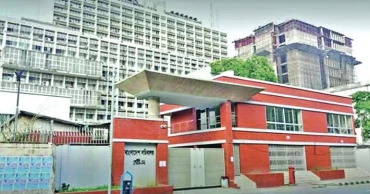
One year after uprising, govt moves to restore order in public service
A year after the July Uprising laid bare the disarray within public administration, the government is intensifying efforts to restore order through a series of tough reforms aimed at strengthening institutional discipline and accountability.
Since the interim government assumed office in August last year, officials at various levels of the civil administration have engaged in rallies, sit-ins, human chains, and "pen break" protests, particularly in response to the restructuring and division of the National Board of Revenue (NBR).
The government has responded with disciplinary action against those participating in such movements.
Senior Secretary of the Ministry of Public Administration Mukhlesur Rahman told UNB that the government is maintaining a firm position on disorderly conduct by officials.
"Chief Adviser Prof Muhammad Yunus has directed a strict stance on such issues. From now on, if any government official or employee engages in unjustified movements against the government, legal action will be taken,” he said.
He mentioned that the administration is adhering to a ‘zero tolerance’ policy to ensure transparency and accountability in the civil service.
Mukhlesur Rahman said this is the government’s most serious effort yet to restore discipline ahead of the elections.
Unrest and Economic Impact
Over the past year, employees of NBR , various ministries and field administrations have staged frequent demonstrations.
These included sit-ins, rallies, and symbolic work stoppages in protest, particularly over the proposed restructuring of the NBR.
Scope is there to reconsider Public Service Ordinance: Law Adviser
The unrest has negatively affected revenue collection, disrupted trade operations and complicated customs and supply chain processes, causing significant losses for businesses.
Tensions peaked when protesting NBR officials reportedly tore up two recent transfer orders, denouncing them as retaliatory and oppressive.
In response, the government has temporarily suspended 14 officials recently.
The Anti-Corruption Commission (ACC) has also launched an investigation into several officials.
Social Media Monitoring and Cautionary Measures
In parallel, the Ministry of Public Administration has issued a directive to all ministries, departments and local administrative bodies, urging officials to exercise caution on social media.
The circular warned that misconduct on digital platforms could violate multiple regulations, including the Government Servants (Conduct) Rules, 1979, the Guidelines for the Use of Social Media in Government Institutions, 2019, and the Government Servants Discipline and Appeal Rules, 2018.
Officials were reminded that unauthorised social media activity could compromise national security, damage the integrity of the civil service and result in disciplinary action as per existing government service laws.
The directive mandates strict adherence to the 2019 guidelines and empowers authorities to take legal measures against violators to uphold decorum in public service.
Govt to form high-level committee to review public service ordinance
Mandatory Investigation
Amid ongoing administrative unrest and employee agitation in the secretariat, the government has approved a series of flexible amendments to the Government Services (Second Amendment) Ordinance, 2025 to ensure due process in disciplinary actions.
Under the new provisions, it is now mandatory to form a three-member investigation committee before taking disciplinary action against any government employee.
A show-cause notice must be issued within seven days of receiving a complaint, and a decision must be made within seven working days of the employee’s response.
Besides, the previous provision allowing punishment solely on the basis of notice has been scrapped.
Meanwhile, the Advisory Council of the interim government has given in-principle approval to the draft of the ordinance, which builds on the earlier Government Services (Amendment) Ordinance, 2025, issued on 25 May.
Key Changes in Law
The new amendment adds due process and clarifies what constitutes misconduct.
According to the law, an employee may be punished for acts that include:
Disobeying superiors or inciting others to disobey
Disrupting administrative discipline
Abstaining from duties without leave or valid reason, individually or collectively
Inciting others to abstain or obstructing colleagues from performing duties
Under the updated ordinance, which was formally issued on 23 July and signed by Dr Hafiz Ahmed Chowdhury, secretary of the Legislative and Parliamentary Affairs Division, a government employee found guilty of such misconduct, including striking or obstructing others from working, may face compulsory retirement or dismissal.
Reforms in Promotion
The government has also taken steps to address long-standing grievances related to inequality in promotions and postings. For the past 17 years, certain officials, particularly those politically deprived, have allegedly been overlooked.
Secretariat Protests: Energy Adviser warns of possible misuse of Public Service Ordinance
To minimise these imbalances, a Public Administration Reform Commission has been formed to address intra-cadre discrimination. In response to the recent secretariat strike, new appointments are also being made by integrating cadre and non-cadre roles.
The government has additionally introduced new privilege rules for public servants and compiled a list of secretariat officials from field-level administration.
Expert Insights
Commenting on the developments, former Secretary and public administration expert Abdul Awal Majumder told UNB, “There can be no ‘softness’ when it comes to restoring discipline in the administration. Without strict accountability, it’s impossible to curb corruption or negligence among those who hold the reins of the state.”
He mentioned that while some critics view the special provisions of the 1979 conduct rules as draconian, they are necessary under the current circumstances.
“The government can dismiss employees who are absent from work with just an eight-day notice—no PSC opinion or investigation needed,” he added.
While he welcomed the government’s strict approach, Majumder stressed that enforcement was key.
“Too many laws, circulars and committees have been created in the past without meaningful follow-through. Real success will depend on implementation and transparency, not paperwork,” Majumder added.
1 year ago
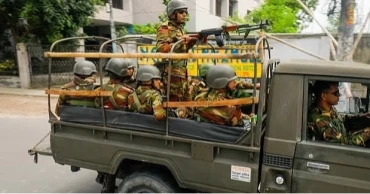
Armed forces' magistracy powers again extended by 60 days
The government has once again extended the magistracy power of commissioned officers in the Army, Navy and Air Force by another 60 days with effect from July 14 (Monday).
The Ministry of Public Administration issued a notification to this effect on Sunday.
According to the notification, commissioned officers holding the rank of captain and above in the Bangladesh Armed Forces have been granted special executive magistrate powers across the country.
Armed forces' magistracy powers extended by 60 days
Military officers serving on deputation in the Coast Guard and Border Guard Bangladesh (BGB) have also been vested with the same authority.
The interim government initially granted the magistracy power to commissioned army officers on September 17 last year for 60 days to improve law and order. It was subsequently extended on January 12, March 13 and May 13 this year.
1 year ago

Contractual appointments at top levels of administration raise concerns
The number of contractual appointments to top administrative posts has reached an all-time high, reportedly slowing the pace of work across ministries and fuelling frustration among regular officials, according to insiders in the public administration.
This growing trend has hindered promotion prospects for regular cadre officers, thereby dampening morale and reducing work efficiency across various ministries, they said.
Officials in several ministries told UNB that many of the appointees had long been out of public service, and their sudden return after seven to eight years has disrupted workflow, as they often struggle to adapt to the current operational environment.
Qatari PM to meet CA Prof Yunus today for bilateral talks
This has also contributed to rising tensions between regular staff and contract appointees.
According to the Ministry of Public Administration, there are currently 84 posts equivalent to secretaries or senior secretaries.
Of these, 17 officials, including the Cabinet Secretary and Principal Secretary to the Chief Adviser, are serving on a contractual basis, a number unprecedented in Bangladesh’s administrative history, said several officials.
Twelve officials with the rank of secretary or senior secretary are currently posted as Officers on Special Duty (OSD).
The total number of OSDs in the entire administration, however, has surpassed 500, creating an additional financial burden for the government.
Palak faces legal heat in Natore arms case
Officials currently serving on contract include: Cabinet Secretary Sheikh Abdur Rashid; Principal Secretary to the Chief Adviser M Siraj Uddin Mia; Home Secretary Nasimul Gani; Planning Commission Member (Senior Secretary) MA Akmal Hossain Azad; Public Administration Senior Secretary Md Mokhlesur Rahman; Roads and Highways Division Senior Secretary Md Ehshanul Haque; Election Commission Senior Secretary Akhtar Ahmed; Expatriates’ Welfare Ministry Senior Secretary Md Neyamat Ullah Bhuiyan; Land Ministry Senior Secretary ASM Saleh Ahmed; Secondary and Higher Education Division Senior Secretary Siddique Zobair; Shipping Ministry Senior Secretary Mohammad Yusuf; and Women and Children Affairs Ministry Senior Secretary Momtaz Ahmed.
Besides, ICT Secretary Shish Haider Chowdhury, Land Reform Board Chairman AJM Salauddin Nagari, Planning Commission Member Kayyum Ara Begum, Alternate Executive Director at the World Bank Sharifa Khan, and Ambassador to Portugal Md Mahfuzul Haque are all serving on contract.
Explaining the Surge
Senior officials at the Ministry of Public Administration told UNB that many top-level officers had been kept as OSDs for years during the long tenure of the Awami League government, often sidelined for political reasons.
Many were denied promotions, creating a backlog of deserving officers.
Following the regime change, several of these sidelined officials were reinstated through contractual appointments.
They added that numerous top bureaucrats aligned with the previous government were either sent into forced retirement or made OSDs after the interim government assumed power.
Criticism from Former Bureaucrats
ABM Abdus Sattar, president of the Anti-Discrimination Employees Unity Forum and a former secretary, said the administration is “crumbling under the burden of contractual appointments.”
He said the current government has continued the trend set by what he termed the “fascist regime,” even reappointing some of the same individuals it had initially dismissed.
“In some cases, appointments have been made without following any due process—sometimes even to foreign nationals or controversial officials aligned with the 1/11 government,” he said.
Former secretary AKM Abdul Awal Majumder said excessive contractual appointments discourage officers aspiring to be promoted through the regular track.
Search committee to appoint new Kuet VC, Pro-VC
He also strongly criticised the OSD system, saying, “No other country has such a wasteful mechanism. It’s a massive burden on the state exchequer, as hundreds of officers draw full salaries without any responsibilities.”
OSDs and Forced Retirements
Currently, 12 officers holding the rank of secretary or senior secretary are OSDs, including: Md Mostafa Kamal, Md Mashiur Rahman, Md Manzur Hossain, Md Shamsul Arefin, Mohammad Salah Uddin, Md Azizur Rahman, Md Nurul Alam, Md Khairul Alam Sheikh, Farid Uddin Ahmed, Rehana Parvin, Shafiul Azim, and AKM Matiur Rahman.
In January, the interim government also took action against deputy commissioners and police superintendents who had served in the controversial 2014, 2018, and 2024 elections under the Awami League regime.
On 19 January, 33 such officials were made OSDs, while 22 were sent into forced retirement the following day due to their extended service record.
According to the recruitment and promotion wing of the Ministry of Public Administration, many officers were labelled as BNP-Jamaat sympathisers during the Awami League’s rule and kept as OSDs for years without any specific charges.
Some were even forced into retirement in silence.
The previous government routinely prioritised political considerations over merit when granting contractual extensions, often as a reward for loyalty.
1 year ago

Appointment of 6 members of BPSC cancelled
Amid controversy, the government has cancelled the appointment of six members of the Bangladesh Public Service Commission (BPSC).
The Ministry of Public Administration issued a gazette notification in this regard on Monday.
The members were appointment on January 2.
HC affirms legitimacy of interim government, cites public consensus
The six members are Professor Dr. Syeda Shahina Subhan, Sabbir Ahmed Chowdhury, Brig Gen (retd) AF Jaglul Ahmed, Md. Dr. Munir Hossain, Prof. Dr. Shahnaz Sarker and Dr. Md. Mizanur Rahman.
On Sunday, a group of Dhaka University students issued a 24 hour ultimatum to cancel the appointment of the six members on Sunday.
1 year ago
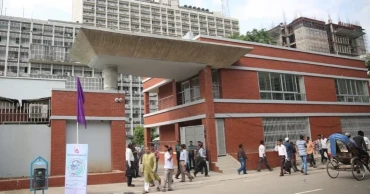
Ministry issues stern warning to public servants on adhering to service conduct
The Ministry of Public Administration has issued a stern warning to public servants, reminding them of their obligation to adhere to the Government Servants (Conduct) Rules, 1979 and the Government Servants (Discipline and Appeal) Rules, 2018.
The circular, issued on the final day of the year 2024, highlighted a growing trend of demonstrations, sit-ins, strikes and other protest activities by public servants that tarnish their image and contravene established regulations.
The ministry cautioned that violators would face disciplinary action for misconduct under these rules.
Escalating Breaches Since October
The issue first surfaced on October 5 when 25 cadre officials, under the banner of the Inter-Cadre Disparity Resolution Council, publicly rejected the Public Administration Reform Commission (PARC).
Public Administration Reform Commission to recommend creating Cumilla, Faridpur divisions
Their actions amounted to public dissent against government decisions, violating Section 30(a) of the Government Servants (Conduct) Rules, 1979.
This defiance escalated on October 19 when the council held a meeting at Dhaka's Tula Bhaban, further solidifying their opposition to the commission.
By November 16, the council convened a divisional conference in Rajshahi, where they branded the commission as biased and demanded its reconstitution.
The movement gained momentum following a pivotal announcement on December 17 by PARC Chairman Abdul Muyeed Chowdhury.
He proposed excluding the education and health cadres from the cadre system and recommended a 50-50 promotion ratio to the post of deputy secretary between administration cadre officers and other cadre officials.
Chaos, instability prevail in public administration as chain of command collapses
A Turning Point
This announcement triggered widespread unrest among public servants.
On December 21, officials from 25 cadres declared a protest movement—an unprecedented act for government employees.
The next day, administration cadre officials gathered at the Secretariat to submit their demands to the senior secretary of the Ministry of Public Administration. Meanwhile, heated debates and counter-statements erupted on social media.
In a dramatic move, officials from the 25 cadres formed a new organisation, the Association of Senior Pool Service, on 22 December, excluding administration cadre members. This act heightened inter-cadre tensions.
The following day, the Bangladesh Civil Service (BCS) Health Cadre Association rejected recommendations to abolish the Health Cadre, issuing a veiled threat that no cadre would exist if the Health Cadre were dissolved.
Contractual appointments of two press ministers in UK and US terminated: Public Administration Ministry
A Series of Unprecedented Protests
On 24 December, officials from 25 cadres observed a pen-down strike for one hour.
The next day, administration cadre officials organised a protest meeting at the BIAM Foundation under the Bangladesh Administrative Service Association and the BCS Administration Multipurpose Cooperative Society.
Speakers at the meeting included serving and retired officials, with some demanding the resignation of Abdul Muyeed Chowdhury within 48 hours.
On the same day, officials from 25 cadres staged human chains across the country, marking a historic escalation of protest activities by public servants.
Implications and Expert Opinions
The ongoing violations of conduct rules by public servants, including administration cadre officials, represent a worrying breakdown of discipline within the government.
Experts warn that if this trend continues, it could destabilise administrative order and degrade the quality of public services. They urge the government to address the issue with urgency to restore discipline and safeguard public sector efficiency.
1 year ago
Disarray in administration: inter-cadre conflict grows at year’s end
Bangladesh’s public administration witnessed major turmoil and disruptions in its operations after the fall of the Awami League government in August and the chaos is not over yet as inter-cadre conflict intensified at the end of the year.
Issues surrounding promotions, postings, and the appointment of deputy commissioners (DCs) and others who were reportedly deprived under the previous regime remained in discussion in the last four months and many decisions sparked controversy.
The latest controversy arose following the recommendations of the Public Administration Reform Commission which has fueled significant discontent among various cadres of the civil service.
Although the commission was initially formed to simplify public services it has now become entangled in disputes among officials’ own interest.
On Sunday, administrative cadre officers expressed anger over the reform commission’s proposals and several hundred officers staged rare demonstrations outside the Ministry of Public Administration in protest.
Education sector may get increased allocation in FY 25-26
The Inter-Cadre Disparity Resolution Council, representing 25 other cadres, has announced plans for demonstrations, including pen-down strikes, human chains, and rallies.
The draft proposal recommends allocating 50% of deputy secretary positions to officials from the administration cadre and the remaining 50% to other cadres. Currently, 75% of these positions are reserved for the administration cadre and 25% for others.
Chaos under the interim government
The interim government, which took office on August 8 following the ouster of the Awami League government through an uprising, has yet to restore administrative discipline.
Instances of disorder, such as frequent cancellation of transfer orders and inconsistencies in postings reflect the lack of coordination.
Bangladesh must boost investment to avoid economic crisis: Analysts
The interim government canceled the contractual appointments made during the tenure of the previous government.
Later this government appointed secretaries on a contractual basis in 14 ministries.
Over the past four and a half months, the Ministry of Public Administration had to withdraw several significant transfer orders.
They appointed secretaries on a contractual basis only to later cancel those appointments. Similarly, deputy commissioner (DC) appointments were made but had to be withdrawn following criticism.
Slackened administrative activities
Administrative activities have slowed significantly due to ongoing disruptions.
Talking to UNB, officials from various ministries said normalcy may take longer to achieve under the current circumstances.
BNP conveys a strong message against any ‘puppet party’
Mass promotions raise questions
According to the Ministry of Public Administration, 537 officers got promoted in the past four months including 23 secretaries, 17 to grade-1, 135 made additional secretaries, 228 joint secretaries, and 134 deputy secretaries.
Now questions have arisen regarding these promotion criteria, with allegations of favoritism and inclusion of officials facing graft allegations.
Fear of arrest and uncertainty
Fear of arrests gripped many as 12 high-ranking officials including former secretaries were arrested in the past four months.
Cases have been filed against several others, further deepening tension among civil servants.
Vacant secretary posts hamper activities
Four critical ministries and divisions remain without secretaries -the Local Government Division, Rural Development and Cooperatives Division, Cultural Affairs Ministry, and Bridge Division which is hampering operations and their activities.
The reform committee has also recommended promoting 764 previously ‘deprived’ officials to various ranks including 119 to secretary positions.
1 year ago

BNP proposes reforms for public administration overhaul
The Bangladesh Nationalist Party (BNP) has unveiled a set of proposals aimed at reforming the country’s public administration, suggesting comprehensive restructuring to enhance efficiency and impartiality within the system.
A delegation, led by Ismail Jabirullah, a member of the BNP Chairperson’s Advisory Council and a member of the party's Public Administration Reform Committee, submitted the proposal to Dr Mokhlesur Rahman, Senior Secretary of the Ministry of Public Administration on Sunday.
BNP to hold rallies nationwide excluding Dhaka
“The entire administrative structure needs to be revamped. We propose that changes be made at all levels of the administration three months prior to every election. This includes revising the process for creating the Deputy Commissioner (DC) fit list,” Ismail Jabirullah said while talking to journalists.
He said the importance of addressing issues caused by employees remaining in the same positions for prolonged periods, which has led to the formation of syndicates.
BNP to be accountable government, if elected: Tarique Rahman
The proposals include provisions for mandatory transfers in such cases.
The BNP also highlighted the need to identify and take action against officials who may have exploited their positions under previous governments, ensuring a fair and neutral administration moving forward.
1 year ago