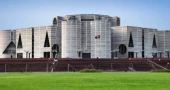
Salahuddin

Improvement in law and order now visible, suspects being arrested in 24-48 hours: Salahuddin
Home Minister Salahuddin Ahmed on Thursday told Parliament that an improvement in the country’s law-and-order situation is now visible, with law enforcement agencies arresting alleged perpetrators and bringing them to justice within a short time after crimes are committed.
“The improvement in the law-and-order situation is visible in Bangladesh. Since the present government took charge, whenever a crime has occurred, the perpetrators have been arrested and brought under the law within 24 to 48 hours or even less time,” he said.
The minister made the remarks, while replying to a supplementary question from National Citizen Party (NCP) lawmaker Md Abul Hasnat (Cumilla-4) in the House.
Responding to the lawmaker’s concerns over the law-and-order situation, he said police and other law enforcement agencies have made prompt arrests in several cases, including those that drew significant public attention.
“From the Ramisa case to the four recent murders in Rangpur, the police and other law enforcement agencies have been able to arrest the suspects within the shortest possible time and bring them under the law,” Salahuddin said.
He rejected broad allegations of failure by the Ministry of Home Affairs or law enforcement agencies, saying such claims should be backed by specific incidents and verifiable information.
“If you can point to any specific incident where the ministry or the law enforcement agencies have failed, we can give a detailed response to that particular incident,” the minister said.
He also questioned the basis of crime statistics cited by the lawmaker, saying figures presented in Parliament should be accompanied by their sources and methodology.
Salahuddin recalled that the government previously placed detailed crime statistics before Parliament, including through statements under Rule 300, covering different categories of criminal activities.
Responding to another supplementary question about the number of firearms and the recovery of weapons looted from different places, he said a committee comprising representatives of all relevant forces has been formed to recover the weapons.
The minister said law enforcement agencies are regularly recovering looted firearms and matching their serial numbers to identify them.
“We are continuously recovering weapons, including some of the looted firearms. We match their numbers and inform the media when such weapons are recovered,” he said.
Salahuddin expressed hope that all looted weapons, including those taken from prisons and other locations, will eventually be recovered.
Regarding allegations of political or partisan considerations in police recruitment during the previous government, he said an investigation into the matter is nearing completion.
The minister said investigators have found irregularities involving the recruitment of thousands of police constables and personnel of other ranks in several districts.
In some cases, he said, applicants allegedly changed their addresses to become eligible for recruitment in particular districts, including by purchasing small plots of land and using those addresses as their permanent or village addresses.
Salahuddin said several districts, including Faridpur, Gopalganj, Madaripur, Shariatpur and Kishoreganj, have been identified where such irregularities were allegedly committed.
“We have reached an advanced stage in the investigation. Once it is finalised, we will make the findings public before the nation,” he said.
Replying to another question from Joynal Abedin, MP, the minister said the country’s law-and-order situation has witnessed a visible and expected improvement compared to the corresponding period of last year.
“Even if I do not call it a revolutionary improvement, I would say there has been a visible and expected improvement,” he said.
Salahuddin made the remarks while presenting a comparative picture of the law-and-order situation between January-August 2025 and the same period in 2026.
According to the comparative figures, a total of 2,607 murders were recorded from January to August in 2025, while the number stood at 2,332 during the same period in 2026.
The number of incidents of violence against women and children also declined, from 11,269 in January-August 2025 to 9,347 during the same period this year.
Similarly, the number of rape cases fell from 4,666 in the first eight months of 2025 to 4,472 in the corresponding period of 2026.
The minister said incidents of mob violence also declined significantly. There were 89 such incidents from January to August 2025, compared to 56 during the same period this year.“We have been able to bring it down to 56. Inshallah, we will bring it down to zero,” he said.
1 month ago
Inclusive opinions to be taken for an acceptable constitutional amendment: Salahuddin
Chairman of the parliamentary special committee on constitutional amendment and Home Minister Salahuddin Ahmed on Tuesday said the body will recommend an "acceptable" constitutional amendment, taking opinions from political parties and people from all walks of life.
“We want to prepare an acceptable amendment proposal with the opinions of people from all classes and professions, including political parties,” he told reporters, coming out from the committee's first meeting in the midway.
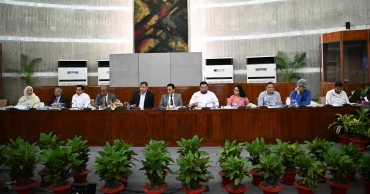
The first meeting of the committee began around 12:30 pm and concluded at about 1:30 pm at the Cabinet Room of the Jatiya Sangsad Bhaban.
Salahuddin said the committee would adopt an open and inclusive approach in formulating its recommendations.
"As we are liberal and open, we will listen to everyone. We will incorporate all necessary proposals for amendments and prepare our report accordingly," he said.
He said the committee's recommendations would later be translated into a constitutional amendment bill, which would be placed before Parliament.
"The bill will be discussed in Parliament, and we want to adopt the amendment through understanding so that it reflects public expectations," he said.
The chief of the parliamentary special body said the committee would also seek to incorporate the state structure related promised democratic reforms into the proposed amendments.
He said the committee sat in its first meeting to discuss the preparation of a list of persons and organisations to be consulted, as well as fixing a schedule for the consultations.
It plans to seek opinions from constitutional experts, lawyers, political parties, professional bodies and other stakeholders.
Salahuddin said any person or organisation interested in offering suggestions would also be given the opportunity to do so.
He, however, could not specify when the committee would submit its report, saying the timeframe has yet to be determined.
On the opposition's absence from the committee, Salahuddin said the government requested the opposition to nominate five representatives, but the names have not yet been received.
"We still hope they will reconsider and submit the names. We will also hold discussions with them," he said.
He added that even if the opposition does not nominate members, the committee will seek opinions from all opposition lawmakers.
Suggestions may be submitted during committee meetings or in writing outside the meetings, he said.
"We want to bring forward an acceptable amendment that reflects public aspirations. We want to adopt a report through discussions with everyone," Salahuddin added.
The committee will review 48 constitutional reform proposals included in the July National Charter.
Proposals on which political parties reached consensus will be incorporated into the amendment recommendations, while issues where the BNP registered dissent will be considered as notes of dissent, he said.
Salahuddin said the committee would also examine constitutional reform commitments included in the BNP's election manifesto, but not reflected in the July National Charter.
Referring to the 2024 July mass uprising, the Home Minister said public expectations have risen significantly following the uprising.
He stressed the need to rebuild Bangladesh in line with the aspirations of those who sacrificed their lives in the July uprising.
July charter to be followed word by word: Law minister
Law Minister Md Asaduzzaman said the constitutional amendment process would move forward by upholding both the July National Charter and the spirit of the July uprising.
"We cannot move merely on emotions by bypassing the July National Charter or imposing any political ideology or agenda. We will bring a constitutional amendment proposal before Parliament by following the July Charter word-by-word,” he said.
The committee will place a proposal to implement for building a new Bangladesh as dreamt by the July martyrs.
Responding to a question on whether the amendment process would remain credible if the opposition did not join the committee, the law minister said the government would make every effort to obtain the opposition's recommendations.
He said the recommendations of the opposition are already reflected in the July National Charter, which was signed by 33 political parties.
He said the committee has taken several policy-level decisions at its first meeting on how to proceed with the constitutional amendment process.
As part of its consultation, the committee will hold discussions with families of those killed in the July uprising, July warriors, leaders of the Anti-Discrimination Student Movement, representatives of different professions, journalists, members of the Supreme Court Bar Association, retired judges and other stakeholders.
Chief Whip Nurul Islam Moni, also a member of the committee, expressed hope that the opposition would finally join the constitutional amendment committee. “The door remains open for them at all times," he said.
Moni said there is no difference between constitutional amendment and reform, as any change made to the Constitution amounts to reform.
Committee members who attended the meeting also include Chairman of parliamentary standing committee on home ministry Zainul Abedin, Chairman of parliamentary standing committee on the law ministry Andaleeve Rahman, State Minister for Planning Zonayed Abdur Rahim Saki, State Minister for Expatriates' Welfare and Overseas Employment Nurul Haque, State Minister for Land Mir Mohammed Helal Uddin, State Minister for Social Welfare Farzana Sharmin, Shakila Farzana and Mahmudul Hoque Rubel.
Besides, another committee member Islami Andolan Bangladesh lawmaker Md. Oli Ullah didn’t attend the meeting.
2 months ago
No push-in allowed across Bangladesh border: Home Minister
Home Minister Salahuddin Ahmed on Friday said not a single person has been allowed to enter Bangladesh through illegal push-ins due to the strict vigilance maintained by the Border Guard Bangladesh (BGB) along the country's frontiers.
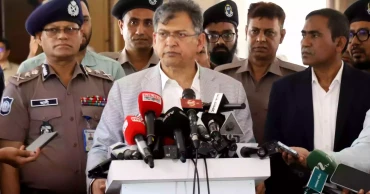
He made the remarks while briefing reporters after attending a discussion and award-giving ceremony organised by the Department of Narcotics Control (DNC) marking the International Day Against Drug Abuse and Illicit Trafficking 2026 at Osmani Memorial Auditorium in Dhaka.
Salahuddin Ahmed said pushing individuals across the border without prior verification is neither a proper nor internationally accepted procedure.
"If India has a list of Bangladeshi nationals staying there illegally, it can provide the information through diplomatic channels or the Ministry of Foreign Affairs," he said.
The minister said the Bangladesh government would verify their nationality through due process and, if confirmed, bring them back through legal procedures.
Referring to claims made in the West Bengal Legislative Assembly regarding the pushback of 10,000 people, he said the Bangladesh government has no documentary evidence or verified statistics supporting such assertions.
The minister praised the role of BGB, saying the border force remains on maximum alert across all frontiers and has successfully thwarted any attempts by India's Border Security Force (BSF) to push people into Bangladesh.
He also suggested that recent push-in activities along the border may have been displayed as part of a political agenda following recent elections in the Indian state of West Bengal.
Providing an update on the murder case of Shaheed Osman Hadi, Salahuddin Ahmed said three of the principal suspects had been arrested by Indian law enforcement agencies in Bongaon, West Bengal.
He said judicial proceedings have already begun in India following the filing of a case under the country's laws.
According to the minister, Bangladesh has formally sought the return of the accused under the extradition treaty between the two countries by sending the necessary legal documents and warrants to the Indian authorities.
"We are hopeful of their early handover to Bangladesh," he said.
Regarding former Inspector General of Police (IGP) Benazir Ahmed, the minister said the Federal Police of the United Arab Emirates (UAE) informed the Bangladesh government via email after arresting him.
The UAE authorities requested the required documents within 30 days, he said.
"The Bangladesh government completed all legal and institutional documentation within just three days and sent them to the UAE through the Ministry of Foreign Affairs," he added.
The documents were formally handed over to UAE authorities by the Bangladesh Embassy in Abu Dhabi a few days ago.
Salahuddin Ahmed said Benazir Ahmed is currently in the custody of the UAE Federal Police and Bangladesh is awaiting the final response from the UAE government regarding the next course of action.
Senior Secretary of the Ministry of Home Affairs Manjur Morshed Chowdhury, Inspector General of Police (IGP) Mohammad Ali Hossain Fakir and other senior officials of the ministry were present at the briefing.
3 months ago
Jungle Salimpur will no longer remain safe haven for terrorists: Salahuddin
Home Minister Salahuddin Ahmed on Sunday declared that Jungle Salimpur will no longer remain a safe haven for criminal and terrorist groups, saying those behind last week's attack on and demolition of newly established RAB and police camps there have already been identified.
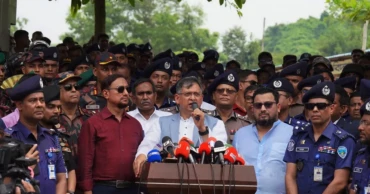
“Those who dared to challenge the authority of the state by destroying law enforcement camps have been identified. Jungle Salimpur can no longer remain a safe haven for isolated terrorist groups,” he told reporters after visiting the Alinagar area of Jungle Salimpur in Sitakunda upazila of the district in the morning.
The visit came a week after armed criminals attacked and bulldozed newly built camps of the Rapid Action Battalion (RAB) and police.
The minister said the government has already prepared a list of illegal occupiers in the area and assured long-time residents that they will not be evicted, urging them to inform law enforcement agencies if anyone attempts to spread panic regarding possible eviction.
He said Jungle Salimpur will be freed from terrorism through planned and coordinated operations. “For the past 17 years, the Alinagar-Jungle Salimpur area has been known as a safe haven for criminals. We will eliminate terrorism from this area through joint operations,” he said.
Besides, similar drives will be conducted in the Betua and Tea Garden areas to annihilate terrorist activities, Salahuddin added.
Highlighting government's priorities, he said restoring law and order has been given top importance since the government took office in February.
“The government has a comprehensive master plan for Jungle Salimpur. The long-pending issue of relocating the central jail will be resolved soon, and necessary steps will be taken promptly,” the minister said.
4 months ago
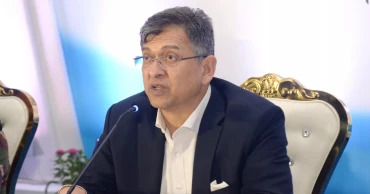
RAB to be restructured as people-friendly, responsible force: Salahuddin
Home Minister Salahuddin Ahmed on Monday said the government will restructure the Rapid Action Battalion (RAB) as a people-friendly and responsible force in the future.
He made the announcement while addressing a programme as the chief guest at the RAB headquarters in Uttara, marking the force’s 22nd founding anniversary.
The Home Minister said the government has undertaken a series of reform initiatives aimed at transforming RAB into a professional, modern, responsible and people-oriented institution.
“These initiatives include enhancing the operational capability and professional skills of RAB members, providing specialised training on the minimum use of force in line with international standards, human rights compliance, and the use of artificial intelligence in crime prevention,” he said.
Salahuddin also announced that a specialised training centre for RAB will soon be established at Jungle Salimpur in Chattogram to further strengthen the force’s operational capacity.
He said the government is also working to adopt time-befitting strategies to address evolving crime patterns, strengthen public engagement to restore confidence, and uphold the principles of human rights, rule of law and professional ethics to help build a safe and stable society.
“To ensure transparency and accountability, the government has taken initiatives to formulate a specific and comprehensive law for RAB,” the Home Minister added.
He said no institution remained unaffected during the Awami League “fascist regime” when the elite force was used for political interests, harming its image, but stressed that an entire institution should not be blamed for the unlawful activities of a few officials. “The institutions must continue their work while upholding their own reputation and dignity. There will be no political interference from the government in this regard,” he said.
Salahuddin wants to demonstrate to the world that all its institutions are accountable and committed to the rule of law.
He also said the government is considering changing the existing name of RAB.
Replying to a question, the Home Minister said RAB is essentially a combined elite force comprising members from Bangladesh Police (44 percent), the Armed Forces Division (44 percent), as well as Ansar, Border Guard Bangladesh (BGB), and civil staff.
Responding to a question about the withdrawal of US sanctions imposed on the force, he said, “During the previous fascist regime, Sheikh Hasina used this force like a puppet to fulfil her desire to establish a one-party rule and to achieve political objectives. Due to the unlawful and misguided activities of a small number of officers, the entire institution has suffered today. However, the whole institution cannot bear responsibility for the crimes of an individual or a few specific officers.”
Salahuddin added that directives have already been issued to take strict legal action against the accused officers under the legal frameworks of their own forces.
He also expressed hope that once the force is reformed, reorganised, or renamed under the new law, the United States government will reconsider the sanctions issue.
Explaining the rationale behind the legal reforms, the Home Minister said for the past 20 years, RAB had not operated under any specific independent law but had instead functioned on an ad hoc basis under a special provision of the Armed Police Battalion Act. “An elite force cannot continue for such a long time under an interim structure,” he said.
To address this legal gap, he said, the Ministry of Home Affairs has already formed a high-level law formulation committee comprising experts, which is being directly supervised by the minister himself.
He said the proposed new law will clearly define the force’s authority and responsibility while ensuring strict provisions for transparency and accountability.
Responding to another question regarding investigations and trials over enforced disappearances and crimes against humanity committed during the previous government, Salahuddin said the earlier commission on enforced disappearances had no specific legal authority to take punitive measures, which created legal complications.
The government is currently working to amend and strengthen the law related to the International Crimes Tribunal (ICT), he said, adding that once the reforms are completed, all crimes related to enforced disappearances, threats of disappearance and missing persons could be tried through a specific legal process under the special tribunal, ensuring justice directly for victims and their families.
4 months ago
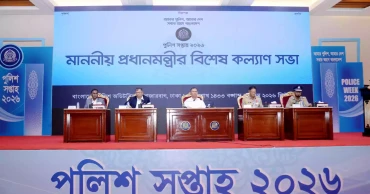
Salahuddin outlines steps to increase welfare benefits for police
Home Minister Salahuddin Ahmed on Sunday said the government has taken a series of initiatives aimed at ensuring welfare of the police personnel, including honorary promotions upon retirement and possible overtime allowances, as part of efforts to turn police into a modern and people-oriented force.
While addressing the “Welfare Parade” organised as part of Police Week-2026 at the Bangladesh Police Auditorium in the Rajarbagh Police Lines, he also said the government will fulfil all logical demands of police members in line with the country’s financial capacity.
Prime Minister Tarique Rahman was present as the chief guest while Senior Secretary of the Home Ministry Monzur Morshed Chowdhury and Inspector General of Police Md Ali Hossain Fakir, among others, addressed the programme.
Highlighting retirement-related benefits, Salahuddin said many police constables complete 40 years of service without receiving further promotion.
PM asks police to remain neutral, turn stations into reliable support centres
To address the issue, the government plans to introduce honorary promotions at retirement based on special policies and satisfactory service records, he said.
Under the proposal, eligible constables may receive an honorary promotion to the rank of assistant sub-inspector (ASI), ASIs to sub-inspector (SI) and SIs to the rank of inspector upon retirement, the minister said.
Besides, the government is considering introducing special overtime allowances for police personnel who work extended hours under a special policy framework, he said.
The proposed benefit may apply to officers from the rank of inspector down to constable and is expected to help improve morale and service quality, Salahuddin added.
Meanwhile, the government is also taking plans to modernise central and divisional police hospitals to improve physical and mental healthcare services for police members, considering their long working hours and heavy workload, he said, adding that the additional modern hospital facilities may also be constructed after necessary assessments.
On accommodation and infrastructure, the minister said the government remains committed to resolving accommodation shortages and improving office facilities for different police units, adding that land acquisition and funding for such projects are among government priorities.
Referring to current law and order, he said visible progress has been made over the past two months. “Special drives are underway against identified terrorists, extortionists and drug traffickers,” he said.
Salahuddin also stressed the importance of advanced training for police personnel to combat evolving crimes linked to technological developments, including cybercrime, online gambling and money laundering.
Meanwhile, a committee has already been formed to put forward suggestions to update laws to tackle gambling, cybercrime and financial crimes more effectively, he said.
Besides, the existing laws will be amended and updated to curb mob culture, the minister said, instructing police personnel to carry out their duties in line with public expectations.
5 months ago

Govt to take Bangladesh forward in a constitutional manner: Salahuddin
Home Minister Salahuddin Ahmed on Sunday said the public mandate reflected in the referendum must be respected within the constitutional framework as the government will take the country forward following the Constitution in the days to come.
“We’ve come this far by adhering to the Constitution and we will continue to follow it in the days ahead. We will move the country forward in a constitutional manner,” he told Parliament.
The minister made the remarks after Opposition Leader Md Shafiqur Rahman expressed concern that the Constitution Reform Council has not yet been summoned despite provisions mentioned in the presidential order promulgated to implement the July National Charter.
Salahuddin, also a member of BNP standing committee, said there is little scope to place a constitutional amendment bill in the current session as 133 ordinances, promulgated by the President during the interim government, were placed in the House, which will have be to scrutinised and settled within 30 calendar days, not working days.
If the business advisory committee decides such a bill can be placed during the upcoming budget session, he said.
“I am not denying anything. The public mandate must be respected, but it has to be done constitutionally and legally. There is no place for emotion here. A state does not run on emotion; it runs through the Constitution and laws,” he said.
The BNP leader also proposed the opposition to pass a constitutional amendment bill through mutual understanding in Parliament to implement the July National Charter exactly as it was signed.
“I would like to propose to the Leader of the Opposition that we can discuss in the Business Advisory Committee when we can place a bill to amend the Constitution,” he said, adding that his party remains committed to implementing the July National Charter exactly as it was signed as a political document.
Salahuddin said a legal and also constitutional question has emerged here whether the Constitution can be amended by an order or invalid order imposed outside the framework of the July National Charter.
He asked them to discuss this legal question in parliament and also in the Business Advisory Committee.
“We can raise a bill for constitutional amendment and adopt it in this august House based on consensus. After that, the state will be run in accordance with the amended Constitution,” he said.
The BNP leader said the constitution reform council could not be summoned as it has no existence in the Constitution.
“According to Article 72 of the Constitution, there is no existence of constitution reform council, so the Prime Minister can’t recommend the President to do so (to summon the council). Since the President can’t summon it, he didn’t do it,” he said.
’Those who persecuted Hindus in 71 are back in elections': Salahuddin Ahmed
Salahuddin further cited that Parliament may hold discussions on whether the July National Charter (Constitution Reform) Implementation Order, 2025, issued by the President, is constitutionally valid.
Referring to Article 93 of the Constitution, he said the President may promulgate ordinances when Parliament is not in session, but such ordinances cannot alter the Constitution.
“Any change to the Constitution cannot come through an ordinance,” he said, raising questions about the legal nature of the presidential order.
Opposition Leader Dr Shafiqur Rahman said the Constitution Reform Council should have been convened within 30 calendar days of the parliamentary election results, as mentioned in the presidential order issued on November 13, 2025.
“Today marks the 30th calendar day, but the council session has not been called yet,” he said, expressing concern over the delay.
According to the order, he said, elected representatives of Parliament were also supposed to function as members of the Constitution Reform Council.
Shafiqur Rahman said the issue deserves urgent attention to ensure that the verdict of the referendum and the commitments made in the July National Charter are properly implemented.
6 months ago
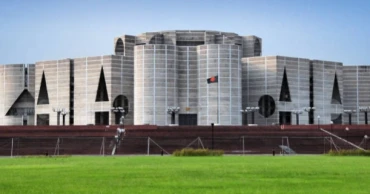
New parliament may go into session by March 12: Salahuddin
The 13th National Parliament is likely to go into its maiden session on March 12 next month or one or two days earlier, said Home Minister and BNP Standing Committee member Salahuddin Ahmed.
“The first session of the National Parliament will begin on March 12 next month or one or two days earlier,” he told journalists on Saturday night.
The BNP leader said the Speaker and Deputy Speaker will be elected during the session.
“During this session, the ordinances promulgated during the tenure of the interim government will be placed before Parliament, and an obituary motion will also be presented,” he added.
Earlier, on February 17, the newly elected members of the 13th Parliament--from both the treasury and opposition benches--were sworn in by Chief Election Commissioner AMM Nasir Uddin.
Later, the BNP Parliamentary Party (BPP) unanimously elected party Chairman Tarique Rahman as the Leader of the House.
Meanwhile, Shafiqur Rahman, Ameer of Bangladesh Jamaat-e-Islami, has been chosen as the Leader of the Opposition by opposition MPs.
The 13th parliamentary election was held on February 12.
Out of 300 seats in the 13th Jatiya Sangsad, results for two seats have been suspended, while polling in one seat was cancelled following the death of a candidate.
Of the remaining 297 seats, BNP secured 209, Bangladesh Jamaat-e-Islami 68, Jatiya Nagorik Party (NCP) six, Bangladesh Khelafat Majlish two, while Islami Andolan Bangladesh, Gano Odhikar Parishad, Bangladesh Jatiya Party (BJP), Ganosamhati Andolon and Khelafat Majlish won one seat each. Independent candidates secured seven seats.
7 months ago
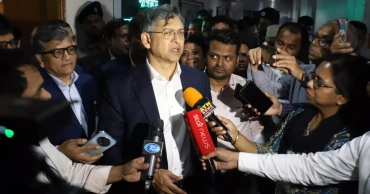
Salahuddin sounds the death knell for mob culture
Newly appointed Home Minister Salahuddin Ahmed on Wednesday said that the ‘mob culture’ must come to an end in the country.
“The government is determined to completely eliminate ‘mob culture’ in Bangladesh. Mob culture is over. No one will be allowed to engage in mob activities in the name of realising demands,” he said.
The Home Minister came up with the remarks while talking to reporters at an introductory meeting with officials on his first working day at the Secretariat on Wednesday.
However, rallies and gatherings can be held and memorandums can be submitted to make legitimate claims as the democratic process will continue, he said.
He also urged for maintaining transparency and accountability in the Home Ministry’s operations.
“We want to build the ministry as a corruption-free institution,” he said, adding “If anyone from any force is found involved in criminal activities, immediate investigation and action will be taken.”
He also urged officials to perform their duties with transparency and accountability, warning that no illegal lobbying would be tolerated.
Stressing the need to restore public trust in law enforcement, the Home Minister said police must become friends of the people. The image of the police that has been damaged must be rebuilt.
7 months ago
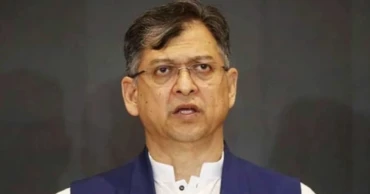
No election code violation in Tarique’s northern region tour: Salahuddin
BNP senior leader Salahuddin Ahmed on Thursday said the upcoming four-day tour of the northern region by party Acting Chairman Tarique Rahman will not violate the election code of conduct, as it is meant to pay homage to the martyrs of the July mass uprising.
“Some people may be viewing this tour from different perspectives. Paying proper respect to the martyrs of the 2024 student-led mass uprising is our responsibility and a national responsibility. Our leader Tarique Rahman wanted to do this long ago, but for various reasons the visit could not take place earlier,” he said.
Talking to reporters in front of the BNP Chairperson’s Gulshan office, Salahuddin, also a BNP Standing Committee member, said paying tributes to the martyrs and visiting their graves is the nation’s expectation.
“We uphold the spirit of the mass uprising, and we must elevate that spirit. That is why he is going. From this perspective, there is no issue of violating the election code of conduct,” he said.
The BNP leader urged everyone not to question the dignity of the 2024 student uprising, but rather to further honour and glorify the sacrifice of the martyrs.
Read More: Khaleda’s janaza likely on Wednesday, burial beside Ziaur Rahman: Salahuddin
As the top leader of the country’s major political party, he said if Tarique Rahman visits the graves of the uprising martyrs and offers floral tributes, it means upholding the spirit of the uprising and fulfilling the nation’s expectations.
“This is the people’s expectation—the nation’s expectation—and it should be viewed from that perspective,” the BNP leader added.
Tarique Rahman is scheduled to travel by road from Dhaka to Bogura on January 11.
During the visit, he will go to Rangpur to visit the graves of the martyrs of the 2024 student-led mass uprising, including Abu Sayed, who was killed during the July movement.
Replying to a question about internal party issues, Salahuddin said BNP has already taken organisational steps against leaders who are contesting the election in violation of party decisions, while efforts are also underway to persuade them.
“In a large party like ours, many candidates have expectations. Some became disappointed when they did not receive nominations. In the greater interest, for the sake of seat-sharing and to ensure multi-party representation in parliament, we had to deprive many capable candidates,” he said.
As a result, the BNP leader said, there is disappointment among those who were denied nominations.
“In some cases, we have taken organisational action, and in other cases, we are trying to convince and calm them down. We hope the matter will be resolved,” he said.
Asked whether the killing of a Swechchhasebak Dal leader could affect the election, Salahuddin said some isolated incidents are taking place, but these will not have any impact on the election.
He said all political parties are now committed to holding a proper 13th national parliamentary election.
“Insha’Allah, with united efforts and the sincerity of all political parties, we will be able to cross the electoral hurdle smoothly. Although there were many demands earlier, all parties are now committed to the election,” the BNP leader said.
At different times, he said, some parties raised various demands, arguments and allegations regarding the election, referendum and other issues. “I think they have finally understood (the importance of holding the election). I believe all political parties have now reached a common position and are sincere about holding a free and fair election,” he said.
Salahuddin said if any party has complaints about the level playing field or other election-related issues, they should inform the Election Commission.
Read More: No legal scope to defer election over Khaleda Zia’s death: Salahuddin
“The Election Commission and the government will address these issues properly. I believe all political parties and the people are sincere about a fair election,” he observed.
9 months ago