Henley Passport Index
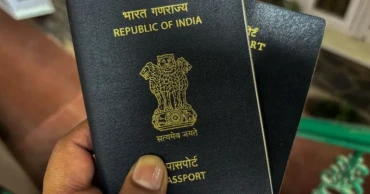
Why India’s passport is slipping in global rankings
Earlier this year, a video by an Indian travel influencer criticizing the weak power of the Indian passport went viral. He pointed out that while countries like Bhutan and Sri Lanka are welcoming to Indian tourists, getting visas to most Western and European destinations remains difficult.
His frustration mirrors the findings of the latest Henley Passport Index, which ranks passports based on visa-free travel access. India slipped five places this year to the 85th spot out of 199 countries, marking another decline in global mobility.
The Indian government has yet to comment on the report. The BBC has reached out to the Ministry of External Affairs for clarification.
Countries with smaller economies—such as Rwanda (78th), Ghana (74th), and Azerbaijan (72nd)—rank higher than India, despite India being the world’s fifth-largest economy.
Over the past decade, India’s passport ranking has generally stayed in the 80s, even falling to 90th in 2021. This contrasts sharply with Asian nations like Japan, South Korea, and Singapore, which have consistently dominated the top positions.
Read more: Getting e-passport without police verification in Bangladesh: Documents, fees, and online application process
For the second consecutive year, Singapore topped the list, offering visa-free access to 193 countries, followed by South Korea (190) and Japan (189). In comparison, Indian passport holders can visit 57 countries visa-free, sharing the 85th position with Mauritania.
A Reflection of Soft Power and Global Influence
Passport rankings reflect not only travel convenience but also a nation’s soft power, diplomatic ties, and global reputation. A weak passport means more paperwork, higher visa costs, fewer privileges, and longer approval times.
However, despite the drop in rank, the number of countries granting visa-free access to Indian citizens has increased over the years.
In 2014, when Prime Minister Narendra Modi’s BJP came to power, Indians had visa-free access to 52 countries, and the passport ranked 76th. By 2024, that number rose to 62 countries, though India’s rank still slipped to 85th in 2025.
Experts say this decline is mainly due to growing global competition. More countries are signing reciprocal visa-free agreements to boost tourism and trade. According to Henley & Partners’ 2025 report, the average number of visa-free destinations worldwide has nearly doubled—from 58 in 2006 to 109 in 2025.
Read more: Digital Nomad Visas in Europe in 2026: Top 10 European Countries
China, for instance, has expanded its visa-free access from 50 to 82 countries in the past decade, improving its rank from 94th to 60th.
India’s ranking, meanwhile, dropped from 77th in July 2025 to 85th in October, after losing visa-free access to two countries.
Beyond Diplomacy: Other Factors at Play
Former Indian ambassador Achal Malhotra says that factors such as political stability, security, and openness to foreign citizens also influence a country’s passport strength.
For example, the U.S. passport, once among the most powerful, has fallen to 12th place, partly due to its inward-looking foreign policy.
Mr Malhotra notes that in the 1970s, Indians could travel visa-free to many Western nations, but that changed after the Khalistan movement in the 1980s, which raised concerns about India’s internal stability.
Read more: 7 Most Affordable Countries for Citizenship by Investment in 2026
He adds that high emigration rates and cases of visa overstays have made some nations more cautious about granting Indians visa-free access.
Moreover, issues such as passport fraud and slow immigration processes also affect India’s standing. In 2024, Delhi Police arrested 203 individuals for alleged passport and visa fraud.
A Path Forward
Technological advances like India’s new e-passport, which stores biometric data on a secure chip, could help strengthen document security and streamline border checks.
But experts agree that diplomatic outreach and bilateral travel agreements will be crucial for improving the global mobility of Indian citizens—and restoring the strength of the Indian passport on the world stage.
Source: BBC
Read more: Bangladesh moves up one step in global passport strength index
11 months ago

Passport Index 2024: Bangladesh in bottom 10, shares 97th spot with North Korea
The 2024 edition of Henley Passport Index – the most widely-accepted rating of global travel documents – places the Bangladeshi passport at 97th position, down one place from the last quarter of 2023.
The latest edition of the Passport Index — published on Tuesday — features a total of 104 spots with some countries’ passports sharing the same ranking.
Bangladesh ranked 97th on the index, sharing the spot with North Korea — a country virtually isolated from the rest of the world.
The ranking is based on the number of destinations passport holders can access without a prior visa.
Also read: Bangladesh climbs 5 spots in latest passport ranking, still behind Sri Lanka and Libya
According to the 2024 Henley Passport Index, a Bangladeshi passport entitles visa-free travel to 42 destinations.
In South Asia, the Bangladeshi passport fared better compared to that of Nepal (98), Pakistan (101) and Afghanistan (104).
Maldives’ passport ranked at 58, becoming the strongest in South Asia with visa-free access to 94 countries. India, Bhutan and Sri Lanka’s passports ranked at 80th, 87th and 96th respectively.
An unprecedented six countries share the top spot for the most desirable travel documents in 2024.
Citizens of France, Germany, Italy, Japan, Singapore, and Spain now have access to visa-free or visa-on-arrival entry to a remarkable 194 destinations worldwide.
This figure marks the highest count recorded since the Henley Passport Index began monitoring global travel freedoms 19 years ago, according to CNN.
Also read: Bangladesh e-Passport Information Update: Step by Step Procedure, Related Costs
Apart from those 6 countries who share the top spot, other countries sharing the top 5 rankings in the Henley Passport Index are: Finland, South Korea, Sweden in the second spot with visa-free or visa-on-arrival entry to 193 countries; Austria, Denmark, Ireland, Netherlands sharing the third spot with visa-free or visa-on-arrival entry to 192 countries; Belgium, Luxembourg, Norway, Portugal United Kingdom in fourth spot with visa-free or visa-on-arrival entry to 191 countries; Greece, Malta, and Switzerland in the fifth spot with visa-free or visa-on-arrival entry to 190 destinations.
Countries sharing the bottom 5 rankings as per the passport index are: Yemen, Pakistan, Iraq, Syria, and Afghanistan.
The Henley Passport Index, the only one of its kind based on unique data from the International Air Transport Authority (IATA), has historical data going back 19 years. The database lists 227 travel destinations and 199 passports.
The Henley Passport Index is updated every quarter, and is regarded as the go-to resource for global citizens and sovereign states for determining where a passport ranks on the scale of global mobility.
Also read: Bangladesh passport visa free countries for 2023
2 years ago

Bangladeshi passport’s ranking improves in 2023, still behind Iran and Sri Lanka as per Henley Index
The 2023 edition of the Henley Passport Index – the most widely-accepted rating of global travel documents – places Bangladesh’s passport at 101st position, up three places from last year.
The latest edition of the Passport Index features a total of 109 spots with some countries’ passports sharing the same ranking. Bangladesh shares the 101st position with Kosovo. In 2022, Bangladesh ranked 104th.
Interestingly enough, passports of heavily sanctioned Iran, economically devastated Lebanon and Sri Lanka, and conflict-ridden Sudan have fared better compared to that of Bangladesh – at 99th and 100th (shared) positions respectively.
Read more: Bangladesh Passport Renewal Process: How to renew MRP, Handwritten Passport
According to the 2023 Henley Passport Index, a Bangladeshi passport entitles visa-free travel to 41 destinations.
In South Asia, Bangladeshi passport is in a better position compared to those of Nepal (at 103), Pakistan (106) and Afghanistan (109). At 61, Maldives’ passport is in the best position in the region. Indian passport ranks at 85 and Bhutan’s at 90.
The top 5 ranking passports according to the Henley Index are: Japan at 1, allowing citizens visa-free access to 193 destinations; Singapore and South Korea at 2; Germany and Spain sharing the 3rd spot; Finland, Italy, Luxembourg at 4; and Austria, Denmark, Netherlands and Sweden at 5.
Read more: Travelling 100 countries with the 9th weakest passport in the world
The bottom 5 ranking passports as per the index are: Afghanistan at 109, Iraq at 108, Syria at 107, Pakistan at 106 and Yemen at 105.
The Henley Passport Index, the only one of its kind based on unique data from the International Air Transport Authority (IATA), has historical data going back 18 years. The database lists 227 travel destinations and 199 passports.
The index is updated every quarter, and is regarded as the go-to resource for global citizens and sovereign states for determining where a passport ranks on the scale of global mobility.
Read More: E-Passport for Children in Bangladesh: Application process, necessary documents
Karim Waheed is the Digital Editor at UNB.
3 years ago