judicial system
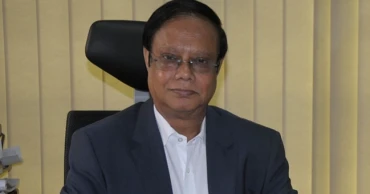
Financial sector 'will never recover' under prevailing judicial system: Ahsan Mansur
Bangladesh Bank Governor Dr. Ahsan H. Mansur has expressed grave concerns about the financial sector's recovery under its present judicial system, as he disclosed plans to revise the ‘Artha Rin Adalat Ain’ (Money Loan Courts Act) soon.
The governor made these remarks in a recent interview with a local news outlet, criticizing the present judicial system's impact on financial stability.
"If the judiciary continues on its current path, the financial sector will never be able to rebound," Dr Mansur asserted.
"Bangladesh Bank, the government, and the judiciary must work in harmony. To reach international standards, we must operate with similar capacity and accountability," he added.
Tough Stance on Loan Defaulters:
Addressing the persistent issue of non-performing loans (NPLs), Dr. Mansur emphasized a zero-tolerance approach. "A defaulter should be called a defaulter," he stated unequivocally.
He added that even if a borrower obtains a stay order from the High Court, Bangladesh Bank should still classify them as a defaulter. "Because the way a bank knows a customer, it is not possible for the court to understand that."
Bangladesh Bank aims to cut inflation to 5%: Governor
Mansur cited a recent incident involving Agrani Bank, where a borrower was declared a defaulter despite having a stay order, leading to the issuance of a warrant against them. According to the Governor, such decisions are "policy-wise correct."
Organized Looting in banking sector
Responding to questions about the progress made in restructuring the banking sector over the past year, Dr. Mansur highlighted the deep-rooted nature of the problem.
"We have seen that this is not a one-day affair. Banks and financial institutions have been systematically seized for about eight to nine years," he said, adding that funds were then "methodically laundered" from them.
He likened the situation to a "honeypot" – a sweet repository from which honey was looted. "No one thought about protecting the safety of public deposits. Instead, it was used as a sector for looting," he lamented.
The Governor further alleged that this "process of looting" occurred "right before the eyes of the government" and "under the notice of Bangladesh Bank." Yet, he claimed, "no one said anything." In many cases, he added, "the concerned authorities even assisted those groups."
Mansur recalled that civil society had raised concerns, and he himself had warned about the impending crisis: "I directly told a former Governor, 'Be careful about Mr. X.' Because if he hijacks the banks, the entire sector will collapse."
Merger of 5 Islamic banks at final stage: Bangladesh Bank Governor
He concluded with a dire analogy: "I then said, if several banks fall at once, we will even need ambulances. Unfortunately, that's exactly what happened – the entire banking sector was handed over to one family and opened up for looting."
1 year ago

Israelis press on with protests against new government
Tens of thousands of Israelis gathered in Tel Aviv on Saturday night to protest plans by Prime Minister Benjamin Netanyahu’s new government to overhaul the judicial system, measures that opponents say imperil the country's democratic fundamentals.
Israeli media, citing police, said some 100,000 people were out protesting.
The protest followed another demonstration last week that also drew tens of thousands in an early challenge to Netanyahu and his ultranationalist and ultra-Orthodox government — the most right-wing in Israeli history.
Read more: Israel troops kill 2 Palestinians during raid in occupied West Bank
The government says a power imbalance has given judges and government legal advisers too much sway over lawmaking and governance. Netanyahu has pledged to press on with the changes despite the opposition.
Protesters filled central streets in the seaside metropolis, raising Israeli flags and banners that read “Our Children will not Live in a Dictatorship” and “Israel, We Have A Problem.”
“This is a protest to defend the country,” said opposition leader and former Prime Minister Yair Lapid, who joined the protest. “People came here today to protect their democracy.”
“All generations are concerned. This is not a joke,” said Lior Student, a protester. "This is a complete redefinition of democracy.”
Other protests took place in the cities of Jerusalem, Haifa and Beersheba.
In addition to the protests, pressure has built up on Netanyahu’s government after the country’s attorney general asked Netanyahu to fire a key Cabinet ally following a Supreme Court ruling that disqualified him from holding a government post because of a conviction of tax offenses.
While Netanyahu was expected to heed the court ruling, it only deepened the rift in the country over the judicial system and the power of the courts.
Earlier this week, Netanyahu, who is on trial for corruption, vowed to continue with the judicial overhaul plans despite the protests. Opponents say the changes could help Netanyahu evade conviction in his corruption trial, or make the court case disappear altogether.
Read more: Over 90 nations express ‘deep concern’ at Israeli punitive measure against Palestinians
One protester said she thinks the judicial changes are meant to protect Netanyahu. “The aim is to save only one person and one only — this is Mr. Netanyahu, from his trial, and that’s why I’m here.”
On Friday, Netanyahu's coalition was put for a new test after a disagreement between Cabinet members over the dismantling of an unauthorized settlement outpost in the West Bank.
Defense Minister Yoav Galant, a member of Netanyahu's Likud party, ordered the removal of the outpost, upsetting a pro-settlement Cabinet member who had issued a directive to postpone the eviction pending further discussions.
3 years ago