Ministry of Commerce
Bangladesh moves to formalise gold trade with new draft policy, eyes export potential
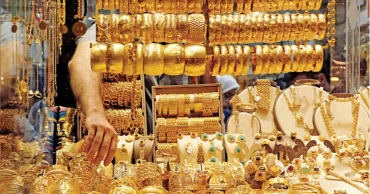
The Ministry of Commerce has invited government agencies and stakeholders to submit written feedback by Sunday on a draft "Gold Policy 2018 (Amended) 2026," aimed at transforming the country's gold sector from an informal state into a legal, recognised and accountable business sector.
Commerce Minister Khandaker Abdul Muktadir gave the directive on Thursday while chairing a meeting on the draft policy at the ministry's conference room.
Gold price jumps by Tk 9,856 per bhori
The minister said the gold sector has long played a significant role in the economy but has failed to achieve full institutional shape due to the absence of proper policy and regulatory frameworks, adding that regulatory weaknesses, not businesses alone, should be held responsible for the situation.
"We need to fix our mindset. It has not been right for a recognised business sector to remain outside a formal structure for so long. This situation arose because necessary steps were not taken in time. We now want to bring the sector under a legal and institutional framework," the minister said.
Noting that the government aims to allow the gold sector to operate like other industrial and business sectors, Muktadir said formalisation would boost employment generation, legal imports, revenue collection, and transparency in gold stocks and transactions, with businesses paying duties and taxes as per rules while the government ensures favourable regulations.
Every stage of the purchase, sale and storage of legally imported gold must be brought under accounts, he said, adding that regulators should have regular oversight of how much gold traders hold, how much is sold, and where it is sourced from.
Highlighting the economic importance of gold, the minister said one of the primary functions of currency is to preserve value, and gold is similarly recognised internationally as a means of preserving value, with central banks across the world holding significant gold reserves alongside foreign currency.
"If $4 billion or $10 billion worth of gold is legally imported into the country and remains here instead of being illegally taken abroad, then value is essentially being preserved within the country," he said.
To prevent gold from being smuggled abroad, the minister stressed avoiding an abnormal gap between domestic and international market prices, noting that a significantly lower local price compared to neighbouring or nearby countries creates economic incentives for illegal outflow.
He said international gold prices, particularly rates from major trading hubs including Dubai, must be considered while setting customs duties and tax rates.
The minister said the policy is not limited to gold imports but also gives serious consideration to the potential for jewellery manufacturing and exports through value addition within the country, adding that allowing raw material imports at minimal and reasonable duties would enable local artisans and entrepreneurs to produce internationally competitive products.
He said two aspects need consideration: first, whether gold imported at international prices can be exported after value addition domestically; and second, the significant domestic demand for gold, particularly for weddings and social occasions, which requires the policy to also account for the purchasing power of ordinary consumers.
Noting that rising gold prices are putting pressure on common people, the minister said a rational policy and supply system would increase market competition and allow consumers to purchase gold at comparatively fairer prices.
Before finalising the draft policy, the ministry will review the policies and regulatory systems of three to four gold jewellery-exporting countries, including India, the minister said, adding that a comparative analysis will be conducted of their import systems, tariff structures, stock management, export facilities and monitoring mechanisms against Bangladesh's proposed policy.
He called on the National Board of Revenue (NBR), Bangladesh Bank and other relevant agencies to identify possible questions, risks and implementation-related complexities and submit written opinions accordingly.
"It is not the government's intention to push the sector into a new crisis by formulating this policy. Everyone involved here is experienced and aware. We must collectively build a framework that prioritises the country's interest, so that the gold sector becomes legal, transparent and sustainable," the minister said.
The meeting was told that after compiling feedback from various stakeholders, another stakeholder meeting would be held if necessary, following which the revised gold policy would be finalised at the earliest.
Commerce Secretary Ataur Rahman Khan presided over the meeting, where Bangladesh Jewellers Association (BAJUS) President Enamul Haque Khan and Bangladesh Export Promotion Bureau (EPB) Vice Chairman Mohammad Hasan Arif, among others, spoke.
Representatives from the NBR, Bangladesh Bank and other relevant government agencies and the gold sector also shared their views at the meeting.
2 months ago

Commerce Secretary stresses stronger coordination in market monitoring
Commerce Secretary Md Ataur Rahman Khan on Sunday stressed the need for stronger coordination, greater inter-agency cooperation and enhanced leadership skills among field-level team leaders to make the country's market monitoring system more effective, coordinated and technology-driven.
He made the remarks while presiding over a workshop titled "Capacity Building for Team Leaders Engaged in Market Monitoring" at the Ministry of Commerce conference room in Dhaka.
The commerce secretary said all agencies involved in market surveillance are working toward a common objective, adding that the main challenge lies not in capacity constraints but in ensuring effective coordination, mutual cooperation and prompt decision-making at the field level.
He said market monitoring activities are carried out by the Ministry of Commerce and its subordinate agency the Directorate of National Consumer Rights Protection.
Several other government ministries, departments and agencies are also involved, making market oversight a shared responsibility, he said.
He said the effectiveness of the system depends on rapid field-level response, coordinated operations and responsible execution of assigned duties.
Addressing the team leaders, the commerce secretary said leadership must be efficient, timely and result-oriented, urging them to resolve any coordination gaps quickly to ensure smooth implementation of market monitoring activities.
The secretary said the ministry would soon develop a Power App, introduce an AI-based model for the Trading Corporation of Bangladesh (TCB), and further upgrade the existing market monitoring application in line with the minister's directives.
He said these initiatives are expected to make field-level market surveillance more efficient and data-driven.
Additional Secretary (IIT) of the Ministry of Commerce Shibir Bichitra Barua and Acting Director General of the Directorate of National Consumer Rights Protection Sebastian Rema attended the workshop as special guests, along with senior officials from the ministry and the directorate.
3 months ago
Soybean oil price hiked by Tk 4 per litre
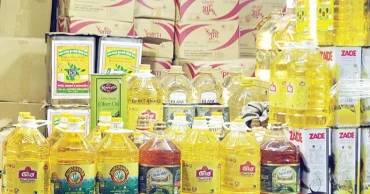
The Ministry of Commerce on Wednesday raised the retail price of both bottled and loose soybean oil by Tk 4 per litre, citing mounting pressure from global market volatility and sustained losses incurred by importers and refiners.
The decision was announced by Commerce Minister Khandaker Abdur Muktadir following a meeting with edible oil traders at the ministry's conference room.
Under the revised pricing, bottled soybean oil will now retail at Tk 199 per litre, up from Tk 195, while loose soybean oil has been fixed at Tk 180 per litre against the previous rate of Tk 176.
The price of five-litre bottled soybean oil has been adjusted to Tk 975 from Tk 955. Palm oil prices remain unchanged.
Justifying the upward revision, the minister said traders had been purchasing oil at elevated prices since Ramadan and selling at a loss, prompting persistent appeals from importers and refiners for a price correction.
“The prices of import-dependent commodities have risen due to adverse global condition, placing significant strain on businesses,” Muktadir said. “Traders had sought a steeper increase, but the government has kept prices within consumers' reach.”
The minister assured consumers that prices would be reviewed and readjusted once the international soybean oil market stabilises.
Traders pledged to sell at the newly fixed rates and committed to making no further revision requests ahead of Eid-ul-Azha, he added.
The price adjustment comes amid a prolonged supply crunch lasting over a month, particularly for five-litre bottled soybean oil.
Market surveys indicate the product has already been changing hands at Tk 980 to over Tk 1,020, well above the official ceiling of Tk 955 underscoring the gap between regulated and street-level prices that the revised rates now seek to narrow.
5 months ago

Unauthorised edible oil price hike to prompt govt action: Adviser Bashir
Businessmen have raised the price of edible oil in the market without obtaining approval from the Ministry of Commerce, increasing the price of bottled soybean oil by Tk 9 per litre — a move that will face action, Commerce Adviser Sk Bashir Uddin said on Wednesday (December 03, 2025).
During visits to several markets in the city, five-litre bottles of soybean oil were found selling at Tk 965, up from Tk 922 just days ago.
Aseem Halder, a grocer at Uttar Badda Kacha Bazar, said, “Companies have increased soybean oil prices by Tk 9 per litre. What was Tk 189 per litre is now Tk 198. Loose soybean oil has also gone up by Tk 5 per litre.”
Read more: Govt to allow onion import to curb price hike: Commerce Adviser
Asked whether the ministry approved the hike, the adviser said traders raised prices without notifying the government.
“They did not discuss the matter with the ministry,” he told reporters.
“Just a few days ago, through a tender, they offered us soybean oil at Tk 20 less per litre than the existing market rate. We purchased 50 lakh litres of soybean oil. I don’t know on what grounds they have now increased the price,” he said.
The adviser said the ministry will sit with traders soon, and if they fail to justify the hike, the new prices will not be approved.
Read more: BERC raises LPG price for December
When asked how traders raised prices without government clearance, he added, “They tried to increase prices in October as well, but we didn’t approve it — and the market didn’t follow the hike either. We will sit with them again.”
Regarding commodity prices ahead of Ramadan, the adviser said the prices will remain stable as necessary measures have already been taken, and mentioned that the prices of chickpeas, sugar and lentils have recently declined.
According to the Bangladesh Vegetable Oil Refiners and Vanaspati Manufacturers Association, companies sent a letter to the ministry on November 10 seeking approval to raise soybean oil prices.
On November 24, they again recommended a price adjustment, but the ministry did not respond.
Read more: Raiding retailers won’t help, real culprits must be caught: Adviser Bashir
10 months ago

Rawhide market disappoints again as prices fail to cross Tk 1,000 mark
Despite a government-mandated price hike, the rawhide market failed to meet expectations during Eid-ul-Azha, frustrating traders who say they were forced to sell below the official rates yet again.
The Ministry of Commerce had increased the price of cowhide in Dhaka by Tk 5-10 per square foot, setting the official rate at Tk 60-65.
But, ptraders said the market reality fell short. Most cowhides were sold at Tk 55-60 per square foot, with some deals made at even lower rates.
“We collected cowhides from sacrificers for Tk 750, but ended up struggling to recover costs,” said Hefaz Ullah, a trader from Uttara.
“The best quality hides in this area fetched only Tk 800-820. We couldn’t sell for more," he said.
Sirza, a trader from Badda, echoed similar frustration. “There was no demand for rawhide. We couldn’t sell at a fair price. After paying for van rental and two workers, we were left with almost nothing. The entire day’s effort felt wasted.”
Govt fixes rawhide prices ahead of Eid-ul-Azha
In Khilkhet, trader Mizanur said the lack of fair pricing by tannery owners continues to discourage seasonal traders. “Had I known this would happen, I wouldn’t have paid so much initially. Tannery owners always undercut prices.”
1 year ago

Government okays import of 4.0 crore more eggs to keep market stable
The Ministry of Commerce has approved the import of 4.0 crore more eggs to increase supply and make the market stable.
A notification in this regard was issued by the ministry's internal trade-1 wing on Wednesday.
Another 2.31 lakh eggs imported from India
According to the notification, 12 traders have been allowed to import the eggs and the import permit will remain valid till December 31, 2024.
In a bid to address the volatility in the egg market, the Ministry allowed seven designated firms
to import of 4.05 crore eggs on October 8.
1 year ago

Govt permits import of 40.5 million eggs to stabilise market
In a bid to address the ongoing volatility in the egg market, the Ministry of Commerce has granted approval for the import of 40.5 million eggs to seven designated firms.
The decision, announced by the ministry’s Internal Trade-1 division on Tuesday, aims to stabilise prices and ensure the availability of this essential commodity.
The domestic egg market has witnessed a sharp increase in prices over the past few months, driven by a supply-demand imbalance.
The cost of eggs has escalated to a record high, making it unaffordable for many consumers.
This crisis has prompted the government to intervene by allowing imports to supplement the local supply.
According to the ministry’s statement, the import permission was granted following a thorough evaluation of the market situation. "We aim to bring down the inflated prices and ensure that consumers have access to eggs at a reasonable rate," said a senior official from the Ministry of Commerce.
Initially, approval has been given to seven institutions to import a maximum of 1 crore pieces each. The seven institutions are: Messrs. Meem Enterprise: 1 crore pieces,Messrs. Tawseen Traders: 1 crore pieces, Messrs. Suman Traders: 20 lakh pieces, Alif Traders: 30 lakh pieces,Himalaya: 1 crore pieces,Messrs. Prime Care Bangladesh: 50 lakh pieces, and Messrs. Zaman Traders: 50 lakh pieces.
According to the notification issued in this regard said, as per the Department of Livestock, there is a daily demand for about 5 crore pieces of eggs in the country. Considering the current market situation of eggs and aiming to stabilise market prices, permission has been given for the import of eggs based on the applications from different importers for a limited period.
The validity of this import permission will remain until December 31, 2024. Importers must follow the conditions to carry out the necessary import procedures.
Rising Prices
Currently, the price of a dozen eggs in Dhaka's retail market ranges between Tk 175 and Tk 180, a significant jump from the Tk 100 to Tk 120 price range earlier this year. The rising prices have led to widespread consumer dissatisfaction and criticism of the government’s inability to regulate the market.
Market insiders attribute the price hike to multiple factors, including an increase in the cost of poultry feed, disruptions in supply chains, and the impact of recent flooding in some parts of the country that affected egg production.
The situation has also led to hoarding and artificial scarcity created by some unscrupulous traders, further exacerbating the crisis.
Import Initiative and Market Impact
The government’s decision to import 40.5 million eggs is expected to have a cooling effect on the overheated market. The seven companies authorised to import eggs are tasked with ensuring a steady supply to retail markets across the country.
However, experts caution that the success of the initiative will depend on efficient distribution and stringent market monitoring.
2 years ago
Price hikes: Seven businesses fined in market monitoring drive
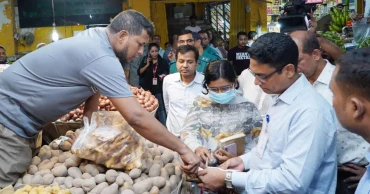
Two teams of the Ministry of Commerce have fined seven businesses Tk 29,000 while monitoring the market to keep the prices of essential commodities stable.
The monitoring activities were conducted in Dhaka’s New Market kitchen market and Gulshan kitchen market on Sunday afternoon.
In New Market, a team led by Senior Assistant Secretary Md. Mehedi Hasan of the Ministry of Commerce inspected the prices of essential items such as rice, lentils, eggs, and chicken. The team reviewed price lists and receipts of transactions.
A poultry seller was fined TK 2,000 for failing to properly display the price list and for improper record-keeping, while other businesses were issued warnings.
At the Gulshan kitchen market, six businesses were fined a total of TK 27,000 for various irregularities. The inspection team there was led by Deputy Secretary Mansurin Khan Chowdhury.
Officials from various departments under the Ministry of Commerce were present during the inspections.
2 years ago

Bangladesh sets $72 billion export target with 11.52% growth for FY 2023-24
Bangladesh's Ministry of Commerce has set an export target of $72 billion with 11.52 percent growth for the fiscal year 2023-24.
Export target for goods has been set at $62 billion while for the service sector, the target was set at $10 billion.
Export target achieved in FY 2022-23 was $64.55 billion, which saw a growth of 5.88 percent.
RMG exports to EU grew 9.93% in FY 2022-23: Export Promotion Bureau
Goods worth $55.55 billion and services worth $9 billion were exported in FY 2022-23, and the growth were 6.67 percent and 1.25 percent respectively.
Commerce Minister Tipu Munshi today (July 12, 2023) made the announcement of the export target and achievements in the previous fiscal in a press conference at the ministry.
Prior to the announcement, the minister met with leaders of different business organizations and ministry officials.
RMG exports in FY23 almost $47bn, 85% of total exports
Business leaders at the meeting urged the government to ensure uninterrupted gas and electricity supply to industries at affordable rates.
Otherwise, exports would be negatively impacted, they told the minister.
While announcing the new export target, Commerce Minister Tipu Munshi said the global economic slowdown has been considered when setting the new target.
Gas and power crises have also been considered while setting the target, the minister said.
Exports raked in $55.56bn in FY23, highest in history
While replying to a query, the minister said Bangladesh has some advantages including trained labour force, and affordable cost of products.
Besides, global entrepreneurs are relocating industries from China due to geo-political reasons, and Vietnam has a labour crisis, the minister said.
If Bangladesh can utilize these opportunities, exports can go beyond the target, the commerce minister said.
Dollar exchange rate for repatriated export income increased to Tk107.5
3 years ago

Govt fixes rawhide prices ahead of Eid-ul-Azha
The Ministry of Commerce on Sunday (June 25, 2023) fixed the prices of salted cowhides at Tk 50 to Tk 55 per square feet in Dhaka and at Tk 45 to Tk 48 outside Dhaka.
Commerce Minister Tipu Munshi disclosed this after a meeting with tannery owners, the Tariff Commission, and related stakeholders at the Ministry of Commerce.
The minister said that the price of salted cowhide has been increased by Tk 3 in Dhaka and by Tk 5 outside Dhaka compared to last year. And the prices of Khasi (male goat) and goat skin were kept the same as it was in the previous year.
Read: Salted rawhides collection starts Thursday
Tipu Munshi said the rawhide prices of sacrificial Khasi (male goat) has been fixed at Tk 18 to Tk 20 and goat Tk 12 to Tk 14.
Last year, the price of salted cowhide was Tk 47 to Tk 52 per square feet in Dhaka and Tk 40 to Tk 44 outside Dhaka. And the price of salted skin of khasi was Tk 18 to Tk 20 and goat skin was Tk 12 to Tk14.
Tanners will get around Tk 259 crore loans from banks to procure and preserve rawhides during the upcoming Eid-ul-Azha.
Read: Steps taken to prevent rawhide smuggling in border areas: Industries Secy
According to commerce ministry sources, tannery owners have written to the ministry seeking a Tk 500 crore loan .
A total of 12 public and private banks will disburse the loans among applicants with state-owned ones lending the maximum amount.
Read more: Govt hikes rawhide prices ahead of Eid
3 years ago