Reza Pahlavi
Exiled crown prince urges world support to topple Iran government
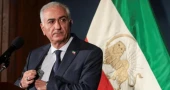
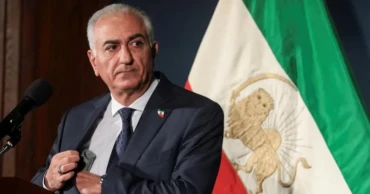
Reza Pahlavi, the exiled son of Iran’s last shah, has called on the international community to support protesters seeking to overthrow Iran’s government, saying the fall of the Islamic Republic is inevitable.
Speaking at a news conference in Washington, Pahlavi said the world should help the protesters and urged “surgical” strikes on Iran’s Revolutionary Guards to weaken the authorities and prevent further loss of life.
Protests erupted across Iran on Dec 28 over the country’s weak economy and falling currency. The demonstrations later turned into calls for the end of the rule of Supreme Leader Ayatollah Ali Khamenei.
Human rights groups say more than 2,000 protesters have been killed in the crackdown. The Iranian government has described the unrest as riots backed by foreign enemies.
Pahlavi said parts of Iran’s security forces have refused to join the crackdown and claimed that foreign militia fighters were brought in to suppress the protests. He vowed to return to Iran and outlined plans for a new constitution based on democracy, individual freedom, and separation of religion and state.
He said Iran’s future leadership should be decided by its people. “I am trying to help them liberate themselves,” he said.
The protests began after shopkeepers in Tehran went on strike over rising prices and quickly spread nationwide. Demonstrators have chanted slogans against the Supreme Leader and the clerical leadership.
With inputs from BBC
8 months ago
Reza Pahlavi returns to spotlight as protests shake Iran
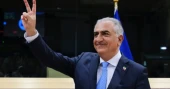
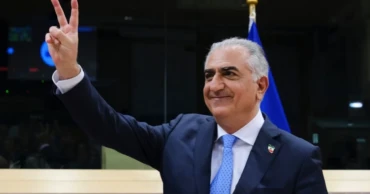
Iran’s exiled crown prince Reza Pahlavi, whose father was overthrown nearly five decades ago, is once again seeking a role in shaping Iran’s future as nationwide protests challenge the country’s Islamic rulers.
Pahlavi, 65, has lived in exile in the United States since the 1979 Islamic Revolution forced his father, Shah Mohammad Reza Pahlavi, from power after mass uprisings across the country. Though the monarchy was widely despised for corruption, repression and deep inequality, Pahlavi is now trying to position himself as an alternative to Iran’s struggling theocracy.
Iran’s supreme leader warns of harsh response as protests continue
He recently called on Iranians to return to the streets, helping trigger large demonstrations that began over economic hardship but have evolved into a broader challenge to the Islamic Republic. The protests come after years of unrest and a recent 12-day conflict with Israel that included U.S. strikes on Iranian nuclear facilities.
It remains unclear how much genuine support Pahlavi commands inside Iran. Some protesters may favor a return to monarchy, while others simply want an end to clerical rule. Iranian state media dismissed the unrest as the work of “monarchist terrorists” and accused Pahlavi’s supporters of violence.
Born into privilege in 1960, Pahlavi grew up in Tehran’s royal palaces and was educated at a private school inside Niavaran Palace. His father’s rule, strengthened by a 1953 CIA-backed coup, relied heavily on U.S. support and a feared intelligence service known for torturing dissidents. Rising oil wealth in the 1970s failed to prevent widening inequality, and millions eventually took to the streets against the monarchy.
As protests intensified, Pahlavi left Iran in 1978 for flight training in the United States. A year later, the shah fled the country and Shiite clerics consolidated power, establishing the Islamic Republic and executing thousands of opponents. After his father’s death in 1980, royalists in exile declared Reza Pahlavi the new shah.
Since then, Pahlavi has spent decades abroad, mainly in the U.S., trying to maintain influence. His efforts included a brief clandestine television broadcast into Iran in the 1980s. However, memories of his father’s rule, repression inside Iran and perceptions that he is disconnected from everyday life in the country have limited his appeal.
Younger Iranians, born long after the revolution, have grown up under strict social controls, economic crisis, corruption and sanctions. Pahlavi has sought to reach them through social media and foreign-based Persian-language media.
In recent years, he has spoken of a possible constitutional monarchy or another system chosen by Iranians themselves. He has also drawn criticism for his ties to Israel and for meeting Prime Minister Benjamin Netanyahu.
Iran protests intensify as citizens call for political change
Pahlavi argues the Islamic Republic is beyond reform and says only fundamental change can save Iran. Whether he can become a central figure in that transformation remains uncertain.
9 months ago

Son of Iran's last shah set to make first visit to Israel
Iran's exiled crown prince is scheduled to come to Israel this week on a visit that reflects the warm ties his father once had with Israel and the current state of hostility between Israel and the Islamic Republic.
Reza Pahlavi, the son of the last shah to rule Iran before the 1979 Islamic Revolution, said Sunday that he will be delivering “a message of friendship from the Iranian people.”
He is set to participate in Israel's annual Holocaust memorial ceremony on Monday night, said Israeli Intelligence Minister Gila Gamliel, who will host him. He is also set to visit a desalination plant, see the Western Wall and meet representatives of the local Bahai community and Israeli Jews of Iranian descent, she said.
Also Read: In first, Iran's president addresses Palestinians in Gaza
Gamliel praised the “brave decision” by Pahlavi to make what she said would be his first visit to Israel. “The crown prince symbolizes a leadership different from that of the ayatollah regime, and leads values of peace and tolerance, in contrast to the extremists who rule Iran,” she said.
Pahlavi left Iran at age 17 for military flight school in the U.S., just before his cancer-stricken father Mohammad Reza Pahlavi abandoned the throne for exile. The revolution followed, with the creation of the Islamic Republic, the takeover of the U.S. Embassy in Tehran and the sweeping away of the last vestiges of the American-backed monarchy.
Pahlavi, who still resides in the U.S., has called for a peaceful revolution that would replace clerical rule with a parliamentary monarchy, enshrine human rights and modernize its state-run economy.
Whether he can galvanize support for a return to power is unknown. His father ruled lavishly and repressively and benefitted from a CIA-supported coup in 1953. The late shah also had close diplomatic and military ties with Israel.
That ended in 1979, when the Iranian revolution’s leader, Ayatollah Khomeini, declared Israel an “enemy of Islam” and cut all ties. Today, the countries are arch-enemies. Israel considers Iran to be its greatest threat, citing the country's calls for Israel's destruction, its support of hostile militant groups on Israel's borders and its nuclear program. Iran denies accusations by Israel and its western allies that it is pursuing a nuclear bomb.
“I want the people of Israel to know that the Islamic Republic does not represent the Iranian people. The ancient bond between our people can be rekindled for the benefit of both nations,” Pahlavi said on Twitter.
3 years ago