referendum
BNP conducts outreach campaign at Motijheel against ‘propaganda’ about July Charter, referendum
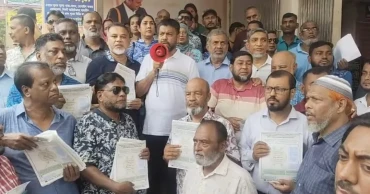
Dhaka South City BNP on Thursday conducted a leaflet distribution and public outreach campaign at Motijheel against what the party described as propaganda by vested interests about the July National Charter and referendum, and in support of the positive steps taken by the BNP government.
The programme was organised in the morning around the Bangladesh Bank headquarters under the initiative of ward No. 8 unit of BNP under Dhaka South City Corporation.
Dhaka South City BNP Convener and MP from Feni-1 constituency Rafiqul Alam Majnu, Senior Joint Convener Harunur Rashid Harun, Motijheel Thana BNP Convener Alamgir Hossain, Member Secretary Zahid Hossain and Joint Convener Ismail Hossain were present.
During the campaign, the BNP leaders distributed leaflets among people on important roads, alleys, business establishments and general public.
They also explained in detail the objectives of the July Charter, the necessity of the referendum, BNP’s role in restoring democracy and various activities undertaken by the party to establish people’s rights.
The leaders alleged that a quarter has been deliberately trying to create confusion among people regarding the July Charter and referendum.
They said BNP has always practised politics based on the hopes and aspirations of the people and has consistently played an uncompromising role in establishing democracy, voting rights and human rights in the country.
During the outreach programme, BNP leaders also highlighted what they described as the achievements of BNP governments in infrastructure development, education, healthcare, communication, agriculture and the economy, saying those developments are still remembered by the people.
They said BNP had worked sincerely in the past to improve people’s living standards, create employment opportunities, establish the rule of law and build a democratic and accountable state system, and will continue to stand beside the people in the future as well.
They urged people not to be misled by propaganda and rumours, and to remain united in the interest of the country.
5 months ago
PM urges people not to pamper those trying to create chaos
Prime Minister Tarique Rahman on Monday urged the country’s people not to pamper those who are trying to create chaos and mislead people over the referendum and the July National Charter for their own political gains.
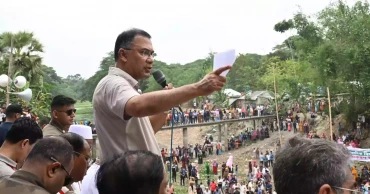
“Some individuals and political parties are now trying to divert the referendum in a different direction and create confusion across the country,” he said while addressing a gathering on the bank of the historic Ulashi Canal after inaugurating its re-excavation work in Sharsha upazila of Jashore.
The Prime Minister listed several government initiatives, including family cards for women, farmer cards, canal excavation, reopening of closed mills to create jobs for unemployed youth, expanding healthcare to rural areas and tree plantation drives.
“We have seen that since independence, at different times, certain quarters have tried to create unrest, confusion and disorder in the country. Whenever BNP has taken programmes to improve people’s lives, we have seen how, in the name of movements, a 173-day hartal was enforced. Do you remember how those 173 days were used in an attempt to destroy the country’s economy?” he said.
Tarique Rahman said the same ‘ghost’ has now possessed others again, urging people to remain alert against this quarter.
“You must stay vigilant against those who want to divert the verdict of the referendum and present the July Charter in a misleading way to serve their own political interests,” he said.
The Prime Minister warned that such elements were trying to create disorder in the country, which could obstruct the government’s development programmes and harm public welfare.
“If they are pampered and they succeed in creating chaos, the programmes undertaken for the people’s welfare will be disrupted,” he said.
Tarique Rahman stressed that people themselves must ensure that no one is allowed to undermine the nation’s progress.
“If we remain united and alert, no one will be able to play with the destiny of Bangladesh,” he said.
The Prime Minister also recalled the mass uprising of August 5, 2024, saying people had already shown how they respond to attempts to ignore their will.
“Just as the people gave a fitting reply on August 5, they will do so again in the future if anyone tries to play with their fate,” he added.
Tarique Rahman also highlighted his government’s various development initiatives, expressing confidence that their successful implementation will bring meaningful changes to people’s lives across the country.
“We, who follow Shaheed Zia and are soldiers of Begum Khaleda Zia, believe that this country is our first and last address. That is why we say – Bangladesh first, Bangladesh last,” he said.
The Prime Minister reiterated that his government will gradually implement – word by word – the July Charter as signed by political parties at the South Plaza of Parliament.
Using 40 crore hands to build the nation
The Prime Minister called for mobilising the 40 crore hands of the country’s 20 crore people to build the nation.
“Today, we must take a pledge. The 40 crore hands of 20 crore people cannot remain idle. These hands must be used to build the nation and change the fate of its people. Only then will the destiny of the people of this country change,” he said.
Referring to the progress of different countries, Tarique Rahman said many nations have transformed their fortunes over the past 50 years.
“We often talk about Singapore – its condition in 1971 was worse than ours. Just look where they are today, 50 years later. If they can do it, why can't we? Inshallah, we can. The people of this country can do it,” he said.
Free education for girls up to degree level
The Prime Minister also announced a plan to make education free for girls up to degree level.
He said of Bangladesh’s nearly 20 crore population, half are women, and stressed the need to expand educational opportunities for them.
Referring to past initiatives taken by his mother and former Prime Minister Khaleda Zia, Tarique Rahman said education for girls had earlier been made free up to the school level during her first tenure and later extended to the intermediate level.
“We want to take that programme further…we have decided that, Inshallah, girls’ education will be made free up to the degree level. Not only that, stipends will also be introduced for those who achieve good academic results,” he said.
Inaugurating Ulashi Canal re-excavation work
Earlier, the Prime Minister formally inaugurated the Ulashi Canal re-excavation project by digging soil with a spade and later planted trees along the bank of the canal.
He said the canal had dried up due to siltation, encroachment and lack of maintenance, bringing no benefit to farmers or local residents.
“Nearly 50 years ago, Shaheed President Ziaur Rahman excavated this canal. If we can re-excavate about four kilometres of it, water will return to the area,” Tarique Rahman said.
He said around 20,000 farmers will directly benefit from the project, with an estimated additional 1,400 tonnes of food grains to be produced.
The Prime Minister also said about 72,000 people are expected to benefit overall if the canal is revived through re-excavation.
He also announced the government’s plans to plant around 3,000 trees along both sides of the canal.
“When there is water in the canal, local people benefit. Women, in particular, can earn extra income through duck rearing, which is now difficult due to a lack of water,” he added.
Health and Family Welfare Minister Sardar Md Sakhawat Husain, Water Resources Minister Shahid Uddin Chowdhury Anee, State Minister Forhad Hossain Azad and State Minister for Local Government Mir Shahe Alam, among others, were present at the programme, with State Minister for Power, Energy and Mineral Resources Aninda Islam Amit in the chair.
5 months ago
Writ petition filed challenging legality of referendum
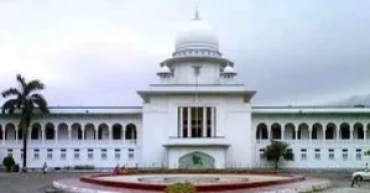
A writ petition was filed on Tuesday challenging the legality of the referendum that was held on February 12.
ABM Ataul Majid Touhid, a Supreme Court lawyer filed the writ petition with the HC bench concerned.
The petition also sought cancellation of the results of the referendum.
The Chief Election Commissioner, the Cabinet secretary and the Law secretary were made respondents in the petition.
The petition is likely to move before a High Court bench led by Justice Fatema Najib.
Meanwhile, the ‘Yes’ vote won in the nationwide referendum held on February 12.
According to the announced results, a total of 4,80,74,429 voters cast their votes in favour of the proposal, while 2,25,65,627 voted against it.
8 months ago
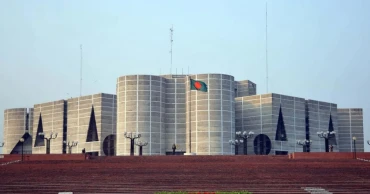
Gazettes of newly elected MPs, referendum results published
The Election Commission (EC) has published the two separate gazette notifications of the 297 Members of Parliament elected to the 13th parliament as well as the referendum results.
The two gazettes were issued on Friday night by EC Senior Secretary Akhtar Ahmed.
The names of the elected MPs along with their fathers’ or husbands’ names, mothers’ names and addresses have been published in the gazette.
The process for administering the oath to the newly elected lawmakers will now be arranged.
59.44 percent votes cast in national election:EC
Earlier on Thursday last, the voting was held in 299 out of 300 constituencies across the country in the 13th parliamentary election and referendum on July National Charter (Constitutional Reform) Implementation Order 2025.
The election in Sherpur-3 constituency was earlier cancelled following the death of a contesting candidate.
The EC on Friday announced the unofficial results of 297 constituencies and kept the results of Chattogram-2 and 4 constituencies postponed in the line of the court orders.
In the election, BNP secured victory in 209 out of the 297 constituencies. BNP candidates are also leading in the two constituencies - Chattogram-2 and 4– where results have been withheld. Besides, BNP’s alliance partners – BJP (Andaleeve Rahman Partho), Ganaodhikar Parishad and Ganasamhati Andolan– won three seats.
On the other hand, Jamaat-e-Islami won 68 seats, while other partners of the Jamaat-led 11-party electoral alliance secured nine seats. Of them, NCP secured six seats, while Bangladesh Khelafat Majlish gained two seats and Khelafat Majlish won one seat.
Pakistan PM congratulates Tarique Rahman on election win, pledges closer ties
Besides, seven independent candidates clinched victory in seven other parliamentary seats.
According to the separate gazette issued by the EC, a total of 48,200,660 voters cast their votes in favour of ‘Yes’ option, while 22,071,726 voters voted ‘No’ option. The number of rejected ballots in the referendum was also significant, standing at 7,422,637.
According to the Constitution, newly elected MPs must take their oath, typically administered by the Speaker within three days of the gazette notification. Due to the resignation/absence of the 12th Parliament Speaker, the Chief Election Commissioner (CEC) or a President-nominated person will administer the oath.
The Article 148 (2A) states,”If, within three days next after publication through official Gazette of the result of a general election of members of Parliament under clause (3) of article 123, the person specified under the Constitution for the purpose or such other person designated by that person for the purpose, is unable to, or does not, administer oath to the newly elected members of Parliament, on any account, the Chief Election Commissioner shall administer such oath within three days next thereafter, as if, he is the person specified under the Constitution for the purpose.”
8 months ago
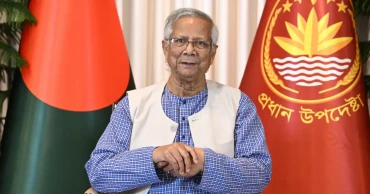
Flawed, violent polls invite destruction, benefit no one: Prof Yunus tells parties
Chief Adviser Prof Muhammad Yunus on Tuesday urged political parties to refrain from any form of chaos, violence, intimidation, occupation of polling centres, vote manipulation, or provocative activities, warning that a ‘flawed, questionable, or violent election’ ultimately benefits no one.
“History teaches us that a flawed, questionable, or violent election does not bring good to anyone. Instead, it brings destruction to the country,” he said in a televised address to the nation ahead of the twin polls - the national election and referendum, scheduled for February 12.
Prof Yunus said those who have ignored public opinion and attempted to remain in power through force or irregular means have invariably faced strict accountability in the court of the people.
“I want to clearly tell all political parties that they must unequivocally instruct their leaders and activists at every level - from the party headquarters to the grassroots, not to engage in chaos, violence, intimidation, occupation of polling centres, vote influence, or any provocative actions,” he said.
Prof Yunus also cautioned against the spread of rumours on social media or through any other means.
The Chief Adviser warned that the state will not tolerate such activities under any circumstances.
Key in your hands, use it wisely: Prof Yunus tells voters
“Since the election process began, we have observed that a certain group has been systematically attempting to create doubt, fear, and confusion among citizens by spreading rumours and misinformation,” Prof Yunus said, adding that their sole objective is to disrupt the peaceful election environment and undermine public trust.
He called on all citizens to remain vigilant and act responsibly. “Do not share any information without verification. Awareness and truth are the strongest weapons against rumors. Those who deliberately sought to create doubts about the elections over the past months have been proven completely wrong and have failed to mislead the people.
“Stay clear of all forms of propaganda. Remain in contact with the government to verify information. Call the Election Friend Hotline - 333 - to obtain accurate updates,” Prof Yunus said.
He said a new narrative is now being circulated claiming that the interim government will not hand over power to the elected representatives.
He described this claim as “completely baseless and a planned propaganda effort aimed solely at creating obstacles in the country’s democratic transition. Rest assured, the interim government will fulfill its responsibilities and hand over power to the elected representatives as soon as possible.”
8 months ago
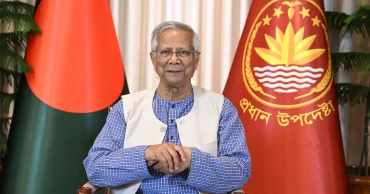
Key in your hands, use it wisely: Prof Yunus tells voters
Chief Adviser Prof Muhammad Yunus on Tuesday urged the electorate to make the February-12 election day the ‘birthday of a new Bangladesh’, saying that voters themselves will write the history of the country’s glorious future.
“Your vote will write the history of Bangladesh’s glorious future. Let this election day be the birthday of a new Bangladesh. Let us make this festive election a reality and establish it as a memorable day in history,” he said in a televised address to the nation in the evening.
Calling on citizens to take ownership of the country’s future, the Chief Adviser encouraged voters to open the door to building a new Bangladesh through their valuable votes.
“The key to the country is in your hands. Use that key wisely. May Allah guide us on the right path,” Prof Yunus said.
He emphasised that a vote in the referendum is not merely a stamp on a piece of paper, but a decisive choice that will shape the future of the next generation, the security of families and the overall direction of the nation.
“The decisions you make today will influence education, employment, justice, democracy, and every level of governance. This is a moment when your rights and responsibilities as citizens come together,” he said, urging people to actively participate in the referendum. “Cast your vote and secure your future.”
“Let us make this historic moment a success through responsibility, awareness, and peaceful participation,” he added.
Prof Yunus said voters should go to polling stations with hope rather than fear, with responsibility instead of apathy, and with unity rather than division.
Only through a ‘free, fair, and credible’ referendum, he said, can the people of Bangladesh demonstrate their ability to determine their own future.
Once the elections are completed, he said, the elected government will promptly assume office, marking the end of the interim government’s responsibilities.
“We will hand over power to the newly elected government with joy and pride, wish them all-out success, and return to our respective work after bidding farewell,” Prof Yunus said, adding that the interim government is eagerly waiting for this auspicious moment.
He also urged voters to attend polling stations in groups with their families, in a festive atmosphere, and to exercise their right to vote freely and without hesitation.
Prof Yunus said there are moments in the life of every nation that carry far-reaching significance, days when the future direction of the state, the character and stability of democracy and the fate of future generations are decided. “The day after tomorrow is one such moment, when two elections will be held,” he said.
Flawed, violent polls invite destruction, benefit no one: Prof Yunus tells parties
The Chief Adviser said people will elect a new government and simultaneously determine the future structure of the beloved state of Bangladesh through a referendum. The formal election campaign has concluded and that the responsibility of decision-making now rests with people, he added.
Despite differences in opinion and ideology, Prof Yunus said, political parties have exercised restraint, candidates have acted responsibly, and citizens have remained vigilant. “This environment did not emerge overnight - it is the result of a shared sense of responsibility.”
Prof Yunus expressed sincere gratitude to all political parties, contesting candidates, voters, the Election Commission, civil society representatives, media professionals, and members of the law enforcement agencies and administration involved in the electoral process.
“With your collective efforts, we have reached the threshold of holding elections in a hopeful atmosphere,” he said.
A total of 51 political parties are contesting the elections - the highest number in the country’s history, Prof Yunus said. The total number of candidates, including independents, exceeds 2,000, a figure rarely seen in previous national elections.
He appealed to all candidates to rise above personal or party interests and place the greater national interest first, regardless of the outcome. “Just as victory is an essential part of democracy, defeat is also an inseparable reality of democracy.”
Following the elections, Prof Yunus said, all should dedicate themselves to building a new, just, democratic, and inclusive Bangladesh.
“Therefore, I am not merely requesting, but demanding - leave fear behind and bring courage to the polling stations. Your single vote will not only elect a government; it will respond to 17 years of silence, challenge unbridled fascism, reshape the nation, and affirm that this country will never again allow the voices of its youth, women, and struggling people to be silenced,” the Chief Adviser said.
He said the government has taken all necessary measures to ensure the elections are free, fair, impartial, and peaceful.
A record number of law enforcement personnel have been deployed for the polls, Prof Yunus said.
To maximise the use of technology, CCTV cameras have been installed nationwide on an unprecedented scale. Presiding officers at polling stations are using body-worn cameras, while drones and dog squads have been deployed for enhanced security and surveillance, he said.
“The sole purpose of these measures is to ensure that voters can exercise their right to vote without fear or anxiety and with dignity. Voting rights are not granted at anyone’s discretion; they are fundamental rights guaranteed by our Constitution,” Prof Yunus said.
He emphasised that ensuring a free, fair, and participatory election is not solely the responsibility of the government, but a shared responsibility of every citizen of the state.
8 months ago

Six international organisations to deploy 63 observers for Bangladesh elections
Six international organisations, including the Organisation of Islamic Cooperation (OIC), have agreed to deploy at least 63 observers for Bangladesh’s 13th general election and the referendum on the July National Charter, both scheduled for February.
They will join observer missions from the European Union, 16 countries and 32 individuals affiliated with various global bodies, bringing the total number of confirmed international observers for the dual polls to 330 so far, said the Chief Adviser’s press wing on Saturday.
The number of international observers confirmed for the upcoming election is more than double that of the controversial general election held on January 7, 2024.
The number of international observers for the 12th, 11th, and 10th general elections stood at 158, 125, and four respectively.
Shakir Mahmood Bandar, Head of the OIC Election Observation Unit, will lead the two-member OIC observer mission.
Besides, 28 observers will arrive from the Asian Network for Free Elections (ANFREL), 25 from the Commonwealth Secretariat, seven from the US-based International Republican Institute (IRI), and one from the National Democratic Institute (NDI), also based in the United States.
Thirty-two observers representing organisations such as Voice for Justice, Democracy International, SNAS Africa, the SAARC Human Rights Foundation, and the Polish Institute of International Affairs will monitor the election in their individual capacities, according to information received from the Ministry of Foreign Affairs and the Election Commission.
16 countries to send 57 observers for Feb 12 election
“We expect the number of international observers to increase, as several countries invited to send observer missions have yet to confirm the names of their delegates,” said Senior Secretary and SDG Coordinator Lamiya Murshed, who is overseeing coordination of the international observer visits.
The invited countries yet to confirm their delegates include India, Nepal, Australia, Brazil, Canada, Egypt, France, Kuwait, Morocco, Nigeria, and Romania.
Forum of the Election Management Bodies of South Asia (FEMBoSA) is also expected to name its delegates soon.
Nearly 2,000 candidates, representing more than 50 political parties as well as independent contenders, are contesting the 300 parliamentary seats.
The general election in Bangladesh will be held simultaneously with a referendum on the July National Charter.
8 months ago
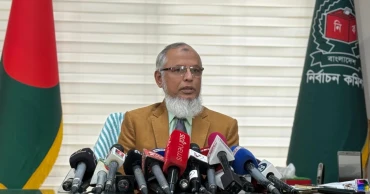
Election officials can’t campaign for or against referendum: EC Anwar
Election Commissioner Anwarul Islam Sarker on Tuesday said officials assigned to perform election duties will carry out publicity about the referendum but won’t campaign for or against any side.
“Our position on the referendum is that we are encouraging people to participate in it. However, those entrusted with election duty will not legally work in favour of or against any side,” he said while responding to a question from reporters at his office in the city’s Nirbachan Bhaban.
The Election Commissioner said returning officers, assistant returning officers and other election officials would carry out publicity related to the referendum but would not take sides.
“No returning officer or assistant returning officer is campaigning for any side. Those appointed as returning officers cannot do that,” he claimed.
Replying to a question on whether publishing election results might take longer this time due to the counting of postal ballots alongside manual ballots for both the general election and the referendum, Anwarul Islam said the Election Commission is trying to announce the results within the expected timeframe.
Imams can play key role in holding successful referendum: Jashore DC
“In previous elections, we usually saw that most unofficial results came in by midnight. This time as well, it will be similar—at most by late night or by the following day,” he said.
Responding to another question regarding demands to ban the Jatiya Party from participating in the election, the Election Commissioner said registered political parties that have valid nominations will take part in the polls. “We believe that all registered parties with nominations will contest the election,” Anwar said.
About the maintenance of electoral code of conduct, he said mobile courts have so far conducted drives in 128 constituencies. “They identified 144 violations of the code of conduct, fined a total of Tk 905,500 and filed 94 cases in the last 18 days since January 8,” he added.
Addressing allegations by Jamaat-e-Islami and National Citizen Party (NCP) that there is no level-playing field, Anwarul Islam said the Election Commission has already taken necessary measures to address their complaints.
“We have forwarded every specific complaint they submitted to the concerned returning officers and the Electoral Inquiry Committees, and action will be taken in accordance with the law,” he said.
EC Anwar said the EC believes the overall election atmosphere this time is much better than many previous elections.
Nation's future hinges on ‘Yes’ vote in referendum: Land Adviser
He said the people are participating in the election with full confidence. “Political parties are taking part, and election campaigns are being conducted in a festive manner across the country. These things are reflection of public confidence (in EC),” the Election Commissioner said.
Asked whether the Election Commission has any concerns about the February 12 elections, Anwarul Islam said the commission has taken all necessary steps to ensure a fair and neutral election.“Inshallah, you, the nation and the world will see that a fair election is held on February 12.”
8 months ago
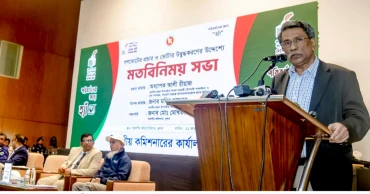
Key to nation’s success lies in people’s hands: Ali Riaz
Prof Ali Riaz, Special Assistant to the Chief Adviser, on Thursday said the key to the nation’s success rests with the country’s people.
Speaking at a consultation meeting organised by the Khulna Divisional Administration at the Divisional Commissioner’s Office auditorium, Prof Riaz emphasised the importance of public participation in the referendum and voter mobilisation.
Ali Riaz, also the chief coordinator of the public awareness campaign team on the upcoming referendum, urged people to vote ‘Yes’ in the referendum to reform the country and establish equality and dignity, marking their ballots with a tick.
BNP in favour of ‘Yes’ in referendum: Mahdi Amin
Ali Riaz highlighted that the July National Charter 2025 reflects the aspirations of people. “Although this charter is printed in black ink, its true meaning has been written in blood. While we may not have contributed with our blood, it is our responsibility to recognise the July National Charter 2025.”
He said the referendum is the best mechanism to determine the future system of government, and even though the interim government remains neutral in national elections, it supports the ‘Yes’ vote in the referendum.
According to the constitution, he said, public servants face no restrictions in campaigning for the ‘Yes’ vote.
Nation's future hinges on ‘Yes’ vote in referendum: Land Adviser
At the event, Special Guest Monir Haider, Special Assistant (Consensus) to the Chief Adviser, said the main aim of the 2024 mass uprising was to create a fascism-free and inequality-free society.
“This referendum serves to gauge public support for a new Bangladesh and a new settlement. Voting in favour of the July National Charter will constitutionally block the path of fascism,” he added.
Presided over by Khulna Divisional Commissioner Md Mokhtar Ahmed, the meeting was addressed, among others, by Prof Dr Md Maksud Helali, Vice-Chancellor of Khulna University of Engineering & Technology, Range DIG Md Rezaul Haque, and Metropolitan Police Commissioner Md Zahidul Hasan.
Officials from all 10 districts of Khulna Division, including district, divisional, and upazila-level officers, election officials, representatives from the Chamber of Commerce, teachers and students from schools and colleges, civil society members, NGO representatives and media personnel, attended the consultation meeting.
8 months ago
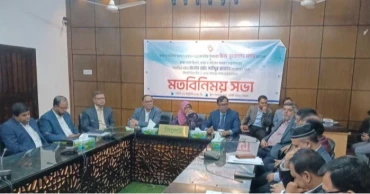
Campaigning for ‘Yes’ in referendum is a state obligation: Adviser Nurjahan
Health and Family Welfare Adviser Nurjahan Begum on Friday said that campaigning in favor of a ‘Yes’ vote in the upcoming referendum is a collective obligation for the state.
She made the remarks while answering journalists’ questions after a discussion with district- and divisional-level health officials in Sylhet on the referendum.
“Citizens do not need to understand the constitution or the difference between the upper and lower houses. What matters is explaining how the referendum will affect their daily lives and building public opinion in favor of ‘Yes’,” she said.
She also warned that those opposed to elections would do everything possible to prevent them. “The more people we can engage, the more we can defeat anti-election and malevolent forces,” she added.
Earlier, during the meeting with divisional health officials, Nurjahan directed all officials of the Health Department to campaign for the ‘Yes’ vote. She also suggested involving NGOs alongside government offices to support the campaign.
None can destroy communal harmony in Bangladesh: Adviser Nurjahan
On the sidelines, she said the opening of Sylhet District Hospital has been delayed due to staff shortages, but the issue will be resolved soon.
The discussion was chaired by District Commissioner Md. Sarwar Alam and attended by Health and Family Welfare Ministry Secretary Md. Saidur Rahman, along with health officials at district and divisional levels.
9 months ago