IRI
IRI calls for sustained dialogue to build trust ahead of Bangladesh election
The US-based International Republican Institute (IRI) has said sustained dialogue, transparent election administration, and "credible participation by political parties" will be essential to mitigate polarisation and reinforce confidence in the transition.
The Election Commission has introduced reforms to enhance participation and operational preparedness, including mechanisms for out-of-country voting, said the IRI on November 5.
To strengthen election security, it plans to integrate the armed forces into the election security framework.
Despite these efforts, the IRI said the pre-election environment remains fragile, with isolated yet politically significant episodes of violence, questions about the neutrality of local officials, and lingering distrust of security forces.
The emergence of youth-led parties and the anticipated high turnout of first-time and diaspora voters signal a potential shift in political engagement and underscore the continued influence of youth activism on Bangladesh’s democratic renewal.
Canada advocates for ‘free, participatory’ elections in Bangladesh
However, challenges persist — candidate selection processes within political parties lack transparency, women remain underrepresented, and concerns are mounting that the growing appeal of extremist and hardline groups could embolden intolerant narratives and undermine Bangladesh’s secular political foundations, IRI said.
It observed that while Bangladesh’s Election Commission and the Interim Government have taken commendable steps to enhance electoral credibility and ensure transparent election administration, maintaining public trust will require consistent communication and ongoing engagement with political and civic stakeholders.
The IRI, an organisation dedicated to promoting freedom and democracy worldwide, deployed a pre-election assessment mission from October 20 to 24 to examine Bangladesh’s evolving political and electoral landscape ahead of the expected February 2026 parliamentary elections.
The polls will mark the first major test of the country’s democratic transition following the July 2024 student-led protests and the formation of the interim government.
This impartial assessment highlights the progress of the interim government’s reform agenda, including the creation of 11 reform commissions, renewed inter-party dialogue and broad consultations on the July National Charter, a comprehensive framework of 84 proposals addressing nearly every aspect of Bangladesh’s democratic architecture, the IRI said in a statement on November 5.
Ambassador Mushfiqul promotes Bangladesh-Mexico trade ties at Querétaro
It noted that disputes over the Charter’s sequencing, referendum timing, and enforcement mechanisms underscore the challenges of building a broad-based political consensus.
Political parties, the IRI observed, are actively shaping the transition by participating in reform dialogues and undertaking early electoral preparations such as candidate recruitment.
Yet, they must continue strengthening internal structures, increasing responsiveness to citizens, and rebuilding public trust to foster meaningful political competition, said the organisation.
The Institute said civil society organisations have re-emerged as key actors in promoting transparency and civic participation.
Expanding civic space and ensuring that the media, watchdog groups, and grassroots movements can operate freely will be essential to sustaining reform momentum and public confidence.
The assessment provides a non-partisan analysis of these dynamics, identifies key risks to electoral integrity, and offers actionable recommendations to support credible and peaceful elections as Bangladesh enters a new phase of democratic renewal.
Statement of Findings and Recommendations
The IRI conducted its pre-election assessment mission in Bangladesh from October 20–24, 2025, ahead of the expected February 2026 parliamentary elections.
The mission, composed of international policy and election experts, met with a broad spectrum of stakeholders, including the Election Commission, political parties, interim government officials, and civil society representatives, to evaluate the electoral environment and prospects for democratic renewal.
Dhaka eyes new horizons in partnership with Kathmandu
The interim government, led by Prof Muhammad Yunus, has launched an ambitious reform agenda through 11 commissions and the National Consensus Commission, culminating in the July National Charter, a framework of 84 proposals addressing nearly every aspect of Bangladesh’s democratic architecture.
While the Charter has been broadly endorsed, its implementation remains uncertain due to procedural ambiguities and divergent party positions on timing and enforcement.
The trajectory of the July National Charter and the extent to which political parties institutionalise democratic norms, including those advanced by the student movement, will determine the direction of Bangladesh’s democratic transition.
As Bangladesh moves toward the expected February elections, the coming months will reveal whether the promise of the post-uprising reform movement can be institutionalised through credible and peaceful polls.
The interim government’s success will depend on its ability to maintain neutrality, ensure security, and advance the National Consensus Commission’s reform agenda towards tangible implementation.
The July National Charter provides a blueprint for democratic renewal, but much of its realisation will rest on the next parliament’s political will.
Ireland offers support for police reform in Bangladesh
The IRI pre-election assessment mission held 21 meetings with 59 stakeholders, including representatives from political parties, the Interim Government, the Election Commission, the media, international organisations, and civil society, and expressed gratitude to all who shared their insights.
Throughout 2025, the National Consensus Commission struggled to reconcile competing preferences over how and when to enact reforms.
The Bangladesh Nationalist Party (BNP) insists that the Charter should be implemented after the February 2026 elections to avoid what it describes as “procedural overreach” by the unelected interim government.
In contrast, Jamaat-e-Islami and several allied Islamist parties advocate holding a referendum before the election to ensure reforms become binding on the next parliament.
Newer parties, such as the National Citizen Party (NCP), occupy an intermediate position, favoring simultaneous elections for the national parliament and the formation of a body with limited constituent authority.
The NCP has further proposed renaming the Charter the “Bangladesh Constitution 2026”, requiring all public officials to take a renewed oath under it, a symbolic gesture aimed at reinforcing the break from past authoritarianism.
French Ambassador presents credentials to President
In October, the National Consensus Commission drafted an implementation plan requiring enforcement of the Charter’s provisions within nine months of the next parliament’s seating.
The plan, however, does not yet define penalties for missed deadlines, leaving its enforceability uncertain.
These procedural ambiguities underscore how the reform process remains dependent on post-election political will.
With roughly four months remaining until the expected polls, the Election Commission has emerged as both a key institutional actor and a flashpoint for partisan criticism.
The proposed Representation of the People (Amendment) Ordinance 2025 (RPO) includes significant changes aimed at enhancing transparency and rebuilding voter confidence.
The revised RPO raises campaign spending limits, reintroduces the “No Vote” option, and empowers the Election Commission to annul constituency results in cases of irregularities.
Following months of public consultation, the Election Commission also cancelled the use of Electronic Voting Machines (EVMs) for the upcoming election, citing operational challenges and concerns over credibility.
11 months ago
Bangladesh on track for ‘peaceful, inclusive’ polls: Prof Yunus tells IRI
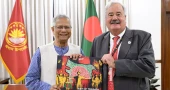
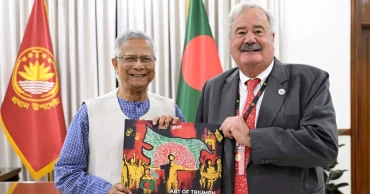
Chief Adviser Prof Muhammad Yunus on Tuesday conveyed to the US-based International Republican Institute (IRI) that Bangladesh is on track for a ‘peaceful and inclusive’ election, noting that this is going to be a lifetime experience for so many young people.
“Half the population of the country is under 27. They will vote for the first time in their life. We want to make sure they are satisfied. We will have a peaceful and festive voting,” said the Chief Adviser when a delegation from the IRI met him at the state guest house Jamuna.
The delegation confirmed that the IRI will send at least 10 international observers for Bangladesh’s national election in February.
"We will have robust election observation in February," said delegation head Christopher J. Fussner, Member of the Board of Directors of IRI.
He said deployment of election observers would help mitigate chances of violence during the vote.
Lisa Curtis, Senior Fellow and Director of the Indo-Pacific Security Program at the Center for a New American Security (CNAS); Jessica Keegan, Technical Expert on Democratic Elections and Political Processes at IRI; Steve Cima, Resident Program Director at IRI; and Jami Spykerman, Program Director at the National Democratic Institute (NDI) were present at the meeting.
SDGs Affairs Principal Coordinator Lamiya Morshed was also present.
The team is currently visiting Bangladesh to assess the pre-election environment and is scheduled to meet with all major political parties.
IRI delegation meets BNP, discusses upcoming election
During the meeting, the delegation shared insights from their previous election observations and exchanged views with the Chief Adviser on electoral reforms.
They expressed optimism about the current political atmosphere, said the Chief Adviser’s press wing.
Fussner praised the prevailing atmosphere for the general election in Bangladesh.
"All parties want an election. From our experience of the previous election, we can see a positive atmosphere, which feels really good. We could tell the difference between the previous election and this election,” Fussner said.
The delegation said it is important to include local observers from civil society, such as student groups, to make the election more transparent. They also talked about the dangers of false information during elections.
The Chief Adviser said disinformation is a serious problem. “The biggest threat to democracy today is disinformation. It’s well-planned, well-funded and creates tension immediately. By the time the truth comes out, people have already reacted,” he said.
Christopher J. Fussner also raised concerns about the use of artificial intelligence to fabricate images and manipulate public opinion.
Prof Yunus underscored the significance of the July Charter as a unique milestone for the country's democratic journey, noting that all political parties have shown their commitment to reform.
“This puts us another step ahead of the election,” he said, adding that most parties have signed the charter and hoped that others would do very soon.
The IRI delegates lauded the leadership of Prof Yunus over the last 15 months.
"You are doing a great job during the transition," one delegate said.
"Everything you have done is absolutely remarkable," said another delegate.
The IRI, a non-profit, non-partisan organisation dedicated to advancing democracy and freedom globally, is now assessing the electoral environment in advance of the February 2026 parliamentary elections.
The IRI team deployed its pre-election assessment mission to Bangladesh from October 20 and they will continue to engage until October 23.
US-based IRI assessing environment ahead of Feb polls
1 year ago
BNP, IRI discuss upcoming election, reforms
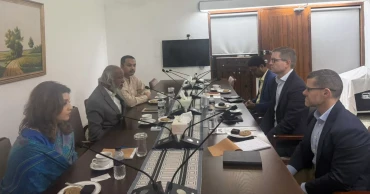
A BNP delegation held a meeting with a visiting team from the US-based International Republican Institute (IRI) on Thursday morning, focusing on the country’s evolving political situation, upcoming polls and reforms.
The hour-long meeting, which began around 11am, was held at the BNP Chairperson’s Gulshan office.
A three-member BNP delegation, led by party Standing Committee member Dr Abdul Moyeen Khan, attended the meeting.
The other members of the BNP delegation were Organising Secretary Shama Obaed and Acting Chairperson's Adviser Mahadi Amin.
The IRI delegation included Asia Pacific Director Stephen Cima, Deputy Director Matthew Carter and Senior Programme Manager Amitabh Ghosh.
Talking to reporters after the meeting, Dr Moyeen said the discussion covered the post-uprising political context in Bangladesh, ongoing reform initiatives and the BNP’s views on the future election.
PR demand ‘suspicious, unrealistic’, says BNP’s Nazrul
He said they presented the BNP’s strategic vision and plans to the IRI representatives.
“The meeting was constructive…we explained how we view the current political transition in Bangladesh and shared our thoughts on democratic reforms and the upcoming election,” Dr Khan said.
The IRI delegation is holding separate meetings with various political parties in Bangladesh as part of its ongoing engagements.
On August 19, the same delegation held talks with senior leaders of Bangladesh Jamaat-e-Islami at its central office.
The IRI is a Washington-based organisation that supports democratic practices and institutions across the world through engagement with political parties, civil society and government bodies.
1 year ago

Moderate rhetoric, engage in open dialogue on key election issues: IRI-NDI delegation
An International Republican Institute (IRI) and National Democratic Institute (NDI) joint delegation has said the upcoming national election in Bangladesh is a litmus test for democracy in the country.
“We feel the primary problem is lack of constructive engagement among key political actors,” said Karl F. Inderfurth (NDI Co-Chair) in a statement published today (October 15, 2023).
“The best way to end the stalemate is through good faith dialogue, in the run-up to the January 2024 elections and beyond.”
Also read: 'BNP kept no scope for compromise': Obaidul Quader to US delegation
From October 8 to 11, 2023, the International Republican Institute (IRI) and the National Democratic Institute (NDI) deployed a bipartisan, international delegation to provide an independent and impartial assessment of electoral preparations ahead of Bangladesh's upcoming 12th parliamentary election; examine factors that could affect the integrity and viability of the electoral process; and offer recommendations that could help improve the prospects for inclusive, transparent, and peaceful elections and public confidence in the process.
Bangladesh’s robust economic growth and strong tradition of democratic values have set a strong foundation for the country to achieve its 2041 vision of becoming a developed country, the delegation said.
However, they said, the current political environment presents several challenges to electoral integrity, including uncompromising and zero-sum politics, highly charged rhetoric, political violence, a widespread climate of uncertainty and fear, contracting civic space and freedom of expression, and a trust deficit among citizens, political leaders, and other stakeholders.
Also read: Credible polls not possible under current regime, BNP tells US pre-election assessment team
Women, youth, and other marginalized groups also face significant barriers to participation.
Bangladesh is at a crossroads and the upcoming elections provide a litmus test for the country’s commitment to a democratic, participatory, and competitive political process.
The delegation offered the recommendations below as a roadmap for progress toward credible, inclusive, participatory, and nonviolent elections that can advance Bangladesh’s democracy.
They are outlined as
· Moderate rhetoric and engage in open and substantive dialogue on key election issues.
· Protect freedom of expression and ensure an open civic space where dissent is respected.
· Commit to nonviolence and hold perpetrators of political violence accountable.
· Create conditions to allow all parties to engage in meaningful political competition, including bolstering independent election management.
· Promote a culture of inclusive and active electoral participation among citizens.
To develop these recommendations, the delegation met with government officials; the Bangladesh Election Commission; party leaders from across the political spectrum; civil society representatives; current and former women members of parliament; representatives of organizations engaging with youth, persons with disabilities and religious minorities; media representatives; members of the legal community; and representatives of the international and diplomatic communities.
Also read: PM Hasina vows to uphold democracy
“We appreciate all those who shared their views freely about the challenges and opportunities that exist in Bangladesh for holding inclusive, participatory, and nonviolent elections,” said Bonnie Glick (IRI Co-Chair)..
“We came away from these conversations with concerns about the election environment, but hopeful that our recommendations can help to improve the process.”
The delegation recognized that it is the people of Bangladesh who will ultimately determine the credibility and legitimacy of their elections and their country’s democratic development.
The delegation therefore offered this pre-election statement in the spirit of supporting and strengthening democratic institutions in Bangladesh.
Also read: US mission’s focus on free, fair, participatory polls: CEC
Members of the joint delegation included Bonnie Glick (IRI Co-Chair), Former Deputy USAID Administrator; Karl F. Inderfurth (NDI Co-Chair), Former Assistant Secretary of State for South Asian Affairs; Maria Chin Abdullah, Former Member of the House of Representatives, Malaysia; Jamil Jaffer, Former Associate Counsel to the President of the United States; Johanna Kao, IRI Senior Director, Asia-Pacific Division; and Manpreet Singh Anand, NDI Regional Director, Asia-Pacific. The delegates were joined by technical and country experts from NDI and IRI.
3 years ago

‘Here to listen, support a transparent and inclusive electoral process’: NDI-IRI mission
Former US Assistant Secretary of State for South Asian Affairs Karl F. Inderfurth today (October 08, 2023) said the international community plays an important role in supporting Bangladesh as it prepares for the elections.
“We are here to listen to a variety of actors and show our support for a transparent and inclusive electoral process,” he said as a joint NDI-IRI mission began assessing the status of election preparations.
The team is scheduled to have a meeting with the Ministry of Foreign Affairs at 2:30pm today.
The joint International Republican Institute (IRI) and National Democratic Institute (NDI) pre-election assessment mission arrived in Bangladesh to follow electoral preparations and conduct an independent and impartial assessment.
From October 8 to 12, the six-member delegation will meet with a diverse group of election stakeholders including government officials, political party leaders, election authorities, civil society, and others.
Read: IRI-NDI pre-election assessment mission due to arrive Saturday
The delegation is co-chaired by Inderfurth and Bonnie Glick, former Deputy USAID Administrator; and includes Maria Chin Abdullah, former Member of the House of Representatives, Malaysia; Jamil Jaffer, former Associate Counsel to the President of the United States; Manpreet Singh Anand, NDI Regional Director for Asia-Pacific; and Johanna Kao, IRI Senior Director, Asia-Pacific Division.
“This joint pre-election assessment mission demonstrates our interest and support for democracy in Bangladesh,” said Bonnie Glick.
“We look forward to meeting with key stakeholders and to provide independent, impartial, and timely analysis as the country heads to the polls,” Glick added.
The delegation will conduct its assessment in accordance with the laws of Bangladesh and consistent with the Declaration of Principles for International Election Observation which was signed in 2005 at the United Nations.
Read: Uzra Zeya reiterates USA’s desire to see free, fair election in Bangladesh
Following the conclusion of its activities, the delegation will release a statement of its key findings, analysis of the pre-election environment, and practical recommendations to enhance the credibility of the process and citizen confidence in the elections.
NDI and IRI are nonpartisan, nongovernmental organizations that support and strengthen democratic institutions and practices worldwide.
The Institutes have collectively observed more than 200 elections in more than 50 countries over the last 30 years.
Read more: Australia’s Greens party MPs want free, fair elections in Bangladesh
3 years ago
AL govt enjoys overwhelming public support, says IRI survey
Bangladeshis have a strong support for the Awami League government, according to a survey of the International Republican Institute (IRI).
6 years ago