UNFPA
UNFPA hosts Open Mic to amplify public voices for women’s and girls’ rights
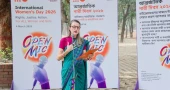
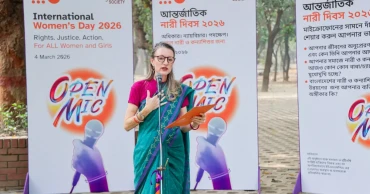
To mark International Women’s Day, the United Nations Population Fund (UNFPA) in Bangladesh on Wednesday organised an Open Mic event at Shahabuddin Park in the city’s Gulshan area to raise their voices for the rights, justice and empowerment of women and girls across the country.
With the global theme “Rights, Justice, Action: For All Women and Girls,” the event created a public platform for women, girls, men and boys to share their reflections, commitments and aspirations for a more equal Bangladesh.
Foreign Adviser lauds UNFPA’s role in maternal health, gender equity in Bangladesh
Addressing the gathering, UNFPA Representative in Bangladesh Catherine Breen Kamkong thanked participants for their courage and engagement, emphasizing that meaningful change begins by listening to communities.
“Policies and programmes are strongest when they reflect and are guided by real voices and lived experiences,” the UNFPA Representative said. “At UNFPA, we are committed to preventing violence against women and girls, ending child marriage, reducing adolescent pregnancy, ending preventable maternal deaths and ensuring access to sexual and reproductive health and rights. But sustainable progress requires collective action, and that starts with dialogue.”
Bangladesh has made significant progress in advancing gender equality. However, challenges remain as violence against women continues to affect millions, child marriage persists as a reality for almost half of all adolescent girls, mothers still die in pregnancy and birth, and many women and girls still face barriers in exercising full agency over their health and life choices.
“Many girls are still discouraged from studying technology and engineering, and too often they face cyber-bullying and online harassment. Initiatives like Alapon Helpline help adolescents to have a safe space to openly share their struggles, talk about mental health, and support each other. When young people feel heard, they find strength and hope to move forward,” said Farhana Sadika, a student at the United International University speaking at the Open Mic event about the challenges girls face in her community.
The Open Mic event was held as part of UNFPA Bangladesh’s broader International Women’s Day campaign, which aims to highlight data, personal stories and community voices to drive action on women’s and girls’ rights.
7 months ago
Bangladesh steps up efforts to end child marriage
With child marriage still affecting one in every two girls in Bangladesh (51%), the government is stepping up efforts to reverse this trend.
At the current slow pace of a 2% annual decline, it would take two centuries to end the practice.
Determined to accelerate progress, the government of Bangladesh has convened a high-level Inter-Ministerial Dialogue to define a unified roadmap for ending child marriage once and for all.
The dialogue, led by the Ministry of Women and Children Affairs (MOWCA), the Department of Women Affairs (DWA), and supported by the United Nations Population Fund (UNFPA), brought together Secretaries and senior officials from the Ministries of Education, Law and Justice, Information and Broadcasting, as well as the Local Government Division and the Cabinet Division, to translate data and commitments into concrete action.
“The acceleration we seek will only be achieved when these actions are taken in tandem, creating a web of protection so strong that no girl can fall through,” said Catherine Breen Kamkong, UNFPA Representative in Bangladesh.
“A girl kept in school is still at risk if she lacks legal protection, comprehensive life skills, and opportunities. A strong law is meaningless if enforcement fails. This is why today’s meeting represents a true whole-of-government response in action.”
The ministries agreed on a set of evidence-based, time-bound actions that together aim to create an environment where every girl can grow up free from coercion and with full control over her future.
Child marriage stopped by administration in Manikganj
The Ministry of Law and Justice was called to digitise the marriage registration system to prevent falsification of age and reforming the Child Marriage Restraint Act to close legal loopholes.
The Ministry of Education will aim at reinforcing school retention mechanisms and strengthening provision of comprehensive life skills education, including health and wellbeing, making schools safer for girls and recognising education as “the most effective vaccine against child marriage.”
The Ministry of Health and Family Welfare was invited to integrate a comprehensive and rights-based adolescent sexual and reproductive health package into the national Universal Health Coverage framework to reduce high adolescent pregnancy rates, as well as introduce a dedicated service package for married adolescent girls and first-time young parents.
The Local Government Division was invited to empower local government actors through performance-based funding and stronger accountability, while strictly enforcing universal birth and marriage registration for reliable age verification to effectively prevent child marriage at the grassroots level.
The Cabinet Division will explore ways to establish the prevention of child marriage as a core national and district-level priority by embedding it into national development plans, mandating the District Commissioners to create and and be accountable for fully costed action plans, and promoting inter-district collaboration on best practices.
Eradicating child marriage a cornerstone of our commitment to protect children’s rights: Simeen
The Ministries of Social Welfare and Information will tackle economic drivers and harmful gender norms, using both social protection schemes and large-scale norm change interventions to shift attitudes at the community level.
“While Bangladesh has made commendable progress for women and girls, child marriage remains a major challenge. It snatches away a girl's childhood, cuts short her education, and creates severe health risks, all of which hinder our national development,” said Mamtaz Ahmed, Senior Secretary of the Ministry of Women and Children Affairs.
“The government of Bangladesh is resolute in its commitment to ending this practice through multifaceted, coordinated action," he said.
The meeting concluded with an agreement to present the consolidated action points at the upcoming National Child Marriage Prevention Committee meeting for further endorsement and action.
MoWCA and UNFPA will be tracking implementation progress and providing technical assistance to ministries and local governments.
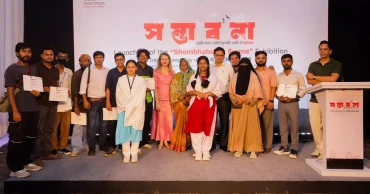
Earlier in the day, participants toured the “Shombhabonar Frame (Framing Possibilities)” photo exhibition, which vividly portrayed the lives and dreams of adolescent girls across Bangladesh.
The exhibition, featuring images and stories of resilience and hope, grounded the policy dialogue in real human experiences, underscoring the urgency of protecting girls from early marriage and promoting their education, health, and empowerment.
The event closed on a message of collective determination.
“We have the evidence. We have a plan. And now, we have the collective will to act,” concluded Ms. Breen Kamkong. “Together, we can build a Bangladesh where every girl’s childhood is protected, her choices respected, and her potential fully realised.”
1 year ago
Bangladesh’s population hits 175.7 million, majority in working-age group
Bangladesh's population is estimated at 175.7 million of which half are women, two-thirds (115 million) in the working-age group (aged 15-64), presenting a window of opportunity to harness the demographic dividend.
The estimation was made in the annual flagship publication, the State of World Population (SWOP) 2025, of the United Nations Population Fund (UNFPA).
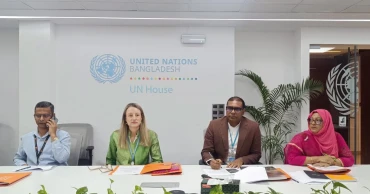
UNFPA Representative in Bangladesh Catherine Breen Kamkong officially launched the annual report at a press event held at the UN Building in the city’s Gulshan area on Monday.
“As of 2025, the global population stands at 8.2 billion. Bangladesh's population is estimated at 175.7 million of which half are women, two-thirds (115 million) are in the working-age group. It is an opportunity to harness the demographic dividend,” said Catherine Kamkong.
At the same time, 7 percent (12 million) of the population is aged 65 and above, signalling the onset of population ageing, she said.
Adolescents make up 19% of Bangladesh's population-approximately 33 million-while the broader youth cohort aged 10-24 accounts for 28%, nearing 50 million, Catherine Kamkong added.
Talking about this year’s theme of the publication, "The Real Fertility Crisis – The Pursuit of Reproductive Agency in a Changing World," she said it challenges the dominant narrative of "too many" or "too few" births. The real crisis is not about numbers-it is a crisis of reproductive agency.
“Around the world, and here in Bangladesh, people especially women and young people are unable to realize their reproductive intentions due to systemic, economic and social barriers,” said the UNFPA representative.
Bird strikes threaten aircraft safety in Bangladesh; monitoring system lies inoperative
The report is based on a global survey conducted by UNFPA, complemented by academic research and the lived experiences of communities, offering a rich and diverse perspective on fertility and reproductive agencies.
In high-income countries like the Republic of Korea, fertility has dropped to just 0.8 children per woman-the lowest globally.
In contrast, some African countries continue to experience high fertility rates, with Niger recording the highest Total Fertility Rate (TFR) at 5.8 children per woman, as per the report.
The report shows that Bangladesh falls in between, with a total fertility rate (TFR) of 2.1. In parts of Bangladesh, adolescent birth rates remain high, fueled by early marriage, limited access to contraception, and a lack of sexuality education.
The report sheds light on unfulfilled fertility aspirations, backed by evidence from 14 countries.
While most people desire two children, many have fewer than they wish, especially older adults-while others anticipate having more than planned and lack the knowledge or the means to access family planning services.
In Bangladesh, Catherine Kamkong said, there is very high out of pocket expenditure for health which means that people that do not have the financial means might not be able to access the care they need.
“In Bangladesh the government currently invests only 0.7% of GDP and 2% of the common budget for health. We hope that will be increased to 5% of GDP and 15% of the common budget as the health and wellbeing of Bangladesh is crucial for harnessing the future potential of the country,” she said adding that this will enable the recruitment, deployment and retention of skilled health workforce including midwives across the country.
It will also enable uninterrupted supply of life saving medicines and a variety of contraceptives which give women choice, she added.
1 year ago
Foreign Adviser lauds UNFPA’s role in maternal health, gender equity in Bangladesh
Foreign Affairs Adviser Md Touhid Hossain on Thursday praised UNFPA’s contributions to Bangladesh’s achievements in maternal health, family planning, gender equality and humanitarian response over the past decades.
He also highlighted the government’s desire to continue building its fruitful partnership with UNFPA.
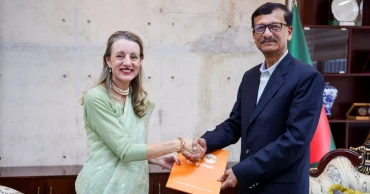
UNFPA’s newly appointed Country Representative in Bangladesh, Catherine Breen Kamkong, formally presented her credentials to Adviser Hossain.
Catherine Breen Kamkong, who is a national of Australia, has served with the United Nations in various capacities since 2011 and brings with her over 20 years of experience in international development and humanitarian response.
Prof Yunus urges Meta to find ways to fight disinformation more effectively
During the credential handover held at the Foreign Adviser’s office, Hossain congratulated Catherine Breen Kamkong, for assuming her new duty in Bangladesh.
“UNFPA plays a crucial role in Bangladesh, particularly in reducing preventable maternal deaths and advancing adolescent health to achieve the Sustainable Development Goals," Hossain said.
While notable progress has been made, significant challenges persist, especially in ensuring equitable access to reproductive health information and services for women and girls, he said.
"Every preventable death is one too many. Keeping girls in school to end child marriage, and addressing the needs of underserved populations—especially in urban slums—through expanded economic opportunities and essential health services, are central to our collective efforts to build a more just and equitable society,” said the Foreign Adviser.
Kamkong said Bangladesh’s steady progress in reducing maternal mortality is globally recognised.
"The country is also undergoing a profound demographic transition, with notable achievements across several indicators, including increased life expectancy, particularly among women. I am deeply honoured to lead UNFPA at this pivotal moment,” she said.
Germany dependable partner in our development journey: Prof Yunus
Kamkong said they are committed to building on this success while tackling both persistent and emerging challenges, including addressing inequities, advancing gender equality and sexual and reproductive health, meeting the needs of adolescents and youth, ending gender-based violence and child marriage, and addressing the complex issues arising from population dynamics and climate change.
"Together, we will move closer to our shared vision: zero preventable maternal deaths, zero unmet need for family planning, and zero gender-based violence and harmful practices —a future that is more inclusive, equitable, and resilient for all,” said UNFPA Representative Kamkong.
1 year ago

UN agencies' Regional Directors call for immediate action to halt attacks on Gaza hospitals
The regional directors of UNFPA, UNICEF and WHO call for urgent international action to end the ongoing attacks on hospitals in Gaza.
We are horrified at the latest reports of attacks on and in the vicinity of Al-Shifa Hospital, Al-Rantissi Naser Paediatric Hospital, Al-Quds Hospital, and others in Gaza city and northern Gaza, killing many, including children, said a press release.
Millions of Indians set a new world record celebrating Diwali as worries about air pollution rise
Intense hostilities surrounding several hospitals in northern Gaza are preventing safe access for health staff, the injured, and other patients.
Premature and new-born babies on life support are reportedly dying due to power, oxygen, and water cuts at Al-Shifa Hospital, while others are at risk. The Staff across a number of hospitals are reporting lack of fuel, water and basic medical supplies, putting the lives of all patients at immediate risk.
Over the past 36 days, WHO has recorded at least 137 attacks on health care in Gaza, resulting in 521 deaths and 686 injuries, including 16 deaths and 38 injuries of health workers on duty.
A fragile global economy is at stake as US and China seek to cool tensions at APEC summit
Attacks on medical facilities and civilians are unacceptable and are a violation of International Humanitarian and Human Rights Law and Conventions. They cannot be condoned. The right to seek medical assistance, especially in times of crisis, should never be denied.
More than half of the hospitals in the Gaza Strip are closed. Those still functioning are under massive strain and can only provide very limited emergency services, lifesaving surgery and intensive care services. Shortages of water, food, and fuel are also threatening the wellbeing of thousands of displaced people, including women and children, who are sheltering in hospitals and their surroundings.
Netanyahu rejects growing international calls for a cease-fire in Gaza
The world cannot stand silent while hospitals, which should be safe havens, are transformed into scenes of death, devastation, and despair. Decisive international action is needed now to secure an immediate humanitarian ceasefire and prevent further loss of life, and preserve what’s left of the health care system in Gaza.
Unimpeded, safe and sustained access is needed now to provide fuel, medical supplies and water for these lifesaving services. The violence must end now.
2 years ago

Ambassador Muhith elected vice-president of UNDP/UNFPA/UNOPS Executive Board
Ambassador Muhammad Abdul Muhith, Bangladesh's permanent representative to the United Nations, has been elected vice-president of the UNDP/UNFPA/UNOPS Executive Board for 2023 at the elections held in New York.
This will enable Bangladesh to work closely with the other board members and the leaderships of these three vital UN organs and provide them with strategic guidance for their work.
The ambassador of Kenya was elected president of the board on Tuesday. The other vice-presidents are ambassadors of Costa Rica, Ukraine and Türkiye.
Read more: Switzerland, UNDP sign deal to promote peaceful, inclusive societies for sustainable development
Ambassador Muhith is serving as the current chair of the UN Peacebuilding Commission and served as the president of the Executive Board of the UN Women last year.
The UNDP, UNFPA and UNOPS have specific mandates to advance the UN's development agenda at the field level in realising Sustainable Development Goals (SDGs).
The UNDP is the largest UN agency with a primary focus on poverty alleviation and sustainable development.
The UNFPA covers population and family planning issues, while the UNOPS works in cross-cutting areas across peace, development and humanitarian matters.
Read more: Liller vows to continue UNDP’s full support to Bangladesh
3 years ago

Japan, UNFPA join hands to provide $3.7 million assistance to Rihingyas in Bhasan Char, host communities in Noakhali
The government of Japan and UNFPA have on Tuesday signed an exchange of notes for the assistance to Rohingyas in Bhasan Char and host communities in Noakhali district.
The contribution of USD 3.7 million will be used for improving access to sexual and reproductive health (SRH) services, protecting the dignity and safety of women and girls from gender-based violence (GBV) and empowering adolescents and youth.
“With the generous support of the government of Japan, UNFPA is able to work with the Government of Bangladesh to scale up lifesaving SRH, and GBV services and strengthen linkages between key health facilities in Noakhali district. UNFPA wishes to thank the Government of Japan for the confidence expressed and most notably their encouraging engagement to improve health and protection outcomes for women and girls and across Noakhali district and Bhasan Char,” said Kristine Blokhus, UNFPA Representative.
Read more: UN adopts resolution on human rights of Rohingya, other minorities in Myanmar
Japanese Ambassador to Bangladesh Ito Naoki said Japan can provide additional assistance to Rohingya refugees in Cox’s Bazar and Bhasan Char, and to the host communities through UNFPA.
"While many women and girls are suffering from reproductive health problems and GBV due to the protracted Rohingya crisis, assistance to those areas has been relatively scarce," he said.
The Ambassador hoped that this assistance will contribute to the protection of women and girls, their dignity, and improvement of their quality of life.
As the Rohingya crisis has turned into the sixth year, it is imperative to continue funding for better and dignified lives of refugees, while making every effort for the early repatriation to Myanmar, Naoki said.
"Durable solutions of this crisis will be conducive to realizing the vision of a Free and Open Indo-Pacific, Japan will stand by the Government and the people of Bangladesh in supporting the Rohingya response,” said Naoki.
Read more: Relations with Bangladesh now deeper, more extensive: JICA
Since the beginning of the emergency in August 2017, Japan has been a steadfast supporter of the Rohingya refugee response in Bangladesh, contributing over USD $175 million to UNFPA and other UN agencies and NGOs in Bangladesh, including through this new funding.
3 years ago
.jpg)
UN maintains strong relationship with Bangladesh: Brandt
Executive Board President of UNDP, UNFPA and UNOPS Yoka Brandt has said the UN has a “strong relationship” with the government of Bangladesh and wants to further build on that to facilitate the achievement of the Sustainable Development Goals by 2030.
“We are here to see how we can work together more efficiently to that end, especially as the country is poised for LDC graduation,” said Brandt, also Permanent Representative of the Kingdom of The Netherlands to the UN.
A high-level delegation of the Executive Board of UNDP (United Nations Development Programme), UNFPA (United Nations Population Fund) and UNOPS (United Nations Office for Project Services) visited Bangladesh on a week-long mission to see the projects implemented by the UN and met the government.
Read: KOICA for strengthening community resilience progs in Bangladesh’s flood-prone regions
Led by the board’s President Yoka Brandt, the delegation arrived in Dhaka on June 25 and left on July 1, according to UNDP.
Foreign Secretary Masud Bin Momen said the UN has been a strong development partner for Bangladesh, and this mission is giving the scope to review and evaluate areas that need to be focused.
“It is a very timely visit. The UN has been a partner of the Government and the people of Bangladesh since 1971, and this mission will allow us to take stock of where we stand and guide our future interventions,” said UN Resident Coordinator Gwyn Lewis.
4 years ago
.jpg)
UNFPA, KOICA join hands to address menstrual hygiene in Cox’s Bazar
Korea International Cooperation Agency (KOICA) has partnered with the United Nations Population Fund (UNFPA) to safeguard women and girls’ dignity and improve their menstrual hygiene in Cox’s Bazar district.
The partnership agreement with a value of US$ 2,950,000 was signed by KOICA Country Director in Bangladesh, Youngah Doh and UNFPA Representative in Bangladesh, Dr. Asa Torkelsson at a ceremony held in the city on Thursday.
Between 2021-2024, this partnership will support a variety of activities to improve the knowledge of menstrual hygiene and address the menstrual hygiene needs of women and girls in Cox’s Bazar.
Read: KOICA takes project on road safety in Bangladesh through ITS
A total of 17,160 adolescent girls, boys, female, and male caregivers in 12 targeted communities are expected to directly benefit from the programme interventions.
5 years ago

13,886 child marriages in 7 months during Covid-19 outbreak: MJF
Between April and October last year, at least 13,886 children were married off in 21 districts when Bangladesh was grappling with Coronavirus in its initial stage, according to a survey.
5 years ago