Awami League
Awami League is not a political party, it’s a "mafia gang": Adviser Zahed
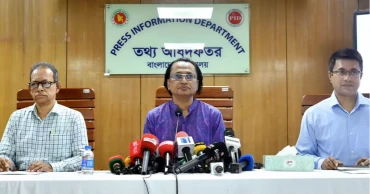
Prime Minister’s Information and Broadcasting Adviser Dr Zahed Ur Rahman on Tuesday described Awami League as a “mafia gang,” saying the attack on actress Azmeri Haque Badhan has once again raised questions about whether the party should be allowed to engage in politics in Bangladesh.
“We have seen the video of the attack on Azmeri Haque Badhan. Those who carried out the attack also recorded and published videos of it,” he said while responding to questions from reporters at a press briefing at the Secretariat on the progress of various government activities.
Referring to the attack, Zahed said the process for taking legal action against those responsible has already begun. “We certainly will not let this go. It cannot be overlooked in any way.”
On the Awami League, he said there have been extensive discussions over whether it should be considered a political party.
“I do not consider the Awami League a political party. It is a mafia gang,” he said.
“If you have even the slightest remorse for what you have done, and if you have any intention of returning to politics, these acts of violence would not have happened. They would not have happened in any way,” he said.
The adviser also described the attack on Badhan as a kind of “achievement” and “honour” for the actress, saying it showed that she has been on the right path.
Addressing Badhan, he said, “Being harassed by the Awami League, being victimised by a mafia gang, proves that you are actually on the right path.”
Referring to Badhan identifying herself as a “July fighter” during a Facebook Live session, Zayed said, “Yes, I am.”
He added that many others shared the same position and could also face attacks.
“But we don’t care. Not at all,” he said.
1 month ago
Bangladesh to mark July Mass Uprising Day Wednesday
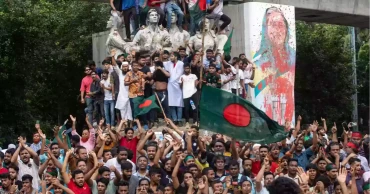
Bangladesh will observe July Mass Uprising Day on Wednesday with nationwide programmes to commemorate the student-led mass uprising that culminated in the fall of the Awami League government on Aug 5, 2024.
The day will be observed with state ceremonies, political programmes and tributes to those killed and injured during the uprising.
On June 26, 2025, the government declared August 5 as July Mass Uprising Day. The day is a public holiday.
According to an official notification, the minister, state minister, secretary, officials and employees of the Ministry of Liberation War Affairs, along with people from different walks of life, will place wreaths at the July Martyrs' Memorial at Shahbagh in Dhaka at 6:01am.
Later, at 12:00pm, a reception will be accorded to the families of the July martyrs and the July fighters at the Bangladesh-China Friendship Conference Centre in the capital.
Acting President Hafiz Uddin Ahmad will attend the function as the chief guest, where the significance of the day will also be highlighted through a discussion.
Besides, Dhaka University will commemorate the 2nd anniversary of July Mass Uprising with a series of programmes, including foundation-laying a July Memorial and a dedicated July Corner in the Central Library of the university.
A discussion on July uprising will be held at the TSC where five families of the July martyrs will be honoured and a prayer session will be held after Asr prayers at the Central Mosque, seeking eternal peace for the martyrs.
Meanwhile, acting President Hafiz Uddin Ahmad and Prime Minister Tarique Rahman issued separate messages on the occasion of July Mass Uprising Day.
In his message, Hafiz Uddin extended his heartfelt greetings and congratulations to the valiant July warriors and all patriotic citizens of the country, saying the nation will forever remember their extraordinary sacrifices, boundless courage and outstanding contributions as an enduring source of inspiration.
He also called for upholding the dignity of the martyrs’ sacrifices, building a humane Bangladesh that belongs to the people, where fascist and authoritarian rule, as well as extremism, will never again find a place.
The acting President also urged all to unite in building a new Bangladesh that is democratic, just, humane, free from discrimination, happy and prosperous and work together to realise the dreams, ideals, hopes and aspirations of the martyrs who made the supreme sacrifice in the Great War of Independence and the July Mass Uprising.
In his message, the Prime Minister described August 5 as a day of joy, a day of victory and a day of the restoration of democratic political rights for all those who cherish freedom and democracy.
He said for more than one and a half decades, in the struggle against fascism and for the restoration of the people's right to vote and their democratic rights, the BNP, other anti-fascist political parties, and the people of differing views had to endure limitless persecution and repression.
Tarique Rahman said countless people became victims of enforced disappearance, murder, abduction, assaults, false cases, torture and oppression. “In leading this movement, the uncompromising leader of the nation, former Prime Minister late Begum Khaleda Zia was also forced to spend years in the prison of the oppressors on false charges.”
He remembered with profound respect all the martyrs. “By sacrificing their lives for the freedom, rights and dignity of the country and its people, they have left us in their debt. Bangladesh owes an enduring debt to every martyr's family. Now it is our turn to repay that debt.”
The Prime Minister urged all to make a pledge to honour that debt through sincere efforts to build a just, self-reliant, democratic and humane Bangladesh by ensuring the political and economic empowerment of people and by establishing equality, human dignity and social justice.
He also called for preserving the unprecedented national unity forged on the blood-soaked streets sanctified by the sacrifice of thousands of martyrs at all costs. “We will have differences of opinion on many issues and that is the beauty of democracy. But we must all remain vigilant to ensure that differences of thought and opinion never descend into hostility. Every political party, individual and group that stands on the side of democracy shares this responsibility.”
Meanwhile, Dhaka Metropolitan Police (DMP) has taken extensive and multi-layered security measures to maintain law and order and ensure public safety in the capital ahead of July Mass Uprising Day.
The measures have been taken to prevent any act of sabotage, untoward incident or disruption to public safety during the observance of the day, according to a DMP statement issued on Tuesday.
As part of the security plan, the number of police patrols and checkpoints has been significantly increased across the capital, with stricter search operations at all entry points to Dhaka.
Detective Branch (DB) and Counter Terrorism and Transnational Crime (CTTC) personnel in plain clothes will remain deployed at all important venues.
Special sweeping operations will also be conducted by the Special Weapons and Tactics (SWAT) unit, Bomb Disposal Unit and Dog Squad Unit at places expected to witness large public gatherings.
The DMP said all programme venues and the July Memorial Monument area have been brought under a special security arrangement, including surveillance through CCTV cameras and drones.
At the same time, intelligence activities by the Counter Terrorism and Intelligence Bureau (CTSB) and Intelligence Analysis Division (IAD) in plain clothes will continue, while an adequate number of Quick Response Teams (QRTs) will remain on standby to respond to any emergency.
In addition to the regular deployment, extra DMP personnel, along with members of the Rapid Action Battalion (RAB) and the Criminal Investigation Department (CID), will remain active across the capital to ensure overall security.
Senior police officials will also remain in the field to directly supervise security arrangements throughout the day, the statement added.
2 months ago
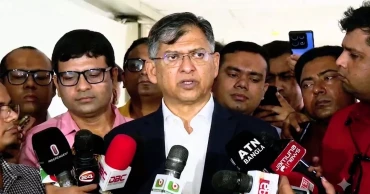
Awami League lacks capacity for sabotage centering August 5: Home Minister
Home Minister Salahuddin Ahmed on Monday said Awami League lacks the capability to carry out sabotage surrounding August 5, which is being observed as the July Mass Uprising Day.
"I don't think Awami League has the capacity to do such things. It is a banned organisation and a mafia force. Occasionally they make attempts to attract attention from abroad, but beyond that I do not see any significant activity," he said in response to a question from reporters at the Secretariat.
When asked whether intelligence reports have prompted authorities to instruct the police to remain on high alert, Salahuddin Ahmed said the directives were part of routine security procedures rather than a response to any specific threat.
"This is standard practice within the police force. Officers are instructed not to leave unattended vehicles, not to have all team members leave their posts at the same time, and to ensure that at least one officer remains with official vehicles. These are regular precautionary measures and should not be interpreted otherwise," said the minister.
Responding to a question on the election of a new President, the minister said the matter falls under the jurisdiction of the Election Commission.
Asked about the government's programmes marking August 5, Salahuddin Ahmed said a meeting has been scheduled for Tuesday under his party's leadership, bringing together allies of the joint movement and representatives of other political parties at the Krishibid Institution Bangladesh.
He added that the Prime Minister is expected to attend the event,where the government's plans for observing the day will be outlined.
2 months ago

Over 50 AL men sued in Khulna for ‘anti-state activities’
A case has been filed against 15 named and 35-40 unnamed leaders and activists of Awami League and its associate bodies in Khulna on charges of conspiring against the government and carrying out anti-state activities.
Sub-Inspector Tapan Kumar Pal of Sadar Police Station filed the case on Thursday night, said its Inspector (Investigation) Md Mizanur Rahman.
The accused include Khulna district Jubo League Office Secretary Asaduzzaman Khan Riaz and Joint General Secretary of Khulna city unit of banned Bangladesh Chhatra League (BCL) Tayeful Islam Taj. The other named accused are Ranbir Baroi Sajal, Anup Sarkar, Mridul, Prosenjit, Md Shahidul Islam, Rahat Ali Morol, Anik Hasan Parvez, Gautam Sarkar Kakon, Asafur Dhali, Gopal Chandra Saha, Md Akhter Sikder, Monirul Islam Moni and Md Rafiqul Islam Pintu.
According to the case statement, the accused allegedly gathered on Wednesday between 4:45am and 5:55am in front of Islami Bank Hospital near Tare Pukur in the city.
They reportedly threw bricks and vandalise vehicles in a bid to topple the democratic government, disrupt public order and sever communication between Khulna and other districts.
It was also alleged that they shouted slogans supporting the banned BCL and Awami League, which faces a ban on its activities, creating panic among people.
The accused fled the scene before police arrived after receiving information.
Later, police identified the suspects analysing CCTV footage and through local information.
It was further alleged the group was involved in secret meetings, collecting funds, recruiting members to reorganise banned organisations, and engaging in activities aimed at destabilising law and order.
Inspector Mizanur Rahman said police operations were ongoing to arrest the accused.
3 months ago

DMP arrests 3 activists of Awami League, affiliated bodies
Dhaka Metropolitan Police (DMP) arrested three activists of Awami League( now facing ban on its activities) and its affiliated organisations from different parts of the capital in 24 hours till Saturday morning.
According to a DMP press release on Saturday, one was arrested from Mohammadpur Police Station area, one from Mirpur Police Station area and another from Banani Police Station area, said Additional Deputy Commissioner of the Media and Public Relations Division of the Dhaka Metropolitan Police (DMP) Niaz Mehdi.
Such operations will continue in order to maintain public safety and ensure law and order in the city, he said.
arrested three activists of Awami League( now facing ban on its activities) and its affiliated organisations from different parts of the capital in 24 hours till Saturday morning.
According to a DMP press release on Saturday, one was arrested from Mohammadpur Police Station area, one from Mirpur Police Station area and another from Banani Police Station area, said Additional Deputy Commissioner of the Media and Public Relations Division of the Dhaka Metropolitan Police (DMP) Niaz Mehdi.
Such operations will continue in order to maintain public safety and ensure law and order in the city, he said.
3 months ago
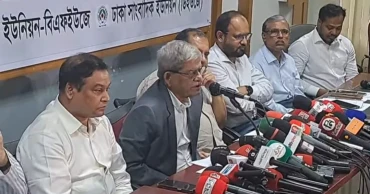
Awami League and democracy can never go together: Fakhrul
Local Government, Rural Development and Cooperatives Minister and BNP Secretary General Mirza Fakhrul Islam Alamgir on Tuesday said Awami League and democracy can never go together as the party has historically failed to uphold democratic values.
“Awami League and democracy can never go together. They did not go together in the past, not after the party’s birth, and certainly not during the recent fascist period. It is a DNA problem, and it will not change,” he said.
He made the remarks at a discussion marking the Black Day of Newspapers at the Jatiya Press Club in the capital. Bangladesh Federal Union of Journalists (BFUJ) and Dhaka Union of Journalists (DUJ) arranged the event.
“BNP is not a revolutionary party. It is a liberal democratic party that accommodates everyone,” he said.
The BNP leader also expressed concern about what he described as attempts by various groups to destabilise society through misinformation, deterioration of law and order and online propaganda.
“There is a conscious effort to push society in a different direction through misinformation and propaganda on social media. We must collectively resist and defeat these efforts,” he said.
He said efforts should be made to reopen media outlets that have ceased operations and added that the current government is working to ensure freedom of the press.
Fakhrul said those who fought and sacrificed for democracy and media freedom have often failed to remain united.
“Unfortunately, those of us who have struggled and sacrificed for democracy and freedom of the press have not always been able to remain united,” he said.
However, he criticised some media owners and organisations for what he termed unjust treatment of journalists.
He said many journalists continue to face harassment and professional insecurity.
“There are still many journalist brothers who remain unemployed. We have not yet been able to create sufficient employment opportunities for them,” he said.
He suggested creating new media platforms through collective efforts to generate employment opportunities for journalists.
Fakhrul said the current government came to power after a prolonged struggle and Prime Minister Tarique Rahman has repeatedly stressed the importance of ensuring media freedom.
He said that BNP remains one of the safest political platforms for journalists and professionals because it tolerates opposing views, Fakhrul said. “BNP is a political party that accepts opposing views and that is what we have always practised,” he said.
Information and Broadcasting Minister Zahir Uddin Swapan spoke as a special guest at the event.
Leaders of the Bangladesh Federal Union of Journalists, the Jatiya Press Club and the Dhaka Union of Journalists were also present.
4 months ago
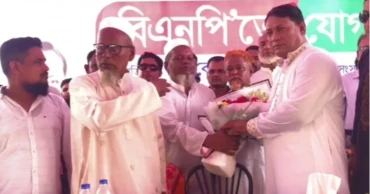
Around 1200 AL activists in Gopalganj join BNP
Around 1200 leaders and activists of the Awami League joined the Bangladesh Nationalist Party (BNP) in Gopalganj on Wednesday.
The joining ceremony was held at Jangal Bazar area under Nijra Union of Gopalganj Sadar upazila, where the new members formally joined the BNP by presenting flowers to Gopalganj-2 lawmaker Dr KM Babor.
MP Babor said around 1,200 Awami League leaders and activists from Gopalganj Sadar upazila joined the party at the event.
Leaders and activists of BNP and its associate bodies were present there.
Dr Babor said BNP is playing an important role in fulfilling public expectations in the current political reality.
He said the party would welcome experienced and popular individuals from other political parties and ensure them due respect within the organisation.
The newly joined leaders said they decided to join BNP with the aim of promoting development, establishing democratic values and securing people's rights. They also pledged to work actively to implement the party’s ideals and programmes.
The development has generated mixed reactions among different political circles in Gopalganj district.
4 months ago
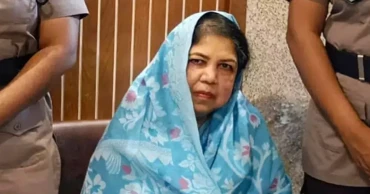
Ex-Speaker Shirin Sharmin gets bail in attempted murder case
A Dhaka court on Sunday granted bail to former Speaker Dr Shirin Sharmin Chaudhury in an attempted murder case linked to the 2024 July uprising.
Dhaka Additional Metropolitan Magistrate Zakir Hossain passed the order on Tk 50,000 on bond considering her illness and gender, said Public Prosecutor M Omar Faruq Faruqi.
There is no legal bar to the release of the former Speaker as she has not been shown arrested in any other cases, said court sources.
A Dhaka court on April 7 sent her to jail in the case following her arrest the same day.
According to the case statement, Ashraful alias Fahim suffered bullet injuries to his left eye in the Azampur Bus Stand area of Uttara on July 18, 2024 during the mass uprising, which ultimately led to the fall of the Awami League government on August 5.
Later, he filed a case against 25 named individuals, including Shirin Sharmin Chaudhury, and 120 unnamed ones.
Following the fall of the Awami League government, she resigned on September 2, 2024.
Abdul Hamid was elected Speaker after the Awami League came to power through the 2008 general election. Following his election as President, Shirin Sharmin Chaudhury was elected Speaker on April 30, 2013. Since then, she had been serving as Speaker until the government’s fall.
Shirin Sharmin Chaudhury was a Member of Parliament from Rangpur-6 constituency.
6 months ago
Father disowns son over BCL involvement
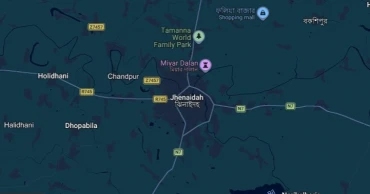
A father on Monday in Jhenaidah has formally disowned his son for involvement in banned Bangladesh Chhatra League (BCL) activities, the youth wing of the Awami League.
The declaration was made through an affidavit submitted at the Jhenaidah District Notary Public office.
According to the affidavit, businessman Md. Abu Zafar (48) of Aruakandi village in Porahati Union, Jhenaidah Sadar, declared his son Md. Nahid Hasan Shobuj (24) as a disowned child. Shobuj currently serves as the joint general secretary of BCL Jhenaidah Government Keshabchandra College branch.
Abu Zafar stated that his son has long been living a disobedient and reckless life, staying separately from the family and acting on his own will. He also criticized Shobuj for continuing to participate in BCL activities even after the organization was banned on August 5, 2024.
In particular, he mentioned an incident on February 21, when Shobuj hoisted the party flag at the abandoned Jhenaidah District Awami League office, a video of which went viral on social media, causing embarrassment to the family.
The affidavit further clarified that Shobuj’s income, responsibilities, and actions will have no connection with his father or any other family members. The family will not bear responsibility for any of his misconduct, and all legal and blood relations with the family are considered severed.
Abu Zafar said, I do not want my son to engage in any activities against the country’s laws and policies. Despite repeated warnings, he did not reform, leaving me with no choice but to take this difficult decision.
The legal process was completed through Jhenaidah District Judge Court lawyer Md. Sadatur Rahman Hadi.
Efforts to reach Chhatra League leader Nahid Hasan Shobuj for comment were unsuccessful, as his phone remained unanswered.
7 months ago
AL activists defy ban, reopen party office in Barguna
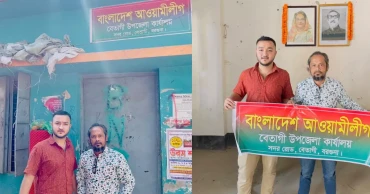
The local office of the Bangladesh Awami League was reopened in Betagi Upazila of Barguna on Monday, around 18 months after its activities were declared banned.
The office, located at Betagi Bazar, was unlocked around noon by leaders of the banned Bangladesh Chhatra League, witnesses said.
The reopening was carried out under the supervision of former Chhatra League joint general secretary Asaduzzaman Nadim.
RAB detains two JMB members in Borguna
Photographs of Sheikh Mujibur Rahman and ousted prime minister Sheikh Hasina were also displayed inside the office.
Among those present were Betagi Upazila Chhatra League general secretary Sifat Sikder and former upazila general secretary Mostafa Jamal Shamim, along with a number of other leaders and activists.
Eyewitnesses said leaders and activists of Jubo League and the banned Chhatra League gathered in front of the office and chanted slogans.
Later, a banner reading “Reopening of Betagi Upazila Awami League office after 18 months” was hung inside and outside the office.
U-16 Women’s Football: Borguna, Magura make good start
No immediate reaction from the local administration was available in this regard.
8 months ago