Commission on Enforced Disappearances
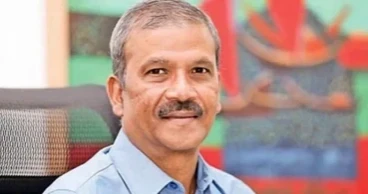
Commission on enforced disappearances to be formed soon: Law Adviser
A strong commission on enforced disappearances will be formed under a newly proposed law on the issue, said Law Adviser Asif Nazrul on Monday.
The draft legislation would be finalised within the next month, he said while talking to reporters at the Secretariat following a meeting with a delegation of United Nations Working Group on Enforced or Involuntary Disappearances (WGEID).
Adviser Asif Nazrul trashes report by Indian portal as false, defamatory
When asked whether a future government might scrap the law, the adviser said, “Regardless of whether it's BNP, Jamaat, NCP, or any other party — they have all been victims of enforced disappearances. They have all raised their voices against it. In fact, BNP and Jamaat were the most affected.”
“The UN Working Group wanted to visit Bangladesh several times in the past, as far back as 12 years ago. But under the previous fascist Awami League government — who we believe were responsible for these disappearances — the visits were denied. They did not even respond to the UN’s letters,” he said.
“Our government has made a commitment to investigate and prosecute enforced disappearances,” he said, adding that during Monday’s meeting, the UN team appreciated some of the government’s ongoing initiatives.
“They welcomed our move to establish an investigation commission and to draft legislation. They also recommended extending the commission's mandate and we will present that suggestion to the Chief Adviser,” said the Adviser.
The law adviser also said the proposed law would aim to establish a strong, independent commission on enforced disappearances.
The UN delegation also advised engaging with the families of the disappeared, issuing missing person certificates and forming a search committee -- all of which, he noted, are already being considered in the draft law. “They have also offered to provide intellectual support for the law-making process.”
UN team praises interim govt for steps against enforced disappearances
When asked about the recent visit to South Africa led by the Chief Justice and whether a Truth and Reconciliation Commission (TRC) would be formed in Bangladesh, Asif Nazrul said, “The TRC model, which gained global attention after its implementation in South Africa, has also been adopted by countries like Sri Lanka and Nepal -- though it remained unsuccessful.”
The TRC typically includes four components: Truth-Seeking – Understanding what actually happened.
“That process is already underway here,” he noted, citing the UN’s fact-finding report and ongoing investigations and trials in Bangladeshi tribunals.
He also referred to filmmaker Mostofa Sarwar Farooki’s initiative to set up a ‘July Museum’ at the former Ganabhaban premises as part of this truth-seeking effort.
Memorialisation – Preserving the collective memory of these events. “The museum will serve that purpose,” he said.
Amnesty – “This is more complex,” he acknowledged.
“There may be scope for amnesty in cases involving minor offenses committed without malicious intent — a practice seen in many countries.”
Reconciliation – Building national consensus by ensuring appropriate punishment for the main perpetrators.
He also emphasised the importance of reparation, adding that compensation for victims must go beyond monetary terms.
“For example, survivors of the July incidents who suffered permanent injuries could be provided with employment opportunities,” he said.
Reflecting on the recent South Africa visit, the adviser said, “We held several meetings during the trip. In the next phase, we plan to organise a regional conference led by the Chief Justice. We aim to bring in representatives from Sri Lanka, Nepal and South Africa, along with Bangladeshi political parties, civil society members, human rights groups and students to discuss a way forward based on collective opinions.”
1 year ago

Without independence, judiciary lacks public trust: Former Justice Moinul Islam Chowdhury
Chairman of the Commission on Enforced Disappearances, former Justice Moinul Islam Chowdhury, has emphasized that the judiciary loses public trust if it is perceived as lacking independence. He also criticized successive governments for neglecting the judiciary, making it the weakest branch of the state.
“None of the governments has ever given proper attention to the judiciary. As a result, it has become the most fragile institution of the state,” he said while addressing a discussion titled "Seventeen Years of Judicial Separation from the Executive Branch" at the National Press Club’s Tofazzal Hossain Manik Miah Hall on Wednesday.
The event was organized by the Humanity Foundation, a volunteer human rights organization, and the monthly Ain O Bichar, with support from Minouri Bangladesh.
Justice Moinul further remarked, “The current state of the judiciary reflects our collective failure. Lawyers and judges are two sides of the same coin, and their cooperation is crucial for a well-functioning judiciary.”
Judiciary facilitated authoritarianism under Sheikh Hasina: TIB Executive Director
He said, “Judicial independence will not yield desired results unless judges can think freely. Judiciary’s key characteristic is its accessibility, and it should work transparently to monitor the executive and legislative branches. Judicial harassment is one of the worst scenarios for justice.”
Law Reform Commission member Justice Mazdar Hossain underscored the need for the judiciary to be under the control of the Chief Justice. “We need a framework where all decisions regarding the recruitment, management, and discipline of judges are entrusted to the Chief Justice,” he said.
Criticizing the outdated laws, he added, “We are still clinging to the CrPC introduced by the British, which they themselves abandoned. Although the judiciary is independent on paper, it has not fulfilled our expectations. In the past 53 years, no political party has enacted laws in the public interest; they have only legislated for self-preservation and power consolidation.”
The discussion, chaired by Humanity Foundation Chairman Advocate Muhammad Shafiqul Rahman, was also attended by former Supreme Court Registrar, District Judge, and constitutional analyst Iktedar Ahmed, among others.
1 year ago