Environment, Forest and Climate Change
Dhaka rejects draft ‘Global Plastics Treaty’, seeks stronger measures
Bangladesh has categorically rejected the latest draft of the proposed Global Plastics Treaty, demanding stronger measures against plastic pollution.
According to the Ministry of Environment, Forest and Climate Change, the draft falls far short of the mandate set by United Nations Environment Assembly (UNEA) Resolution 5/14 to establish an internationally legally binding instrument to end plastic pollution.
Dhaka made its position clear during the second part of the fifth session of the Intergovernmental Negotiating Committee on Plastic Pollution (INC-5.2), held on Wednesday at the Palais des Nations, Geneva, Switzerland, said a media release sent from the Ministry of Environment, Forest and Climate Change on Thursday.
The media release said that the draft “represents a weak and inadequate outcome” that excludes supply-side measures and fails to address the full life cycle of plastics.
The ministry noted that it does not address health impacts, chemicals of concern, or the waste hierarchy, and imposes no robust obligations to curb trans-boundary plastic pollution.
BIMSTEC seeks joint efforts to achieve plastic-smart Bay of Bengal region
The draft also lacks provisions for reliable means of implementation, instead relying on a “convoluted and voluntary approach” that ignores the urgency of the global plastic crisis.
Bangladesh underscored that the treaty’s core must confront harmful chemicals in plastics—where scientific evidence most strongly links to health risks—and address emissions and primary plastic production, given the harms plastics cause throughout their life cycle.
“This text does little to protect human health or the environment from plastic pollution. It reduces the treaty to a waste management framework, shirking responsibility for plastic producers and omitting binding measures to phase out the most harmful plastic products,” the ministry says.
Bangladesh reaffirmed that it cannot support the draft without substantial and meaningful amendments and called on negotiators to significantly raise ambition in line with the UNEA mandate.
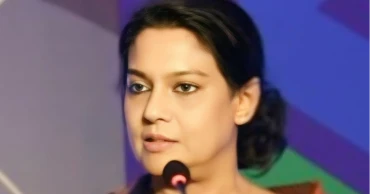
Earlier in the day, Syeda Rizwana Hasan, Adviser to the Ministries of Environment, Forest and Climate Change and Water Resources, called for stronger global partnerships and targeted resources to combat plastic pollution.
Single-use plastic to be banned at Secretariat from Oct 2 : Cabinet Secretary
Speaking at an Informal Ministerial Roundtable during INC-5.2 in Geneva, she highlighted Bangladesh’s vulnerability as a downstream country and urged a global framework to address trans-boundary pollution.
Rizwana stressed promoting circular economy models, plugging waste management leakages, fostering sustainable product design and ensuring a just transition for waste workers.
Emphasising the environmental and health dimensions, she urged ambitious, cooperative action to phase out harmful plastics through institutionalised global cooperation.
1 year ago
Full demarcation of Madhupur Sal Forest begins
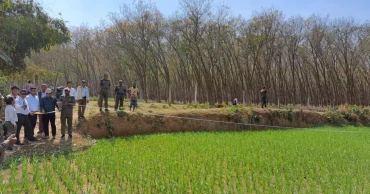
The government has commenced the demarcation of 18, 565 acres of Madhupur’s Sal forest in Tangail.
The Forest Department, local administration and local organisations jointly started the work as per the directives of the Ministry of Environment, Forest and Climate Change.
For the first time in the country’s history, the official boundary of a forested region is being systematically delineated.
The demarcation process has begun at the border points of Beribaid Mouja in Madhupur upazila and Kamalapur Mouja in Mymensingh.
A total of 15 moujas, including Arankhola, Beribaid, Chunia, Gachabari, Idilpur and others, will have their forest boundaries precisely defined.
The absence of a clearly marked boundary has led to rampant encroachment, with settlements emerging and large tracts of forestland being converted into pineapple, banana, and papaya plantations.
Adviser Rizwana urges students to join in reducing noise, plastic pollution
The new demarcation will safeguard the forest, enabling scientific management and the long-overdue restoration of Madhupur’s Sal ecosystem.
Besides, as part of the Forest Department’s annual encroachment removal initiative for FY 2024-25, 150 acres of illegally occupied forestland will be reclaimed and reforested with Sal and associated native species.
Meanwhile, the site-specific afforestation programs will replace non-native plantation species with ecologically suitable flora.
The collection of seedlings—including Haldu, Koroi, Haritaki, Bahera, Arjun, Jarul, and others—is already underway.
Plans are also in place to sow Sal seeds directly in designated areas to facilitate natural regeneration.
1 year ago

COP29: $250bn per year for all developing countries shockingly insufficient, says Adviser Rizwana
Syeda Rizwana Hasan, Adviser to the Ministry of Environment, Forest and Climate Change, has expressed profound disappointment with the latest text on the New Collective Quantified Goal (NCQG) for climate finance, published by the COP29 Presidency as the conference nears conclusion.
In her statement, she referred to it as a “very disappointing package,” noting its failure to meet the critical needs of least developed countries (LDCs) and small island developing states (SIDS).
“The proposed decision to allocate USD 250 billion per year for all developing countries is shockingly insufficient,” she said, emphasizing that the amount is neither provisioned nor designated as grants.
Furthermore, the text fails to allocate any dedicated funds to the most vulnerable 45 LDCs.
The adviser highlighted the inadequacy of the COP29 outcomes in addressing climate finance challenges, despite this conference being explicitly focused on the issue. “The package has failed to provide the minimum required justification for an NCQG that should uplift the most vulnerable nations. It offers nothing concrete for LDCs and SIDS, leaving them exposed to escalating climate risks.”
COP29: Bangladesh urges EU to support proposal for allocating $200bn to LDCs
Rizwana urged LDCs to resist this package, asserting that it “will make little difference in reality” without substantive revisions.
She called on all stakeholders to advocate for a more ambitious, fair, and actionable climate finance framework that prioritizes the needs of the world's most vulnerable communities.
1 year ago