energy adviser
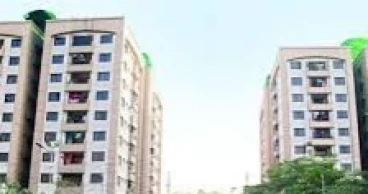
No proposal for 9,000 square feet minister flats submitted: Energy Adviser
No proposal over the construction of 9,000 square feet flats for ministers have been placed before the Advisers Council Committee on Government Purchase, said Power, Energy and Mineral Resources Adviser Muhammad Fouzul Kabir Khan on Tuesday.
“I have not seen any such proposal. I do not understand where this information is coming from. No such proposal has come to the purchase committee,” he told reporters after meeting of Advisers Council Committee on Government Purchase and Committee on Economic Affairs at the Secretariat.
He said any project involving such a significant expenditure would necessarily have to be placed before the Purchase Committee.
Ensure power in all polling stations within a week: Energy Adviser
Such matter has not been discussed at the committee level, he said responding to a question over the media report on flat construction.
When journalists pointed out that the initiative reportedly originated from the Ministry of Housing and Public Works, the adviser said any such proposal would have to go through the proper process.
“They may be preparing something at their level but a project involving such a large amount of money must come to the purchase committee. I attend every purchase committee meeting and I do not recall any such proposal being placed,” he said.
9 months ago
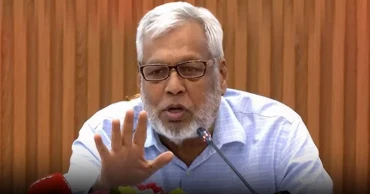
Ensure power in all polling stations within a week: Energy Adviser
Energy Adviser Fouzul Kabir Khan on Wednesday directed authorities to ensure electricity connection or alternative power supply in all polling stations within a week.
He gave the instruction at an inter-ministerial meeting held at Bidyut Bhaban in the afternoon to review the overall power and energy situation ahead of the upcoming holy month of Ramadan, the 13th National Parliamentary Election and Referendum, and the summer season.
The adviser said immediate alternative arrangements should be made in areas prone to load shedding, including deployment of mobile power vans, diesel, and generators. Power connections should be arranged in all areas currently without electricity, while generators or solar power should be provided in remote locations where connections are not feasible.
To ensure uninterrupted supply, round-the-clock monitoring will be conducted. Central and local monitoring teams, along with designated focal points, will oversee the process.
The Chairman of the Power Development Board said necessary arrangements would be made in coordination with district administrations, while rural electricity teams will monitor power supply in local centres.
The meeting also mentioned that electricity demand is expected to rise during Ramadan, summer, and the irrigation season. Citizens were urged to use electricity responsibly. Power and energy supply companies presented their plans to meet peak demand, which will be finalised in coordination with the ministry and relevant departments.
Business leaders attending the meeting were requested to moderate air conditioning use, avoid excessive lighting, and cooperate with law enforcement during Ramadan. They assured full cooperation.
The adviser stressed that all authorities must remain vigilant to ensure that fasting people do not face inconvenience due to power interruptions.
9 months ago
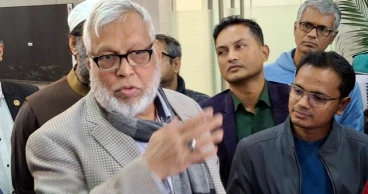
Traders behind LPG price manipulation: Energy Adviser
Power, Energy and Mineral Resources Adviser Muhammad Fouzul Kabir Khan on Tuesday said the abnormal rise in Liquefied Petroleum Gas (LPG) prices was created by retail and wholesale traders.
“Some traders created an artificial crisis in the market by taking advantage of the Bangladesh Energy Regulatory Commission’s price adjustment announcement,” he told reporters after a meeting of the Advisers’ Council Committee on Government Purchase and Economic Affairs at the Secretariat.
Red Hat to empower local businesses with open source solutions
The adviser said the government has ordered the authorities to conduct mobile courts across the country through district administrations and police to tackle the situation.
“Those who expected LPG prices to rise saw that BERC increased the price by Tk 53 or so and many tried to take advantage of that. We have asked the Cabinet Secretary to ensure mobile courts are conducted in every district. We also discussed this at yesterday’s law and order committee meeting,” he said.
There is no real reason for such abnormal price hike and this has been done through manipulation, he added.
9 months ago
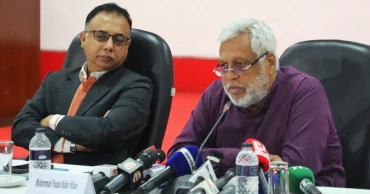
Focus on stopping today’s corruption, not just on past: Energy Adviser
Power, Energy, and Mineral Resources Adviser Muhammad Fouzul Kabir Khan on Thursday said corruption in the energy sector often occurred within a framework of supportive laws and flawed policies.
While the interim government had worked to reduce corruption and repaid most of the country USD 3.2 billion energy debt, he said it lacked sufficient time to undertake deeper reforms.
Speaking at a dialogue, the Adviser acknowledged dissatisfaction with anti-corruption efforts, highlighting that vested interests benefit from corruption and that focus should shift from investigating past misdeeds to addressing present-day corruption.
The Centre for Governance Studies (CGS) hosted the dialogue at the CIRDAP (Centre on Integrated Rural Development for Asia and the Pacific) auditorium.
Zillur warned that Bangladesh is facing a security crisis which may deepen if elections are not held on time.
He noted that the issues of security, energy, and corruption are interlinked and highlighted the key questions for debate, including the risks posed by great power rivalries, the urgent need for border protection, the modernisation of defence and cybersecurity, the formulation of a national security policy, and the constitutional and legal reforms necessary to combat corruption. Questions were also raised on strengthening the Anti-Corruption Commission (ACC), implementing a realistic anti-corruption strategy, addressing budget loopholes that legalise illicit wealth, ensuring uninterrupted electricity, reducing reliance on energy imports, expanding renewable energy, and increasing transparency in major projects such as the Rooppur Nuclear Power Plant.
Moyeen Khan outlined five key dimensions of security: state, economy, politics, diplomacy, and society.
He stressed that people’s security must come first, encompassing environmental safety, technological challenges, food security, media literacy, and energy. He argued that diversity of thought must be protected and that security should not be viewed merely as protecting those in power.
Badiul Alam emphasized political stability as a cornerstone of national security, underscoring the need for free and fair elections.
He recounted discussions with citizens who admired the parliament building’s beauty but lamented the corruption of those in power.
He argued that corruption has undermined recent elections, warning that without reforming politics and curbing money’s influence, democratic processes cannot function properly.
Muniruzzaman argued that the opportunity to enact meaningful reforms following the recent uprising has already been missed.
He highlighted gaps in Bangladesh’s national security, including the lack of a comprehensive national security policy, unresolved transboundary water disputes, rising sea levels threatening much of the country, and the absence of policies to address these issues.
Draft law approved to intensify EC’s authority to punish negligence in election duty
1 year ago

Industries to get additional 250 mmcfd gas: Energy Adviser
Industries will get an additional gas supply of 250 million cubic feet per day (mmcfd) from the existing system.
Energy Adviser Dr. Fouzul Kabir Khan announced this after a meeting with the leaders of the business sector at his office in the Power and Energy Ministry on Wednesday.
He said 150 mmcfd gas will be curtailed from the power sector while 100 mmcfd will be added from the import of four extra LNG cargoes.
The power sector is currently getting 1200 mmcfd gas from Petrobangla.
He admitted that this step will lead to a decline in power generation.
“But we will run more liquid fuel-based power plants to increase the power generation,” he told reporters after the meeting.
He also noted that the government will take measures to increase the gas supply through enhancement of local production and import.
“We’ll import four more LNG cargoes in addition to the existing annual plan,” he said.
Currently, Petrobangla supplies a total of about 2740 mmcfd of gas through production from local fields and imported LNG.
Push-ins must follow formal channels: Security Adviser Dr Khalilur
Of this, about 1,700 mmcfd gas comes from local fields and the remaining 1000 mmcfd comes from imported LNG.
The adviser said that the meeting took a number of decisions including that Titas Gas and industrial investors’ leaders will set up a joint taskforce to oversee and check the illegal use of gas by industries.
Besides, the government and industry leaders will identify the industrial areas to increase the gas supply.
He said the government has been drilling 100 wells which will add about 500 mmcfd gas in the next two years.
Former FBCCI president AK Azad led the business leaders’ delegation.
1 year ago
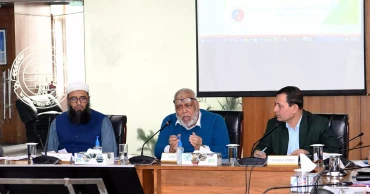
Electricity demand likely to 15,700 MW during Ramadan: Energy Adviser
Electricity demand is expected to reach 15,700 MW during the holy Ramadan set to begin in March, Energy Adviser Dr. Fouzul Kabir Khan has said.
"We are making all-out efforts to ensure Ramadan remains fully free from load shedding. There might be disruptions due to other reasons but not due to a supply shortfall," he said while addressing a press briefing at Biduyt Bhaban in the city on Wednesday.
The briefing followed a preparatory meeting with top officials of power and gas sector utilities ahead of summer.
Responding to a question, he clarified that the government has no immediate plans to raise power or gas tariffs.
The Bangladesh Energy Regulatory Commission (BERC) is considering a gas price hike for industrial consumers who wish to consume additional gas, said the adviser.
Election schedule depends on July Charter: CA’s Press Secretary
He said after Ramadan, electricity demand may rise to 18,000 MW during the summer when demand of power for irrigation also increases.
During this period, there might be a load shedding of 700 MW to 1,400 MW daily, he added.
"However, our efforts will focus on managing the cooling load, which primarily comes from the use of air conditioners," he said urging consumers to set their ACs above 25 degrees Celsius.
He added that the AC load is approximately 6,000 MW, which can be reduced with consumers’ cooperation.
The adviser said he had held meetings with the Finance Adviser, Finance Ministry officials, the Bangladesh Bank Governor, and CEOs of various public and private banks who assured full support in providing adequate funding to meet the demands of the power and gas sectors.
Power Secretary and the Chairman of the Bangladesh Power Development Board (BPDB) were also present.
"This Ramadan, gas supply will be increased to 1,200 million cubic feet per day (MMCFD) from the current 900 MMCFD to enhance power generation from gas-fired plants,” he said.
He said the government will import four LNG cargoes to meet the additional gas demand for power generation.
Fouzul Kabir said that gas supply will be maintained at 1,100 MMCFD during the summer to meet the requirements of gas-fired power plants from April to September. "Our strategy prioritizes increasing gas-based power generation," he added.
Reform Commission recommends completing BCS exam within one year
He also said load shedding will be balanced between rural and urban areas. "We assure you that there will be no discrimination in load shedding between rural and urban areas," he said.
The adviser highlighted that the government's primary focus is on food production, fertilizer supply, and ensuring uninterrupted power and gas supply.
Regarding shop closure timings, he said there is currently no strict embargo on closing shops by 8 pm but the situation will be closely monitored, and decisions will be made based on evolving circumstances.
He also mentioned that the government is considering clearing the dues of the BPDB by paying private power producers, though it may not be possible to clear all dues in one go.
1 year ago
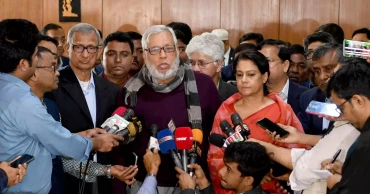
Govt won’t raise power tariff despite pressure from IMF: Energy Adviser
The interim government will not increase power tariffs despite a recommendation from the International Monetary Fund (IMF), said Power and Energy Adviser Dr. Fouzul Kabir Khan on Thursday.
"We will not raise power tariff despite IMF’s suggestion," Dr. Fouzul told reporters after a meeting with an IMF delegation at the Finance Ministry.
The delegation, led by IMF Mission Chief to Bangladesh Chris Papageorgiou, held a meeting as part of the IMF’s third review under the Extended Credit Facility (ECF), Extended Fund Facility (EFF), and Resilience and Sustainability Facility (RSF). Finance Adviser Dr. Salehuddin Ahmed and Dr. Fouzul were present during the discussions.
Govt prioritises timely textbook distribution: Education Adviser
The energy adviser explained that while the IMF recommended a tariff hike to ease the subsidy burden in the power sector, the government emphasized the adverse effects such a move would have on citizens already grappling with high inflation.
The government is focusing on reducing subsidies by cutting production costs in the energy sector, the adviser said.
Old, polluting buses in Dhaka to be scrapped to combat air pollution: Rizwana
He also highlighted several reforms aimed at improving efficiency and transparency in the power sector.
The government has repealed the Speedy Increase of Power and Energy Supply (Special Provision) Act, 2010, and removed bureaucrats from the boards of directors in various power companies, he noted.
1 year ago

‘Fighting my own shadow,’ says energy adviser about bureaucratic challenges
Citing his recent experience in dealing with the country’s bureaucracy, Energy Adviser Dr Fouzul Kabir Khan said he feels like fighting with his own shadow.
"I am fighting with my own shadow, even though I was part of this bureaucracy," he said while addressing a seminar titled ‘Predictable Energy Pricing and Supply Stability’ at the Dhaka Chamber of Commerce and Industry (DCCI) in the city on Saturday.
Fouzul Kabir mentioned that state-owned Petrobangla has sought clearance from the Planning Ministry to waive the mandatory feasibility study provision for implementing drilling projects at different onshore gas fields.
"This feasibility study needs to be conducted by a third party, which requires one year for gathering necessary data about a field. We didn’t want to bypass the feasibility study, but all the data is available with Petrobangla, and it should be handled within the organization itself," he said.
Fouzul Kabir also pointed out that if a year is needed for the feasibility study, how can the job be completed quickly? "This is a time-buying tactic, and we should raise our voices against such a time-consuming provision."
Looking forward to next year with hopes for a better Bangladesh: Foreign Secretary
The DCCI organised the seminar with its president Ashraf Ahmed in the chair. Eminent energy expert Prof Dr M Tamim made a presentation on the topic.
Former BUET Prof Dr Ijaz Ahmed, Dhaka University Prof Badrul Imam, head of corporate affairs at Bangladesh Steel and Re-rolling Mills (BSRM) Saumitra Kumar Mussuddi, and president of the Bangladesh Solar and Renewable Energy Association Eng Nurul Aktar also addressed the seminar.
Reiterating his plans, Dr Fouzul Kabir said that the government would no longer allow independent power producer (IPP) plants in the private sector with a 100 percent off-take guarantee by the government.
"The government will provide a maximum of 10-20 percent guarantee to purchase electricity from these plants. Instead, the government will encourage the private sector to set up merchant power plants, where they can choose their own buyers for electricity," he noted.
Fouzul Kabir said that investors in merchant power plants would be allowed to use the transmission and distribution facilities to sell their electricity to their buyers. "The IPP model in power generation is outdated, and no country is following this model anymore," he added.
Dr Khan also mentioned that the government will float an open tender next week for setting up 40 solar power plants in the private sector. The advertisement for the tender will be released gradually.
Judicial efficiency a moral imperative, not just administrative goal: CJ
"From now on, all doors will be open at the power and energy ministry, and you businessmen will not need to come to the ministry for any persuasion... No personal relationships will be needed to secure a contract. Only competitive offers will determine the outcome," he said.
Dr Tamim said that many power plants had agreements with the previous government to purchase electricity at 17-18 cents per kilowatt hour in solar power. He suggested renegotiating these deals.
Daytime electricity consumption should be met with solar power, and there must be supply and demand-side management, while markets should not be allowed to remain open beyond certain hours.
1 year ago