low-income
Chandpur’s winter harvest eases the burden on plates
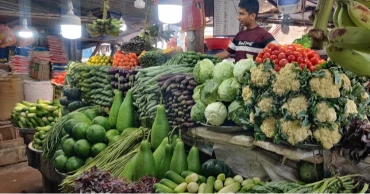
As winter sets in, consumers in Chandpur are finding a welcome relief in kitchen markets, as the prices of winter vegetables see a modest decline, particularly benefiting low-income groups.
Vendors in the coastal district say this year’s price correction is a departure from previous trends, attributing the stability to the absence of syndicates that traditionally caused sudden spikes.
“If this situation continues, it could provide lasting relief for consumers,” a local vendor told UNB.
Agriculturists echoed this observation, noting that last year, potato prices had surged to Tk 80 per kilogram, while high-quality potatoes are now available at Tk 22–25 per kilogram.
Read more: Dry fish trade keeps Narail economy moving in winter
Other vegetables have also become more affordable: papaya is selling at Tk 25–30 per kilogram, and lower-quality potatoes are offered at six to seven kilograms for Tk 100 in van markets across neighbourhoods.
Similar pricing patterns are evident in the district town’s roadside markets, including Wireless, Baburhat, Bohoria, Mahamaya, Bakila, and Munshirhat in Matlab.
Over the past fortnight, fresh winter vegetables such as bottle gourd, ridge gourd, black eggplant, pointed gourd, chichinga, okra, and cucumber have seen price reductions of Tk 10–15 per kilogram, now retailing at Tk 45–50 per kilogram.
Other staples include radish at Tk 40 per kilogram, fresh cauliflower at Tk 35–40 per piece, and smaller cabbages at Tk 40 each. Bitter gourd remains relatively expensive at Tk 80–90 per kilogram, green chilli is Tk 80, coriander leaves Tk 30–40, medium-sized bottle gourd Tk 40, and carrots Tk 120 per kilogram.
Local tomatoes sell for Tk 100–120 per kilogram, taro at Tk 40–50, and leafy vegetables such as red amaranth, pumpkin, kolmi, pointed gourd, and radish are priced between Tk 20–30 per kilogram. Onion prices have fallen to Tk 50 per kilogram.
Read more: Polyshade tomato farming reviving Narail’s rural economy
Traders in the city’s busiest market, Biponibag, including Juel Mia, Jahangir Khan, Iqbal Bepari, and Abul Kalam Bepari, expect prices to fall further in the coming days.
Observations across other prominent district markets, such as Palbazar, New Market, Puranbazar, Wireless Market, and Biponibag, confirm this trend.
Vegetable vendors selling directly from vans are offering produce at Tk 5–10 lower per kilogram than retail shops, attracting crowds of low-income buyers, especially in the evenings.
Each morning, large quantities of fresh vegetables arrive via trawlers from remote char areas in Matlab Uttar, Chandpur Sadar, and Haimchar, including Raj Rajeshwar, Char Ibrahim, Harina, Char Kashim, Kanudi and Bishnupur.
Despite the ample supply, the lack of government regulation in retail markets keeps prices higher than production costs. Mohammad Mobarak Hossain, an agricultural officer at the Department of Agricultural Extension in Chandpur, told UNB that authorities have no power to control market prices.
He said winter vegetable cultivation targets cover 6,100 hectares, aiming for a total production of 134,200 metric tons. Vegetables are grown across nearly 12,000 hectares along riverbanks and chars, with additional supply coming from neighbouring districts.
“There is no shortage of winter vegetables,” he emphasised.
The current price trend provides a glimmer of hope for consumers, signalling a more stable market for winter staples this season.
Read more: Naogaon farmers face uncertainty as unseasonal rain hits early crops
10 months ago
Soaring price of fresh produce and its effect on low-income families of Dhaka
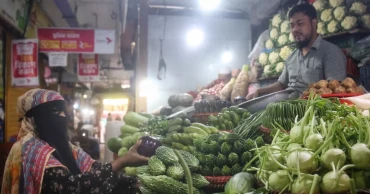
As the scent of winter promises relief, the fresh produce markets of Dhaka are delivering a different kind of jolt: sudden and sharp price hikes on essential food items. For the city's ordinary citizens, this surge in the cost of living is a heartbreaking compromise between family needs and financial reality.
The recent spike in prices for both seasonal vegetables and proteins is placing an immediate and heavy burden on middle and low-income families, with a simple trip to the market becoming a source of anxiety.
The struggles reported by consumers and small traders across the capital show a widening gap between market reality and the goal of price stability pursued by bodies like the Directorate of National Consumer Rights Protection (DNCRP).
Read more: Winter fails to cool prices as Khulna kitchen markets see fresh hikes
Reality of the Market
The escalating prices are not abstract figures; they are deeply personal crises.
Md. Dulal, a security guard, shared his heartache over a family craving. "The duck meat is now selling for Tk 500 per kilogram. My children had their hearts set on it, but with the price going up, it's out of our reach now. It's simply a luxury we cannot afford."
The protein crisis extends to fish as well. Md. Mainuddin, a fish trader himself, noted the extreme costs for premium catches. "A one-kilogram Hilsa fish goes for Tk 2,800, and a large Rupchanda fish is Tk 1,200 per kg, which is far too high for the average buyer, even if other fishes are slightly lower in price."
10 months ago

Chuadanga, Gopalganj shivering in cold wave
Chuadanga and Gopalganj have been shivering as a cold wave coupled with wind is sweeping the districts.
Chuadanga weather office recorded the country’s lowest temperature at 10.2 degree Celsius in Chuadanga and nearby Gopalganj district on Thursday.
Vehicles were seen moving with headlights on Thursday morning to avoid accident due to poor visibility, taking time to reach destination.
Read: Severe cold grips Kurigram, low-income residents hit hard
The low-income people, day labourers are the worst sufferers amid the knee-shaking cold as they have to move out of home to earn bread.
Rakibul Hasan, senior observer at Chuadanga First Class Weather Observatory Office, said the humidity in the wind was 97 percent at 9am.
He said cold may increase in the next few days.
1 year ago