Foreign Adviser Touhid Hossain

Elections to be largely peaceful, hopes Foreign Adviser Touhid Hossain
Foreign Affairs Adviser Md Touhid Hossain on Sunday said the forthcoming twin elections – national election and referendum – will be largely peaceful with an opportunity for people to express their will for a representative government, as no election in Bangladesh was fully peaceful.
“Let us hope that the elections will be held peacefully and people will have the opportunity to express their will and we shall have a representative government after the elections are held,” he said while speaking as the chief guest at the closing session of training on election reporting.
Diplomatic Correspondents Association, Bangladesh (DCAB) in cooperation with the UNDP and Media Resources Development Initiative (MRDI) hosted the training where former Bangladesh Bureau Chief of the Associated Press (AP) Farid Hossain was the facilitator of the two-day session.
UNDP Resident Representative in Bangladesh Stefan Liller, MRDI Executive Director Hasibur Rahman and DCAB President AKM Moinuddin also spoke at the event conducted by DCAB General Secretary Emrul Kayesh.
Bangladesh’s election narratives can influence global confidence: Stefan Liller
Speaking at the event, the Adviser, however, did not completely rule out the possibility of some violence during the elections and said the important thing is that the elections - by and large - must be peaceful.
He said the authorities, the Election Commission and the law enforcement authorities must take immediate steps so that these do not go out of hand.
Hossain said some incidents happened at night but that should be very limited and immediate actions need to be taken.
He said the media during the elections will play a very important role and noted that it is an extremely important event in national life as people have not been able to cast their votes for a long time.
The Adviser said steps are being taken so that the people really have the opportunity to go to the polling centers, and cast their votes without fear and without any disturbance.
“I'm sure this election will definitely reflect the will of the people even if there are small aberrations here and there. I am saying this because traditionally, we have seen that in each and every election scene - some undesired incidents do take place,” he said, adding, “I wish all of you a very vibrant day of reporting on that day.”
As Bangladesh approaches an important electoral milestone, Liller said, the role of journalists is both demanding and indispensable. “Democracy is sustained not only by laws and institutions, but by informed citizens. Journalists are central to that process.”
Liller, who is responsible for UNDP’s activities in the country, said electoral developments must be situated within Bangladesh’s constitutional and legal frameworks, as well as within its international commitments under the United Nations Charter, international human rights instruments and the Sustainable Development Goals, particularly Goal 16 on peace, justice and strong institutions.
He said responsible reporting helps ensure that moments of political contestation are understood internationally as part of a lawful, rules-based democratic process.
Liller said electoral processes are among the most technically and politically sensitive elements of democratic governance. “They involve complex legal frameworks, electoral codes of conduct, voter and candidate regulations, results tabulation systems, and complaints and dispute resolution mechanisms.”
In this context, the international development professional with over 20 years of experience said, journalists serve as a critical bridge between institutions and citizens.
When electoral processes are reported clearly, accurately and responsibly, Liller said, citizens are better able to understand not only what is happening.
He said at moments of heightened political competition, professional and ethical reporting contributes directly to public trust, democratic legitimacy and social cohesion.
Conversely, Liller said, misinformation or imprecise reporting can unintentionally amplify tensions and undermine confidence in electoral outcomes.
8 months ago
Bangladesh signs one bilateral deal, 5 MoUs with Pakistan
Bangladesh has signed one bilateral agreement and five Memorandums of Understanding (MoUs) with Pakistan to strengthen bilateral relations.
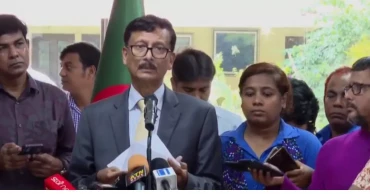
Foreign Adviser Touhid Hossain said this at a press briefing after a meeting with Pakistan Deputy Prime Minister and Foreign Minister Senator Muhammad Ishaq Dar at Hotel Sonargaon in Dhaka on Sunday.
The agreement is on visa exemption for diplomatic and official passport holders of Bangladesh and Pakistan.
The MoUs are the formation of a joint working group on trade between the two countries, cooperation between the Foreign Service academies of both countries, collaboration between the national news agencies of the two countries (BSS and APPPC) and cooperation between Bangladesh Institute of International and Strategic Studies (BIISS) and Pakistan’s Institute of Strategic Studies Islamabad (ISSI).
Both sides reviewed the entire gamut of bilateral relations, including high-level exchanges, trade and economic cooperation, people-to-people contacts, cultural exchanges, cooperation on education and capacity building and humanitarian issues.
Regional and international issues, including rejuvenation of SAARC and resolution of Palestine and the Rohingya issue, were also discussed.
The talks took place in a ‘constructive atmosphere’, reflecting the existing goodwill and cordiality between two countries. Both sides agreed to work for further strengthening of bilateral relations, said the Pakistan side.
The Foreign Adviser told reporters that both sides have agreed to resolve the long-standing unsettled issues between the two countries.
“We have brought up all three of our unsettled issues and they have shared theirs. We have agreed to work on resolving them to further strengthen our bilateral ties,” he added.
For Bangladesh, the adviser said, the three unresolved issues are an official apology for the 1971 Liberation War genocide, the return of due assets and the repatriation of stranded Pakistanis.
He also said it is impossible to resolve these issues that have persisted for 54 years in a single day, but efforts will continue.
During the meeting, the two sides stressed strengthening trade relations and expanding investment, as yearly turnover between the countries is below $ 1 billion, he said.
Bangladesh wanted some facilities to the Pakistani bazars under SAFTA to export textile, energy, medicine, agriculture products and information technology, the adviser added.
Bangladesh-Pakistan Knowledge Corridor
Coinciding with the visit of the Pakistan Foreign Minister, a Bangladesh-Pakistan Knowledge Corridor was launched.
The project envisages grant of 500 scholarships to Bangladeshi students for pursuing higher studies in Pakistan during the next five years.
Read more: Meeting between Touhid Hossain and Pakistan’s Ishaq Dar underway
A quarter of these scholarships will be awarded in the field of medicine.
Besides, training for 100 Bangladeshi civil servants will be arranged during the same period.
Pakistan also decided to increase the scholarships allocated to Bangladeshi students under the Pakistan Technical Assistance Program from 5 to 25, according to the Pakistan Foreign Ministry.
Other Meetings, Reception
The Foreign Adviser of Bangladesh also hosted a lunch in honour of the Deputy Prime Minister and Foreign Minister.
Meanwhile, Deputy Prime Minister and Foreign Minister Senator Muhammad Ishaq Dar had a breakfast meeting with Bangladesh Adviser for Commerce Sk Bashir Uddin.
Minister of Commerce Jam Khamal Khan also joined the meeting.
The Commerce Adviser was accompanied by Chowdhury Ashik Mahmud Bin Harun, Chairman, Bangladesh Investment Development Authority, Dr Ahsan H Mansur, Governor, Bangladesh Bank, Md Abdur Rahman Khan, Chairman, National Board of Revenue of Revenue and Secretary, Internal Resources Division, Md Abdur Rauf, Secretary, Ministry of Textiles and Jute Moinul Khan, Chairman, Bangladesh Trade and Tariff Commission, Nasreen Jahan, Secretary, Ministry of Civil Aviation and Tourism, Mahbubur Rahman, Secretary, Ministry of Commerce, Brigadier General Mohammad Foyshol Azad, Chairman, Trading Corporation of Bangladesh and Md Iqbal Hussain Khan, High Commissioner of Bangladesh to Pakistan
The two sides discussed ways to promote economic and commercial cooperation, with a special focus on enhancing trade and promoting connectivity.
The Pak Deputy Prime Minister and Foreign Minister attended a reception hosted in his honour by the High Commissioner of Pakistan to Bangladesh Imran Haider.
At the reception, Ishaq Dar interacted with a number of personalities from different walks of life, including Bangladesh government advisers, bureaucrats, leadership of political parties, vice chancellors, members of intelligentsia and think tanks, sportsmen, artists, journalists, retired generals and others.
Pakistan’s Minister for Commerce, Jam Kamal Khan, also attended the reception.
In his remarks at the reception, Ishaq Dar underscored that the people of Pakistan had fraternal sentiments towards the people of Bangladesh.
He said the relations between the two countries were anchored in centuries-old shared traditions, Islamic heritage, social norms and literary expressions.
Wishing the people of Bangladesh a harmonious and prosperous future, he expressed Pakistan’s strong desire to forge a cooperative and forward-looking relationship with Bangladesh.
Ishaq Dar arrived in Dhaka on Saturday on a two-day official visit at the invitation of the government of Bangladesh.
He is also scheduled to meet Chief Adviser Prof Muhammad Yunus and Commerce Adviser Sk Bashir Uddin.
1 year ago
Foreign Adviser says July Uprising paved way for inclusive Bangladesh
Foreign Affairs Adviser Md Touhid Hossain, now in New York, has said the July Uprising paved the way for a fairer and more inclusive Bangladesh under the interim government led by Professor Muhammad Yunus.
"Our government, drawing its strength and legitimacy from citizens across all spectrums of our life was entrusted with a singular mandate: to rebuild the foundations of our republic that serves all its people," he said.
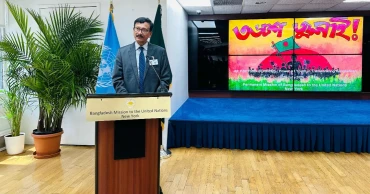
The Foreign Affairs Adviser was speaking at an event 'July Beyond Border' at the Permanent Mission of Bangladesh to the UN on July 28.
Over the past one year, he said, they have taken decisive steps to that end.
'We have repealed laws that stifled dissenting voices and eroded public trust. We have embarked on constitutional reform to ensure that no future regime can compromise the rights of people," Hossain said.
He said they are overhauling the electoral process to restore credibility, inclusiveness, and the sanctity of the people’s choice.
"We have initiated institutional repair, reviving the independence of our courts and commissions. And most importantly, we have created real space for young people to lead," Hossain said.
Prof Yunus launches July Uprising commemoration prog with QR code
He said the youth who once led the protest rallies are now designing programmes, driving digital innovations, and helping them chart their governance and development policies.
"When young people are trusted, they can change our societies for the better. They are the ultimate beacon of hope in times of political inertia or crises of public trust," Hossain said, adding that this is where the story of July resonates far beyond their borders. "This is where our journey intersects with everyone else’s."
Hossain said their experience with youth leadership is relatable in the comity of nations too.
"Our story deeply aligns with global frameworks that have strong focus on youth. To us, Youth, Peace and Security agenda, the 2030 Agenda for Sustainable Development, or more recent Pact for the Future are not abstract aspirations. They speak directly of our lived reality," he said.
The Foreign Adviser said, "Let us move beyond just commemoration and celebration. Let us continue this conversation – here, and beyond these walls."
He also said, "Let us invest in policies, platforms, and partnerships that place youth at the heart of leadership. Their courage, energy, and creativity will illuminate our path toward a more peaceful, just, and sustainable world."
A year on: How the July Uprising redefined Bangladesh’s political landscape
Hossain said just one year ago, the nation witnessed the profound power of youths.
"A movement led by our students ignited a mass upsurge and was embraced by every segment of our society," he said, adding that their call for opportunity, equity and transparency soon evolved into a popular aspiration for systemic transformation across the country, leading to the ouster of a regime that had become completely autocratic.
1 year ago

Pakistani Deputy PM's visit expected, but not before April: Foreign Affairs Adviser
Foreign Affairs Adviser Md Touhid Hossain has hinted that Pakistan’s Deputy Prime Minister and Foreign Minister Ishaq Dar is expected to visit Bangladesh soon, but not before April this year.
Speaking to reporters at the Ministry of Foreign Affairs on Thursday, Hossain emphasised that there was no reason to maintain strained relations with Pakistan.
Foreign fund cuts will worsen Rohingya crisis, warns Adviser Touhid Hossain
“We assume that Pakistan’s Foreign Minister will visit, though the exact date has not been finalised yet. However, I don’t think the visit will take place before April,” he said.
Officials in both Dhaka and Islamabad are currently working on the planned visit.
“There is still time, and we will make some decisions in the meantime,” the Adviser added.
When asked whether Bangladesh would raise the issue of Pakistan’s apology for its role in the 1971 Liberation War and possible compensation, Hossain acknowledged that unresolved issues persist even after 53 years.
He assured that these matters would be addressed during discussions.
He, however, cautioned against being fixated.
“If we remain stuck on these issues, neither side will benefit. We will, of course, protect and pursue our interests, but at the same time, we want to engage with Pakistan as we would with any other country. We do not want to perceive our relationship with them negatively,” he said.
Hossain stressed that Bangladesh sees Pakistan as a fellow South Asian nation with shared interests.
The Adviser highlighted that maritime connectivity between Bangladesh and Pakistan has already resumed, bringing economic benefits. “We will try to maximise our gains from this opportunity,” he added.
Responding to another question, he noted that the previous Awami League-led government had deliberately strained Bangladesh-Pakistan relations, which, in his view, did not serve the interests of either nation.
Ishaq Dar’s upcoming trip to Dhaka will mark the first visit by a Pakistani Foreign Minister since 2012.
Under the previous government, Bangladesh had repeatedly urged Pakistan to issue a formal public apology for the atrocities committed against unarmed Bangladeshis in 1971.
In February 2023, Dhaka conveyed the same message to former Pakistani State Minister for Foreign Affairs Hina Rabbani Khar during a meeting in Colombo, Sri Lanka.
Maintaining balanced relations extremely important for Bangladesh: Touhid Hossain
More recently, Chief Adviser Prof Muhammad Yunus and Pakistani Prime Minister Shehbaz Sharif discussed the issue on the sidelines of the D8 Summit in December 2024.
Prof Yunus urged Sharif to address the unresolved matters from 1971 to facilitate improved relations between Dhaka and Islamabad.
“These issues keep coming up repeatedly. Let’s resolve them once and for all so that we can move forward,” Yunus told Sharif.
Sharif acknowledged the 1974 tripartite agreement between Bangladesh, Pakistan and India, which had aimed to settle such matters, but expressed willingness to revisit any outstanding concerns.
“It would be beneficial to resolve these issues permanently for future generations,” Prof Yunus said.
During their meeting, Yunus and Sharif also discussed expanding cooperation in new sectors, including the sugar industry and dengue management.
They explored ways to revive the South Asian Association for Regional Cooperation (SAARC), a key priority in Bangladesh’s foreign policy under the interim government.
Prof Yunus, a Nobel Peace Laureate, also reiterated his administration’s commitment to carrying out essential reforms and holding the next general elections before mid-2026.
1 year ago
Bangladesh had to accept huge Rohingyas under certain circumstances: Touhid Hossain
Foreign Affairs Adviser Md Touhid Hossain on Sunday said Bangladesh had to accept over 60,000 Rohingyas under certain circumstances through various unofficial channels, including border-related corruptions, despite its decision in principle not to allow any new arrival from Myanmar.
“We had a position in principle that no new arrival one will be allowed. No one was allowed formally. Another thing we need to keep in mind that there is huge corruption in the border. And it is true,” he said while talking to reporters at the Ministry of Foreign Affairs on his recent informal consultation at the ministerial level among Myanmar and its five neighbouring countries.
The six-nation consultation was held in Bangkok on Thursday under the chairmanship of the Thai Foreign Minister Maris Sangiampongsa.
The meeting was attended, among others, by Myanmar Deputy Prime Minister and Foreign Minister Than Swe.
Bangladesh must address pressing challenges, seize opportunities: Foreign Adviser
Responding to a question, Hossain said the Rohingyas are not entering Bangladesh through a single route; they are coming through multiple routes, making it very difficult to stop.
Asked about a potential new influx of Rohingya refugees, he dismissed such possibility. "I do not believe another influx will occur, although many are concerned. We too share these concerns, but we must take measures to prevent it, working with the international community," Hossain said.
Meanwhile, speaking at a seminar on Sunday morning, Adviser Hossain said they are aware of the civil war situation currently prevailing in Myanmar, and the 1.2 million Rohingyas who were forcibly displaced from the Rakhine state under extreme atrocities, and are sheltered in Bangladesh for the last 7 plus years.
There has been no progress in their repatriation and the situation is further complicated by a non-state actor, the Arakan Army taking control of the entire border with Bangladesh, he said.
Referring to his meeting in Bangkok, the Foreign Adviser said, "I told them in no uncertain terms that peace and order will not be possible in Myanmar, and consequently in the region, unless the Rohingyas lodged in Myanmar can go back to their homes with security and rights."
It is incumbent on Myanmar and the regional powers to create a congenial atmosphere for their return, he said. “I had the scope to talk in details as it was an informal discussion and I explained our position clearly,” Hossain told reporters at the foreign ministry.
Take action-orinted initiatives, harness technology: Prof Yunus tells D-8 members
“If Rohingya problem is not resolved, peace and stability that you are thinking of will never be achieved,” he said, while conveying Bangladesh’s position during the meeting in Bangkok.
Hossain also said if the Rohingyas, mostly young people, cannot be given a hope and if no light is seen at the end of the tunnel, they will become desperate and they will do desperate activities. “I made it clear to them.”
The Foreign Adviser said offenders are on the both sides of the border and in the Rohoingya camps and they made huge money through illegal activities. If these issues are not addressed, peace cannot be achieved, he said.
Hossain informed Myanmar that the border is no longer under their control; rather it is now controlled by non-state actors like the Arakan Army. “As a state, we cannot engage with a non-state actor. Myanmar must find a way to resolve the issues related to the border and Rakhine."
In Bangkok, Hossain reiterated the call for a "comprehensive roadmap" for Rohingya repatriation with priority attached to ensuring stability in Rakhine State.
Dhaka seeks ‘comprehensive roadmap’ for Rohingya repatriation
He urged ASEAN and other key regional actors to play a further proactive role in restoring peace, security, and democracy in Myanmar.
“Bangladesh has every interest to see lasting peace, stability and democracy in Myanmar, and a conducive environment in Rakhine State for the Rohingya to have confidence to go back there in safety and dignity," Hossain affirmed.
1 year ago