Jamaat-e-Islami
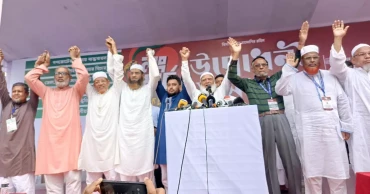
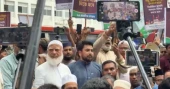
Jamaat-led 11-party alliance’s Dhaka-Chattogram long march begins
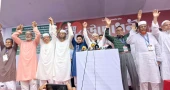
11-party alliance led by Jamaat-e-Islami began a long march from the capital toward Chattogram on Saturday morning, to press home a six-point demand including the implementation of the “people's verdict in the February 12 referendum, trial of July 2024 mass killings, and resolution of the multi-dimensional energy crisis”.
The alliance is also demanding measures to control soaring prices of essential commodities, an end to extortion and corruption, improvement of the law and order situation and an end to narrow partisanisation.
The rally began at 7:00am at Shapla Chattar in Motijheel.
The programme opened with the recitation of verses from the Holy Quran.
Dr AHM Hamidur Rahman Azad, assistant secretary general of Bangladesh Jamaat-e-Islami and coordinator of the 11-party alliance, delivered the opening remarks.
Top leaders of the alliance addressed the rally.
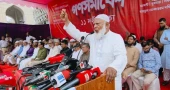
Following speeches by the alliance's senior leaders, including opposition leader and Bangladesh Jamaat-e-Islami Ameer Dr Shafiqur Rahman, the long march convoy left for Chattogram.
The first roadside rally will be held near the truck stand by the Kanchpur Bridge in Narayanganj, followed by rallies at Paduar Bazar Bishwaroad in Cumilla, Mohipal in Feni and Mirsarai and the final rally at Laldighi Maidan in Chattogram.
The long march will conclude with a public rally at Laldighi Maidan in Chattogram.
Jamaat Secretary General and Long March Implementation Committee Convener Mia Golam Parwar on Friday urged the government to provide all necessary administrative cooperation to ensure the success of what he described as the largest peaceful political programme of the opposition.
He warned that if any government party or anyone creates an adverse situation during the long march, they would lose further public trust and face public anger.
He clarified that delegates participating in the long march would not get down from their vehicles to join the roadside rallies. Local party units will organise those rallies.
He said vehicles in the procession would carry stickers and no vehicle would be allowed to join the procession.
Media vehicles will also be allowed to join the procession to cover the programme, he said.
Talking about their demands, he said although six months had passed since the formation of the government, it had not taken any initiative to implement the people's verdict given in the referendum.
1 month ago
Jamaat-led opposition alliance's Dhaka-Ctg 'Long March' slated for Saturday
The 11-party opposition alliance led by Jamaat-e-Islami will observe a long march from Dhaka to Chattogram on Saturday, to press home a six-point demand, including the implementation of the people's verdict in the February 12 referendum, trial of the July 2024 mass killings, and resolution of the multi-dimensional energy crisis.
The alliance is also demanding measures to control soaring prices of essential commodities, an end to extortion and corruption, improvement of the law and order situation and an end to narrow partisanisation.
11-party alliance backs march to Parliament over enforced disappearances
Jamaat Secretary General and Long March Implementation Committee Convener Mia Golam Parwar on Friday urged the government to provide all necessary administrative cooperation to ensure the success of what he described as the largest peaceful political programme of the opposition.
He warned that if any government party or anyone creates an adverse situation during the long march, they would lose further public trust and face public anger.
“We hope that the government and anyone from the ruling party will not take such an unwise step,” he said, while briefing reporters after a final preparatory meeting.
The meeting was held at 11am at Jamaat's central office in the city’s Moghbazar area to finalise preparations for the programme.
Golam Parwar said preparations for Saturday's programme had already been completed and around 1,500 vehicles were expected to join the long march.
The inaugural rally will begin at 7am at Shapla Chattar in Dhaka, while rallies will be held at a number of points along the route.
The first roadside rally will be held near the truck stand by the Kanchpur Bridge in Narayanganj, followed by rallies at Paduar Bazar Bishwaroad in Cumilla, Mohipal in Feni and Mirsarai and the final rally at Laldighi Maidan in Chattogram.
“We have so far received information that a huge number of people will join there (the final rally in Laldighi Maidan),” said Golam Parwar.
He clarified that delegates participating in the long march would not get down from their vehicles to join the roadside rallies. Local party units will organise those rallies.
He said vehicles in the procession would carry stickers and no vehicle would be allowed to join the procession.
Media vehicles will also be allowed to join the procession to cover the programme, he said.
The Jamaat leader said the opposition has continued to play a systematic, constructive and responsible role both inside and outside Parliament since the formation of the government following the 13th parliamentary election.
Talking about their demands, he said although six months had passed since the formation of the government, it had not taken any initiative to implement the people's verdict given in the referendum.
“Rather, it has turned away from implementing the people's verdict,” he said.
Noting that they are dreaming of building their dream of Bangladesh, he said, “We are not waging any movement to overthrow the government. Our demand, as well as the people's demand, is that you accept the people's verdict in the referendum. Accept our six-point demands,” he said.
Golam Parwar stressed for maintaining political tolerance between the ruling and opposition parties following the 2024 July political change. “Let it now be proven that there is mutual tolerance between the opposition and ruling parties and that we have come out of the negative culture of political violence,” he said.
He said the alliance did not anticipate any sabotage during the programme and expressed confidence that the long march could be held peacefully without causing any loss of life or property.
The Jamaat leader expected thousands of people to greet the long march from both sides of the road.
The final preparatory meeting was attended, among others, by Jamaat Assistant Secretary General and 11-party alliance Coordinator AHM Hamidur Rahman Azad, NCP Chief Coordinator Nasiruddin Patwari, Jagpa spokesperson Rashed Pradhan, Jamaat Assistant Secretary General Maulana Abdul Halim.
1 month ago
Editors advise opposition to engage in constructive criticism, avoid violence: Jamaat
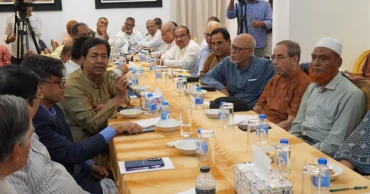
Editors of various newspapers have advised the opposition to engage in constructive criticism of the government and avoid violence on the streets in order to maintain stability in the country, Bangladesh Jamaat-e-Islami Secretary General Mia Golam Porwar said on Monday.
He made the remarks while briefing journalists after a view-exchange meeting between Jamaat Ameer and Leader of the Opposition in Parliament Dr Shafiqur Rahman and a group of newspaper editors at the opposition leader’s official residence on Minto Road in the capital in the afternoon.
“Editors advised us to oppose the government and criticise it constructively, and, if necessary, take to the streets with the demands of the people. But they advised us not to destabilise the country by following intolerant, unstable or violent paths like those adopted by opposition parties in the past,” Porwar said.
He said Shafiqur Rahman outlined the roles being played by Jamaat and the 11-party alliance in Parliament in the current situation.
The Jamaat chief said their party has been playing a constructive role as the main opposition both inside and outside Parliament.
He also presented before the editors the party’s policy decision to break away from the bad practices traditionally associated with opposition parties and, instead, cooperate with the government in its good initiatives while resisting all unjust and anti-people activities in order to maintain overall stability in the country.
“The editors praised this policy of Jamaat,” Porwar said, adding that Jamaat’s opposition will be “constitutional and constructive”.
Those present at the meeting included The Daily Star Editor Mahfuz Anam, Daily Jaijaidin Editor Shafik Rehman, Daily Manab Zamin Chief Editor Matiur Rahman Chowdhury, Daily Ittefaq Editor Tasmima Hossain, Bonik Barta Editor Dewan Hanif Mahmud, Daily Naya Diganta Editor Salahuddin Muhammad Babar, Daily Inqilab Editor AMM Bahauddin, Protidiner Bangladesh Editor Maruf Kamal Khan, Daily Amar Desh Editor Mahmudur Rahman, Daily Khoborer Kagoj Editor Mostofa Kamal, Daily Waadaa Editor Shafiqul Alam, Agamir Somoy Editor Mustafa Mamun, Daily Bhorer Dak Editor KM Belayet Hussain, Ajker Patrika Editor Kamrul Hasan, Daily Manabkantha Editor Shahidul Islam, Daily Kalbela Editor Santosh Sharma, Banijjo Protidin Editor Giash Uddin, Daily Karatoa Editor Mozammel Haque, Daily Janata Editor Obaidur Rahman Shaheen, Khola Kagoj Editor Ahsan Habib, The New Nation Editor Mohammad Mokarram Hossain, Green Watch Editor Mostafa Kamal Majumder, Prothom Alo Executive Editor Sajjad Sharif, The Business Standard Joint Editor Sajjadur Rahman, Daily Desh Rupantor Executive Editor Shahidul Islam Chowdhury, Daily Edin Executive Editor Khandaker Mozammel Haque, The Evening News Editor ABM Salim Ahmed, Daily Sangram News Editor Shamsul Arefin and Weekly Sonar Bangla News Editor Ferdous Ahmad Bhuiya.
1 month ago
Govt takes narrow-minded approach to opposition’s participation in presidential election: Hamidur
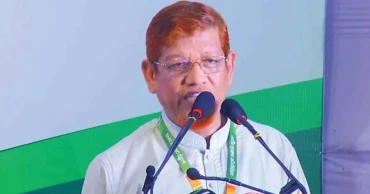
Bangladesh Jamaat-e-Islami Assistant Secretary General Dr AHM Hamidur Rahman Azad on Friday criticised what he described as the government's "narrow-minded" assessment of the opposition's participation in the presidential election.
In a statement, he said the government is viewing the opposition's participation through a politically “narrow-minded” perspective instead of assessing it from a liberal and democratic lens.
Referring to a recent remark by a cabinet member that the oath taken by opposition members to the Constitution Reform Council could no longer remain valid because they participated in the presidential election while retaining Article 70 of the Constitution, Hamidur questioned the logic behind the argument.
"If this argument is acceptable, then how can the oath taken as Members of Parliament remain valid? Because no parliamentary election was held through a constitutional process in 2026," he said.
He said their position is "very clear", adding that the opposition's participation in the presidential election was a symbolic protest against the limitations of the government's desired reform process and an effort to introduce a new form of democratic practice.
"We already knew what the outcome of the election would be. Even so, we participated to make our position clear to the people and strengthen the demand for democracy," the Jamaat leader said.
He said the people have once again realised why constitutional reform is essential to make democracy in Bangladesh effective, accountable and sustainable.
Hamidur urged the government not to interpret the opposition's participation in a narrow manner and instead understand its underlying democratic message.
"The government must respect the people's expectations by implementing the verdict of the referendum and taking effective initiatives for necessary constitutional reforms," he said.
"No government can run the state in the long term by ignoring the aspirations of the people," the Jamaat leader added.
1 month ago
11-party alliance announces 4 long marches, Dhaka ‘grand rally’
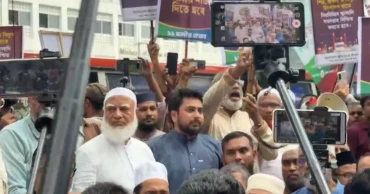
The Jamaat-e-Islami-led 11-party alliance on Thursday announced a series of long march in four divisions and a ‘grand rally’ in Dhaka to press for a set of demands including the withdrawal of increased LPG prices, ensuring adequate supplies of gas, electricity, safe drinking water and implementation of the July Charter.
Opposition Leader and Jamaat-e-Islami Ameer Dr Shafiqur Rahman announced the programme at a sit-in programme organised by the alliance at Muktangan in the capital.
The sit-in was held in protest against what the alliance described as the fuel and gas crisis, “ghost” electricity bills, deteriorating law and order situation, and soaring prices of essential commodities.
According to the announced schedule, the programmes will begin with a long march from Dhaka to Chattogram on Sept 5. This will be followed by a long march from Dhaka to Rangpur on Sept 19, from Dhaka to Khulna on Oct 10 and from Dhaka to Sylhet on Oct 24.
Besides, a grand rally in Dhaka has been scheduled for Nov 14.
Highlighting shortages of gas and electricity, Dr Shafiqur Rahman said every household must receive electricity, gas must be ensured for cooking, sufficient gas should be supplied for transport, and safe drinking water must be made available to people.
Criticising the recent increase in LPG prices, he demanded its immediate withdrawal and warned that the relevant offices would be surrounded if the decision is not reversed.
“If an artificial gas crisis is created and then used as a pretext to increase prices, it will not be accepted,” he said.
The Jamaat chief also said their movement would continue until justice is ensured for those involved in killings, crimes and looting.
“Those responsible for oppression, repression and opening fire on innocent people will not be allowed to return and rule Bangladesh again,” he said.
About the Rangpur programme, he said meetings would be held at different points along the route to hear public concerns and present the alliance’s demands, with the aim of preparing people for a larger movement.
Explaining why the Sylhet programme would be held by rail instead of road, Dr Shafiqur Rahman said ongoing road construction work in the region would cause severe public suffering if hundreds of vehicles join the march.
“Considering public inconvenience, we have chosen the railway route,” he said.
2 months ago
Jamaat Ameer urges people to prepare for another imminent revolution
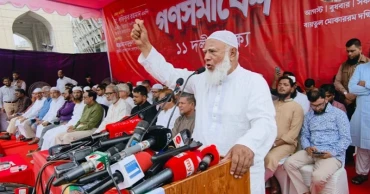
Leader of the Opposition and Bangladesh Jamaat-e-Islami Ameer Dr Shafiqur Rahman on Wednesday claimed that another revolution is imminent and urged the people to prepare for it, warning that no one would be able to prevent the fall of the current government unless it corrects its course.
"Everything seems to indicate that another revolution is imminent. I urge the countrymen to prepare for that revolution," he said while addressing a public rally in the capital.
The Jamaat-led 11-party alliance organised the rally at the south gate of the Baitul Mukarram National Mosque in the capital, marking the second anniversary of the 2024 July Mass Uprising.
Addressing the programme as the chief guest, the Jamaat chief said the consequences of wrongdoing may take time to unfold, but ultimately sin decays and collapses on its own.
“Now that sin has started to decay. If the government understands that, then it is good. If they don't, no one will be able to prevent its downfall,” he said.
Dr Shafiqur Rahman said as people of all ages had joined the July uprising, everyone would take part in the coming movement. “The uncompromising struggle against fascism will continue," he said.
The opposition leader also accused the current government of repeating the practices of the fascist regime. "If you behave like fascists, people will call you fascists. So, abandon fascist behaviour," he said.
Dr Shafiqur Rahman urged the government to respect public mandate given through the referendum for implementation of reform initiatives.
"Accept our public mandate. Do not insult the verdict of 70 percent of the people (given through referendum). No one has survived after disrespecting the people's mandate," he said.
He alleged that his party was facing continuous pressure and inducements to compromise but vowed not to retreat.
“I would like to say before the people of this country that we will safeguard your democratic mandate, InshaAllah. With Allah's help, we must ensure that this demand is realized. We will not retreat from it in exchange for anything, not even our lives," he said.
Talking about recent violence in educational institutions, the opposition leader alleged that the developments of the past few days have created anxiety among students and teachers. It has also created a fear that the fascist culture of ‘ganoroom’ (overcrowded dormitory rooms) and 'guest room' may return, he said.
He urged students, teachers and staff to resist injustice wherever it occurs. “No wrongdoing should be tolerated," he said.
Bangladesh Khelafat Majlish Ameer Maulana Mamunul Haque presided over the rally, while leaders of the 11-party alliance addressed the gathering.
2 months ago
Jamaat asks EC to allow MPO teachers in local elections; seeks removal of additional secretary
Bangladesh Jamaat-e-Islami on Wednesday demanded the Election Commission to withdraw its proposed provision barring MPO-listed teachers from contesting local government elections and cancel the contractual appointment of an additional secretary over “political affiliation”.
A six-member Jamaat delegation, led by its Secretary General Mia Golam Parwar, sat in a meeting with Chief Election Commissioner AMM Nasir Uddin at the Nirbachan Bhaban in the city's Agargaon and submitted a letter to the CEC.
Election Commissioners Abdur Rahmanel Masud and Tahmida Ahmad, along with EC Senior Secretary Akhtar Ahmed, were also present at the meeting in the morning.
According to a letter submitted to the CEC, Jamaat also demanded consideration of its previous opinions regarding the local government election code of conduct which were placed before the Election Commission on June 30 last.
In the letter, Jamaat said the EC has sent a proposal to the Ministry of Local Government declaring MPO-affiliated teachers ineligible to contest in local government elections.
If the proposed provision is implemented, several lakhs of teachers and employees of more than 30,000 MPO-affiliated educational institutions in the country will be deprived of the opportunity to participate in local government elections, which is inconsistent with the principles of equality and non-discrimination enshrined in Articles 27 and 28 of the Constitution, it added.
“So, we believe that the proposed provision needs to be reconsidered and withdrawn or amended so that the constitutional right of eligible citizens to political participation remains intact,” it said.
Jamaat also demanded the immediate cancellation of the recent contractual appointment of 67-year-old Md Shamsul Alam as an additional secretary to the EC Secretariat, alleging that he had links with a political party.
The party claimed that media reports regarding his alleged political affiliation have raised questions among people about the neutrality of the Election Commission.
Briefing reporters after the meeting, Mia Golam Parwar said the delegation discussed four demands with the Commission. "We met the Election Commission to discuss our demands aimed at ensuring the upcoming local government elections are fair, neutral, transparent and credible," he said.
Raising the fourth demand, he said they asked the EC to make the administrators appointed to local government bodies on political considerations ineligible to contest local government elections.
Regarding Shamsul Alam's appointment, Parwar alleged that appointing a politically affiliated person to a constitutional body like the Election Commission would undermine its neutrality as he had served as a member of the BNP's electoral constituency delimitation committee.
The Jamaat leader alleged that the appointment was intended to influence the upcoming local government elections in favour of the ruling party.
The EC told the delegation that it had not been aware of Shamsul Alam's alleged political affiliation and that the contractual appointment had been made by the government. “But the EC could have objected to the appointment,” he said.
Parwar criticised ministers for making differing statements about the possible timing of local government elections.
He also criticised the EC over the publication of the gazette notification declaring BNP leader Sarwar Alamgir elected from Chattogram-2 on the same day the Supreme Court delivered its verdict.
He alleged that the Commission had acted under political pressure by issuing the gazette without waiting for the signed copy of the court order. “Their body language reflected that they did it under pressure,” he added.
Responding to a question, Parwar said they did not discuss the parliamentary membership of its expelled Satkhira-4 lawmaker Gazi Nazrul Islam in the meeting.
"We have already written to both the Speaker and the Election Commission. Expulsion from the party is the highest disciplinary action we can take. The issue of parliamentary membership is constitutional and falls under the jurisdiction of the Speaker and the Election Commission," he said.
The Jamaat delegation also included Assistant Secretaries General Dr AHM Hamidur Rahman Azad, Ahsanul Mahboob Zubair and Moazzem Hossain Helal, members of its central working committee Jasim Uddin Sarkar and Shishir Mohammad Monir.
2 months ago
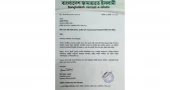
Jamaat formally notifies EC of Satkhira-4 MP Nazrul's expulsion
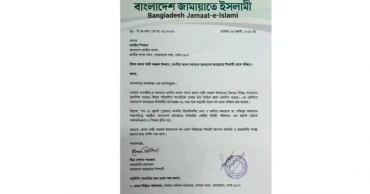
Bangladesh Jamaat-e-Islami on Thursday formally notified the Election Commission (EC) that it has expelled Satkhira-4 lawmaker Gazi Nazrul Islam from the party after an internal investigation found allegations of moral turpitude against him to be true.
In a letter signed by party's Secretary General Mia Golam Porwar and addressed to Chief Election Commissioner (CEC) AMM Nasir Uddin, Jamaat informed the EC of its decision.
According to the letter, the party conducted an organisational investigation into various media reports published recently regarding MP Nazrul.
The investigation found the allegations of moral turpitude against him to be substantiated. Consequently, he was expelled from the party under Article 62 of the Bangladesh Jamaat-e-Islami constitution, it said.
The letter stated that the decision was unanimously taken at an emergency meeting of the party's Central Executive Council held on July 22 chaired by Jamaat Ameer and Leader of the Opposition Dr Shafiqur Rahman.
It said copies of the decision have also been sent to the Office of the Speaker of the Jatiya Sangsad for taking necessary action.
2 months ago
Jamaat expels Satkhira MP Gazi Nazrul Islam over viral video
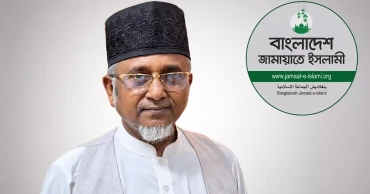
Bangladesh Jamaat-e-Islami has expelled Satkhira-4 lawmaker Gazi Nazrul Islam after an internal investigation found evidence of what the party described as "moral lapses" following the circulation of a viral video that sparked widespread controversy.
The decision was taken at an emergency meeting of the party's Central Executive Council held at 4pm on Wednesday at the official residence of the Opposition Leader on Mintoo Road in the capital, said a statesman of the party.
Jamaat Ameer Dr Shafiqur Rahman chaired the meeting.
According to the party, an organisational investigation into allegations reported by various media outlets found evidence of "moral lapses" on the part of Gazi Nazrul Islam.
Based on the findings, the council decided to expel him from the party, said the statement.
The party said it will immediately notify the Election Commission of his expulsion.
Earlier at noon, local people brought out a protest procession in Shyamnagar upazila of Satkhira, demanding the removal of Gazi Nazrul Islam.
The protesters under the banner of Shyamnagar Sachetan Nagorik brought out a procession around 12pm that marched through the upazila's main roads before ending on Shyamnagar Press Club premises.
Later, the protesters burned an effigy of the MP.
A video on social media on Monday night showed the Satkhira-4 lawmaker getting intimate with a girl in a room.
Amid the controversy, Gazi Nazrul Islam claimed in a Facebook post that the girl seen in the video is his second wife.
2 months ago

Viral video sparks protests in Satkhira, locals demand Jamaat MP's removal
Local people brought out a protest procession in Shyamnagar upazila of Satkhira on Wednesday, demanding the removal of Jamaat-e-Islami MP Gazi Nazrul Islam over a viral video that has sparked widespread controversy.
The protesters under the banner of Shyamnagar Sachetan Nagorik brought out a procession around 12pm that marched through the upazila's main roads before ending on Shyamnagar Press Club premises.
Later, the protesters burned an effigy of the MP.
They alleged that the MP has lost the moral authority to represent the constituency and demanded that Jamaat-e-Islami remove him from both the party and Parliament.
They also declared Gazi Nazrul Islam ‘persona non grata’in Shyamnagar, alleging that his actions has tarnished the image of the locality.
They also urged the party to take organisational action against him.
The protest follows the circulation of a video on social media on Monday night showing the Satkhira-4 lawmaker getting intimate with a girl in a room.
Amid the controversy, Gazi Nazrul Islam claimed in a Facebook post that the girl seen in the video is his second wife.
However, his claim has also triggered debate and drawn public scrutiny.
Jamaat-e-Islami has not issued any official statement on the matter yet.
2 months ago