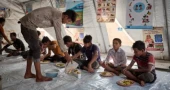
Bangladeshi children
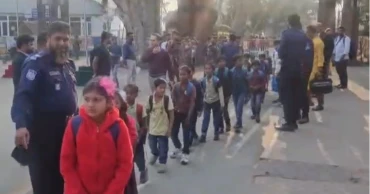
28 trafficked Bangladeshi children, teens repatriated via Benapole
A total of 28 Bangladeshi children and teenagers trafficked to India were repatriated through the Benapole International Checkpost on Tuesday evening on special travel permits issued by the Indian authorities.
Among the returnees, 17 were children and 11 were teenagers. They were handed over by Indian immigration police to their Bangladeshi counterparts at the checkpost.
Officer-in-Charge of Benapole Immigration Police Sakhawat Hossain said the victims had entered India through different border routes, some with their parents and others through traffickers. They were later detained by Indian police on charges of illegal entry and jailed following court orders.
Security tightened along Benapole border after BNP leader’s killing
After completing their jail terms, they were kept at shelter homes run by an Indian NGO before being sent back to Bangladesh under special travel permits provided by the Indian government, he added.
Following completion of immigration formalities, the children and teenagers were handed over to Benapole Port Police Station.
Three NGOs—Rights, Justice and Care, Women Lawyers’ Association and another partner organisation—received them and will facilitate their reunification with families, the official said.
7 months ago
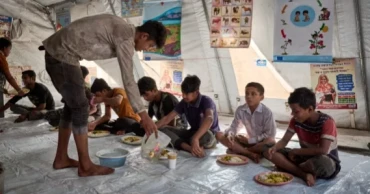
Bangladeshi children aren’t eating vegetables — and how it’s fueling a health crisis
Despite growing awareness of healthy eating, vegetable consumption among children in Bangladesh remains alarmingly low, posing serious threats to child nutrition and long-term health, nutritionists and public health experts have warned.
Recent estimates suggest that more than 1.5 crore children across the country are at nutritional risk due to the lack of vegetables, fruits, and milk in their daily food intake. Experts say this deficiency is causing a shortfall of at least five key nutrients essential for healthy growth and development.
Nutritionists recommend that children aged 2 to 5 years should consume at least 40% of their daily food intake in the form of vegetables to lay a strong foundation for lifelong health.
The World Health Organization (WHO) recommends that children consume at least 400g, or five portions, of fruits and vegetables per day.
Adequate vegetable intake is linked to a lower risk of heart disease, stroke, and certain cancers later in life, it also said.
On the other hand, poor dietary habits, including low vegetable intake, can increase the risk of developing chronic diseases like type 2 diabetes later in life, according to the Centers for Disease Control and Prevention (ICDDR,B).
A recent analysis of dietary patterns reveals that a significant number of Bangladeshi children under the age of five consume little to no vegetables on a daily basis. According to data from the Bangladesh Demographic and Health Survey (BDHS), more than 60% of children aged 6 to 23 months had not consumed any fruits or vegetables on the day before the survey.
“This trend is deeply concerning,” said Dr. Nusrat Jahan, a pediatric nutritionist at the National Institute of Public Health. “Vegetables are essential for a child’s physical and cognitive development. When children miss out on this group of foods early in life, it can lead to vitamin deficiencies, weakened immunity, and poor eating habits in the future.”
Richest countries damaging child health worldwide: Unicef
Experts say the avoidance of vegetables stems from multiple factors—ranging from taste preferences and lack of awareness to the increasing influence of ultra-processed food marketing. Many children show a natural aversion to bitter flavors, especially those found in green leafy vegetables, and without repeated exposure or encouragement, these foods are often rejected both at home and in schools.
In lower-income households, affordability and accessibility pose additional challenges. “There is a clear link between food insecurity and poor dietary diversity,” said Shamsul Alam, a food policy researcher. “When families struggle to make ends meet, vegetables are often replaced with calorie-dense staples like rice and lentils.”
However, the issue cuts across class lines. Dr. Kamrul Hasan, senior pediatrician at Mugda Medical College and Hospital, told UNB that vegetable intake is commonly neglected in both poor and affluent families.
“Our meals are made up of several essential components. Yet vegetables—critical for boosting the immune system—are often overlooked by parents, rich and poor alike,” he said. “Fruits and vegetables provide essential nutrients such as Vitamin A, C, K, iron, potassium, folic acid, calcium, and even protein.”
He emphasized the need for integrating vegetables and fruits into children’s daily meal plans to address widespread micronutrient deficiencies.
“My son doesn’t like vegetables, so I just give him rice with eggs,” said Rina Akhter, a mother from Mirpur. “I didn’t realize skipping vegetables every day could be harmful.”
Neonatal-child healthcare project to be greatly helpful: Japanese envoy
Indeed, many families avoid vegetables fearing they might be harmful due to the practise of selling outdated produce as fresh by applying a chemical called formalin by vendors. When its widespread use was exposed in the media, the public grew even more apprehensive about consuming vegetables.
Encouragingly, some initiatives have begun showing promise. In a pilot project in Khulna and Rangpur districts, primary school students were introduced to school gardens, vegetable-based meals, and basic nutrition education. Teachers reported noticeable improvements in children's willingness to eat vegetables like spinach and amaranth.
Nutritionists recommend involving children in food preparation, offering vegetables in fun and creative forms, and modeling positive eating behaviors. “Children are more likely to eat vegetables when they see parents or peers enjoying them,” said Dr. Nusrat.
Public health advocates are calling for stronger policy-level interventions, including mandatory school meals with vegetables, subsidized vegetable markets, and restrictions on junk food marketing targeted at children.
As Bangladesh continues its fight against malnutrition, experts agree that ensuring vegetables are a regular part of children’s diets must become a national priority.
“It’s not just about full bellies,” said Dr. Nusrat. “It’s about nourishing our next generation—both body and mind.”
Despite progress in reducing poverty and improving health indicators, malnutrition remains a major public health concern for children in Bangladesh. According to recent national and international data, approximately 28% of children under the age of five are stunted, indicating chronic undernutrition that hampers physical and cognitive development.
Urban poor get less access to maternal and child health service: Experts
Additionally, around 9.8% of children suffer from wasting - a result of acute malnutrition—while 22–23% are underweight. Experts warn that over 40% of children face some form of anthropometric failure when combined indicators are considered. Alarmingly, a small but rising percentage (3.3%) are overweight, pointing to an emerging double burden of malnutrition.
1 year ago
Climate crises disrupted schooling for 33 million Bangladeshi children in 2024: UNICEF
Severe weather events disrupted education for children around the world, including 33 million in Bangladesh in 2024, according to an analysis released by UNICEF today.
The report, "Learning Interrupted: Global Snapshot of Climate-Related School Disruptions in 2024," is the first of its kind, and reveals that heatwaves, cyclones, floods, and other extreme weather events led to multiple rounds of school closures around the world.
Globally, at least 247 million students in 77 countries had their schooling disrupted by heatwaves, tropical storms, floods and droughts in 2024. South Asia was the most affected region.
In Bangladesh, nationwide heatwaves in April and May 2024 left children at risk of dehydration and heatstroke, forcing schools to close across the whole country for up to two weeks, and several districts went on to suffer subsequent school disruption due to cyclone Remal, followed by intense flooding in June.
UNICEF appeals for US$9.9 bln funding to support children hit by conflict, crisis
Up to 18.4 million people were impacted by the floods countrywide, including 7 million children. Sylhet district was the worst hit, with severe flooding causing widespread infrastructure damage and leaving more than 600,000 learners without access to education. According to estimates from UNICEF in Bangladesh, children in Sylhet lost up to 8 weeks of school days cumulatively and areas in Khulna, Chattogram and Rangpur districts each suffered 6 weeks of climate-induced school closures over 12 months.
“The increasing frequency and intensity of extreme weather events, exacerbated by the climate crisis, is having a knock-on effect on children’s education in Bangladesh and depriving children of their right to learn”, said Rana Flowers, UNICEF Representative to Bangladesh. “Extreme temperatures and other climate hazards don’t only damage schools, they can affect students’ concentration, memory and mental and physical health. Prolonged school closures increase the chance of children – especially adolescent girls – dropping out of school and being married off by families to cope with economic stress”.
According to the UNICEF Children’s Climate Risk Index, children in Bangladesh are already among the most exposed and vulnerable in the world to climate and environmental hazards. These disasters often put further strains on the ‘learning poverty’ in the country, where one in two children cannot read at their grade level and two-thirds are unable to do basic counting after completing primary education.
In addition, the country loses some of the brightest from their classrooms, as girls and Bangladesh pay the price of ranking among the top 10 countries in the world with the highest percentage of child marriage.
The report notes that schools and education systems are largely ill-equipped to protect students from these impacts, and climate-centred finance investments in education remain strikingly low.
UNICEF is calling on international climate financing institutions and donors, the private sector and the interim Government of Bangladesh to prioritize the needs of children in policies and plans, including by:
Accelerating financing to improve climate resilience in the education sector, including investing in proven and promising solutions to build climate-smart learning facilities that are safe and inclusive for all children.
Number of children recruited by gangs in Haiti soars by 70%: UNICEF
Ensuring national climate plans – including Nationally Determined Contribution 3.0 and the National Adaptation Plan – strengthen child-critical social services, such as education, to be more climate- smart and disaster- resilient, and contain adequate emission reduction pledges to prevent the worst impacts of climate change.
Ensuring children and young people are part of the climate decision-making process at all levels.
“Children in Bangladesh are at the forefront of two interconnected crises - climate change and deepening learning poverty, threatening both their survival and future. As children continue to speak up and call for urgent action on the devastating impacts of the climate crisis, decision-makers must heed their calls and place their needs at the centre of climate policies and financing plans,” said Flowers.
1 year ago