Pete Hegseth
Judge rules Pentagon's actions against Anthropic were illegal and baseless
A US federal judge has ruled in favour of artificial intelligence company Anthropic in its legal battle with the Pentagon, saying the government acted illegally when it labeled the company a supply chain risk.
US District Judge Rita Lin issued the ruling on Thursday, finding that the Pentagon had punished Anthropic over its criticism of the government's approach to the use of artificial intelligence.
The dispute began in February when President Donald Trump and Defense Secretary Pete Hegseth accused Anthropic of posing a threat to national security and designated the company a supply chain risk.
Anthropic CEO Dario Amodei had objected to unrestricted military use of the company's AI technology, raising concerns that its products could be used for mass surveillance and autonomous weapons, including armed drones.
In her written ruling, Lin said the government's actions appeared to be aimed at making a public example of Anthropic because of its criticism of the administration, rather than being based on evidence that the company posed a genuine security risk.
Anthropic welcomed the ruling, saying it remained committed to working with the government to use AI technology in ways that strengthen national security.
The White House did not immediately comment on the decision.
In the 59-page ruling, Lin said neither the Constitution nor the federal law cited by the government allowed authorities to impose broad penalties mainly because Anthropic disagreed with the administration's views.
Anthropic sued the Pentagon in March, calling the supply chain risk designation an unlawful act of retaliation after the company refused to allow unrestricted military use of its technology.
The case has drawn attention to the growing debate over the use of artificial intelligence in warfare, surveillance and national security.
Earlier in the case, Lin temporarily blocked the Pentagon from enforcing the supply chain risk designation. She also stopped the enforcement of Trump's directive ordering federal agencies to stop using Anthropic and its AI chatbot, Claude.
During a hearing on July 30, Lin said the government's position raised serious concerns and appeared to conflict with First Amendment protections.
Justice Department lawyers argued that AI systems are extremely complex and difficult to assess in the same way as traditional physical equipment.
Anthropic lawyer Michael Mongan argued that the government's actions had seriously harmed the company and could also discourage open debate on the important issue of how AI should be used.
Anthropic has also filed a separate and narrower legal challenge, which is still pending before a federal appeals court in Washington, DC. That case concerns another rule the Pentagon is seeking to use to classify the company as a supply chain risk.
1 month ago
Hegseth to face tough questions in Congress over Iran war, defense spending
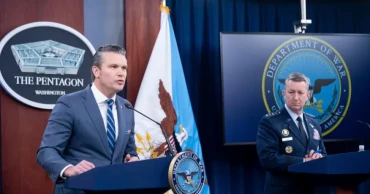
US Defense Secretary Pete Hegseth is set to testify before Congress on Wednesday for the first time since the Trump administration launched its war against Iran, a move strongly criticised by Democrats as an expensive conflict carried out without congressional approval.
The hearing, organised by the House Armed Services Committee, will mainly focus on the administration’s proposed 2027 military budget, which seeks to raise defense spending to a record $1.5 trillion. Hegseth and Joint Chiefs Chairman Gen. Dan Caine are expected to underline the need for increased investment in drones, missile defence systems and naval forces.
However, Democratic lawmakers are expected to shift attention to the growing cost of the Iran war, the depletion of key US weapons stockpiles and reports of civilian casualties, including children killed in a school bombing. Questions may also be raised about the military’s readiness to counter Iranian drone attacks, some of which reportedly breached US defenses and caused American casualties.
Although a ceasefire is now in place, the US and Israel launched the conflict on Feb 28 without formal approval from Congress. Efforts by Democrats to pass resolutions requiring President Donald Trump to halt the war until authorised by lawmakers have so far failed.
Republicans, while largely backing Trump’s leadership during the conflict, have also expressed concern about its duration. They cite Iran’s nuclear ambitions and the risks of withdrawing too soon, but some within the party are looking ahead to possible votes that could test support for the president if the war continues.
Tensions have also affected global energy markets. Iran’s move to shut down the Strait of Hormuz has driven up fuel prices, adding political pressure on Republicans ahead of upcoming elections. In response, the US has imposed a naval blockade on Iranian shipping and increased its military presence in the region, deploying three aircraft carriers to the Middle East for the first time in over two decades.
Despite ongoing tensions, both sides remain at an impasse. Trump is unlikely to accept Tehran’s proposal to reopen the strait in exchange for ending the war, lifting the blockade and delaying nuclear negotiations.
Hegseth has so far avoided direct questioning from lawmakers, though he and Caine have held televised Pentagon briefings. His appearance before Congress this week, including another session with the Senate Armed Services Committee on Thursday, is expected to be more challenging.
Lawmakers are also likely to question recent leadership changes within the military. Hegseth has removed several senior officials, including Army chief Gen. Randy George, along with other top generals and defence figures.
Republican Sen. Thom Tillis said the dismissals raised serious concerns, noting the importance of stability in key military positions during wartime. He admitted the developments have made him reconsider his earlier support for Hegseth.
Meanwhile, Rep. Austin Scott also criticised the removal of Gen. George, calling it a reckless decision that undermined the US Army.
5 months ago
Iran will be hit ‘harder than ever’ if oil flow blocked: US defence secretary
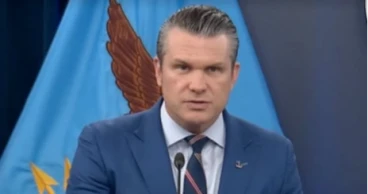
US Defence Secretary Pete Hegseth warned that Iran would face unprecedented retaliation if it attempts to disrupt oil shipments through the Strait of Hormuz.
Speaking at a press conference, he said Iran would be “hit harder than ever” if it takes any action to block the flow of oil through the strategic waterway.
Hegseth also referred to yesterday’s phone call between US President Donald Trump and Russian President Vladimir Putin, saying it was clearly conveyed during the discussion that Russia should not be involved in the ongoing war against Iran.
Iran launches missile attacks on Israel, Qatar and UAE
7 months ago
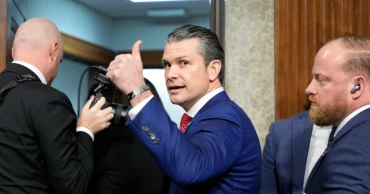
Pete Hegseth confirmed as Defense Secretary amid controversy
The U.S. Senate confirmed Pete Hegseth as defense secretary in a narrow, late-night vote on Friday, despite ongoing controversy over his qualifications and conduct. Hegseth, a former Fox News host and Army National Guard veteran, faced scrutiny over allegations of excessive drinking and aggressive behavior toward women.
The confirmation required Vice President JD Vance to cast a tie-breaking vote, an uncommon occurrence in Cabinet confirmations.
President Donald Trump celebrated Hegseth’s confirmation, dismissing dissent from notable Republican senators, including Mitch McConnell, Lisa Murkowski, and Susan Collins, who opposed the nomination. Trump praised Hegseth as a “great secretary of defense” and emphasized the importance of securing the appointment.
Trump criticises California water policy before touring LA
Senate Majority Leader John Thune supported Hegseth, emphasizing his military background and promise to bring a “warrior culture” to the Pentagon while dismantling diversity initiatives. However, Democrats, alongside some Republicans, voiced serious concerns. Senator Jack Reed criticized Hegseth as unqualified, while Senator Murkowski expressed unease about the message his appointment sends to women in the military.
Hegseth’s confirmation process was fraught with allegations, including claims of sexual assault, which he denied, and accusations of domestic abuse from his former sister-in-law. Despite these controversies, Hegseth pledged to abstain from alcohol while in office and dismissed the allegations as part of a smear campaign.
Hegseth’s controversial remarks on women in combat roles also drew criticism, though he softened his stance during the confirmation process. His nomination signals Trump’s prioritization of loyalty and ideological alignment over bipartisan approval.
This marks the second time a vice president has broken a Senate tie for a Cabinet nominee, underscoring the political divisions surrounding Hegseth’s confirmation. The outcome highlights the president’s influence over the Republican-led Senate and his ability to advance contentious nominees.
Hegseth’s appointment concludes a turbulent process, with more high-stakes nominations awaiting Senate consideration, including Kash Patel for FBI director and Tulsi Gabbard for director of national intelligence.
1 year ago