Italy-Albania
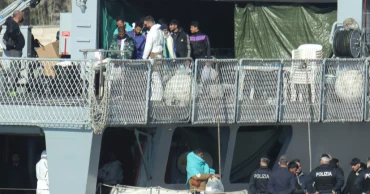
Italy approves decree to use Albanian migration centres for repatriation
Italy's far-right-led government has approved a new decree that broadens the use of Albanian fast-track asylum processing centers to include repatriation hubs, aligning with a recent EU proposal.
The two Albanian centers, originally intended to process non-vulnerable migrants rescued at sea, will now also accommodate migrants who arrived in Italy, had their asylum applications denied, and have been issued deportation orders.
In a separate decree, the government introduced stricter requirements for acquiring Italian citizenship.
The Albanian centers, which opened in October, have largely remained inactive due to legal challenges and strong opposition from human rights groups, who argue they violate international laws and jeopardize migrants’ rights.
The initiative, which has cost nearly 800 million euros over five years, has disappointed Italy’s conservative government led by Prime Minister Giorgia Meloni. After lengthy construction delays, the first groups of migrants transferred to Albania in October, November, and January were quickly sent back to Italy after Italian courts refused to approve their detention in a non-EU country.
Interior Minister Matteo Piantedosi explained in a news conference on Friday that while the new decree does not alter the terms of Italy’s agreement with Albania, it introduces new functions for the centers. "The decree changes the law that ratifies the protocol with Albania, but doesn’t alter its content, making it possible to transfer migrants from Italy to the existing repatriation center in Gjader," Piantedosi said. "This would allow us to reactivate that center, ensuring it doesn’t lose its function."
This move by Italy, which gives new life to the costly Albanian centers, follows a proposal by the European Commission in March to establish new “return hubs” in third countries for rejected asylum seekers. According to the European Commission, only 20% of deportation orders in the EU are enforced, and the "European System for Returns" aims to address this by setting a standard for all EU member states and allowing one country’s authorities to enforce another country’s deportation order. This mechanism was absent from the EU’s migration and asylum pact approved last year.
Italy is also awaiting a ruling from the European Court of Justice, expected this summer, which could allow the Albanian centers to operate as initially planned.
In a separate decree, the Italian government has also tightened rules on citizenship. Italian descendants born abroad will automatically acquire citizenship for only two generations, and only those with at least one parent or grandparent born in Italy will gain citizenship by birth. Foreign Minister Antonio Tajani clarified that while many descendants of Italian emigrants will still be able to acquire citizenship, the new measures aim to prevent misuse and "commercialization" of Italian passports.
From 2014 to 2024, the number of Italian citizens living abroad grew by 40%, from 4.6 million to 6.4 million, with over 60,000 citizenship applications currently pending.
1 year ago

Italy takes back 43 migrants slated for processing in Albania
An Italian navy vessel transported migrants back to Italy from asylum processing centres in Albania following a ruling by a court in Rome, reports AP.
This marked the third unsuccessful effort by Giorgia Meloni’s far-right government to process migrants in the non-EU nation.
Italy sends 49 migrants to Albania after court rejections
A coast guard ship carried 43 migrants from the port of Shengjin, located 66 kilometres (40 miles) northwest of Tirana. They were part of a group of 49 men transferred to Albania aboard an Italian naval vessel on Tuesday. Five of them were returned the same day—four due to being minors and the fifth classified as a “vulnerable” individual.
The status of one remaining migrant remains uncertain.
According to Italian media, the men originated from Bangladesh, Egypt, Ivory Coast, and Gambia.
On Friday, an Italian appeals court in Rome declined to authorise the rapid expulsion of 43 asylum-seekers detained in Albania since Tuesday under a contentious migration agreement designed to relocate proceedings beyond European Union borders.
The court referred the case to the European Court of Justice in Luxembourg, which is expected to issue a ruling on 25 February regarding previous cases. A series of lower court decisions has created a rift between the Meloni government and Italy’s judicial system.
In October and November, judges similarly blocked the expulsion of smaller migrant groups, seeking clarification from the European court on which countries could be deemed safe for repatriation of individuals whose asylum applications had been rejected.
Last year, Italy signed a five-year agreement to process up to 3,000 migrants per month outside EU borders as part of Meloni’s strategy to curb illegal migration. Italy is a primary destination for tens of thousands of migrants who undertake the perilous central Mediterranean crossing.
While the agreement has drawn criticism from human rights activists, some European partners have shown interest in the initiative.
Italy, Albania, and the UAE sign clean energy deal
In the first four weeks of this year, 3,704 migrants arrived in Italy, nearly three times the number recorded in the same period last year. Over the entirety of last year, 66,317 migrants arrived in Italy, marking a 58% decrease from the previous year. The largest group consisted of Bangladeshis, followed by Syrians, Tunisians, and Egyptians, according to the Italian Interior Ministry.
1 year ago