China-US tariffs
China criticises US tariffs, warns of trade war losses
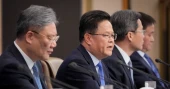
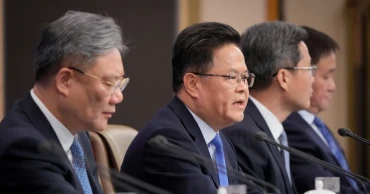
China will not succumb to intimidation and can withstand the increased tariffs imposed by US President Donald Trump, along with other economic challenges, the Chinese commerce minister stated on Thursday, reports AP.
However, he emphasised that “there are no winners in a trade war.”‘
If US wants war, we are ready’: China
Addressing reporters on the sidelines of China’s annual national congress session, Wang Wentao reaffirmed Beijing’s call for negotiations. He asserted that coercion and threats would not succeed, highlighting China’s role as a key trading partner for 140 nations, which provides it with diverse alternatives. Wang and other officials outlined Beijing’s economic and financial strategies but did not introduce any major new initiatives.
China open to dialogue but resolute against US tariffs
Since taking office in January, the Trump administration has twice raised tariffs on Chinese imports. In retaliation, China has imposed duties and other restrictions on American goods and businesses. Wang stressed that China expects mutual respect in its international dealings.
“Coercion and threats will not work on China, nor will they intimidate us. China remains steadfast in defending its own interests,” Wang stated, reiterating that “there are no winners in a trade war.”
“If the US continues down this misguided path, we will respond accordingly,” he warned. “We will fight to the end.”
Despite the firm stance, Wang underscored China’s willingness to resolve trade disputes through dialogue. “Our two sides can meet at an appropriate time, and our teams can initiate discussions as soon as possible,” he said.
He also dismissed Trump’s claim that China is responsible for America’s fentanyl crisis—used as justification for imposing 20% tariffs on all Chinese imports—stating that such accusations would not address the issue.
China’s diverse global trade options
As the primary trading partner of 140 countries and regions, China has secured free trade agreements (FTAs) with over 30 nations, Wang noted.
“We are prepared to sign more FTAs,” he added.
Acknowledging the difficulties faced by Chinese exporters, Wang explained that Beijing is supporting businesses in expanding their global reach through trade fairs and international ventures. The Chinese government is also increasing financial assistance for export credit while aiming to boost trade in services and e-commerce.
“We do not rely on a single market,” he remarked.
China keeps its economic growth target at 'around 5%' despite a looming trade war
Strengthening domestic consumption and investment
China’s economic growth has been weighed down by a sluggish housing market, weak stock performance, limited social welfare, and job losses since the COVID-19 pandemic.
Zheng Shanjie, head of the National Development and Reform Commission, China’s top economic planning agency, acknowledged that growth projections for 2025 range between 4.6% and 4.8%, falling short of the government’s 5% target.
To stimulate the economy, Zheng revealed that authorities are drafting a “specialised plan of action” aimed at boosting consumer spending and business investment, though he did not disclose specific measures.
Finance Minister Lan Fo-an added that China would increase spending on “livelihood and consumption,” pledging more support for heavily indebted local governments and greater investment in education, social security, and public health.
“We will ensure that every coin is well spent,” Lan assured, adding that “the central government has left ample room for policy implementation.”
1 year ago
China reiterates warning of retaliation over US tariffs
The escalating trade conflict initiated by U.S. President Donald Trump against Canada, Mexico, and China is intensifying amid disputes over the manufacture and import of the opiate fentanyl, trade imbalances, and the surge of illegal border crossings by migrants from around the world, reports AP.
Below is Beijing’s perspective on the matter:
What Is China’s Response So Far?
China has reaffirmed its threat to implement “necessary countermeasures to defend its legitimate rights and interests” in response to Trump’s imposition of a 10% tariff on China. The tariff was justified on the grounds that China had not sufficiently curtailed the production of chemicals used to manufacture fentanyl.
Although the Foreign Ministry’s statement issued on Sunday did not specify any exact retaliatory actions, it urged, “China calls on the United States to correct its wrongdoings, maintain the hard-won positive dynamics in counternarcotics cooperation, and foster a steady, sound, and sustainable development of the China-U.S. relationship.”
China's exports in December grew 10.7%, beating estimates as higher US tariffs loom
China also argues that the U.S. measures breach World Trade Organization regulations, and it has pledged to bring the matter before the global commerce authority.
In a similar tone, the Ministry of Public Security released an almost identical statement on Sunday, and the Commerce Ministry followed with a comparably worded announcement.
Who Is China Blaming?
Trump has accused China of enabling the production of fentanyl, which is then processed into tablets in Mexico and smuggled into the U.S.—a country that records approximately 70,000 overdose deaths linked to the drug each year.
China, however, asserts that the United States must address its own issues rather than “threatening other countries with arbitrary tariff hikes.” The Foreign Ministry stated, “The United States needs to view and resolve its own fentanyl problem in an objective and rational manner ... (China is) among the world’s most rigorous countries regarding counternarcotics policy and enforcement.”
While experts estimate that China executes an unknown number of individuals annually for drug smuggling offenses, domestic drug use within the country remains relatively low.
Additionally, the Ministry of Public Security noted that since Beijing began to implement legal measures, the U.S. has not reported any seizures of fentanyl precursors originating from China.
What Other Factors May Influence the Dispute?A long-standing issue in this dispute is China’s massive trade deficit with the U.S., which reached nearly $1 trillion last year—a frequent target of Trump’s criticisms. The tariffs would increase the cost of Chinese goods for U.S. consumers, who would ultimately bear a substantial portion of the expense for imported products ranging from toys to clothing.
China’s critical export market could suffer if U.S. consumers choose to “buy American.” At the same time, the Chinese domestic economy has struggled to respond to various government-backed stimulus measures, and major initiatives like foreign infrastructure projects, which add to the already significant public debt, further jeopardize economic growth.
These economic challenges are beginning to undermine Chinese President Xi Jinping’s ambitions to surpass the U.S. in key economic and political arenas, thereby threatening his long-term goal of dominating the island nation of Taiwan and asserting China’s supremacy in the Indo-Pacific region.
US economy grows 2.3% on eve of Trump return
Moreover, curbing illegal immigration remains one of Trump’s central political themes, having been a factor in tariff actions against neighboring nations such as Mexico and Canada. Although the number of illegal entries from China is only a small portion compared to those from other countries, Trump has signaled that he will hold every nation responsible for its nationals who enter the U.S. unlawfully.
1 year ago