quality education
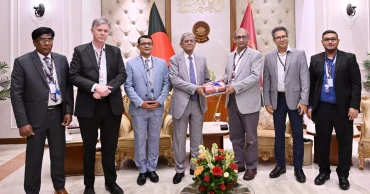
President stresses quality education, more university research
President Mirza Fakhrul Islam Alamgir on Thursday stressed the need to improve the quality of education and increase research activities at both public and private universities to keep pace with the rapidly changing world.
“It is necessary to formulate policies for a modern, up-to-date and employment-oriented education system by moving away from outdated approaches,” the President said when a delegation from BRAC University led by its Vice-Chancellor Prof Dr Syed Farhat Anwar paid a courtesy call on him at Bangabhaban.
He said outstanding individuals who have made significant contributions to the education sector need to be recognised and honoured at the state level.
President's Press Secretary Md Sarwar Alam briefed reporters after the meeting.
During the meeting, the BRAC University VC briefed the President on the university’s overall academic activities.
He said the university is placing emphasis on teaching students in employment-oriented subjects in line with current demands, including artificial intelligence (AI), life sciences, agro technology and nursing.
During the meeting, the VC invited the President, in his capacity as Chancellor, to attend the university’s upcoming convocation.
The President accepted the invitation and assured the delegation that he would attend the convocation.
The President’s Military Secretary, Secretary and Press Secretary, as well as BRAC University’s Pro-Vice-Chancellor, Treasurer and Registrar were present at the meeting.
10 days ago
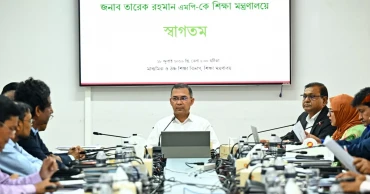
Quality education for every student govt's top priority: PM
Prime Minister Tarique Rahman on Tuesday reaffirmed the government's commitment to overhauling the country's education system through coordinated reforms, effective monitoring and the timely implementation of plans to bring qualitative improvements at every level of education.
"Ensuring quality education for every student in the country is one of the government's highest priorities. We will continue implementing coordinated initiatives, effective monitoring and timely plans to bring qualitative improvements at every level of the education system," he said.
The Prime Minister made the remarks while visiting the Ministry of Education for the first time since assuming office, said a press release issued by his Press Wing.
During the visit to the ministry at the Bangladesh Secretariat, Tarique Rahman reviewed its overall activities and exchanged views with senior ministry officials, heads of its departments and agencies, and experienced education officers working at the field level.
A detailed presentation was made on the ministry's ongoing activities, development projects, progress in implementing the national education policy and overall administrative performance.
After reviewing the presentation, the Prime Minister provided necessary directives to the officials.
He stressed the need to improve the standard of education, ensure students' regular attendance in classrooms, strengthen effective teaching, provide continuous and up-to-date training for teachers, expand technology-based education and reinforce administrative accountability.
Tarique Rahman also held direct discussions with experienced education officials from the field level, who shared their experiences, highlighted the realities and challenges in the education sector and offered recommendations for improving educational standards.
He listened to their views attentively and emphasised that field-level experience and recommendations should be given due importance in policymaking and implementation.
The Prime Minister said the government's goal is to ensure that every student, regardless of location or background, receives quality education through an efficient, accountable and modern education system.
He urged officials and employees of the ministry to carry out their responsibilities with dedication, professionalism and a strong commitment to public service.
Tarique Rahman also issued necessary directives for the overall development and modernisation of the country's education sector.
2 months ago
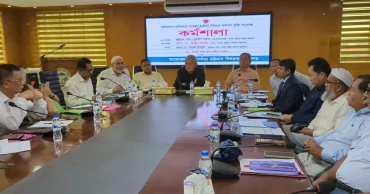
Quality education essential to make hilly region competitive: CHT Adviser
Chittagong Hill Tracts (CHT) Affairs Adviser Supradip Chakma on Friday said there is no alternative to ensuring the quality education in the hilly region to remain competitive with the country’s mainstream.
“To compete with the national mainstream, ensuring quality education in the Chittagong Hill Tracts area is a must,” he said.
CA Prof Yunus to visit UK after Eid to refresh Dhaka-London bonds
The adviser made this remark while addressing a workshop at the conference room of the Rangamati Hill District Council on enhancing skills related to the Grievance Redress System (GRS).
He emphasised improving the standard of living in the hilly districts and encouraged women entrepreneurs to come forward to promote self-employment among women.
“Development should not be limited to district headquarters; it must be visible in all upazilas of the district,” he said adding it is essential to ensure proper monitoring of the implementation of the development initiatives.
Supradip urged all concerned at the Ministry of Chittagong Hill Tracts Affairs, the CHT Development Board, the CHT Regional Council, and the Hill District Councils to always follow Cabinet instructions.
Speaking at the workshop, CHT Affairs Secretary Md Abdul Khaleque said the government introduced the GRS system to ensure service delivery for people. “This workshop aims to enhance the skills of people in remote areas,” he said.
Prof Yunus for maintaining stable security situation, appreciates security forces
The secretary highlighted the importance of the Citizen’s Charter, the National Integrity Strategy, GRS, Right to Information and Annual Performance Agreement, said a PID handout here.
1 year ago

SAJIDA Foundation, Khan Academy launch joint research programme on quality education
SAJIDA Foundation and Khan Academy Bangladesh has jointly launched a research Programme to ensure quality education for students.
On the occasion, the two organisations organised an orientation programme in Dhaka to which was attended by the representatives from the Directorate of Secondary and Higher Education (DSHE), district and upazila secondary education offices, head teachers of participating secondary schools, and other stakeholders at CIRDAP auditorium.
Addressing the event, Zahida Fizza Kabir, CEO of SAJIDA Foundation highlighted the organisation’s journey, which began as a garage school providing education to underprivileged children.
She said that over the years, the organisation expanded its focus to include various sectors such as women’s empowerment, mental health, microfinance, and climate change, among others.
Azwa Nayeem, CEO of Khan Academy Bangladesh, spoke about how the Khan Academy platform empowers students, teachers, and education leaders.
She said that the platform offers personalised learning experiences, real-time progress tracking, and interactive content that fosters deep conceptual understanding.
Professor Dr AQM Shafiul Azam, Director General (Additional Charge), stressed the need to embrace transformational education, which will reshape the role of teachers and prepare students for new learning modalities.
Professor Dr Khan Moinuddin Al Mahmud Shohel, Director (Secondary), Directorate of Secondary and Higher Education, emphasised that the success of the research programme will largely depend on the selection of schools, teachers, and students, as well as the available facilities in participating institutions. He called for close coordination, monitoring, and mutual support throughout the implementation process.
Md Abdul Majid, District Education Officer of Dhaka, shared his enthusiasm for Khan Academy Bangladesh.
He expressed optimism that the programme could have a transformative impact, similar to Shikkhok Batayon, particularly for students struggling with maths. He noted that the platform would make learning maths easier and more effective.
Professor Md Saidur Rahman, Director (Training), Directorate of Secondary and Higher Education, emphasised the role of maths in fostering critical thinking and creativity among students.
He underscored the importance of support from district and upazila education officers in supervising and strengthening these initiatives to enhance maths and science learning.
The workshop focused on how the Khan Academy platform would be utilised in schools, the potential challenges that might arise, and their possible solutions.
Professor Shipon Kumar Das, Project Director of the Learning Acceleration in Secondary Education (LAISE) project also addressed the event.
The orientation programme organised by Khan Academy Bangladesh successfully concluded with the completion of the workshop.
1 year ago