China - Business

China raises retaliatory tariff on US to 84% as it vows to 'fight to the end'
China again vowed to “fight to the end" Wednesday in an escalating trade war with the US as it announced it would raise tariffs on American goods to 84% from Thursday.
Beijing also added an array of countermeasures after US President Donald Trump raised the total tariff on imports from China to 104%, AP reports.
Beijing said it was launching an additional suit against the US at the World Trade Organization and placed further restrictions on American companies' trade with Chinese companies.
“If the US insists on further escalating its economic and trade restrictions, China has the firm will and abundant means to take necessary countermeasures and fight to the end,” the Ministry of Commerce wrote in a statement introducing its white paper on trade with the US.
The government declined to say whether it would negotiate with the White House, as many other countries have started doing.
Chinese netizens mock US tariffs on social media
On Friday, China announced a 34% tariff on all goods imported from the US, export controls on rare earths minerals, and a slew of other measures in response to Trump's “Liberation Day” tariffs. Trump then added an additional 50% tariff on goods from China, saying negotiations with them were terminated.
Wednesday's newest measures include adding 11 American companies to a so-called “unreliable entities” list that would bar Chinese companies from selling them dual-use goods. Among the companies are American Photonics, and SYNEXXUS, both of whom work with the American military.
So far, China has not appeared interested in bargaining. “If the US truly wants to resolve issues through dialogue and negotiation, it should adopt an attitude of equality, respect and mutual benefit,” said Ministry of Foreign Affairs spokesman Lin Jian Wednesday.
1 year ago
China to impose 34% tariff on all US imports from April 10
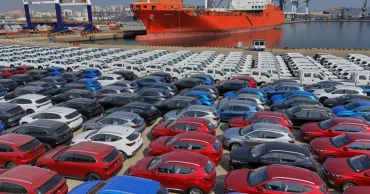
China announced Friday that it will impose a 34 per cent tariff on imports of all US products beginning April 10, part of a flurry of retaliatory measures following US President Donald Trump’s “Liberation Day” slate of double-digit tariffs.
The new tariff matches the rate of the US "reciprocal" tariff of 34 per cent on Chinese exports that Trump ordered this week, AP reports.
The Commerce Ministry in Beijing also said in a notice that it will impose more export controls on rare earths, which are materials used in high-tech products such as computer chips and electric vehicle batteries.
Included in the list of minerals subject to controls were samarium and its compounds, which are used in aerospace manufacturing and the defence sector. Another element called gadolinium is used in MRI scans.
China's customs administration said it had suspended imports of chicken from some US suppliers after detected furazolidone, a drug banned in China, in shipments from those companies.
Separately, it said had found high levels of mold in the sorghum and salmonella in poultry meat from some of the companies. The announcements affect one company exporting sorghum, C&D Inc., and four poultry companies.
Additionally, the Chinese government said it had added 27 firms to lists of companies subject to trade sanctions or export controls.
Among them, 16 are subject to a ban on the export of “dual-use” goods. High Point Aerotechnologies, a defense tech company, and Universal Logistics Holding, a publicly traded transportation and logistics company, were among those listed.
Beijing also announced it filed a lawsuit with the World Trade Organization over the tariffs issue.
“The United States’ imposition of so-called ‘reciprocal tariffs’ seriously violates WTO rules, seriously damages the legitimate rights and interests of WTO members, and seriously undermines the rules-based multilateral trading system and international economic and trade order,” the Commerce Ministry said.
“It is a typical unilateral bullying practice that endangers the stability of the global economic and trade order. China firmly opposes this,” it said.
1 year ago

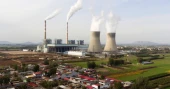
China’s new coal power plant projects hit highest level in 10yrs, report says
China’s power industry began construction on nearly 100 gigawatts of new coal plant capacity last year, the most in nearly a decade, a report from two clean-energy groups said Thursday.
The development raises concerns about the country’s ability to meet its carbon reduction goals and threatens to undercut China's massive expansion in solar and wind power, which has far outpaced that in the United States and Europe, the report said.
“Instead of replacing coal, clean energy is being layered on top of an entrenched reliance on fossil fuels,” it said.
China establishes over 30,000 smart factories
The report is part of a review of China’s coal projects done every six months by the Europe-based Centre for Research on Energy and Clean Air and the U.S.-based Global Energy Monitor.
Construction began on 94.5 gigawatts of coal power plant capacity in 2024, more than in any year since 2015, according to a worldwide database of coal plants maintained by Global Energy Monitor.
Work also resumed on 3.3 gigawatts of suspended projects, the report said.
"A substantial number of new plants will come online in the next 2-3 years, further solidifying coal’s role in the power system,” it said.
The concern is that coal power will displace solar and wind capacity. The report said that in the last three months of 2024, electricity generation from fossil fuels remained high, while solar and wind utilization dropped sharply.
Chinese President Xi Jinping announced two climate goals in 2020 — a peak in carbon emissions by 2030 and reaching carbon neutrality by 2060.
The country's carbon emissions may have already peaked, analysts say, and the next challenge is to begin reducing them.
China was among the many nations that missed a U.N. deadline this week to submit a national plan to cut emissions by 2035.
Foreign Ministry spokesperson Guo Jiakun said the government is working on a plan and will submit it “in due course this year.”
The report from the two clean energy groups said that China accounted for 93% of construction starts globally for coal power plants last year.
South Korea's top think tank lowers economic growth projection, citing Trump's tariffs
Proposals for new or revived coal plant projects in China fell last year to 68.9 gigawatts from more than 100 gigawatts the two previous years, suggesting that construction starts could slow, the report said.
The amount of new coal power capacity approved in China last year also fell to 66.7 gigawatts, after a sharp rise in 2022-23.
1 year ago

China establishes over 30,000 smart factories
China has built over 30,000 basic-level smart factories as part of a nationwide push to accelerate industrial digitalization and intelligent upgrading, according to the Ministry of Industry and Information Technology (MIIT).
The initiative, under the smart factory gradient cultivation action, has also seen the creation of 1,200 advanced-level and 230 excellence-level smart factories. This achievement highlights the significant progress that has been made in reshaping the country's manufacturing landscape, according to the ministry.
The 230 excellence-level factories, distributed across all 31 provincial regions in China and covering over 80 percent of manufacturing sectors, have carried out nearly 2,000 advanced scenarios, including smart warehousing, AI-powered quality inspections, and digital research and development, said MIIT.
Japan says it has asked the US to exclude it from 25% steel and aluminum tariffs
On average, these factories are 28.4 percent shorter in product development cycles, 22.3 percent higher in production efficiency, 50.2 percent lower in defect rates and 20.4 percent lower in carbon emissions, said the ministry.
MIIT, alongside five other state agencies, jointly launched a smart factory gradient cultivation action last year and classified smart factories into four tiers based on technological maturity and integration depth, including the basic-level, the advanced-level, the excellence-level and the pioneer-level.
For instance, basic-level smart factories are required to develop foundational capabilities in digitization and networking. This involves deploying the necessary smart manufacturing equipment, industrial software, and systems centered around typical scenarios of smart manufacturing. By doing so, they can achieve real-time data collection, automation of key production processes, enhance the informatization of production and operational management, and utilize intelligence exploration in certain aspects.
Moving forward, MIIT will expand excellence-level smart factory promotion and prepare to launch pioneer-level cultivation, aiming to further promote the expansion, deeper integration, and elevated evolution of intelligent manufacturing, it said.
1 year ago