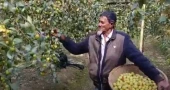
jujube cultivation
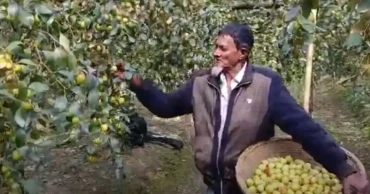
Jujube cultivation brings new prosperity to Cumilla’s Shikarpur village
Shikarpur village in Barura upazila of Cumilla district is witnessing a quiet agricultural revolution as jujube orchards transform the rural landscape and uplift farmers’ incomes.
Once a traditional farming community, the village has now become a hub for cultivating Ball Sundari, Bari Sundari and Kashmiri varieties of jujube.
The success of jujube cultivation in Shikarpur is gradually spreading to neighbouring villages, attracting farmers eager to tap into the lucrative market.
Many of these farmers had spent years abroad before returning home, drawn to jujube farming as a promising alternative to conventional crops.
Read more: Sirajganj’s mustard fields bloom into golden seas, promise bumper harvest
A winter morning visit to the village offers a picturesque scene: sunlight filters softly through the crisp air, illuminating clusters of ripe jujubes that hang from branches bending under their weight.
Farmers are busy plucking fruits, weighing them for buyers and savouring the freshly harvested sweetness during short breaks.
Ramiz Uddin, a farmer who returned after nearly 20 years abroad, credits his success to the guidance of his brother, Suruj Mia, an established jujube grower.
“In the first year, I cultivated jujubes on 18 decimals of land. Seeing good profits, I expanded cultivation to another 32 decimals,” he said, adding that today many farmers consult him for advice. Alongside jujubes, Ramiz also grows a variety of vegetables.
Abdur Razzak, another local farmer, highlighted the profitability of the crop.
“Shikarpur has become widely known for jujube production. Compared to other crops, jujube farming is far more profitable. Three of us brothers cultivated jujubes on 60 decimals of land. Our cost was about Tk 1,50,000, while sales are expected to reach Tk 5,00,000,” he said.
He also credited the Department of Agriculture Extension (DAE) for guidance, which helped them achieve good yields.
The popularity of jujube cultivation is crossing village borders. Junab Ali, a farmer from Joykamata, said he started cultivating jujubes after bringing saplings from Shikarpur three years ago.
“I began with 22 decimals in the first year, expanded by another 22 decimals in the second year, and this year I cultivated an additional 16 decimals,” he said.
Deputy Assistant Agriculture Officer Golam Sarwar Bhuiyan of the DAE confirmed that jujube cultivation began in Shikarpur four years ago, with Suruj Mia being the pioneer.
Read more: Chapainawabganj farmer sparks local excitement with amazing Chinese orange harvest
“Seeing his success, other farmers, including Ramiz Uddin and Abdur Razzak, also became interested. From the beginning, we have been providing advice and assistance. Today, jujube is being cultivated on 20 acres in this village. Its popularity is now spreading to neighbouring areas, offering new hope for sustainable rural livelihoods,” he said.
Shikarpur’s jujube orchards are not just changing the scenery—they are reshaping the local economy, turning a once-sleepy village into a centre of agricultural innovation and prosperity, he added.
8 months ago
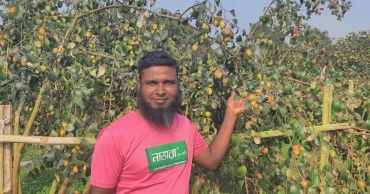
Jujube brings money and joy to once jobless Samiul in C’nawabganj
Samiul Hossain, a 39-year-old agricultural entrepreneur, has successfully transformed his fortune through jujube (boroi) cultivation in Gomastapur upazila of Chapainawabganj becoming a source of inspiration for others.
After a failed career in Iraq as an expatriate, Samiul, a resident of Daingpara area of the upazila, returned home around five years back amid frustration over his career.
Being inspired about the jujube cultivation after watching videos on YouTube, he decided to venture into it. The fruit is popularly known as boroi or kul.
With consultancy from a relative, he leased 16 bighas of land near his house and started its cultivation. As his business began to grow, he expanded the orchard gradually.
Currently, he has been cultivating various types of jujube on 40 bighas of land, flourishing with clusters of ripe fruits.
His endeavor and subsequent success set an example to many unemployed youths to transform their fortunes through farming this fruit.
The 40-bigh orchard is now enriched with various types of jujubes like Bolsundari, Indrasundari, 'Baby Sundari, Kashmiri, and 'Tokmisti.' The trees are now full of fruits, and the branches are weighed down by the abundance of jujubes with the blessing of congenial weather.
The entrepreneur said he initially started selling the ripe fruit at Tk 110 per kilogram, but now the price has come down at Tk 70-80.
Tetulia’s Tulip: Boosting tourism, regional economy
He informed that he has so far sold his yields worth Tk 20 lakh this season, expecting to earn another Tk 30 lakh if the weather remains favourable, indicating a good profit.
Samiul said buyers from different parts of the country come to this orchard and buy the fruit in cash. Currently 25 employees are working with him.
"I used to be unemployed myself, but now, 20 to 25 workers are employed in my orchard every day, and it gives me peace of mind knowing they have work," he said.
Fazlul Bari, a local school teacher who visited the farm, said, "I heard about the bumper harvest of jujube here, so I came to see it for myself. I walked around the orchard, tried the different varieties, and they tasted very sweet. I’m really satisfied, and I’m thinking of starting a similar orchard myself in the future."
Another visitor from Nachol expressed the same sentiments.
Calling Samiul a successful agricultural entrepreneur, Agriculture Officer of Gomastapur Upazila Tanvir Ahmed Sarker said he has shown that agriculture can be highly profitable and become an inspiration for young entrepreneurs.
Flower market booms in Jashore’s Godkhali ahead of spring, sales expected to reach Tk 100 crore
The agricultural department continues to offer him all kinds of support and guidance, he said.
According to the Department of Agricultural Extension, this variety of fruit was cultivated on 535 hectares of land in the district this year.
1 year ago