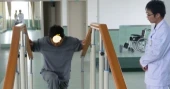
Bangladeshi patients
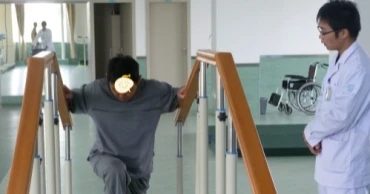
Bangladeshis turning to Kunming for critical medical treatment
Leading hospitals in Kunming, the capital of China’s Yunnan province, are increasingly attracting Bangladeshi patients seeking advanced but affordable medical treatment for critical diseases, with authorities pledging faster visas, smoother procedures and language support to ease medical tourism.
Chinese officials said urgent visas can be issued within a day under a ‘green channel’, with many requirements already eased.
They said their hospitals provide high-quality treatment at about one-fourth the cost of Thailand, cheaper than Malaysia, and only slightly higher than top Indian hospitals.
Bangladesh authorities said China offered support while the interim government explored alternatives beyond India, Thailand, Singapore and Malaysia for timely and cost-effective treatment.
“We are exploring how to expand services and work with travel agencies to attract more Bangladeshi patients,” Yunnan Health Commission deputy director Wang Jiankun told a Bangladesh media delegation during a visit to the First Affiliated Hospital of Kunming Medical University.
He said strengthening medical cooperation is part of broader ties aimed at improving healthcare access, disease control and people-to-people links.
During hospital visits, Bangladeshi journalists saw patients receiving treatment for serious conditions, including liver cirrhosis, breast cancer and heart problems.
Treatment for intellectually disabled patients available in China
Patients said facilities were modern, staff attentive, and care affordable. Language remains a challenge, but hospitals are recruiting Bangladeshi exchange students and Chinese medical students as volunteer interpreters.
The 23-member media delegation, led by Chief Adviser’s Deputy Press Secretary Mohammad Abul Kalam Azad Majumder, visited Kunming from August 6–9 to review medical facilities.
Wang said the province has 29,678 health institutions, including 1,319 hospitals, 122 tertiary hospitals, and 472 secondary hospitals, with 370,000 beds in total.
Of them, he said five major hospitals – Yunnan First People’s Hospital, the First Affiliated Hospital of Kunming Medical University, Yunnan Cardiovascular Hospital, Yunnan Cancer Hospital, and Zhongshan Hospital – are prepared to treat Bangladeshi patients.
“These hospitals have special units for international patients, official contact channels and staff to respond quickly to queries. Our international medical pricing is fair, and Bangladeshi patients in pilot hospitals have expressed high satisfaction,” Wang said.
Lu Jiang, assistant to the president of Fuwai Yunnan Hospital, said treatment costs in Kunming are much lower than in neighbouring countries, depending on the type of examinations and equipment used. “The quality is comparable to Thailand but about one-fourth the cost. Prices are also lower than in Malaysia,” he said.
Chinese officials responded to queries on language barriers, accommodation, travel expenses, credit card use, follow-up care, billing and repatriation of deceased patients.
Wang said they are aware of the challenges and are working to ensure a smooth treatment experience.
China vows hassle-free healthcare for Bangladeshi patients in Yunnan
The delegation also visited Kunming Tongren Hospital, a leading private facility. Vice-President Shen Ling said the hospital has sufficient doctors and medical staff, with international-standard diagnostic and laboratory tools ensuring accurate diagnoses and treatment.
She said the hospital has a strong team dedicated to treating intellectually disabled children and presented case studies of Bangladeshi patients treated for critical illnesses and disabilities.
Shen said the hospital’s new International Medical and Oncology Centre will open in 2026, offering advanced services and making it an ideal choice for Bangladeshi patients seeking high-quality care.
Two attendants of Bangladeshi patients expressed satisfaction over Tongren Hospital’s services.
Omar Faruque from Jashore, who brought his cousin Jannatul Naim for a back problem, praised doctors’ hands-on care and careful use of medicine, though he mentioned language barriers and high food costs.
Sagor Hossain from Chattogram, who brought his mother for cancer treatment, said he was pleased with the services but stressed the urgent need for English-language documentation, as Bangladeshi doctors cannot read Chinese.
Hospital authorities said they offer overseas patients full support, including halal meals, prayer facilities, interpreters, and detailed treatment information.
Chinese Ambassador to Bangladesh Yao Wen said 2025 marks the 50th anniversary of China–Bangladesh diplomatic relations and the year of people-to-people exchanges.
“Healthcare cooperation has become a key achievement. The first Bangladeshi patients travelled in March, and about 600 have since received treatment. We expect 4,000–5,000 by year-end,” he said.
Deputy Press Secretary Azad Majumder said only one direct Dhaka–Kunming flight operates at present, keeping fares high, but a Chattogram–Kunming route is being planned.
“A direct Chattogram–Kunming flight is expected by year-end, making travel easier for patients and businesspeople,” he said.
Official sources said some 800,000 Bangladeshi citizens travel abroad each year for medical treatment, mostly to India, Thailand and Singapore, citing higher standards of care and specialised services.
According to data from the Bangladesh Investment Development Authority (BIDA) and figures referenced by the Ministry of Health and Family Welfare, this medical tourism results in an annual outflow estimated between $2 billion and $5 billion.
1 year ago
China vows hassle-free healthcare for Bangladeshi patients in Yunnan
Authorities in China’s Yunnan province have pledged full cooperation in ensuring high-quality and hassle-free healthcare services for Bangladeshi citizens seeking medical treatment in the country.
They made the assurance when a group of Bangladeshi journalists visited the First Affiliated Hospital of Kunming Medical University on Thursday and exchanged views with provincial health officials and chiefs of local public hospitals.
"Our international medical pricing is based on the principle of offering high-quality services at fair prices. Bangladeshi patients treated in our pilot hospitals have expressed high satisfaction with the services provided,” said Wang Jiankun, deputy director of the Health Commission of Yunnan Province.
He said they are making every effort to support Bangladeshi patients visiting their hospitals. “Our government and our embassy in Dhaka are in regular contact with the Bangladesh government to strengthen cooperation in the healthcare sector.”
The Chinese government invited the 23-member media delegation as part of the celebration of the 50th anniversary of the establishment of diplomatic relations between China and Bangladesh.
Chief Adviser’s deputy press secretary Abul Kalam Azad Majumder is leading the Bangladesh delegation.
Bangladeshi journalists begin four-day visit to China’s Kunming
The delegation joined a two-hour interactive session with Chinese officials, including Zeng Zhing, president of the First Affiliated Hospital of Kunming Medical University, Xie Hongbin, deputy director of the Department of Medical Administration and Han Rui, director of the International Medical Department.
During the session, Chinese officials responded to many queries regarding the language barrier, accommodation for attendants, travel expenses, access to Bangladeshi credit cards, liaison offices, follow-up treatment and billing process and the high cost of carrying the dead body back to Bangladesh.
"We are aware of the challenges faced by Bangladeshi patients and working to address these issues, ensuring a hassle-free treatment experience,” Wang Jiankun said.
The Bangladesh delegation head Azad Majumder urged the Chinese authorities to allow more Bangladeshi students to their medical universities in China so that they can support Bangladeshi patients overcome the language barrier.
“We expect the support of Chinese authorities more Bangladeshi patients will seek treatment in China,” he said.
China assures continued medical support to Bangladesh
First Affiliated Hospital of Kunming Medical University officials said 67 Bangladeshi patients took treatment for diseases such as liver cirrhosis, breast cancer in the past six months.
During a banquet hosted by the local foreign office of China in honour of the Bangladeshi delegation assured Bangladeshi patients of all possible cooperation to facilitate their visit for treatment.
The Bangladesh media delegates are expected to visit a few more hospitals in Kunming on Friday.
1 year ago

3 top Chinese hospitals designated to receive Bangladeshi patients: Ambassador Yao
Chinese Ambassador to Bangladesh Yao Wen on Tuesday said three top-tier hospitals in China’s Yunnan Province have been designated to specifically receive Bangladeshi patients.
“If all the efforts continue smoothly, the first group of Bangladeshi patients could receive treatment in China as early as in March this year,” Ambassador Yao said during a media briefing at the Chinese Embassy in the capital.
He said relevant departments from both countries are working to improve medical service mechanisms, including streamlining visa procedures, clarifying treatment processes and establishing translation teams.
Foreign Affairs Adviser Md Touhid Hossain, during his recent visit to China, proposed strengthening bilateral cooperation in public health, kindly requesting China to facilitate medical treatment for Bangladeshi patients in China and render due consideration to the aided hospital projects.
“China attaches vital importance to these proposals,” said Ambassador Yao assuring of providing top quality services.
China is the largest investor in Bangladesh since the establishment of the interim government and since last August, at least 13 Chinese companies have signed investment agreements with Bangladesh partners, with a total intended investment of around USD 230 million, which fully demonstrates China's confidence in and support for Bangladesh's future development, the envoy said.
Currently, over 30 companies have signed letters of intent to invest in the China Economic and Industrial Zone in Chattogram, with a total investment exceeding USD 1 billion.
China hopes that the interim government will approve the industrial park project as soon as possible, he said, adding that China will also encourage more Chinese enterprises to invest and thrive in Bangladesh.
China wishes to see stability, finds reforms Bangladesh's internal matter
Responding to a question, the Ambassador said his country is ready to help Bangladesh implement the Teesta River water management project but as a sovereign country, it is up to Bangladesh to decide about the implementation of the project.
Bangladesh sought Chinese assistance for the Teesta Project in 2021 by sending a proposal. After evaluating the project, in 2023, China sent a report to the Bangladesh government.
The Chinese envoy said they have yet to receive any response from the Bangladesh government since then.
Ambassador Yao said people-to-people exchanges have reached new stages and both sides agreed to establish more Confucius Institutes and Confucius Classrooms.
China will provide more opportunities for Bangladeshi students to pursue higher education in China, he said.
“In addition, we have officially proposed setting up a Chinese cultural center in Bangladesh, and we welcome Bangladesh to establish its cultural center in China also. These efforts will for sure create broader platforms for bilateral cultural engagement,” Ambassador Yao said.
He said the partnership between the two countries has gained new dimensions and the two sides reached important consensus on international and regional issues including cooperation on multilateral occasions, regional connectivity, and the Rohingya issue.
The envoy said both countries agreed to coordinate positions and enhance collaboration in the UN and other multilateral forums.
“This demonstrates that China-Bangladesh cooperation now extends beyond bilateral scope. The two sides are committed to jointly upholding world peace and stability, protecting developing countries' shared interests, and safeguarding international fairness and justice,” he said.
He said China is accelerating the process of importing fresh Bangladeshi mangoes and the trade is expected to kick off this May.
60% cancer patients directly involved in agriculture: Adviser Farida
“China also plans to import Bangladeshi guavas, jackfruits, and aquatic products. We have sent the inspection and quarantine requirements to the relevant Bangladeshi authorities for their response,” the envoy said.
He said the interim government recently approved the modernization and expansion project of Mongla Port.
China looks forward to Bangladesh expediting remaining domestic procedures to facilitate the early signing of the commercial contract, Ambassador Yao said.
The Ambassador said the mutually-beneficial trade achieved new breakthroughs and the zero-tariff treatment for 100% of Bangladeshi taxable products exported to China has come into effect since December 1 last year.
China pledged to consider providing Bangladesh with a transitional preferential treatment period, supporting its smooth graduation from the least developed country status.
“We are ready to enhance communication and consultation, strengthen development cooperation under the Belt and Road framework, advance major landmark projects as well as "small and beautiful" livelihood initiatives, so as to further consolidate traditional cooperation, explore emerging fields, and elevate mutually beneficial cooperation to new levels,” he said.
1 year ago