Trump-Musk
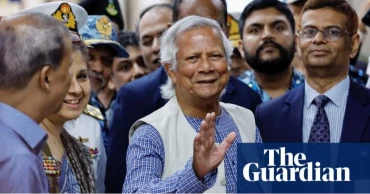
Dr Yunus hopes to attract Trump, Musk for investment in Bangladesh
Chief Adviser Prof Muhammad Yunus has expressed the hope that US President Donald Trump might see Bangladesh as a “good investment opportunity” and trading partner, and said he intended to pitch this to Elon Musk during his visit.
“Trump’s a dealmaker, so I say to him: come, do deals with us,” he told The Guardian in an interview published on Monday. If he did not, Bangladesh would feel a little pain, Yunus said. “But this democratic process will not stop.”
The Biden administration was one of Yunus’ biggest backers, both politically and financially, but the restoration of democracy in Bangladesh is unlikely to be a priority for Trump, according to the Guardian report, the Guardian says in its interview report.
It says Bangladesh has taken a blow from Trump’s decimation of the US Agency for International Development (USAid), which had pledged the country more than $1bn in assistance in recent years.
In a speech, Trump alleged millions of USAid dollars earmarked for strengthening Bangladesh political landscape had been used to elect a “radical left communist” without offering any evidence.
In an attempt to bring the US on side, Dr Yunus recently invited Trump’s billionaire backer Elon Musk to bring his Starlink satellite internet network to Bangladesh.
Sources around Yunus said a visit by Musk to the country was expected in April.
Deposed Prime Minister Hasina is becoming increasingly vocal in her criticisms of Dr Yunus: she recently called him a “mobster” who was unleashing “terrorists” on the country, according to the Guardian report.
Dr Yunus said India hosting her would be tolerated, but “allowing her to use India as a platform for her campaign to try to undo everything we have done is dangerous. It destabilises the country.”
India’s government is not Dr Yunus’s only problem: the return of Donald Trump to the White House is also bad news, reads the Guardian report.
When Dr Yunus flew back to Bangladesh in August, he was greeted by bleak scenes, says the Guardian report.
Dr Yunus, UN chief scheduled to visit Rohingya camp on March 14
It says the streets were still slick with blood, and the bodies of more than 1,000 protesters and children were piled up in morgues, riddled with bullets fired by police.
Sheikh Hasina had just been toppled by a student-led revolution after 15 years of authoritarian rule. She fled the country.
At 84, Dr Yunus – an economist who won a Nobel prize for pioneering microfinance for the poor – had long given up his political ambitions, the report mentions.
He had faced years of vilification and persecution by Hasina, who viewed him a political threat, and he spent much of his time abroad.
But when the student protesters asked him to lead an interim government to restore democracy to Bangladesh, he agreed.
“The damage she had done was monumental,” Yunus told the Guardian, describing the state of Bangladesh when he took charge. “It was a completely devastated country, like another Gaza, except it wasn’t buildings that had been destroyed but whole institutions, policies, people, international relationships.”
Hasina’s reign was dominated by allegations of tyranny, violence and corruption. It culminated in a bloody few weeks over July and August, when more than 1,400 people were killed in protests against her repressive rule, a violent crackdown by police that could amount to a “crime against humanity”, according to the UN. She has denied all use of excessive force.
Yunus’ return to Bangladesh was heralded as the dawn of a new era for the country. In the six months since he took charge, senior police officers – no longer under Hasina’s protection – have been prosecuted for extrajudicial killings, secret detention centres where Hasina’s critics were allegedly tortured have been emptied, human rights commissions have been established and Hasina is facing hundreds of charges, which she denies, the Guardian says.
Dr Yunus has pledged that, sometime between December this year and March 2026, Bangladesh will hold its first free and fair elections in decades, after which he will hand over power.
Dr Yunus calls for quick action to recover billions in stolen money
But walking the streets of Dhaka, there is a feeling that the country stands at a precipice. While Yunus is still widely respected, questions have been raised over his governance capabilities and the pace of promised reform, according to the Guardian.
Political parties, particularly the Bangladesh National party (BNP), have been desperate to return to power and have exerted mounting pressure on Yunus to hold elections, calling into question his legitimacy. The students who led the revolution have also launched their own party.
Senior BNP figure Amir Khosru Mahmud Chowdhury said elections could not come soon enough. “This government was only meant as an interim measure,” he said. “Right now nobody is accountable on a day-to-day basis and they don’t have the political weight, mandate and mobilisation to carry out reforms.”
Police, facing public anger and criminal charges for their actions under Hasina, have been reluctant to return to their posts and the security situation has been rapidly declining.
Gang crime is rampant on Dhaka’s streets and minority groups are experiencing harassment.
Protesters burned an effigy of Jahangir Alam Chowdhury, the home affairs adviser, demanding his removal from office over his failure to curb rising crime.
Dr Yunus denied any suggestion that the streets were less safe than under Hasina’s rule, but others have warned that the country’s security situation threatened to spiral beyond his government’s control.
Prominent student leader Nahid Islam, head of the new National Citizens Party, told the Guardian it would be “impossible to hold free and fair elections in this current law-and-order situation”.
In a strongly worded speech last week, Bangladesh’s army chief, Gen Waker-Uz-Zaman – who played a pivotal role in Hasina’s departure and Yunus’ return – said the country was in a “state of anarchy”, and if the divisions fuelling unrest continued, “the independence and sovereignty of this country will be at stake”.
Yunus maintained he had a “very good relationship” with the military, and that there was “no pressure” from the army chief. However, some took the general’s words as a strong rebuke of Yunus’s leadership and even a warning that military intervention might be on the horizon.
Yunus is determined to frame the country’s woes as consequences of Hasina’s rule:
“Hasina’s regime wasn’t a government, it was a family of bandits. Any order from the boss and it was done. Someone’s causing problems? We’ll make them disappear. Want to hold an election? We will make sure you win all the seats. You want money? Here’s a million dollar loan from the bank you never have to pay back.”
The scale of the corruption carried out under Hasina has left the banking system highly exposed and the economy in tatters.
Among Hasina’s relatives caught up in the financial scandals is her niece, Tulip Siddiq, a UK Labour MP. Siddiq resigned from her role at the Treasury as she faced questions over assets allegedly linked to Hasina’s regime and was named in a corruption investigation in Bangladesh. She has denied all wrongdoing.
Operations involving financial authorities in the UK, US and Switzerland are under way to try to recover upwards of $17bn estimated to have been taken from the country's banks by Hasina’s allies. But hopes of it being returned anytime soon are diminishing.
“Banks were given full licence to loot people’s money, with active participation from the government,” Yunus said. “They would send their officials with guns to get it all signed off.”
Dr Yunus has also been accused of not doing enough to contain a surge in the hardline Islamic religious right in recent months.
Dr Yunus likely to visit China, Thailand and Japan soon to deepen ties
Some of the greatest pressures on Yunus have come from outside Bangladesh.
When she was in power, Hasina enjoyed a close relationship with India and is now hiding out in the neighbouring nation as bilateral ties between the countries disintegrate, the Guardian report says.
The Guardian says India has shown little interest in mending them while Yunus is in charge, with Delhi recently accusing Dhaka of “normalising terrorism”.
In December, a formal extradition request was made to India to send Hasina back to face trial in Bangladesh but Yunus confirmed there had been “no response” from the Indian government.
He said Hasina would still face trial for crimes against humanity, even if in absentia.
1 year ago
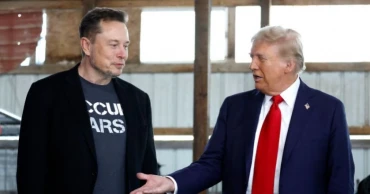
Trump, Musk’s cost-cutting drive echoes Clinton’s ‘Reinventing Government’—but with key differences
A new administration has entered Washington with promises of dramatic reforms, leveraging business strategies and technological advancements to overhaul federal operations. It has offered buyouts to government employees and aggressively reduced expenses in an effort to balance the budget.
While this may resemble billionaire Elon Musk’s cost-cutting measures under Republican President Donald Trump, the largest effort to revamp the federal government in modern history actually took place three decades ago. In the 1990s, Democratic President Bill Clinton launched the "Reinventing Government" initiative, led by Vice President Al Gore, with a focus on efficiency and modernization.
Musk himself has drawn parallels between his current efforts and the Clinton-era reforms. "What @DOGE is doing is similar to Clinton/Gore Dem policies of the 1990s," he wrote on his platform X, referring to the Department of Government Efficiency (DOGE), which is spearheading the recent cuts.
However, experts who worked on or observed the Clinton initiative argue that it was vastly different from Musk’s approach. Unlike the abrupt and chaotic downsizing seen today, Reinventing Government was a structured, bipartisan effort, unfolding over several years with input from federal employees.
“A Thoughtful Overhaul vs. Rapid Cuts”
Max Stier, president of the Partnership for Public Service, emphasized the careful planning behind Clinton’s initiative. "A great deal of effort was put into understanding what changes were necessary," he said. "What’s happening now is actually a step backward."
In contrast, Musk and Trump’s approach has been marked by sudden layoffs of thousands of federal workers, some through a controversial "deferred resignation" program that lacks congressional approval. Their administration has also pushed cost-cutting measures without the necessary legislative backing, sometimes facing judicial intervention. Musk has pledged to cut trillions in government spending, though experts question the feasibility of such savings.
Elaine Kamarck, a former senior adviser to Gore who led the Reinventing Government initiative, said their goal was to make the government "work better for less," rather than pursuing cuts for their own sake. "We didn’t trigger a constitutional crisis," she noted. "Unlike Musk and Trump, we knew there weren’t vast trillions in efficiencies."
Trump criticises USAID funding for India, sparks diplomatic tensions
The Clinton administration assembled a 400-member team, drawing from existing federal employees, to redesign government processes with a focus on efficiency and customer service. The initiative also introduced performance metrics and encouraged employees to adopt emerging technologies—pioneering services like online tax filing.
Gore famously demonstrated his commitment to cutting waste by smashing a government ashtray on the David Letterman Show, symbolizing his drive to eliminate unnecessary bureaucracy. The administration also introduced the "Hammer Award", recognizing employees who successfully streamlined operations.
“A Different View of Federal Employees”
Don Kettl, an emeritus professor at the University of Maryland, highlighted a key distinction between the two efforts: attitudes toward government workers. "The Clinton administration saw federal employees as partners in reform, while the Trump administration treats them as obstacles," he said.
The Clinton team also worked with Congress to offer $25,000 buyouts to federal employees, ultimately reducing the workforce by over 400,000 positions between 1993 and 2000. This was achieved largely through voluntary departures and attrition, with minimal layoffs.
However, Kettl pointed out that the cost savings were limited, as the government had to hire contractors to fill critical roles left vacant—an issue that may resurface under Musk and Trump’s aggressive downsizing.
Chris Edwards, editor of DownsizingGovernment.org at the Cato Institute, emphasized that Clinton’s efforts were more effective because they involved Congress. The current Republican-controlled Congress has largely allowed Musk to proceed unchecked, even though the Constitution requires legislative approval for federal spending. Without congressional backing, Edwards warns, "none of these DOGE changes will be permanent."
Few Republican lawmakers have pushed back. Sen. Lisa Murkowski (R-Alaska) noted, "It takes courage to stand up and say, ‘That’s unlawful, that exceeds executive authority.’"
"Lessons from the Past"
Kamarck estimated the total savings from Reinventing Government at $146 billion, a substantial sum but still a small fraction of the federal budget. She contrasted her team’s methodical and collaborative approach with Musk’s rapid, top-down restructuring, led by a team of outsiders unfamiliar with government operations.
Unlike the Clinton administration, which prioritized minimizing disruptions, Musk’s strategy appears more focused on speed than stability. Kamarck worries that this approach risks undermining essential government functions.
"The consequences of government failure are far greater than in the private sector," she warned. "We were careful not to break the system. I don’t think Musk and Trump share that concern—and it could be their downfall."
1 year ago