NBR-Tax
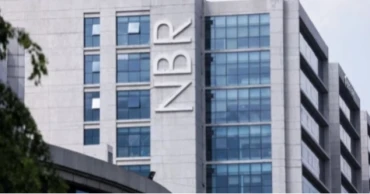
Govt moves to modernise tax admin and boost revenue
The government is set to launch a transformative project titled strengthening Domestic Revenue Mobilisation Project (SDRMP) aimed at modernising the country’s tax administration and boosting internal revenue collection.
The project, spearheaded by the Internal Resources Division and to be implemented by the National Board of Revenue (NBR), has an estimated cost of Tk 1009.20 crore.
Of this, the government of Bangladesh will contribute Tk 8.80 crore, while the remaining Tk 1000.40 crore will come as project assistance from the World Bank, according to project documents seen by UNB.
The project was approved by the Executive Committee of the National Economic Council (ECNEC) on Tuesday.
Spanning from July 2025 to June 2030, the project will cover all tax and VAT offices across Bangladesh and the NBR headquarters in Dhaka.
The primary objective of the SDRMP is to enhance the institutional capacity of NBR to increase domestic revenue collection.
Key components of the project include establishment of a strong research and statistics unit, alongside policy analysis and training initiatives, Comprehensive automation reforms in line with NBR’s modernization master plan, Upgradation of digital platforms such as eTIN, eReturn, and eTDS/TCS, and the rollout of new systems like eRevACC, eTLM, eAudit, eTax Office, ETAM, and eSupport, to ensure interoperability and efficient tax administration.
The others are-- Modernization of the VAT system through a new SAP Competency Center, the development of an Integrated VAT Administration System (IVAS), and a national-level e-invoicing system, Introduction of a unified Unique Identification Number for both income tax and VAT, Integration between NBR systems (ASYCUDA World, IVAS) and national platforms like iBAS++, Establishment of an automated call center for taxpayer support and Launch of a modern e-learning platform for NBR staff and stakeholders.
According to the project papers, development of the government's revenue collection process is very important to support the growth and development of the country through the government's internal resource intelligence.
NBR staff threaten countrywide shutdown from Saturday demanding chairman’s removal
The country's overall revenue collection has grown at an average rate of 13.5 percent in the last 16 years. In the last fiscal year 2007, the actual revenue collection was Tk 485 billion, which increased to Tk 3,666 billion in the fiscal year 2023, i.e., more than 7.5 times growth has been achieved during this period.
In the last five years, despite the economic instability caused by the COVID-19 pandemic and the Ukraine war and the shock of the global recession, the average growth in revenue collection was 11.1 percent.
Bangladesh's revenue collection is very low and this revenue collection is insufficient to meet the development financing needs.
Bangladesh's revenue-to-GDP ratio was 9.1 percent in the fiscal year 2012, which has decreased to 8.5 percent in the fiscal year 2024.
The tax-to-GDP ratio has decreased to 7.4 percent in the fiscal year 2024-25, which is significantly lower than the ratio of its South Asian peers.
The proposed project has been designed to improve the capacity of the National Board of Revenue with a view to increasing revenue collection.
The Planning Commission thinks that the project will support the implementation of necessary reform activities to increase revenue collection, including rationalisation of tax expenditure, reduction of compliance gap, expansion of taxpayer base and modernization of tax administration through complete digitization and automation of tax administration to expand taxpayer services.
1 year ago
Deadline for company tax return submission extended to April 30
The National Board of Revenue (NBR) has extended the deadline for companies to submit their income tax returns until April 30, 2025.
The previous deadline for filing tax returns was set for March 16.
Second report of committee to reform NBR expected next month, focusing on automation
A notification was issued by HM Shahriar Hasan, the second secretary of the NBR, in this regard.
Most companies in Bangladesh follow the fiscal year from July to June for their income year while banks, insurance companies, financial institutions, and multinational companies typically align their income year with the calendar year, from January to December.
1 year ago
Next budget to see cuts in tax waiver: NBR Chairman
NBR chairman Md Abdur Rahman Khan on Wednesday announced that next national budget may witness a significant cut in tax exemption system.
“This time (in budget for 2025-26 fiscal) you will see some big examples. Already we have withdrawn some significant number of tax exemptions, you will see the rest in the next budget ,” he said.
The National Board of Revenue chairman was speaking at a pre-budget meeting with BEZA, BIDA, ΒΕΡΖΑ, Business Initiative Leading Development (BUILD), Bangladesh Hi-Tech Park Authority, Bangladesh India Chambers of Commerce, Women Entrepreneurs Network for Development Association (WEND) and American Chamber of Commerce in Bangladesh (AmCham) held at NGR Conference Room.
He said that the individuals and business entities which are paying reduced rate of taxes will have to pay little bit more from the next budget.
“We can provide support for a limited time, this can not be done for the whole life, one should pay taxes at the regular rate,” he said.
Electronic VAT machines made mandatory at highway restaurants to halt cheating: NBR
Rahman Khan mentioned that this time the big target for the NBR is to streamlining the tax system for those who are enjoying tax exemptions for a long time.
Giving reference of a research, he said that the amount of tax that the government is getting right now is also the amount the government is loosing in the name of tax exemption.
“We have to get rid from that, we are having huge pressure for this (tax exemption),” he said.
He said that the tax exemption will be withdrawn gradually.
The NBR chairman said that his organisation will chase those who are not paying taxes and VAT properly.
In this connection, he said that it does not mean that the consumers get the benefits of the tax exemption directly.
“Rather a big portion of this tax exemptions remains with the business people, there is a widespread complaint regarding this matter although this should not be done,” he said.
The government of Bangladesh since its independence had announced a series of tax exemption measures different times aimed at attracting both local and foreign investment, promoting industrialisation, and fostering economic growth.
Under the policy, businesses in key sectors such as agriculture, information technology, renewable energy, and export-oriented industries gets benefit from significant tax relief. Startups and small and medium enterprises (SMEs) are also set to receive exemptions designed to encourage entrepreneurship and job creation.
NBR would like single VAT rate for all sectors if businesses can reach consensus, says chairman
According to NBR it introduced targeted tax benefits to stimulate growth in priority sectors. This move was expected to ease financial pressure on businesses and encourage long-term investment.
One of the key highlights of the policy is the extension of tax holidays for new industrial undertakings. Businesses in designated economic zones and hi-tech parks will enjoy tax exemptions for up to 10 years, depending on their investment size and industry type. Export-oriented businesses will also benefit from reduced corporate tax rates, designed to enhance the country’s competitiveness in global markets.
In the agriculture sector, companies involved in the production and processing of agricultural goods, including dairy and fisheries, will receive tax exemptions aimed at ensuring food security and promoting rural development.
The information and communication technology (ICT) sector, a rapidly growing contributor to Bangladesh’s economy, is also get benefit. Software developers, IT-enabled service providers, and e-commerce businesses also enjoy tax breaks.
While Bangladesh’s tax exemption policies aim to attract investment and promote economic growth, experts are increasingly wary of their negative impacts on revenue collection, economic equality, and long-term development.
Critics argue that these measures often lead to significant revenue losses for the state. Bangladesh already struggles with a narrow tax base, and generous exemptions further limit the government’s ability to fund essential public services like education, healthcare, and infrastructure.
Another concern is the potential for misuse and lack of transparency. Experts caution that businesses sometimes exploit tax exemptions without making the promised investments or creating jobs. In some cases, politically connected companies benefit disproportionately, raising questions about fairness and governance.
Moreover, the long-term impact on economic efficiency is also debated. Tax breaks can discourage innovation and productivity if businesses rely on incentives rather than improving competitiveness.
As Bangladesh moves toward becoming a middle-income country, experts call for reassessing tax exemption policies. They recommend a more balanced approach — offering targeted incentives while strengthening tax administration and ensuring fair revenue collection. Without careful reform, the negative impacts of tax exemptions could outweigh their intended benefits.
1 year ago