Bangladeshi-scientist
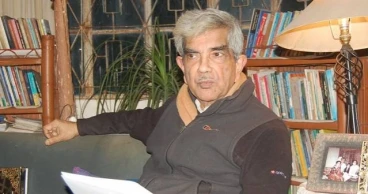
Who is Jamal Nazrul Islam, the 2025 Independence Awardee?
The Bangladesh government has announced the names of seven distinguished individuals to receive the Independence Award 2025 in recognition of their exceptional contributions to the nation.
Among the recipients is Professor Jamal Nazrul Islam, a luminary in the field of science and technology.
But who is Jamal Nazrul Islam, and why is his name held in such high regard—not just in Bangladesh but across the global scientific community?
It is widely acknowledged that no other Bangladeshi scientist has left as profound impact on fundamental physics as he has.
A Life Shaped by Learning
Born in 1939 in Jhenaidah, where his father served as a judge, this scientist began his education in Kolkata. After returning, he studied for some time at Chittagong Collegiate School. He completed his undergraduate studies at St. Xavier’s College in Kolkata before moving to Cambridge for higher education.
Govt reinstates Ziaur Rahman’s Independence Award
At Cambridge, Islam excelled in the rigorous Mathematical Tripos course, completing the three-year programme in just two years. He went on to earn a PhD in mathematics and theoretical physics, followed by a Doctor of Science (DSc) degree — a distinction awarded to only a handful of scientists worldwide.
Friendships with Scientific Giants
The list of Islam’s mentors, friends, and peers reads like a who’s who of modern science. He shared a close friendship with the legendary Stephen Hawking and was mentored by the esteemed physicist Freeman Dyson.
His network also included Richard Feynman, Subrahmanyan Chandrasekhar, Pakistani Nobel Laureate Abdus Salam, and renowned Indian economists Amartya Sen and Amiya Bagchi.
His contemporaries at Cambridge also featured Jayant Narlikar and British economist James Mirrlees.
A Groundbreaking Contribution
In 1983, his seminal research paper, The Ultimate Fate of the Universe, sent ripples through the scientific community at Cambridge and beyond. This work is regarded as one of the most significant contributions to classical physics since Albert Einstein, cementing Islam’s reputation as a preeminent theoretical physicist.
At the peak of his international acclaim, Islam made a life-altering decision—he left behind the prestige of the Western academic world to return to Bangladesh in 1984. Over the next 29 years, he dedicated himself to advancing science and education in his homeland.
Building Bangladesh’s Scientific Future
A key part of Islam’s legacy is the International Centre for Mathematical and Physical Sciences at Chittagong University, an institution he played a pivotal role in establishing.
When it was inaugurated in 1987, his longtime friend, Nobel-winning physicist Abdus Salam, travelled to Bangladesh to mark the occasion.
Not possible for me to receive Independence Award: Badruddin Umar
Even after his formal retirement as a professor under the University Grants Commission in 2006, Islam remained an emeritus professor at Chittagong University until his passing in 2013.
Over the years, he received numerous accolades, including the Bangladesh Academy of Sciences Gold Medal, the Ekushey Padak, and the Dhaka University Award.
Now, with the prestigious Independence Award, his lifelong devotion to science and his unwavering commitment to Bangladesh have been formally recognised.
1 year ago