Indian missle strikes
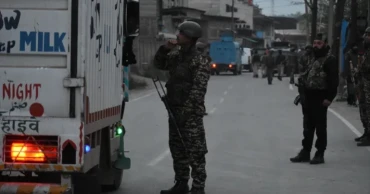
UN, US urge restraint as India-Pakistan tensions escalate over missile strikes
The United Nations and the United States have urged both India and Pakistan to exercise maximum restraint following deadly missile strikes by India into Pakistani territory that Islamabad has condemned as an "unprovoked act of war."
UN Secretary-General Antonio Guterres, through his spokesperson Stephane Dujarric, expressed deep concern over India’s military operations across the Line of Control and the international border. “The world cannot afford a military confrontation between India and Pakistan,” the statement warned, calling for restraint from both nuclear-armed neighbors.
US Democratic Senator Jeanne Shaheen also voiced alarm, urging both countries to prioritize diplomacy. Referring to the April 22 attack on Indian civilians, Shaheen said the perpetrators must be brought to justice swiftly, while underlining the need for calm to avoid further escalation.
Meanwhile, Pakistan’s Foreign Ministry condemned India’s actions as a “blatant act of war,” accusing it of targeting civilians, including women and children. The statement claimed India’s missile strikes endangered civilian air traffic and violated international law. It rejected India’s justification of targeting “terrorist infrastructure,” branding it as a fabrication aimed at deflecting blame.
The Pakistani government said it retains the right to respond under Article 51 of the UN Charter, with Prime Minister Shehbaz Sharif vowing retaliation. “A strong and appropriate response is already underway,” he said on social media.
India launches strikes on Pakistan, Pakistan-administered Kashmir
Tensions intensified further after Pakistan’s Defence Minister Khawaja Asif told international media that Pakistani forces had shot down five Indian aircraft and captured Indian soldiers. He asserted that Pakistan's military response targeted Indian military facilities, not civilians.
On the Indian side, authorities reported that three civilians were killed in Kashmir due to Pakistani artillery fire. The Indian Army said it was responding proportionately to cross-border shelling.
India’s Ministry of Defense claimed its missile operation targeted nine locations associated with planning recent attacks against Indian civilians, asserting that no Pakistani military installations were hit. The operation, named “Sindoor,” was described as “focused, measured, and non-escalatory.”
However, Pakistan's military said Indian missiles struck six areas in Pakistan-administered Kashmir and Punjab province, including a mosque where a child was killed. Dozens more were injured, and hospitals in affected areas declared emergencies.
The escalation has disrupted civilian life across both countries. Airports in Indian-administered Kashmir and parts of northern India, including Srinagar, Leh, and Amritsar, were closed. Airlines such as Air India, IndiGo, and Qatar Airways have suspended or rerouted flights due to changing airspace conditions. In Pakistan, schools in Punjab province were shut and hospital staff called to duty amid emergency conditions.
The UAE joined global calls for restraint, urging both India and Pakistan to de-escalate and resolve differences through diplomacy. Meanwhile, India’s National Security Adviser Ajit Doval briefed US Secretary of State Marco Rubio on its military action, which India insists was based on solid intelligence linking Pakistan-based groups to the April massacre.
Analysts warn that the situation marks one of the most serious escalations between India and Pakistan in years. “Both countries have powerful conventional forces and nuclear weapons, and the risks of further escalation are very real,” said South Asia analyst Michael Kugelman.
At least 8 killed in Indian missile strikes on six Pakistani locations: ISPR chief
Civil defense drills were planned in parts of India on the same day as the strikes, signaling heightened alertness. Factories, schools, and infrastructure were set to conduct emergency preparedness activities.
As tensions continue to rise, both nations face growing international pressure to step back from the brink and avoid a broader conflict.
Source: With inputs from agency
1 year ago

Death toll from Indian missile strike rises to 13: Pakistani official
A Pakistani official said Indian missile strike on Bahawalpur mosque killed 13, including women and children.
Earlier, Lt. Ge Ahmed Sharif Chaudhry, Director General of the Inter-Services Public Relations (ISPR) of Pakistan’s military said at least eight people were killed and 35 others injured after Indian forces launched missile strikes on six locations across Pakistan.
Speaking at a brief late-night press conference, Chaudhry said India carried out a total of 24 strikes, with the most severe attack targeting Ahmedpur Sharqia, near Bahawalpur in Punjab province. A mosque compound was hit there, killing five people, including a three-year-old girl.
India launches strikes on Pakistan, Pakistan-administered Kashmir
Other targeted areas included Muridke city, a village near Sialkot, and Shakargarh, also in Punjab. Additionally, two sites in Pakistan-administered Kashmir—Muzaffarabad and Kotli—were struck, resulting in the destruction of two mosques. A 16-year-old girl and an 18-year-old boy were killed in those attacks.
Chaudhry did not comment on earlier reports that Indian jets had been shot down.
Three civilians killed by Pakistani artillery fire, Indian army says
India’s army says three civilians were killed overnight by Pakistani artillery fire.
Pakistan calls Indian missile strikes ‘Act of War’
The Pakistani army “resorted to arbitrary firing” across the Line of Control, the de facto border dividing Kashmir, the army said in a statement.
“Three innocent civilians lost their lives in indiscriminate firing/shelling”, the army said, adding that Indian forces were “responding in proportionate manner”.
Source: With inputs from agency
1 year ago