reform in Bangladesh
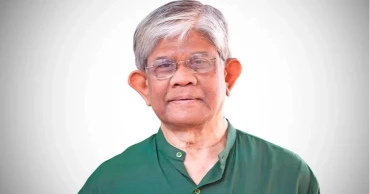
Banking sector reform can’t be done overnight: Salehuddin
The country’s banking sector remains under severe structural stress and meaningful reform cannot be achieved within a short time frame, said Finance Adviser Dr Salehuddin Ahmed said on Thursday.
“The banking sector is definitely challenging. Institutions have been weakened, laws are often ignored and in many cases owners themselves control management, bypassing prudential norms,” he said while speaking at MTB-FE Roundtable on ‘Banking sector reforms’ at a city hotel.
The adviser said the challenges facing the sector are deep, complex and institutionalized and the problems accumulated over the past 15 years cannot be fixed in 14 to 16 months.
He said Bangladesh Bank has operational autonomy but full independence is neither realistic nor desirable without accountability.
“No central bank can operate beyond the sovereignty of the state. Autonomy must go hand in hand with accountability,” he added.
Referring to international assessments, the adviser cited recent global reports highlighting illicit financial flows, crime-related trade and inflation as key vulnerabilities for countries like Bangladesh.
He said these issues directly affect the stability of the banking system and must be addressed primarily by the central bank with support from the finance ministry.
The adviser also criticised the role of auditors, alleging that some chartered accounting firms had signed audit reports without proper verification.
“This is an absurd reality. Auditors signing backdated or questionable reports severely undermine financial discipline,” he said adding that some firms have already been blacklisted.
Irregularities are not limited to banks alone, mentioning that large financial activities in some sectors, including higher education often escape proper auditing, he added.
The adviser said the government has recently passed amendments to the Negotiable Instruments Act and the House Building Finance Corporation Act, while work on amendments to money laundering laws and economic courts is ongoing.
However, time constraints remain a major challenge, he said.
“We have very limited time left but we are trying to complete as much as possible,” he said.
The adviser acknowledged concerns over excessive numbers of senior officials at Bangladesh Bank and said steps have already been taken to rationalise the structure.
Despite the challenges, he said Bangladesh’s international image remains relatively positive.
“Externally, the perception is not that Bangladesh is collapsing. But partners do say the situation is difficult,” he noted.
The adviser said banking sector reform is unavoidable and critical for the economy.
“This opportunity should not be wasted. If we cannot complete all reforms now, the next government must carry them forward. The banking sector is too important to delay,” he said.
Bangladesh Bank Governor Dr. Ahsan H Mansur was present as the special guest while Professor of the Bangladesh Institute of Bank Management Dr. Shah Md. Ahsan Habib delivered the keynote speech.
8 months ago
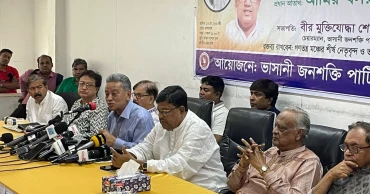
Reforms must be democratic, not imposed: Amir Khosru
BNP senior leader Amir Khosru Mahmud Chowdhury on Tuesday said any reform in Bangladesh must be implemented through a democratic process and with public support, not through any unilateral or imposed initiative.
“No matter how much you talk about reforms, at the end of the day, reforms must be implemented through a democratic process. No reform can be carried out outside the democratic process,” he told a roundtable discussion.
The BNP leader said the people of Bangladesh have not transferred the ownership of the country to anyone who will carry out reforms for its future. “Reforms must take place with the support of people in a democratic manner. There is no scope for reforms beyond that.”
Bhasani Janashakti Party and Bhasani Anushari Parishad jointly organised the programme at the Jatiya Press Club, marking the third death anniversary of Gonoshasthaya Kendra founder Dr Zafrullah Chowdhury.
Mirza Abbas alleges systematic purge of pro-BNP officials from administration
Khosru, a BNP Standing Committee Member, said his party has already made it clear that they are ready to implement any reform proposals that have been agreed upon through political consensus.
“So, why is the delay? Why is it that we cannot know where the consensus stands? We have all submitted our proposals. We are waiting to see where the consensus is. But we still cannot know where the consensus lies. Why the hesitation in stating that?” he said.
The BNP leader said there will be no elections without reforms, but the government is not specifying where the national consensus lies or how those reforms will be implemented.
“We have not given ownership of Bangladesh to anyone who will reform where there is no consensus. Where there is no consensus on the issue of reform, every political party has the right to go to the people and come to Parliament with the mandate of the people on those proposals. There is no room for other reforms beyond that,” he observed.
BNP happy with ban on Awami League activities
The BNP leader said if anyone thinks that Sheikh Hasina’s usurped ownership of the country has passed to someone else enabling them to dictate future reforms regardless of whether the people want it or not, no such ownership has been given to anyone.
“The people of Bangladesh are the owners of the country, it is they who will decide what reforms should be undertaken where there is no consensus,” Khosru said.
In a democratic process, he said, any future reform proposals where there is no consensus must be openly debated both inside and outside Parliament and then passed through the parliamentary process. “There is no alternative to this. The only other path is authoritarianism—and that’s exactly what Sheikh Hasina has resorted to.”
He accused former fascist ruler Sheikh Hasina of creating many small autocrats in the country over the last 15 years.
“You cannot hold the people hostage and then talk about reforms solely to serve the interests of a select few. There is no longer any scope in Bangladesh to impose anything by force while excluding the people. That time is over,” Khosru observed.
The BNP leader lamented that those who hid in fear of Sheikh Hasina are now lecturing others on reforms.
He said BNP has long proposed reforms, including a 31-point state-overhauling outline and a 27-point Vision-2030, which aims to rebuild Bangladesh after the fall of Sheikh Hasina’s regime. “Many of those now talking about reforms were never seen in movements. They hid when pressured and are now emerging to give us lessons,” he said.
The BNP leader criticised the government for acting as if Bangladesh has become an investment haven, saying that investment has actually been falling over the past ten months. “They are putting on a show—a circus of investment. But people are not fools,” he said.
He said no local or international entrepreneur will decide to invest in Bangladesh unless an elected government is in place and political stability is ensured.
“Globally, investors look for political legitimacy. No one will take the risk of investing without an elected government in place. Investment is not a short-term matter, it is a long-term issue,” the BNP leader said.
Khosru said the people of Bangladesh are now united in their demand for the restoration of democracy and democratic order, and for the establishment of a democratic government through a credible election.
“Some people talk about division among the people. I don’t see any division or confusion among the people. They are united to be victorious in the democratic struggle and restore democracy through the election,” he observed.
1 year ago