Gaza's Health Ministry
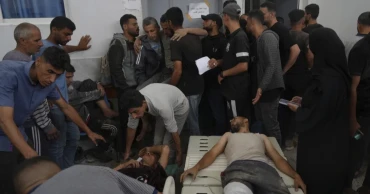
Death toll from Israeli attacks in Palestine exceeds 55, 000
The Palestinian death toll in the 20-month-long Israel-Hamas war has crossed 55,000, according to Gaza's Health Ministry on Wednesday. Among the latest casualties were at least 21 people reportedly killed while attempting to reach aid distribution points.
The exact circumstances surrounding the deaths near the aid locations remain unclear. The Israeli military said it fired warning shots in central Gaza at individuals it described as “suspects” posing a threat to its troops.
The Gaza Humanitarian Foundation (GHF), which manages several of the aid centers, claimed that five of its local staff members were killed en route to one of the distribution sites in an attack it attributed to Hamas.
While the Gaza Health Ministry does not differentiate between civilians and combatants in its casualty counts, it maintains that women and children make up more than half of the over 55,000 deaths. The ministry, part of Hamas’ de facto government in Gaza, reports 55,104 deaths and 127,394 injuries since the war began. These figures exclude Wednesday's fatalities and do not account for those believed to be trapped under rubble or in areas unreachable by emergency responders. Although Israel has often questioned these statistics, past tallies have generally aligned with independent assessments.
Aid Missions Turn DeadlyGazan health officials reported that 14 individuals were killed near Rafah while heading to collect humanitarian aid, with their bodies taken to Nasser Hospital in Khan Younis. Another seven people were reported dead near an aid site in central Gaza, according to Al-Awda Hospital.
The Israeli military said it had fired warning shots early Wednesday at people it identified as posing a threat in central Gaza but did not comment on the reported casualties near Rafah.
Among the victims was 16-year-old Ghazal Eyad. Her mother, Safaa Farmawi, told the AP she was killed while they were attempting to collect food. “She went ahead of me, and then people told me my daughter was martyred,” Farmawi said.
Frequent gunfire incidents have been reported near new aid centers, run by a recently formed organization not endorsed by the United Nations. While Palestinian witnesses claim Israeli forces have fired on civilians approaching aid, the Israeli army maintains it only fires warning shots at perceived threats.
The GHF said it has seen no violence at its distribution points and has advised people to follow designated routes. It temporarily halted aid operations to coordinate safety measures with Israeli authorities.
UK and alies sanction two far-right Israeli ministers over ‘Extremist Violence’ remarks
GHF Blames Hamas for Deadly Attack on Aid WorkersThe Gaza Humanitarian Foundation accused Hamas of targeting a bus carrying two dozen of its Palestinian aid workers heading to a distribution center near Khan Younis. At least five were killed and several others injured, the foundation said, adding that some may have been taken hostage.
“Our hearts are broken,” the foundation said in a statement. “Our thoughts and prayers are with every victim, every family, and every person still unaccounted for.” The AP has not independently verified the foundation’s account.
New Aid Delivery System Under ScrutinyThe newly introduced aid delivery system — rolled out last month — has been marred by confusion and violence. Meanwhile, the longstanding U.N.-managed system has struggled to function due to ongoing Israeli restrictions and deteriorating security conditions, even after Israel relaxed a strict blockade imposed from March to May.
Experts and rights groups warn that famine looms across Gaza unless Israel fully lifts its blockade and halts military operations. The Israeli government insists its new aid model is intended to prevent Hamas from diverting supplies. However, U.N. agencies and international aid groups argue there’s no evidence of large-scale diversion and claim the system violates humanitarian norms by centralizing control and causing further displacement.
Israeli Forces Recover Hostage RemainsIsrael announced on Wednesday that its forces retrieved the bodies of two hostages from Gaza. One was identified as Yair Yaakov, who was killed during the Hamas-led October 7 attack and whose body was taken into Gaza. His partner and two children were released earlier in a ceasefire deal. The identity of the second hostage was not disclosed.
Israeli Defense Minister Yoav Gallant described the recovery mission as "complex," without offering additional details. According to the military, the operation took place in Khan Younis.
The war began on October 7, 2023, when Hamas-led fighters launched a deadly attack, killing approximately 1,200 people — mostly civilians — and abducting 251 hostages. Israel has since recovered the remains of many hostages and rescued eight alive. Militants are still believed to be holding 53 captives, fewer than half of whom are thought to be alive.
Israel attacks Yemeni port city of Hodeida
Hamas says it will only release the remaining hostages in exchange for a lasting ceasefire, the release of Palestinian prisoners, and full Israeli withdrawal. The group has expressed willingness to transfer authority to a neutral Palestinian body but has not agreed to disarm.
Israeli Prime Minister Benjamin Netanyahu has rejected those terms, committing instead to temporary truces for hostage recovery. He vows to continue the war until all hostages are freed and Hamas is either dismantled or exiled. Netanyahu has also declared that Israel will retain long-term control over Gaza and facilitate what he calls the “voluntary emigration” of a significant portion of the Palestinian population — a proposal widely condemned as forced displacement and a potential breach of international law.
1 year ago
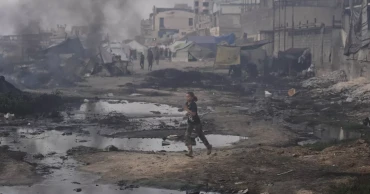
14 killed in firing by Israeli forces, allies near Gaza aid site
Palestinian sources said Israeli forces and their allied local gunmen fired on a crowd heading to a food distribution point backed by Israel and the United States in Gaza early Monday. According to Gaza's Health Ministry and local hospitals, 14 people were killed.
Eyewitnesses reported that the gunmen, who appeared to be cooperating with Israeli troops, retreated into an Israeli military zone in Rafah after the crowd began throwing stones at them. The Israeli military has not yet commented on the incident. Israel recently acknowledged supporting armed local groups opposed to Hamas.
Ongoing Shootings Amid New Aid System
This incident is the latest in a series of shootings that have killed at least 127 people and injured hundreds since the implementation of a new food distribution model last month, as per Gaza’s Health Ministry. While Israel and the U.S. say the new system is intended to bypass Hamas, it has faced rejection from the United Nations and major aid organizations.
Experts warn that the Israeli blockade and military campaign have pushed Gaza to the brink of famine. With nearly all food production destroyed, the region’s two million residents rely almost entirely on humanitarian aid.
Israeli forces intercept Gaza aid vessel, detain Greta Thunberg, fellow activists
Palestinians allege Israeli forces have repeatedly opened fire on people approaching food centers. Previously, the Israeli military claimed it fired warning shots when individuals neared its forces near the aid distribution sites, which are located in restricted military areas inaccessible to independent journalists.
The Gaza Humanitarian Foundation (GHF), a private contractor managing the centers, stated there has been no violence at or near the sites. However, GHF has cautioned aid seekers that straying from the designated routes set by the military poses “a great danger.” Operations at the three sites were paused last week for safety discussions with the military.
On Monday, GHF suspended activity at the Rafah center due to what it described as “chaotic crowd conditions,” according to a Facebook page affiliated with the group. A spokesperson for GHF did not immediately respond to inquiries.
Gunfire Erupts in “Dangerous Zone”
Heba Joda, who was among those present, said gunfire broke out at a roundabout roughly a kilometer from the aid center—a location of previous incidents. She said the shooting came from the “dangerous zone” controlled by Israeli forces and their allies.
She noted that members of a local militia led by Yasser Abu Shabab, known as the Popular Forces, were attempting to organize the crowd. When the crowd surged forward, the gunmen opened fire, prompting people to throw stones. The militia members then withdrew toward Israeli military lines.
While the Popular Forces claim to be guarding the GHF centers in southern Gaza, GHF insists it does not coordinate with them. Aid workers allege the group has a record of looting U.N. aid convoys.
Hussein Shamimi, another witness, said his 14-year-old cousin was among those killed. “It was an ambush... Israelis on one side, Abu Shabab’s men on the other,” he said.
Mohamed Kabaga, who was treated for a neck wound at Nasser Hospital in Khan Younis, said masked gunmen fired directly at the crowd after attempting to impose order. He estimated there were about 50 armed men with 4x4 vehicles stationed near the roundabout close to Israeli military lines. “We didn’t receive any aid,” he said. “They just shot at us.”
Nasser Hospital confirmed it had received 14 bodies from the incident. Zaher al-Waheidi, head of the Health Ministry’s record department, said more than 99 people were injured.
Controversy Over New Aid Mechanism
Israel has pushed for GHF to replace the U.N.-managed system that had been delivering food, medicine, and other necessities since the war began. Israeli officials accuse Hamas of diverting aid for militant use, though U.N. authorities say there's no evidence of systematic diversion.
The U.N. and humanitarian organizations have rejected the GHF-led model, arguing it cannot meet Gaza's large-scale needs and serves Israeli military objectives—including efforts to move the population southward.
Previously, the U.N. network had distributed supplies at numerous points across Gaza, reducing the need for civilians to cross long distances through militarized zones.
Israel completely blocked Gaza’s access to food, fuel, and medicine in early March, just before breaking a ceasefire with Hamas. Although limited aid has been allowed in since last month, U.N. agencies say distribution has been hampered by Israeli restrictions, security breakdowns, and looting.
War Now in Its 20th Month
The conflict began on October 7, 2023, when Hamas-led militants entered Israel, killing about 1,200 people—mostly civilians—and taking 251 hostages. Israel says 55 hostages remain in captivity, more than half believed dead, while the rest were released in deals or ceasefires.
Israel’s military offensive has killed more than 54,900 Palestinians, according to the Gaza Health Ministry. The majority are reported to be women and children, though the ministry does not distinguish between civilians and fighters. The war has razed large parts of Gaza and displaced approximately 90% of its population.
Israel pledges to block aid boat with Greta Thunberg from reaching Gaza
Hamas demands a permanent ceasefire and full Israeli withdrawal in exchange for releasing the remaining hostages. Israel insists the war will not end until all hostages are freed and Hamas is dismantled or driven into exile.
Israeli Prime Minister Benjamin Netanyahu has stated that even after the war, Israel will retain open-ended control over Gaza and pursue what he calls the “voluntary emigration” of much of its population—an idea widely rejected by the international community and Palestinians, who see it as forced displacement.
1 year ago

Israel's latest strikes in Gaza kill 38 people including children
Israeli strikes over the past 24 hours killed at least 38 people in Gaza, including children, local health officials said Sunday, with no data available for a second straight day from now-inaccessible hospitals in the north.
Further details emerged of the Palestinian doctor who lost nine of her 10 children in an Israeli strike on Friday.
Gaza's Health Ministry said 3,785 people have been killed since Israel ended a ceasefire in March, vowing to destroy Hamas and return the 58 hostages it still holds from the Oct. 7, 2023, attack that triggered the war. Hamas has said it will only release the hostages in exchange for a lasting ceasefire and an Israeli withdrawal.
Israel also blocked all food, medicine and fuel from entering Gaza for 2 1/2 months before letting a trickle of aid enter last week, after experts' warnings of famine and pressure from some of Israel's top allies.
Israel is pursuing a new U.S.-backed plan to control all aid to Gaza, but the American heading the effort unexpectedly resigned Sunday, saying it had become clear that his organization would not be allowed to operate independently.
The United Nations has rejected the plan. U.N. World Food Program executive director Cindy McCain told CBS she has not seen evidence to support Israel’s claims that Hamas is responsible for the looting of aid trucks. “These people are desperate, and they see a World Food Program truck coming in and they run for it,” she said.
COGAT, the Israeli defense body overseeing aid for Gaza, said 107 trucks of aid entered Sunday. The U.N. has called the rate far from enough. About 600 trucks a day entered during the ceasefire.
Israel also says it plans to seize full control of Gaza and facilitate what it describes as the voluntary migration of its over 2 million population, a plan rejected by Palestinians and much of the international community.
U.S. Homeland Security Secretary Kristi Noem visited Israel on Sunday and met with Prime Minister Benjamin Netanyahu.
More on the Gaza Humanitarian Foundation resignation
Jake Wood was the executive director of what had been a troubled effort to get more aid into Gaza in a way that would be acceptable to Israel, which has sought to tightly control all aid deliveries.
He said in a statement Sunday that it had become clear “it is not possible to implement this plan while also strictly adhering to the humanitarian principles of humanity, neutrality, impartiality, and independence, which I will not abandon.”
9 of a doctor's 10 children killed in Israel's latest strikes in Gaza
He urged Israel to expand aid supplies "through all mechanisms” and for others to continue to explore “innovative new methods” for delivering aid.
Neither the foundation nor the U.S. had given many details of who was funding the new group, whose creation was announced in recent weeks, or how it would operate. The U.N. and international aid organizations feared it was an attempt to supplant them.
More on the killing of a doctor's 9 children
In Friday's strike, only one of pediatrician Alaa al-Najjar's 10 children survived at their home near the southern city of Khan Younis. The 11-year-old and al-Najjar’s husband, also a doctor, were badly hurt.
The children's charred remains were put in a single body bag, said a fellow pediatrician at Nasser Hospital, Alaa al-Zayan.
The home was struck minutes after Hamdi al-Najjar had driven his wife to the hospital. His brother, Ismail al-Najjar, was first to arrive at the scene.
“They were innocent children," the brother said, the youngest 7 months old. "And my brother has no business with (Palestinian) factions.”
Israel has said “the claim regarding harm to uninvolved civilians is under review.” It blames Hamas for civilian deaths because it operates in densely populated areas.
There was no immediate comment from the military on the latest strikes. One killed a mother and two children in the central city of Deir al-Balah, according to al-Aqsa Martyrs Hospital. Another in northern Gaza's Jabaliya area killed at least five, including two women and a child, according to Gaza’s Health Ministry.
Also on Friday in Khan Younis, two International Committee of the Red Cross staffers were killed when shelling struck their home, the ICRC said.
“This is not an endless war," Israel’s military chief of staff, Lt. Gen. Eyal Zamir, said during a visit to Khan Younis. Recent ceasefire talks in Qatar gained no ground.
Hamas-led militants killed some 1,200 people, mostly civilians, in the Oct. 7 attack and abducted 251. Around a third of the remaining hostages are believed to be alive. Israel's 19-month offensive has killed over 53,000 Palestinians, according to Gaza's Health Ministry, which says women and children make up most of the dead. It does not provide figures for the number of civilians or combatants killed.
New from Hezbollah's leader
Speaking on the anniversary of Israel’s withdrawal from southern Lebanon in 2000, Hezbollah leader Naim Kassem reiterated the Lebanese militant group’s stance that it will not discuss giving up its remaining weapons until Israel withdraws from the five border points it occupies in southern Lebanon and stops its airstrikes.
Over 60 killed in Israeli strikes on Gaza as aid remains scarce
The speech came nearly six months after the latest Israel-Hezbollah war ended with a U.S.-brokered ceasefire. Under the deal, Israel and Hezbollah were supposed to withdraw forces from southern Lebanon.
Israeli officials have said they plan to remain at the five points indefinitely to secure their border. Israel has also continued to carry out near-daily airstrikes in southern Lebanon and sometimes in Beirut’s suburbs.
“We adhered completely” to the agreement, Kassem said, adding: “Don’t ask us for anything else from now on. Let Israel withdraw, stop its aggression, release the prisoners and fulfill all obligations under the agreement. After that, we will discuss each new development.”
A missile from the Houthis
Separately, Israel's military said it intercepted a missile fired by Yemen's Houthi rebels on Sunday. It triggered air raid sirens in Jerusalem and other areas. There were no immediate reports of casualties or damage.
The Iran-backed Houthis have launched repeated missile attacks targeting Israel as well as international shipping in the Red Sea, portraying it as a response to Israel’s military campaign in Gaza. Most of the targeted ships had no relation to Israel or the conflict.
Gaza's main hospital overwhelmed with children in pain from malnutrition
The United States halted a punishing bombing campaign against the Houthis earlier this month, saying the rebels had pledged to stop attacking ships. That informal ceasefire did not include attacks on Israel.
1 year ago