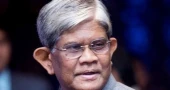
Finance Adviser Salehuddin Ahmed

Govt to procure 50,000 mt of non-basmati parboiled rice, 80,000 mt fertiliser
The government has decided to procure 50,000 metric tonnes of non-basmati parboiled rice and 80,000 metric tonnes of fertiliser.
The decision was taken at a meeting of Advisers Council Committee on Government Purchase on Monday (December 15, 2025) at the Secretariat with Finance Adviser Dr Salehuddin Ahmed in the chair.
The Ministry of Food will procure 50,000 metric tonnes of rice at a cost of Tk 214.70 crore. India-based M/S Bagadiya Brothers Private Ltd has been selected as the supplier.
Officials said the rice import would help maintain adequate public food stocks and contribute to stabilising prices in the domestic market.
Govt happy with macroeconomic stability despite sectoral challenges: Salehuddin
The purchase committee also recommended approval of two proposals placed by the Ministry of Industries to import a total of 80,000 metric tonnes of fertiliser from Saudi Arabia.
Under the proposals, 40,000 metric tonnes of fertiliser will be imported as the 12th lot and another 40,000 metric tonnes as the 13th lot from SABIC Agri-Nutrients Company at a unit price of US$413.46 per metric tonne.
The committee further recommended approval of a proposal to construct a fertiliser buffer warehouse in Naogaon with a capacity of 25,000 metric tonnes at an estimated cost of Tk 54.70 crore to improve storage and distribution.
Another proposal to construct a fertiliser buffer warehouse in Bogura with a capacity of 20,000 metric tonnes at an estimated cost of Tk 59.28 crore was also recommended for approval.
Officials said the fertiliser imports and storage facilities would help ensure uninterrupted supply during peak farming seasons.
Safe, quality shrimp production must be prioritised: Adviser Farida
In addition, the meeting recommended approval of several major infrastructure procurement proposals aimed at improving roads, bridges and local infrastructure across the country.
Among them is a World Bank-supported project under the Local Government Engineering Department (LGED), with a contract value of Tk 363 crore.
The committee also cleared multiple road development proposals under the Road Transport and Highways Division, including four-lane upgrading of regional highways in Cumilla, Lakshmipur and Noakhali, as well as the construction of the Rabnabad Bridge over the Rabnabad River in Patuakhali.
Officials said the approved projects would enhance connectivity, improve logistics and support regional economic growth.
Read more: Govt to procure 50,000 mt non-Basmati parboiled rice, 10,000 mt lentil
9 months ago
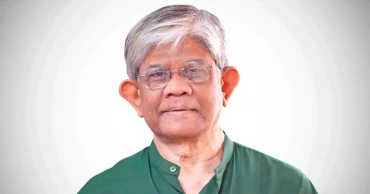
Govt may revise election budget as referendum adds extra costs: Finance Adviser
Finance Adviser Dr Salehuddin Ahmed on Monday (November 24) said the government may need to revise the election budget as holding the national election and the referendum on the same day will inevitably raise costs particularly for security and manpower.
“When we first received their proposal, the referendum was not in the plan. Naturally, holding both on the same day will involve additional expenses. You will need more manpower, more security, more logistics,” he told reporters after a meeting of the Advisers Council Committee on Government Purchase at the Secretariat.
Dr Salehuddin said that even after the announcement of the election schedule essential emergency spending can still be accommodated.
“There is nothing for the Finance Ministry to worry about. If the Election Commission needs something urgently, that can be arranged,” he said.
He also said expenses may rise due to the ongoing registration of Bangladeshi expatriate voters at embassies abroad.
“Foreign missions are doing preparatory work. Officers are collecting information and overtime costs will be involved. The Foreign Ministry may request funds. We will provide support,” he said.
Asked about the Chief Election Commissioner’s recent remark that holding a referendum alongside the national election would be a major challenge, Dr Salehuddin said the issue was outside his jurisdiction.
He said both votes on the same day is more practical.
“This is a government decision. Doing it on two separate days would require the entire mobilisation twice—returning officers, teachers, bank officials, everyone. It is not easy. Many countries hold referendums and national polls on the same day. Logistically, it is better,” he said.
On the use of body cameras by law enforcement agencies during the polls, Dr Salehuddin said the government has already taken a policy decision and procurement will proceed through the respective security agencies.
Read more: Bangladesh Election: Over 18,000 expatriates registered to vote
“The purchase committee has made a decision. We have instructed the relevant agencies to procure the equipment using their allocated budgets and in a transparent manner,” he said.
He declined to reveal how many cameras might be bought.
“It is not my responsibility to decide numbers. This falls under the Home Ministry and its agencies. The Election Commission will only identify sensitive locations. Police, BGB, RAB and other agencies will procure and use them. There is nothing to worry about,” he added.
Dr Salehuddin also said the Finance Division recently scrapped a proposal to buy 100 replacement vehicles for the cabinet members of the next elected government.
“Sometimes wrong messages go out. The vehicles were replacement units, not extra ones. Still, we canceled the plan because it is not necessary now,” he said.
He added that the Finance Division has already begun internal budget revisions.
“We are reviewing the budget. All ministries have been given a deadline to submit their final estimates. In December we will revise the national budget, and by January we will keep the election budget ready for the next government. Everything remains open,” he said
Election candidates must disclose domestic, foreign assets: ACC chairman
10 months ago
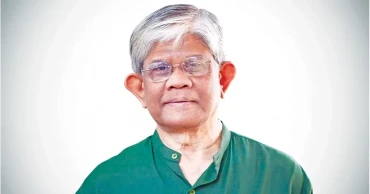
Govt reviewing body camera purchase plan: Finance Adviser
Finance Adviser Dr Salehuddin Ahmed on Tuesday (November 18) said the government is reviewing the proposed procurement of body cameras to ensure transparency, rational planning and appropriate use in sensitive operational areas.
The initial proposal sought a very large number of body cameras, prompting the committees to ask the authorities concerned to revisit the plan, pricing and procurement method, he told reports after meetings of the Advisers Council Committee on Economic Affairs and the Advisers Council Committee on Government Purchase at the Secretariat.
He said the revised plan should adopt a more rational, need-based approach.
“The procurement should be rational. We suggested that body cameras be used in particularly sensitive and critical areas, not everywhere,” he said, adding that the Home Ministry shares the same view.
The adviser said the purpose of introducing body cameras is to strengthen monitoring, improve accountability and support evidence-based action.
Read more: Govt to decide on body camera purchase for police within days: Finance Adviser
“The idea is not to deploy body cameras indiscriminately but to ensure they serve their intended purpose where sensitivity and oversight are crucial,” he added.
On whether the number of cameras will be reduced, Dr Salehuddin said rationalisation is likely.
“The number will be reduced, but I cannot say by how much at this stage. We will be able to comment once the revised proposal is submitted,” he said.
He added that the revised proposal will be placed very soon.
On September 23, the government approved procurement of around 40,000 body cameras for police personnel ahead of the national election scheduled for February.
The cameras are to be procured through the United Nations Development Programme (UNDP) to ensure quality, transparency and neutrality. Dr Salehuddin earlier said buying through UNDP would help avoid controversies over quality and pricing as international tenders would be floated and responsibility placed with the agency.
Read more: Govt okays procurement of new firearms for Ansar and VDP
10 months ago
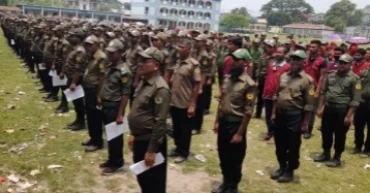
Govt okays procurement of 17,050 shotguns for Ansar and VDP
The government on Tuesday approved a proposal to procure 17,050 shotguns for Ansar and Village Defence Party (VDP) in order to replace their old and outdated firearms.
The decision was taken at the meeting of the Advisers Council Committee on Government Purchase held at the Bangladesh Secretariat.
Finance Adviser Dr Salehuddin Ahmed, who chaired the meeting, told reporters that the existing firearms used by Ansar and VDP have become very old, making replacement essential to ensure operational effectiveness.
“We will procure around 17,000 12-bore shotguns for Ansar and VDP as the existing ones have become very old. The price we are getting is cost-effective and we found the purchase to be economically viable, so it has been approved,” he said.
He noted that the procurement proposal was evaluated on the basis of competitive pricing.
Responding to a query on whether the purchase has any connection to the upcoming national election, Dr Salehuddin said the procurement is not election-related.
“This has nothing to do with the election. It is not an election issue. Ansar has long been in need of updated shotguns and this procurement was overdue,” he stated.
The proposal will now move through detailed scrutiny and procedures under the Cabinet Committee on Government Purchase (CCGP).
According to official sources, the estimated cost of each shotgun has been set at USD 146.
The total expenditure for the procurement is estimated at Tk 35.62 crore.
At a meeting of the Cabinet Committee on Economic Affairs held on November 9, the proposal to procure 17,050 units of 12-bore shotguns for the Bangladesh Ansar and Village Defence Party through the direct purchase method received policy approval.
After inviting proposals under the direct purchase method, four companies submitted bids for supplying the shotguns.
Upon completion of all evaluation procedures and price negotiations, Turkey-based Bay Galatal was recommended as the lowest responsive bidder.
Subsequently, a decision was taken to procure 17,050 units of 12-bore shotguns from the company.
Read more: IMF satisfied with Bangladesh’s reform progress but flags key challenges: Salehuddin
10 months ago
IMF satisfied with Bangladesh’s reform progress but flags key challenges: Salehuddin
Finance Adviser Dr Salehuddin Ahmed on Tuesday (November 18) said the International Monetary Fund (IMF) has expressed satisfaction with Bangladesh’s ongoing economic reforms although reiterated concerns over several structural challenges that require closer attention.
“They said the situation is overall good but they are monitoring the challenges. We are working under a plan but they feel that taking some steps a little faster would bring better outcomes,” he told reporters after meetings of the Advisers Council Committee on Economic Affairs and the Committee on Government Purchase at the Secretariat.
He noted that the IMF is particularly concerned about the speed of policy implementation especially surrounding interest rate adjustments.
“Increasing the policy rate by the central bank cannot be done suddenly. Everyone knows that. We have to ensure supply-side improvements at the same time,” he said.
Dr Salehuddin also mentioned that the IMF has raised issues related to the banking sector.
“They have taken five banks under observation which they consider a major challenge,” he said, adding that the government needs to undertake tough reforms to strengthen financial governance.
On revenue administration, the adviser said the IMF is satisfied with the current progress of the National Board of Revenue (NBR) but expects reforms to continue steadily. “The process has become principled but manpower restructuring and capacity enhancement will take time,” he said.
Read more: Bangladesh’s reserves still remain above $31 billion after ACU payment
He added that while it may not be possible to achieve a complete turnaround within the current government’s tenure substantial groundwork and structural preparations would be completed.
“We may not reach the final conclusion but the logical framework and preparatory work will be done,” he assured.
Responding to a question on whether the IMF has set any new conditions, Dr Salehuddin said no fresh conditions were imposed.
“This was more like a consultation. They expressed satisfaction with the measures we have taken so far. The economic situation is largely under control and the remaining time will be used for consolidation,” he said.
The $4.7 billion IMF loan programme, approved in January 2023, aims to support Bangladesh’s economic stability, strengthen fiscal reforms, and enhance resilience amid global economic pressures.
Several tranches have already been disbursed while further installments remain tied to policy performance benchmarks and structural reforms.
The IMF will delay disbursing the sixth tranche until the next national election and the new elected government assumes office.
Read more: Bangladesh economy in ‘waiting vortex’; experts urge credible elections
The interim government that assumed power on August 8, 2024 three days after the Awami League regime was ousted amid a mass uprising announced that the next general election would be held in February.
Finance ministry officials said that theyare expecting the releases of the sixth and the seventh tranches in June, 2026.
On June 23, the IMF approved the release of the fourth and fifth tranches amounting to $1.3 billion, taking the overall amount of disbursement to $3.6 billion.
In June 2025, the IMF also increased the overall loan amount to $5.5 billion from $4.7 billion under the loan programme that began in 2023 under the AL regime in 2023 to meet the balance of payment shortage.
The progarmme period has also been extended by six months to January 27, 2027 from July 2026, following requests from Dhaka.
The interim government has already reduced the balance of payment pressure.
Driven by higher remittance and export earnings, the country’s gross foreign exchange reserves increased to $32 billion on October 16, the highest in 31 months.
The latest IMF mission is also linked to the Article IV report, an annual consultations with its member countries on overall economy, on Bangladesh.
Read more: Jamaat-e-Islami holds meeting with IMF on economy and tax system
10 months ago
Economy bounces back from brink of collapse: Finance adviser
Finance Adviser Salehuddin Ahmed on Tuesday claimed that the economy of the country has turned around from the verge of collapse.
“I think that this is the beginning to the right direction, we are heading towards right direction,” he told a press conference marking one year of the interim government at the finance ministry.
He said that although the government has been able to solve many issues related to the country's economy, it is not possible for this interim government to solve everything.
“We do not have the magic wand,” he added,
The adviser, a former governor of the central bank, said no country in the world has seen the banking sector plundered like the way it was done during the fallen Awami League regime.
He mentioned that the interim government has taken many steps to rebuild the banking sector of the country.
“I can assure that no deposit will be lost in any banks,” he said.
The adviser also said that the Annual Development Programme (ADP) and budget for the 2025-26 fiscal has been prepared in a pragmatic way leaving out unnecessary projects.
Govt didn’t interfere in ACC probe into NBR officials: Finance Adviser
Salehuddin said the economy of Bangladesh has become stable over the past year, showing more or less satisfactory performance despite challenges in certain areas.
“From what we’ve inherited in August last year, I will say after one year, the country’s economy is more or less satisfactory and it has become stable although there may be different opinion from some people,” he said.
He said the balance of payments, current account and financial account — which were negative during the previous regime — are now on a positive trend.
“Now almost everything is positive like foreign currency reserve, exchange rate,” he noted, adding that the general point-to-point inflation rate has come down below 9 percent from the peak of 14 percent during the Awami League regime.
Acknowledging that revenue generation remains a challenge, Salehuddin said the government is working relentlessly to boost collections by strengthening the manpower of the National Board of Revenue (NBR).
He highlighted the government’s achievements in multiple economic fronts — including the financial sector, banking sector, tax and non-tax revenue, financial institutions, non-bank financial institutions, capital market and the insurance sector.
On the external front, inward remittance flows and export earnings have remained strong over the last year, he said, while noting that not all reforms can be achieved within the short tenure of the interim government.
“Our aim is to build a welfare-oriented state. Short-term reforms are likely to be completed during our tenure, but the mid-term and long-term reforms will be left for the successive elected government,” he said, expressing hope that future governments will retain ongoing “good works” despite any weaknesses.
Addressing concerns about GDP growth, the finance adviser said Bangladesh has never experienced negative growth, unlike countries such as Indonesia and Sri Lanka, and predicted that growth would exceed 5 percent this year.
Conditions of tariff negotiations with US not for public disclosure: Finance Adviser
“On the whole, light is there at the end of the tunnel,” he said, criticising economists who fail to see any positive signs. “By February next year, the country will get an economy which is much better.”
He said efforts are underway to retrieve laundered money from abroad through proper legal procedures, while the government is also working to identify institutional weaknesses and strengthen organisational capacity.
Asked about the draft Bank Resolution Ordinance 2025, he said he has yet to review it.
“We all want the country to progress more. Bangladesh has immense potentials with hard working and intelligent people. We just need to ensure they work with honesty, integrity and sincerity,” Salehuddin said.
Special Assistant to the Chief Adviser Anisuzzaman Chowdhury, Finance Division Secretary Md Khairuzzaman Mozumder, NBR Chairman Md Abdur Rahman Khan, ERD Secretary Md Shahriar Kader Siddiky and Financial Institutions Division Secretary Nazma Mobarek were present.
Anisuzzaman said Bangladesh is the only country in the world where inflation has declined while GDP growth remained positive.
Finance Division secretary said the external sector has performed well over the last year, with the taka gaining strength.
NBR Chairman Abdur Rahman Khan said the revenue board aims to create awareness among taxpayers about the consequences of submitting false information in returns, rather than instilling fear.
1 year ago

People first, not mega projects: Interim govt unveils first national budget
Finance Adviser Salehuddin Ahmed on Monday unveiled the budget proposals of the interim government for the FY2025-26, focusing on taming the inflation and setting the economic growth target at a modest 5.5% in reflecting a policy of pragmatism and prioritising people over mega infrastructure.
Salehuddin took to the state-run BTV to announce the proposed budget of Tk7.90 lakh crore which he described as “exceptional” as the first time the size of a budget has been smaller than the one for the outgoing fiscal year’s (2024-25) outlay of Tk7,97000 crore. It’s the first in Bangladesh history.
The budget proposals were approved by the Advisory Council at a special meeting chaired by Chief Adviser Prof Muhammad Yunus before President Mohammed Shahabuddin signed the documents.
This is the 55th national budget of the country, but first for the interim government that took over after the ouster of former Prime Minister Sheikh Hasina’s government in last year’s July-August upsurge.
In describing the proposed budget “exceptional”, the finance adviser acknowledged, “For the first time in the country's history, we are proposing a smaller budget for the next fiscal year than the budget of FY2024-25.”
“Moving away from a growth-centric concept, we have tried to emphasise the concept of holistic development," said Salehuddin.
In his budget speech, the adviser made no efforts to hide the challenges face by the interim government.
Considering the realities, he projected GDP growth rate at a modest 5.5%, while containing the inflation at 6.5%. in FY26.
He expressed satisfaction in the gradual reduction in the rate of inflation since the Yunus-led government took office last year.
TIB comes down hard on govt for retaining black money whitening provision
He said the point-to-point inflation came down to 9.1% in April this year from point-to-point inflation in December last year. It is expected to go gown to 8% by this month.
Salehuddin explained that the interim government had to face the hard challenges of containing high inflation, rebuilding a near collapsed economy, controlling the labour unrest and keep the industries running, fighting the unbridled corruption of the past regime and revenging the banking system from crisis.
“We have made encouraging progress in our efforts,” he said adding, “But there are still challenges ahead in restoring the economy to normalcy.”
The finance adviser, who served as the governor of the central bank, made efforts to cut the cloth according to the size. But he did not shy away from taking care of the needs in vital sectors like education, healthcare, good governance, civic services and employment generation.
In spite of the limitations, he gave priority to the needs of the people over infrastructure.
He pointed out that the size of the proposed budget is smaller largely because it has prioritise people over infrastructure. Unnecessary mega projects have been cut to save money to be spent on public welfare.
“Instead of merely highlighting physical infrastructure development, this time we are giving priority to people," he said.
The proposed budget, he said, focused on improving people’s living standard and guaranteeing fundamental rights along with creating an equitable and just society.
"Without these critical elements, a state becomes dysfunctional and the foundation of society weakens," the adviser said.
The proposed budget places special emphasis on education, healthcare, good governance, civic services and employment generation, he said.
Real estate route remains open in budget for legalising black money
In the proposed budget, Salehuddin took note of the global realities, the country’s graduation to the middle-income economy by next year, the climate change issues, energy and food security, in some cases making increased allocation.
1 year ago

No immediate power price hike, assures Finance Adviser
Finance Adviser Salehuddin Ahmed on Monday said the government has decided not to raise electricity prices for the time being to give people relief considering the prevailing high inflation.
“It is very important to ensure adequate supply of energy and at the same time keep it as affordable as possible to improve the quality of life of citizens and keep the economy running. In principle, we have decided not to increase the price of electricity for the time being in the context of the prevailing high inflation,” he said while presenting the national budget for the fiscal year 2025–26.
At present, Salehuddin said, the amount of subsidies given in the power sector is about 1 percent of GDP, which is very high.
To reduce this gradually, he said, a plan has been taken to reduce the overall cost of power generation by 10 percent.
Bangladesh unlikely to get electricity from Rooppur nuke plant before 2026
The adviser said if this plan can be implemented, it is estimated that the cost of electricity subsidy of more than Tk 11,000 crore will be saved.
“We are reviewing the power purchase agreements and have taken the initiative to conduct energy audits to reduce the cost of power generation,” he said.
Salehuddin said a plan has been made to supply 648 million cubic feet of gas from domestic sources within this year and to extract an additional 1500 million cubic feet gas from local wells by 2028.
Bangladesh to receive 40MW electricity from Nepal for 5 months
“Keeping these targets in mind, emphasis has been laid on increasing the capacity of the local gas exploration company BAPEX and necessary funds have been allocated for this,” he said.
1 year ago

Budget allocates Tk 405cr for July Uprising martyrs, injured
The interim government has proposed an allocation of Tk 405.20 crore for the families of martyrs and those injured in the July Uprising in the national budget for the 2025–26 fiscal year.
Finance Adviser Salehuddin Ahmed unveiled the proposed national budget of Tk 7.90 lakh crore, marking his first budget presentation since his tenure as a central bank governor nearly a decade and a half ago.
While addressing the allocation, Salehuddin Ahmed said fund is aimed at preserving the memory and history of the July Uprising, rehabilitating injured students and civilians, and institutionalising the ideals and spirit of the movement within national life.
He mentioned that the Department of July Uprising has already been established and initiatives are underway to transform Gonobhaban into the July Uprising Memorial Museum.
Budget prioritises people over infrastructure: Finance Adviser
The finance adviser also confirmed that a policy guideline will soon be formulated to initiate the disbursement of allowances for the affected families. Efforts are currently in progress to ensure proper treatment and rehabilitation for the injured.
In his budget speech, Salehuddin Ahmed explained that this year’s budget size was deliberately kept restrained to reflect economic realities, with a focus on reducing the fiscal deficit. The new budget attempts to provide some relief to lower-income groups amid ongoing political unrest, he added.
1 year ago

Budget prioritises people over infrastructure: Finance Adviser
Finance Adviser Salehuddin Ahmed on Monday said the proposed Tk 790,000 crore national budget for the fiscal year 2025–26 was formulated with a focus on prioritising people over infrastructure.
“For the first time, we are proposing a budget that is smaller than the previous one. Instead of merely highlighting physical infrastructure development, this time we are giving priority to people,” said Salehuddin while unveiling the proposed budget for 2025–26 in a televised speech.
He emphasised that guaranteeing fundamental rights, ensuring a decent standard of living, securing livelihoods, and creating an equitable environment are essential to building an effective state and a strong society.
“Without these critical elements, a state becomes dysfunctional and the foundation of society weakens,” the adviser said.
The proposed budget places special emphasis on education, healthcare, good governance, civic services and employment generation, he said.
Besides, the budget addresses emerging global realities, including the Fourth Industrial Revolution, Bangladesh’s graduation from the LDC category, and the opportunities and challenges posed by climate change.
“We aim to harness new opportunities and tackle upcoming challenges to ensure sustainable development,” Salehuddin added.
Finance Adviser starts unveiling national budget
The Finance Adviser started the presentation of the Tk 790,000 crore national budget for the 2025–26 fiscal year, which begins in July 1.
This is the first time Salehuddin, a former central bank governor, has presented the national budget, as well as the first budget presented by the interim government led by Prof Muhammad Yunus.
Council of Advisers approves revised and proposed budgets
1 year ago