Air India crash
India orders Boeing aircraft checks after deadly Air India crash
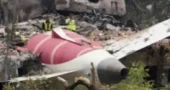
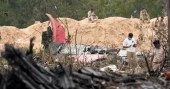
India’s aviation regulator has instructed airlines to inspect specific Boeing aircraft models following last month’s deadly Air India crash which killed 260 people.
On Monday, the Directorate General of Civil Aviation (DGCA) directed all carriers operating Boeing 787 Dreamliners and certain Boeing 737 variants to examine their fuel control switches. Airlines must complete inspections and report their findings by July 21.
The order comes after a preliminary investigation into the June 12 crash near Ahmedabad found both engines were deprived of fuel when the switches were flipped off almost simultaneously. The report, released last week, did not clarify how or why the switches moved from the “run” to the “cutoff” position mid-flight.
Fuel to Air India plane was cut off moments before crash, report says
The switches regulate fuel flow to the engines. The aircraft, a Boeing 787-8 Dreamliner, crashed shortly after takeoff, killing 241 of the 242 people onboard and 19 on the ground.
Investigators cited a 2018 U.S. Federal Aviation Administration advisory that recommended checking the locking mechanism of these switches on Boeing planes.
Cockpit audio recordings revealed a moment of confusion between the pilots, with one asking why the fuel had been cut. The other denied taking such action.
Some Indian aviation experts have suggested pilot error, though pilot unions strongly rejected such claims. The Indian Commercial Pilots’ Association condemned “reckless and unfounded” speculation, including theories of pilot suicide.
Air India CEO Campbell Wilson said the probe found no mechanical or maintenance faults with the aircraft. In a memo to staff, he noted the aircraft had passed all mandatory maintenance and safety checks, and the pilots were medically cleared.
Following the crash, Indian authorities ordered comprehensive checks of all 33 Dreamliners in Air India’s fleet.
1 year ago
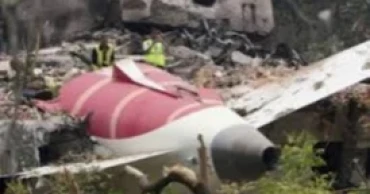
Fuel supply was cut just before Air India crash, preliminary report reveals
A preliminary investigation into last month’s Air India crash has revealed that the fuel control switches for both engines were moved from the “run” to the “cutoff” position moments before the aircraft went down, cutting off fuel and leading to engine failure.
According to the report from India’s Aircraft Accident Investigation Bureau, this change in switch position — which occurred shortly after takeoff — caused the engines to lose thrust. The report also suggested that the pilots were confused by the switch change.
Death toll in India plane crash rises to 270 as more bodies recovered
The crash involved a Boeing 787-8 Dreamliner on June 12 in Ahmedabad, killing at least 260 people, including 19 on the ground. Only one passenger survived, making it one of the deadliest air disasters in India’s history.
The aircraft was carrying 230 passengers — including 169 Indians, 53 British nationals, seven Portuguese citizens, and one Canadian — along with 12 crew members.
Investigators reported that the flight lasted only about 30 seconds. After reaching its peak recorded speed, the fuel cutoff switches for both engines were flipped from “run” to “cutoff” within a second of each other. The report does not clarify how or why this occurred mid-flight.
These switches control the flow of fuel to the engines, and moving them to the “cutoff” position effectively starves the engines of fuel. Although they were returned to the “run” position, the engines could not recover power in time to prevent the crash.
A distress call of “MAYDAY MAYDAY MAYDAY” was recorded from one of the pilots, the report stated. Cockpit voice recordings also captured a moment of confusion, with one pilot asking the other why the fuel had been cut off — to which the other pilot replied that he had not done it.
The report, still in its preliminary stage, does not suggest any corrective actions for Boeing.
Air India has stated it is cooperating fully with investigators. “We are working with all relevant authorities and will continue to support the ongoing investigation,” the airline said in a statement.
Black boxes, which include cockpit voice and flight data recordings, were recovered shortly after the crash and analyzed in India.
In response to the incident, Indian aviation authorities have mandated additional inspections of Air India’s fleet of 33 Boeing 787 Dreamliners to ensure safety going forward.
1 year ago
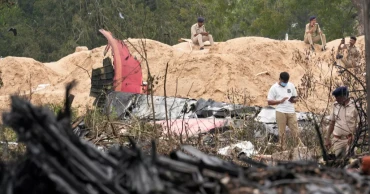
India orders safety checks on Air India Boeing Dreamliners after crash
India’s aviation regulator has ordered sweeping safety inspections on all Boeing Dreamliner aircraft operated by Air India, following a devastating crash in Ahmedabad that claimed the lives of at least 265 people.
The incident, involving a Boeing 787 aircraft on the Ahmedabad–London route, has cast a fresh spotlight on the safety of the American-made Dreamliners.
The Directorate General of Civil Aviation (DGCA) announced that beginning Sunday, 15 June, all aircraft under Air India’s Boeing 787-8 and 787-9 fleet will undergo an “enhanced safety inspection.”
The measures come amid mounting public concern and technical scrutiny of the aircraft’s reliability.
The DGCA directive outlines a range of mandatory inspections, focusing on critical flight and engine systems. These include:
Monitoring of fuel parameters and associated systems
Inspection of the cabin air compressor system
Testing of the electronic engine control system
Operational test of engine fuel-driven actuators and oil systems
Serviceability checks of the hydraulic systems
Review of aircraft take-off parameters
Besides, power assurance checks are to be carried out within two weeks, while a new ‘Flight Control Inspection’ protocol will be introduced. The aviation body has also directed an immediate review of all repetitive snags reported in Dreamliner operations over the past 15 days. Maintenance teams have been instructed to resolve these issues as a matter of urgency.
Air India's sole crash survivor narrates his escape
This series of actions follows the fatal crash of Air India Flight 171, which slammed into a residential hostel for doctors shortly after take-off from Ahmedabad’s Sardar Vallabhbhai Patel International Airport. Of the passengers and crew on board, only one person survived, marking the first fatal accident involving a Boeing 787 since the aircraft entered commercial service in 2011.
The aircraft involved was powered by General Electric’s GenX engines, which will now be subject to additional checks as part of the safety campaign.
While the cause of the crash remains under investigation, the spotlight has inevitably returned to long-standing concerns about the Dreamliner’s structural integrity. In 2024, a Boeing engineer raised alarms over potential issues in the aircraft’s design and manufacturing, but no direct link has yet been established between those warnings and the recent Air India disaster.
In a brief statement, Boeing said it is "in contact with Air India regarding Flight 171" and that it "stands ready to support them" through the ongoing investigation and inspection process.
The Civil Aviation Ministry has assured the public that safety remains the paramount priority, and it will review all inspection reports submitted by Air India as part of its regulatory oversight.
As the aviation community awaits the findings of the crash probe, the incident has reignited debate about Boeing’s quality control processes and Air India’s maintenance standards, at a time when both the airline and the manufacturer are under increasing global scrutiny.
Source: With inputs from India today
1 year ago
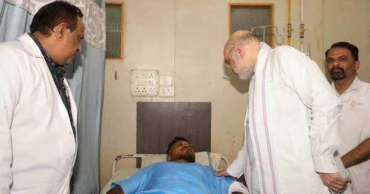
Air India's sole crash survivor narrates his escape
The lone passenger who survived the Air India crash that killed 241 people onboard couldn’t believe he was alive when he opened his eyes, surrounded by flames, debris and charred bodies.
The British national of Indian origin, Vishwashkumar Ramesh, was headed to London when the flight crashed minutes after taking off from India’s northwestern city of Ahmedabad on Thursday afternoon.
It was one of India’s worst aviation disasters and the first crash for a Boeing 787-8 Dreamliner since the widebody, twin-engine planes went into service in 2009, according to the Aviation Safety Network database.
Currently admitted in a local government hospital, Ramesh narrated his ordeal to India’s national broadcaster, saying the aircraft seemed stuck midair within a few seconds of the takeoff.
He said green and white lights came on, and right after that, the aircraft accelerated but seemed unable to gain height before it crashed.
Seated in 11A, Ramesh said his side of the plane fell onto the ground floor of a building, and there was space for him to escape after the door broke open. He unfastened his seat belt and forced himself out of the plane.
“When I opened my eyes, I realized I was alive,” he said.
At least 290 killed in Air India crash
Ramesh sustained burn injuries on his left hand and walked some distance in shock before he was assisted by the locals and taken to the hospital in an ambulance.
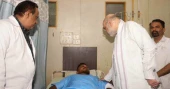
Prime Minister Narendra Modi, who visited the crash side on Friday, met the lone survivor.
“I told Modi what all I had witnessed. He also enquired about my health,” Ramesh said from his hospital bed.
Dr Dhaval Gameti, who treated him, said he was disoriented with multiple injuries all over his body but seems to be out of danger.
Ramesh, who had his boarding pass with him in the hospital, said he saw several passengers and crew members losing their lives and parts of the plane strewn around the crash site.
Ramesh was traveling with his brother and called relatives in Leicester after the crash, his cousin, Ajay Valgi, told the BBC. He has a wife and “little boy” at home.
“He only said that he’s fine, nothing else,” Valgi said, adding that the family is “happy that he’s OK, but we’re still upset about the other brother.”
Ramesh’s brother, Nayan Kumar Ramesh, told Sky News that his brother called his father moments after the crash to say he had survived.
“He video called my dad as he crashed and said, ‘Oh the plane’s crashed. I don’t know where my brother is. I don’t see any other passengers. I don’t know how I’m alive, how I exited the plane’,” he told Sky.
1 year ago
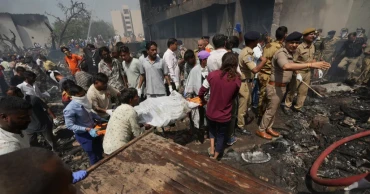
Air India Crash: One survivor found as 241 feared dead
In one of India’s worst aviation disasters, an Air India Boeing 787-8 Dreamliner carrying 242 people crashed shortly after takeoff from Ahmedabad airport on Thursday, leaving 241 feared dead.
Authorities confirmed that a single passenger has miraculously survived the crash and is undergoing treatment in hospital.
According to Ahmedabad Police Commissioner GS Malik, the lone survivor was seated in 11A and is currently receiving medical care. “One survivor has been found in the hospital and is under treatment. We cannot confirm the final death toll yet, as rescue operations are still ongoing,” he told ANI.
According to BBC, Ahmedabad's police chief said that 204 bodies have been recovered from the crash site.
A look at Boeing's recent troubles after Air India crash
It's not known if all 204 were on the plane, or if some were on the ground when the plane crashed.
The ill-fated Flight 171 was en route to London’s Gatwick Airport with 232 passengers and 10 crew members on board, including 53 British nationals and 11 children.
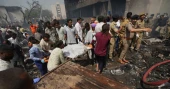
The aircraft crashed into a residential building in the city’s outskirts and burst into flames, sending plumes of thick smoke over the densely populated area.
1 year ago
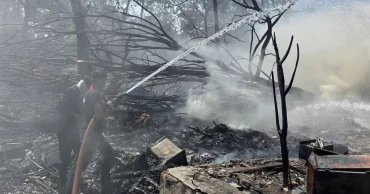
All flights suspended at Ahmedabad Airport following Air India crash
Ahmedabad’s Sardar Vallabhbhai Patel International Airport is currently non-operational, with all flight operations suspended until further notice, a spokesperson confirmed today.
The suspension follows a tragic incident involving Air India Flight AI171, which was travelling from Ahmedabad to London Gatwick. The aircraft, carrying 242 people on board, crashed shortly after take-off from Ahmedabad in western India.
According to Air India, the flight included 169 Indian nationals, 53 Britons, one Canadian national, and seven Portuguese nationals.
Air India’s London-bound flight crashes near Ahmedabad Airport, with 242 on board
Flight tracking website Flightradar24 reported that the last signal from the aircraft was received at an altitude of 625 feet (190 metres), “just seconds after take off.”
Eyewitness videos from the area show black smoke rising over a nearby residential neighbourhood, adding to concerns over the severity of the crash.
Authorities have yet to release further details regarding the cause of the accident or the condition of those on board. Emergency response teams are currently at the scene.
Source: BBC
1 year ago