persistent inflation
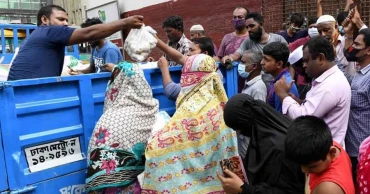
Bangladesh households reel under persistent inflation
Despite a recent marginal dip in the national inflation rate, persistently high prices continue to inflict significant hardship on lower and middle-income households across Bangladesh, severely eroding their purchasing power and forcing many to seek alternative income sources.
The prolonged period of soaring costs has made every essential purchase a test of resilience for families whose incomes often struggle to keep pace with the rising cost of living.
Kawser Mia, a private sector employee in Tejgaon, exemplifies the escalating financial strain. In 2016, he borrowed Tk10 lakh from a bank at an 8 percent interest rate to repair his village home in Mirzapur, Tangail. Today, his loan installment has surged to a daunting 15 percent interest, nearly double the original rate.
"The loan installment has increased severely, now consuming around 65 percent of my salary," Kawser lamented. "It was flexible when I first borrowed, but now it has become very burdensome."
To cope with the drastically increased payment and other family expenditures, Kawser has been forced to work as a street vendor after his regular job.
Govt identifies persistent inflation as top challenge in medium-term outlook
He, like many others, finds himself in distress due to the impact of inflation adjustments in the banking system, which have led to higher interest rates for consumers. This situation has driven many middle and low-income individuals to seek additional employment, with some turning to street vending in Dhaka and other cities.
Inflation's Broad Impact
SM Nazer Hossain, vice president of the Consumers Association of Bangladesh (CAB), told UNB that inflation has adversely affected the living standards of both service holders and farmers in urban and rural areas. Despite CAB's efforts to advocate for lower consumer goods prices, food costs remain elevated, often attributed to hefty production expenses.
Hossain highlighted the unexpected rise in rice prices immediately after the Boro season, noting that many large companies are now engaged in rice trading, selling packaged rice for over Tk100 per kg.
"This profit encourages big companies to buy paddy from farmers at lucrative offers at the village level," Nazer Hossain explained.
"Once they complete paddy collection, the rice price jumps to Tk80-90 per kg. Fine quality rice is not less than Tk88 per kg in Dhaka, severely impacting consumers' purchasing power."
Data Reflects Sustained Pressure
The Bangladesh Bureau of Statistics (BBS) reported a national point-to-point inflation rate of 9.05 percent for May, with food inflation at 8.59 percent and non-food inflation at 9.42 percent. While these figures indicate a marginal improvement from previous months, the 12-month moving average inflation rate, which stood at a high 10.13 percent from June 2024 to May 2025, paints a clearer picture of the sustained pressure on household budgets over the past year.
For millions of Bangladeshis, this persistently high inflation means a drastic erosion of their purchasing power. Daily wage earners, small business owners, and fixed-income employees are finding it increasingly difficult to afford basic necessities. Food, a significant portion of their expenditure, remains a major concern even with the slight dip in food inflation, compelling families to compromise on the quantity and nutritional quality of their meals, impacting their health and well-being.
All instruments positive, inflation likely to fall ahead of schedule: Governor
"Every trip to the market feels like a heavier burden," shared Rahela Banu, a garment factory worker from Mirpur, echoing a widely felt sentiment. "Prices for rice, oil, vegetables – everything keeps going up, but our salaries don't increase at the same rate. We have to cut back on so many things just to put food on the table."
Experts Point to Delayed Measures and Poverty Increase
Professor Mustafizur Rahman, a distinguished fellow at the Centre for Policy Dialogue (CPD), told UNB that the purchasing power of fixed-income groups has been severely affected by the long-prevailing high inflation.
"The government took measures to reduce inflation, but the inflation is reducing at a very slow pace, as the measures were taken late," he added.
As a direct consequence, the rate of poverty has reportedly increased in both urban and rural areas, and protein consumption has remarkably decreased among lower and fixed-income groups, affecting their overall health and nutrition.
The financial distress is further compounded by the fact that wage growth, while showing some increases (the national point-to-point wage rate increased to 8.21 percent in May 2025), is often outstripped by the rate of price increases. This widening gap between earnings and expenses puts immense pressure on household budgets.
Middle-income families, often burdened by housing rent, children's education, and healthcare costs, are also feeling the pinch. Many are resorting to dipping into savings, taking on debt, or delaying significant life purchases. The burden extends beyond food, as soaring costs for transportation, utilities, and healthcare add additional strain, making even a simple illness a potential financial crisis.
1 year ago

Govt identifies persistent inflation as top challenge in medium-term outlook
The government has identified inflation as the foremost challenge for the economy in the coming days, like it has been for over two years now.
“Recognizing the challenge of high inflationary pressures, a tight monetary policy stance has been adopted and contractionary fiscal policies are being pursued, with deliberate efforts to restrain aggregate demand and accommodate a moderate growth trajectory in the short run,” Ministry of Finance said in its Medium Term Macroeconomic Policy Statement (MTMPS).
It said that amid a rapidly evolving global landscape and domestic challenges, Bangladesh has adopted a moderate growth path in the short term, with a focus on transitioning to a robust and sustained trajectory in the medium-term.
Thus, the MTMPS mentioned that the government is pursuing a balanced and pragmatic macroeconomic policy mix that can safeguard economic stability and support future growth.
To reduce cost-push inflation, the government has adjusted customs duties and extended targeted tax exemptions on essential food items with an aim to lower import costs and help stabilize domestic prices.
Govt now focused on laying strong foundation of economy: Finance Adviser
The document said that the government has also prioritized promoting fair competition, strengthening institutional governance and oversight mechanisms for price stability.
“To mitigate potential crises and ensure food security, the government is placing greater emphasis on sustaining and enhancing agricultural productivity, while actively procuring food grains from domestic sources to meet procurement targets and importing from international markets to stabilize prices and ensure adequate market supply,” it said.
Concurrently, the Finance Ministry document mentions that measures are being taken to support industrial productivity by addressing labour unrest and maintaining stability in key industries.
“Social protection initiatives will continue through subsidized sales of essential commodities and the expansion of safety net programs to shield vulnerable populations from the adverse impacts of inflation.”
While controlling inflation remains the highest priority, the MTMPS said that prudent fiscal management supported by selective expenditure rationalization is also underway, including the postponement and avoidance of less priority projects in the Annual Development Programme (ADP).
The document also says that the government is moving forward with the separation of revenue policy and administration for designing effective, fair and growth-friendly tax policies along with greater accountability, transparency and enhanced efficiency.
At the same time, a Medium- and Long-Term Revenue Strategy (MLTRS) has been adopted to enhance revenue Mobilisation.
“To raise both domestic and foreign investment with the aim of higher productivity and job creation, efforts are underway to promote a business-friendly environment through policy reforms, infrastructure development, and streamlined regulatory processes.”
While private sector credit growth remains modest, efforts are underway to stimulate lending activities to support future investment and economic expansion.
To strengthen external sector resilience, measures are being taken to boost export competitiveness and diversify products and markets considering the ongoing global challenges while ensuring a more prudent and demand-sensitive approach to import management.
To contain inflation, Bangladesh Bank has adopted a tight monetary stance by raising the policy rate to 10 percent and maintaining it, as inflationary pressures have yet to ease to a comfortable level. In addition, in coordination with the central bank, the government remains committed to maintaining a stable and market-based exchange rate regime to support external sector stability and bolster foreign exchange reserves.
Bangladesh’s economy is poised to transition to a more robust growth trajectory in the medium-term, following a period of subdued performance amid evolving global and domestic challenges.
The Finance Ministry document said that the real GDP growth is projected to increase from 5.0% in FY25 to between 5.5%-6.5% during FY26–FY28, while average inflation is expected to ease from 9.0% to a range of 6.5%–5.5% over the same period.
“With inflation control as the top priority, tight monetary and contractionary fiscal policies will remain in place until inflationary pressures ease. The policy rate has been raised to 10%, and the ADP allocation for FY26 has been restrained to support demand management.”
It said that the recent improvements in export earnings and remittance inflows enhance external sector resilience and support broader macroeconomic stability.
The general point-to-point inflation rate in the country eased further in May, 2025 as it fell slightly to reach 9.05 percent down from 9.17 percent in April, 2025.
According to the latest data from the Bangladesh Bureau of Statistics (BBS), the slight decline was mainly driven by downtrend in both food and in non-food inflation.
In May 2025, the point-to-point food inflation declined to 8.59 percent, down from 8.63 percent in April, 2025 the BBS data showed.
Meanwhile, the non-food inflation rate also showed a slight decline reaching 9.42 percent in May, 2025 down from 9.61 percent in April, 2025.
The point-to-point inflation rate declined in both the rural and urban areas last month.
The interim government’s fiscal year 2025‑26 budget, presented on June 2, prioritises inflation control, setting the average inflation target at 6.5 percent and emphasizing tighter monetary and fiscal policy coordination.
1 year ago