Socotra
Yemeni Island Socotra: The Most Alien-Looking Place On Earth Drawing Global Wanderers
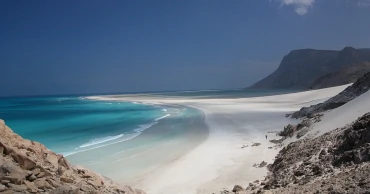
Strange, contorted trees stretch toward a sky so vast it feels unworldly. Bare, jagged cliffs rise from a stark, wind-blasted terrain that seems untouched by time or civilisation. Crystalline waters border bizarre landforms, creating a surreal contrast. Among the world’s many awe-inspiring locations, from Africa’s endless sands to North America’s ancient canyons. Few evoke such profound disbelief as this remote island. Long whispered about in niche travel circles, it now draws increasing global attention. The name? Socotra, locally known as Saqatri. Let’s uncover what's behind this alien-looking island in the Indian Ocean that draws modern explorers.
Geography of Socotra
Tucked between the Guardafui Channel and the Arabian Sea, Socotra forms the largest island in a six-island archipelago. While it falls under Yemen's political boundary, its proximity to Africa gives it a different geographic rhythm. Just 236 miles south of the Arabian Peninsula, this closeness shapes its distinct character.
This remote outpost stands among the most isolated continental landmasses on Earth. It parted ways with the ancient supercontinent of Gondwana millions of years ago. That deep-time isolation shaped its singular environment.
Read more: Chongqing, The 3D City: Chinese Megacity Looking Like AI-Generated
The island is renowned for its extraordinary biodiversity. Many species found here exist nowhere else on the planet, drawing scientific and ecological interest from across the globe. This exceptional natural wealth earned it UNESCO World Heritage status in 2008, marking it as a vital ecological treasure.
Unique Landscape and Discrete Demography
The distinctiveness of this ancient island lies in its terrain, with Socotra shaped over millennia by time, climate, and isolation. Towering limestone plateaus stretch across the island, rising above arid plains and wind-carved dunes. At the heart of it all, a central mountain range climbs to nearly 5,000 feet. It offers an imposing backdrop to an otherwise barren interior. The terrain breaks into elevations that shift with the landscape. Dry mountains and scattered vegetation tell a stark story of nature’s endurance.
This archipelago, over 25 million years old, balances contrasting features- coastal plains brushing against desert stretches, and rocky plateaus giving way to shrub-covered slopes. But what sets Socotra apart is its inimitable biological character. Nearly one-third of its plant species are endemic, including the most iconic locale- the Dragon’s Blood Tree. This umbrella-shaped marvel, known for its crimson resin, casts haunting silhouettes throughout the horizon, lending the landmass its surreal, alien quality.
Read more: Wales’s Stream in the Sky: World’s Tallest Navigable Aqueduct Pontcysyllte
Despite its remoteness, Socotra is home to a modest community of approximately 60,000 people. The Socotrans speak Soqotri, a pre-Arabic language that survives only here. Their cultural fabric, enriched by centuries of isolation, is preserved through an annual poetry competition.
1 year ago