Israel-Iran conflict
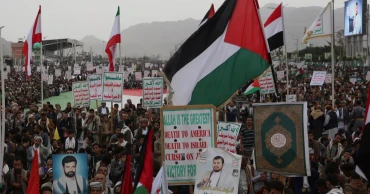
Israel strikes Houthis in Yemen; rebels fire missile back
Israel carried out airstrikes early Monday targeting ports and facilities held by Yemen’s Houthi rebels, prompting the group to retaliate with missile fire aimed at Israel, officials said.
The escalation follows an attack Sunday on the Liberian-flagged bulk carrier Magic Seas in the Red Sea, which caught fire and took on water, eventually forcing its crew to abandon the vessel.
The Magic Seas, owned by Greek interests, was reportedly struck by bomb-laden drone boats after an initial assault involving small arms fire and rocket-propelled grenades. Although Houthi media reported on the incident, the rebels have yet to claim responsibility. Their confirmation of attacks often comes hours or days later.
A renewed Houthi campaign against shipping in the Red Sea could draw US and Western forces back into the conflict, especially after President Donald Trump launched a major airstrike campaign against the rebels earlier this year.
The attack also comes amid heightened tensions in the Middle East, as negotiations for a ceasefire in the Israel-Hamas war remain uncertain and Iran considers whether to resume nuclear talks following recent American airstrikes on its nuclear sites. Israeli Prime Minister Benjamin Netanyahu is also traveling to Washington to meet with Trump.
Israel strikes Houthi-held ports and seized ship
The Israeli military confirmed that it had struck ports under Houthi control, including Hodeida, Ras Isa, Salif, and the Ras Kanatib power plant.
“These ports are used by the Houthi terrorist regime to transfer weapons from the Iranian regime, which is employed to carry out terrorist operations against the state of Israel and its allies,” the Israeli military said.
Israel also targeted the Galaxy Leader, a vehicle-carrying ship seized by the Houthis in November 2023 at the start of their Red Sea attacks linked to the Israel-Hamas war.
“Houthi forces installed a radar system on the ship and have been using it to track vessels in the international maritime arena to facilitate further terrorist activities,” the Israeli military said.
The Galaxy Leader, which sails under a Bahamian flag, is linked to an Israeli billionaire. No Israelis were on board at the time of its seizure, and the ship was operated by Japanese firm NYK Line.
The Houthis acknowledged Israel's strikes but did not provide details on the damage. Rebel military spokesperson Brig. Gen. Yahya Saree claimed that Houthi air defenses “effectively confronted” the Israeli attacks, though no evidence was provided.
Israel has launched multiple strikes on Houthi targets in Yemen, including a naval strike last month. While both Israel and the United States have targeted Houthi-controlled ports in the past — including a US strike in April that killed 74 people — Israel is now operating independently as the rebels continue to target Israel with missiles.
Israeli Defense Minister Israel Katz warned of more strikes if Houthi attacks continue.
“What’s true for Iran is true for Yemen,” Katz said. “Anyone who raises a hand against Israel will have it cut off. The Houthis will continue to pay a heavy price for their actions.”
Turkey sends firefighting planes to Syria as raging wildfires devastate border regions
Houthis retaliate with missile strike on Israel
Following the Israeli strikes, the Houthis fired a missile at Israel. The Israeli military said it attempted to intercept the missile, but it appeared to make impact. No casualties or significant damage were immediately reported. Sirens were activated in the West Bank and along the Dead Sea.
Crew abandons stricken vessel after Houthi attack
The attack on the Magic Seas, which was en route to Egypt's Suez Canal, occurred about 100 kilometers southwest of Hodeida, a port city under Houthi control.
According to the UK’s Maritime Trade Operations center, an armed security team aboard the ship initially repelled gunfire and rocket-propelled grenade attacks. However, the vessel was later hit by additional projectiles.
Private maritime security firm Ambrey said eight skiffs attacked the vessel before bomb-laden drone boats struck it. Two drone boats reportedly hit the ship, while armed guards destroyed two others.
The Maritime Trade Operations center confirmed that the ship was taking on water and its crew abandoned it. They were rescued by a passing vessel.
The U.S. Navy’s 5th Fleet referred questions to Central Command, which acknowledged awareness of the incident but provided no further details.
Yemen's exiled government blamed the Houthis for the attack.
“The attack also proves once again that the Houthis are merely a front for an Iranian scheme using Yemen as a platform to undermine regional and global stability, at a time when Tehran continues to arm the militia and provide it with military technology, including missiles, aircraft, drones, and sea mines,” Yemen’s Information Minister Moammar al-Eryani said on social media platform X.
The ship’s owners have not commented on the incident.
Houthi campaign linked to Israel-Hamas conflict
The Houthis have repeatedly launched missile and drone attacks on commercial and military vessels in the Red Sea in response to Israel’s military operations in Gaza.
The group’s al-Masirah satellite channel acknowledged the latest ship attack but provided no further comment. Ambrey noted that the Magic Seas fits the Houthis’ typical target profile but did not elaborate.
Between November 2023 and January 2025, the Houthis have attacked over 100 merchant ships using missiles and drones, sinking two vessels and killing four sailors. Their campaign has severely disrupted Red Sea trade, through which $1 trillion in goods normally passes each year.
While Red Sea shipping has recently increased, the Houthis had paused maritime attacks until the US launched airstrikes against them in March. That campaign ended weeks later, though the Houthis have continued occasional missile attacks on Israel.
On Sunday, the Houthis claimed to have launched another missile toward Israel, which the Israeli military said it successfully intercepted.
1 year ago
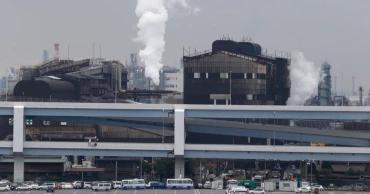
Israel-Iran war exposes Asia’s Middle East energy dependence
The recent conflict between Israel and Iran has underscored Asia's heavy dependence on oil and gas from the Middle East, exposing the region to potential energy supply disruptions, experts say.
The Strait of Hormuz, which borders Iran, is a critical chokepoint for global energy shipments, handling roughly 20% of the world’s oil and liquefied natural gas (LNG) trade. Four Asian countries — China, India, Japan, and South Korea — account for 75% of these imports, according to research by Zero Carbon Analytics, as reported by AP.
Japan and South Korea are considered the most vulnerable, followed by India and China, largely due to their slower transition to renewable energy sources.
In 2023, renewable energy accounted for just 9% of South Korea's electricity mix, far below the 33% average among member countries of the Organization for Economic Cooperation and Development (OECD). Japan, meanwhile, remains the most reliant on fossil fuels among the Group of Seven (G7) nations.
Although a truce appears to be holding after the recent 12-day Israel-Iran war, analysts say the only long-term solution for Asia is to accelerate the transition to clean, domestic energy sources.
“These are very real risks that countries should be alive to - and should be thinking about in terms of their energy and economic security,” said Murray Worthy, a research analyst at Zero Carbon Analytics.
Japan, South Korea most at risk
While China and India are the largest importers of oil and LNG passing through the Strait of Hormuz, Japan and South Korea face greater vulnerability due to their higher dependency on imported fossil fuels. Japan imports 87% of its total energy needs, and South Korea 81%, compared to 20% for China and 35% for India, according to the global energy think tank Ember.
“When you bring that together — the share of energy coming through the strait and how much oil and gas they rely on — that’s where you see Japan really rise to the top in terms of vulnerability,” Worthy explained.
Three-quarters of Japan’s oil imports and over 70% of South Korea’s oil imports, along with about a fifth of its LNG, pass through the strait, said Sam Reynolds of the Institute for Energy Economics and Financial Analysis (IEEFA). Both countries have focused more on diversifying their fossil fuel supply chains rather than transitioning to renewable energy.
Japan plans to rely on fossil fuels for 30-40% of its energy mix by 2040, with ongoing construction of new LNG facilities. South Korea plans to reduce LNG's share in its electricity generation from 28% today to 25.1% by 2030, and further down to 10.6% by 2038.
However, experts say both countries need to dramatically ramp up renewable energy capacity to meet their 2050 net-zero targets. Think tank Agora Energiewende estimates Japan must add 9 gigawatts of solar power and 5 gigawatts of wind power annually by 2030, while South Korea requires similar solar capacity growth and an additional 6 gigawatts of wind power each year.
Japan’s energy policies remain inconsistent, with continued subsidies for gasoline and diesel, increased LNG import plans, and support for overseas oil and gas projects. Regulatory hurdles have also slowed offshore wind development.
“Has Japan done enough? No, they haven’t. And what they do is not really the best,” said Tim Daiss of APAC Energy Consultancy, citing Japan’s strategy to expand hydrogen fuel use, much of which is produced from natural gas.
In South Korea, low electricity prices discourage investment in renewable energy projects, a “key factor” limiting the expansion of solar and wind, according to Kwanghee Yeom of Agora Energiewende. He called for fair energy pricing, stronger policy support, and structural reforms to boost clean energy development.
Israeli law enabling forcible transfer of Palestinians a war crime: UN
China and India making progress, but challenges remain
China and India have taken more aggressive steps to insulate themselves from global energy market disruptions.
China led global renewable energy growth in 2024, increasing wind power capacity by 45% and solar power by 18%. It has also expanded domestic gas production, though reserves are depleting. While China remains the world’s largest oil importer, nearly half of its 11 million barrels per day come from the Middle East, with Russia and Malaysia among other key suppliers.
India, meanwhile, continues to rely heavily on coal, with plans to increase coal production by 42% by 2030. Nonetheless, renewable energy is expanding rapidly, with an additional 30 gigawatts of clean power capacity added last year — enough to supply nearly 18 million homes.
India has also diversified its oil sources, increasing imports from the U.S., Russia, and other Middle Eastern nations to mitigate risks.
“But India still needs a huge push on renewables if it wants to be truly energy secure,” said Vibhuti Garg of IEEFA.
Southeast Asia also exposed
A potential blockade of the Strait of Hormuz would affect energy supplies across Asia, making renewable energy development a “crucial hedge” against oil and gas market volatility, Reynolds of IEEFA warned.
Southeast Asia has already become a net oil importer as demand in Indonesia and Malaysia surpasses domestic production, according to the ASEAN Centre for Energy. While the region remains a net LNG exporter — thanks to Brunei, Indonesia, Malaysia, and Myanmar — rising consumption means ASEAN is projected to become a net LNG importer by 2032, consulting firm Wood Mackenzie forecasts.
At the same time, renewable energy deployment is struggling to keep pace with demand growth, and oil and gas production is declining as older fields mature.
The International Energy Agency (IEA) has warned that without stronger clean energy policies, ASEAN’s oil import bill could surge from \$130 billion this year to over \$200 billion by 2050.
“Clean energy is not just an imperative for the climate — it’s an imperative for national energy security,” Reynolds emphasized.
1 year ago

Khamenei claims victory, says US gained nothing
Iran’s Supreme Leader Ayatollah Ali Khamenei on Wednesday declared a symbolic victory over Israel, marking his first public comments since a ceasefire was reached following a series of military confrontations involving the United States and Israel.
He also said the US gained nothing from its strikes.
Speaking in Tehran, Khamenei said Iran had “defeated the enemy's intentions,” even as he acknowledged the country had lost senior military leaders and sustained damage to critical nuclear infrastructure.
His remarks came amid ongoing questions about the full extent of damage from the recent strikes and the broader strategic consequences for the region.
In a notable development, CIA Director John Ratcliffe told reporters that the agency had gathered “a body of credible evidence” indicating that Iran’s nuclear programme had been severely crippled by the targeted US strikes.
Trump says US-Iran talks expected next week as ceasefire holds
Echoing that assessment, an unnamed Iranian official conceded that key nuclear installations had been “badly damaged” by both US and Israeli attacks during the conflict.
Meanwhile, Iran’s foreign ministry declined to confirm whether Iranian and US delegations would meet next week, despite US President Donald Trump suggesting such a possibility during a news conference at the NATO summit. The uncertainty underscores the fragile state of diplomatic engagement between the two adversaries.
In Washington, the Biden administration has reportedly moved to limit the sharing of classified information with Congress, in what officials described as an effort to reduce the risk of leaks. This decision has already drawn criticism from some lawmakers who argue it undermines democratic oversight of military operations.
Turkey welcomes Iran-Israel ceasefire, condemns Israeli attacks on Gaza
Looking ahead, US Secretary of Defense Pete Hegseth is scheduled to hold a news conference at 8 a.m. ET, where he is expected to address the scope and objectives of the US strikes on Iranian military and nuclear targets.
The recent flare-up has raised concerns across global capitals about a renewed cycle of escalation in the Middle East, with international observers calling for restraint on all sides.
# With inputs from CNN
1 year ago

Trump says US, Iran to talk next week with war over
President Donald Trump announced Wednesday that US and Iranian officials will talk next week, continuing a dialogue that was interrupted by the recent war between Israel and Tehran, while a fragile ceasefire appeared to be holding.
“I’ll tell you what, we’re going to talk with them next week, with Iran. We may sign an agreement, I don’t know," Trump told a press conference during the NATO summit in the Netherlands.
Trump said he wasn't particularly interested in restarting negotiations with Iran, insisting that US strikes had destroyed its nuclear program, reports AP.
“The way I look at it, they fought, the war is done,” he said.
Iran has not acknowledged any talks taking place next week, though US Mideast envoy Steve Witkoff has said there has been direct and indirect communication between the countries.
The fragile ceasefire gave rise to cautious hope for longer-term peace even as Tehran insisted it will not give up its nuclear program.
Trump, who helped negotiate the ceasefire that took hold on Tuesday, the 12th day of the war, earlier told reporters at a NATO summit it was going “very well," adding that Iran was "not going to have a bomb and they’re not going to enrich."
Iran has insisted, however, that it will not give up its nuclear program. In a vote underscoring the tough path ahead, its parliament agreed to fast-track a proposal that would effectively stop the country’s cooperation with the International Atomic Energy Agency, the UN watchdog that has monitored the program for years.
'Daddy has to sometimes use strong language': Nato chief on Trump expletive
Ahead of the vote, Parliament Speaker Mohammad Bagher Qalibaf criticized the IAEA for having “refused to even pretend to condemn the attack on Iran's nuclear facilities” that the United States carried out on Sunday.
“For this reason, the Atomic Energy Organization of Iran will suspend cooperation with the IAEA until security of nuclear facilities is ensured, and Iran’s peaceful nuclear program will move forward at a faster pace," Qalibaf told lawmakers.
IAEA Director General Rafael Mariano Grossi said he had already written to Iran to discuss resuming inspections of their nuclear facilities.
Among other things, Iran claims to have moved its highly enriched uranium ahead of the US strikes, and Grossi said his inspectors need to re-assess the country’s stockpiles.
“We need to return,” he said. “We need to engage.”
French President Emmanuel Macron, whose country was part of the 2015 deal with Iran that restricted its nuclear program but began unraveling after Trump pulled the US out in his first term, said he hoped Tehran would come back to the table.
Iran has long maintained that its nuclear program was peaceful, and US intelligence agencies have assessed that Tehran is not actively pursuing a bomb. However, Israeli leaders have argued that Iran could quickly assemble a nuclear weapon.
Israel is widely believed to be the only Middle Eastern country with nuclear weapons, which it has never acknowledged.
1 year ago

US evacuates diplomats from Israel amid Iran tensions
The U.S. State Department has begun evacuating nonessential diplomatic staff and their families from the American embassy in Israel as the conflict between Israel and Iran intensifies. President Donald Trump has also issued warnings about the potential for direct U.S. military involvement in the region.
According to two U.S. officials speaking anonymously due to the sensitivity of the situation, a government aircraft transported several diplomats and their family members out of Israel on Wednesday. The exact number of individuals on the flight was not disclosed, nor was there confirmation of how many others may have left by land to neighboring Jordan or Egypt.
Putin offers to mediate Iran-Israel conflict
The evacuation flight took place just before U.S. Ambassador to Israel Mike Huckabee announced on social media platform X that the embassy was preparing plans to evacuate private American citizens using both air and sea routes. However, shortly after Huckabee’s statement, the State Department’s Bureau of Consular Affairs posted a contradictory message on X, stating that there were “no announcements about assisting private U.S. citizens to depart at this time” from Israel or the Palestinian territories.
The department did not clarify the conflicting messages but responded to inquiries by saying it is evaluating all possible options and will inform the American community if any new departure plans are confirmed. It added that it is currently providing information to U.S. citizens on available routes out of Israel and strongly advised them to leave the country as soon as it is safe.
Regarding the diplomats, the State Department earlier said that, due to the deteriorating security situation and under the embassy’s “authorized departure” policy, mission personnel were beginning to exit Israel through various means. Under this policy, nonessential staff and all diplomatic family members are permitted to leave at the U.S. government’s expense.
The evacuations, recent White House statements, and the deployment of U.S. military aircraft and naval vessels in and around the Middle East have fueled concerns that the United States may become more deeply involved in a broader regional conflict.
Israel’s military warns people to evacuate the area around Iran’s Arak heavy water reactor
On Wednesday, President Trump warned that while he does not want the United States to launch an attack on Iran, he is prepared to take action if required, particularly in relation to Iran’s nuclear program. He has increasingly signaled support for aligning with Israel should military engagement become necessary.
In parallel, the State Department has intensified its advisories to U.S. citizens in Israel and other parts of the region, including Iraq. Last week, prior to Israel’s initial airstrikes on Iran, the department and the Pentagon issued notifications stating that all nonessential personnel at the U.S. embassy in Baghdad had been ordered to depart. Additionally, the Defense Department authorized the voluntary departure of military dependents stationed across various Middle Eastern locations.
These alerts have become more urgent as the conflict escalates. Over the past weekend, the U.S. embassy in Jerusalem authorized nonessential personnel and families to leave and instructed all remaining staff to shelter in place until further notice. The embassy has remained closed since Monday and is expected to stay shut through Friday.
1 year ago
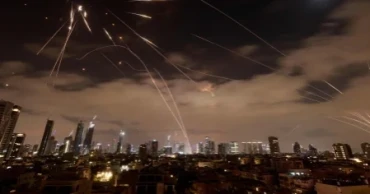
Missiles rain down as Israel-Iran conflict enters fifth day
The conflict between Israel and Iran has entered its fifth consecutive day, with missile strikes and aerial bombardments intensifying across key regions, leaving civilians trapped in an escalating spiral of violence.
In Iran, at least 224 people have been confirmed dead since hostilities erupted, according to officials, reports CNN.
Meanwhile, 24 fatalities have been reported in Israel, as both nations engage in a widening exchange of fire, targeting strategic and urban locations alike.
The violence has severely impacted flashpoint areas on both sides.
In Iran, major cities including Tehran, Isfahan and Mashhad have witnessed multiple waves of strikes, with emergency services overwhelmed and hospitals struggling to cope.
In Israel, border towns and central districts are on high alert, with civilians advised to remain indoors or evacuate when possible.
Trump Proposes Ceasefire
US President Donald Trump announced his early departure from the G7 summit in Italy, citing the urgency of the Middle East crisis. Speaking at a press conference, Trump suggested that a ceasefire deal could be “within reach”, with French President Emmanuel Macron later confirming that Trump had formally proposed a peace framework to Tehran.
However, the US leader delivered a stark warning to the Iranian leadership, advising the 10 million residents of Tehran to evacuate, fuelling speculation of potential US military involvement or strikes on the capital.
“This is a very dangerous moment,” Trump said. “We want peace, but we are prepared for all scenarios.”
Iran launches fresh missile barrage on Israel, killing 5 amid escalating conflict
Israeli Strikes Target Nuclear Infrastructure
Israeli Prime Minister Benjamin Netanyahu said the latest Israeli strikes have “significantly set back” Iran’s nuclear capabilities. According to the Prime Minister’s Office, Israeli forces targeted three key Iranian nuclear facilities, as well as individuals identified as senior nuclear scientists.
“I estimate we are sending them back a very, very long time,” Netanyahu told reporters. The full extent of the damage to Iran’s nuclear programme remains unclear, but satellite imagery and local reports suggest substantial destruction at some high-value targets.
Iran’s response to the attacks has been fierce. State media reported fresh launches of ballistic missiles into southern Israel overnight, with claims of damage to a military airbase near Beersheba, though these reports have not been independently verified.
Israel-Iran conflict enters third day with escalating missile strikes, rising death tolls
International Reactions
The United Nations has called for “immediate de-escalation”, warning that the current course could plunge the region into a broader war with devastating humanitarian consequences.
Meanwhile, regional players including Saudi Arabia and Turkey have urged restraint but are reportedly bracing for spillover effects.
With no clear diplomatic breakthrough in sight and tensions escalating by the hour, analysts warn that the coming days will be critical in determining whether the situation can be contained — or whether the region will face yet another prolonged war.
Source: With inputs from CNN
1 year ago