Strait of Hormuz-Closure
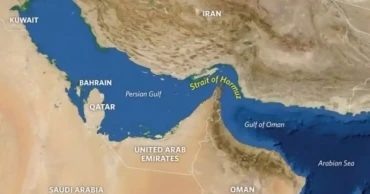
Strait of Hormuz: The world’s most critical oil chokepoint
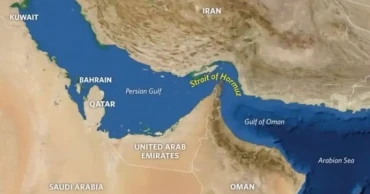
The Strait of Hormuz, a narrow maritime passage between Oman and Iran, has long held immense economic and geopolitical significance. As tensions in the Middle East continue to simmer—especially following recent US military deployments to counter Iranian threats—this strategic waterway has again captured global attention.
Measuring just 39 kilometres at its narrowest, the strait is the only sea route connecting the oil-rich Gulf countries—namely Iraq, Kuwait, Saudi Arabia, Bahrain, Qatar and the United Arab Emirates—to the Arabian Sea and beyond.
Despite its limited width, shipping lanes for both inbound and outbound traffic are confined to merely 3 kilometres each, making it a sensitive and easily disrupted transit corridor.
The Strait of Hormuz serves as the world’s single most important oil passageway. Over one-sixth of global oil production, equating to around 17.2 million barrels per day, passes through this narrow channel.
This includes exports from key OPEC members such as Saudi Arabia, Iran, Kuwait and the UAE. Moreover, Qatar, the largest global exporter of liquefied natural gas (LNG), also relies heavily on the strait, with approximately one-third of the world’s LNG trade funnelled through its waters.
The strait's importance has prompted the deployment of major naval forces to safeguard maritime trade. Chief among them is the United States Fifth Fleet, headquartered in Manama, Bahrain, which oversees the protection of vital shipping routes in the region.
In recent years, the strait has frequently been the stage for military and political tension. Historical flashpoints include the Iran-Iraq War in the 1980s, during which oil shipments were regularly targeted.
What to know about Iran’s nuclear sites targeted by US strikes
In 1988, a tragic incident occurred when the US warship USS Vincennes mistakenly shot down an Iranian passenger plane, killing all 290 people aboard. In 2010, a Japanese oil tanker was attacked by a group linked to al-Qaeda near the strait.
The situation flared again in early 2012 when Iran threatened to block passage through the strait in retaliation for Western sanctions aimed at curbing its nuclear ambitions.
These tensions escalated in 2019. In May, four vessels—including two Saudi oil tankers—were attacked near Fujairah, just outside the strait. A month later, two more tankers were hit by explosions in the Gulf of Oman, raising international alarm over the security of global energy supplies.
Most recently, on 11 July, the United Kingdom accused three Iranian vessels of attempting to impede the passage of a British commercial ship through the strait. The UK had earlier seized an Iranian tanker near Gibraltar, alleging it was transporting oil to Syria in violation of EU sanctions—an accusation Iran vehemently denied.
In light of these repeated threats and incidents, regional powers such as Saudi Arabia and the UAE have proposed building alternative pipelines to circumvent the Strait of Hormuz. Nevertheless, for now, it remains the only maritime exit for the Gulf’s massive oil and gas exports—cementing its status as one of the world’s most strategically critical waterways.
Source: Al Jazeera, news agencies
1 year ago
US Urges China to Prevent Iran from Closing Strait of Hormuz
The United States has called on China to ensure the Strait of Hormuz remains open amid rising tensions in the Middle East, warning of severe economic consequences if Iran moves ahead with plans to block the crucial waterway.
US Secretary of State Marco Rubio made the appeal during an interview with Fox News on Sunday, saying, “I encourage the Chinese government in Beijing to call them (Iran) about that, because they heavily depend on the Straits of Hormuz for their oil.”
Rubio’s comments followed a report by Iran’s state-run Press TV which claimed that the Iranian parliament had approved a plan to close the Strait. However, the final decision rests with the country’s Supreme National Security Council.
“If they [close the Straits]... it will be economic suicide for them. And we retain options to deal with that, but other countries should be looking at that as well. It would hurt other countries' economies a lot worse than ours,” Rubio added.
The Strait of Hormuz is a vital chokepoint for global energy supplies, with around 20% of the world’s oil passing through the narrow waterway. Major oil and gas producers in the Middle East rely on the route to transport energy to global markets.
Any disruption in operations could send oil prices soaring. The price of Brent crude surged to $78.89 per barrel late Sunday – the highest level in five months – after the US launched strikes on Iranian nuclear facilities.
“The US is now positioned with an overwhelming defence posture in the region to be prepared for any Iran counter attacks. But the risk for oil prices is the situation could escalate severely further,” said Saul Kavonic, Head of Energy Research at MST Financial.
Iranian parliament votes to close Strait of Hormuz following US strikes
The price of crude oil directly affects consumer goods and services, including fuel and food costs.
China, the world’s largest buyer of Iranian oil, imported over 1.8 million barrels per day from Iran last month, according to data from ship-tracking firm Vortexa. Other Asian economies, including India, Japan, and South Korea, also depend heavily on oil that transits through the Strait.
Energy analyst Vandana Hari said Iran had “little to gain and too much to lose” by closing the Strait.
“Iran risks turning its oil and gas producing neighbours in the Gulf into enemies and invoking the ire of its key market China by disrupting traffic in the Strait,” Hari told BBC News.
Tensions escalated further over the weekend after the US entered the conflict between Iran and Israel. President Donald Trump claimed Washington had “obliterated” key Iranian nuclear sites. However, the UN’s nuclear watchdog said it was unable to assess the damage at the fortified Fordo underground facility. Iran stated that the damage to Fordo was only minor.
Meanwhile, Beijing criticised the US strikes, saying they had damaged Washington’s credibility and urged for an immediate ceasefire.
China’s UN Ambassador Fu Cong called on all parties to restrain “the impulse of force... and adding fuel to the fire”, according to a report by state-run broadcaster CCTV.
An editorial in China’s state-run Global Times also said US involvement had “further complicated and destabilised the Middle East situation” and warned that it was pushing the conflict to an “uncontrollable state”.
Source: With inputs from BBC, agencies
1 year ago
Iranian parliament votes to close Strait of Hormuz following US strikes
The Iranian Parliament has voted in support of closing the Strait of Hormuz, one of the world’s most vital oil transit routes, following US airstrikes on Iranian nuclear facilities, according to media reports.
While the vote reflects strong parliamentary sentiment, the final decision rests with the country’s Supreme National Security Council and Iran’s Supreme Leader Ayatollah Ali Khamenei.
The parliamentary move is intended to advise the country’s top leadership of available options in response to the attacks.
"The Parliament has reached the conclusion that the Strait of Hormuz should be closed, but the final decision in this regard lies with the Supreme National Security Council," Revolutionary Guards Commander Ismail Kowsari, a member of the National Security Commission of the Parliament, said on Sunday, according to Al Arabiya and the Jerusalem Post.
Gulf states on high alert following US strikes on Iran
The vote followed the U.S. military’s execution of Operation Midnight Hammer on Saturday, during which seven B2 stealth bombers entered Iranian airspace and dropped 14 Massive Ordnance Penetrator (MOP) bombs on two of Iran’s nuclear sites, including the heavily fortified Fordow facility. A third site was targeted with submarine-launched Tomahawk cruise missiles.
US President Donald Trump said the targeted sites had been "obliterated" in the air raid, which involved a total of 125 aircraft and was completed in 25 minutes.
However, Chairman of the Joint Chiefs of Staff General Dan Caine said on Sunday that it would take time to fully assess the extent of damage to the Iranian nuclear infrastructure.
Saturday’s strike marked the first time that MOP bombs had ever been used in a combat scenario.
Source: With inputs from agencies
1 year ago