reform-consensus
Fakhrul urges interim govt to declare ‘July Charter’, hails consensus on reforms
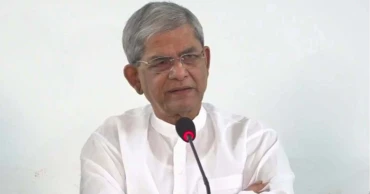
Stating that a consensus among political parties on 12 fundamental reform proposals is a positive development, BNP Secretary General Mirza Fakhrul Islam Alamgir on Tuesday urged the interim government to immediately declare the ‘July Charter’, paving the path for holding the national election.
“I see something good happening. I read in the newspapers today (Tuesday) that all parties have agreed on 12 fundamental points of reform. This is a positive step,” he said while addressing a discussion.
The BNP leader praised Vice Chair of the National Consensus Commission Professor Ali Riaz and his team for their hard work in bringing various political parties closer on key reforms.
“We would like to clearly say—complete the reforms without delay and immediately announce the (July National) Charter. Please hold the national election on the date that was discussed in the meeting in London with our Acting Chairman Tarique Rahman, which gave the nation hope and inspiration. Give people back their rights, including their right to vote,” he said.
Shafiul Bari Babu Smriti Sangsad organised the programme at the Jatiya Press Club, marking the fifth death anniversary of former Jatiyatabadi Swechchhasebak Dal president Shafiul Bari Babu.
Fakhrul said some people criticise BNP by claiming the party does not want reforms. “But the idea of reform came from us—we were the ones who initiated it.”
BNP pledges to prioritise child labour elimination if elected: Fakhrul
He said BNP’s founder Ziaur Rahman began the reform process by restoring democracy and introducing a multiparty system, after Sheikh Mujibur Rahman -- the key architect of authoritarian rule -- had buried democracy by establishing one-party rule through BAKSAL.
“It was Ziaur Rahman who brought back multiparty democracy, removing all darkness. He also ensured freedom of expression and freedom of the press through those reforms. That was his political reform,” the BNP leader said.
As part of economic reforms, he said Ziaur Rahman introduced a free-market economy, moving away from a rigid and flawed economic model, which helped improve the condition of the country within three and a half years.
Fakhrul said BNP Chairperson Khaleda Zia introduced the parliamentary form of democracy, replacing the presidential system.
He said Khaleda also introduced the caretaker government system and carried out many reforms for women’s empowerment and the development of various sectors.
“So, BNP has never been afraid of reforms-- we’ve always welcomed them,” Fakhrul observed.
He thanked all involved in building consensus on 12 key issues but raised concerns about proposals like the proportional representation (PR) system, which he said are unfamiliar to most people in Bangladesh.
“There are proposals like proportional representation in the lower house of parliament—which our people don’t even understand. Many don’t know what PR means. People still struggle with EVM voting—how will they understand PR?” the BNP leader said.
Fakhrul criticised a few political parties for insisting they won’t join elections unless such a system is introduced. “Let’s move away from these confusing ideas. Give people a voting system they understand—one that ensures their proper representation in parliament.”
He also cautioned against trying to solve Bangladesh’s problems using foreign ideas that do not match the country’s political culture or realities.
1 year ago
No significant progress yet on reform consensus: Ali Riaz
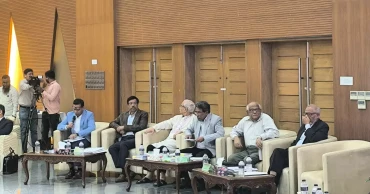
Vice Chairman of the National Consensus Commission Prof Ali Riaz on Sunday said the expected progress in reaching a consensus on reform initiatives has yet to be achieved.
"We have been discussing (reform issues) for the past seven days. Although there has been progress in various areas, the fact is that we are a bit behind in terms of desired progress,” he said while presiding over the seventh day of the second-round talks of the National Consensus Commission at the Foreign Service Academy in the capital.
He said, “We need to attain this (desired) progress and no one of us wants to go back to where we were before. This is not a matter of tomorrow, the next day. This is a matter of the long term."
Prof Riaz stressed the need to break free from fascist rule, saying that it was essential to structurally reform the system that had given rise to such governance.
He clarified the role of the Commission, saying, “We are not your rivals. The Commission is part of you. We are merely carrying out a responsibility. The Commission showed flexibility due to your firm stance (on some reform issues) because you represent the country and its people will ultimately be governed by you.”
Noting that the commission wants to be sincere about its commitment to present a national charter in July, he said, “We had a dream that on the death anniversary of Abu Sayeed, all parties would sign the Charter. Whether that will be possible now depends on you. We are a little bit concerned about it. But we have to reach a conclusion to this process within July.”
Consensus Commission revises proposal on authority over key appointments
Leaders from around 30 political parties, including BNP, Jamaat-e-Islami and the National Citizen Party-NCP participated in the day’s dialogue to present their respective party positions on the proposed reforms.
On June 2, Chief Adviser and Commission Chairman Prof Muhammad Yunus opened the second round of dialogues.
Formed on February 15, 2025, under the leadership of Chief Adviser Prof Yunus, the Commission was tasked with forging a unified national stance on crucial state reforms.
The Commission launched its first round of dialogues on March 20 to build national consensus on the reform initiatives undertaken by the interim government. It held talks with 33 political parties and alliances, including BNP, Jamaat and NCP, before concluding the first round on May 19.
Following the dialogue, the National Consensus Commission will prepare and announce the July Charter (or Reform Charter) next month.
1 year ago