UK visit- migration
Macron begins UK visit focused on migration, Ukraine cooperation
French President Emmanuel Macron has arrived in the United Kingdom for a three-day state visit marked by royal ceremony and high-stakes political discussions focused on curbing cross-Channel migration and supporting Ukraine.
Macron’s visit comes at the invitation of King Charles III and represents the first state visit by a European Union head of state to the UK since Brexit, symbolizing Britain’s efforts to rebuild ties with the EU following its 2020 departure from the bloc.
The French President and his wife, Brigitte Macron, were received at a Royal Air Force base by Prince William and Princess Catherine. They then traveled to Windsor Castle in a horse-drawn carriage, passing through streets decorated with Union Jacks and French tricolor flags.
Upon arrival at Windsor, the Macrons were welcomed with a military honor guard and will attend a state banquet hosted by King Charles and Queen Camilla. This visit follows a reciprocal state visit by the British royals to France in September 2023.
While the monarch is expected to avoid direct political commentary, King Charles will use his address at the banquet to make a broader call for international unity, stating that the UK and France “face a multitude of complex threats” that “know no borders,” adding that “no fortress can protect us against them.”
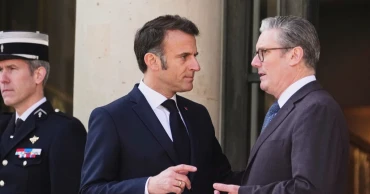
During his stay, President Macron will also address both houses of the British Parliament in the historic Royal Gallery before holding bilateral talks with UK Prime Minister Keir Starmer. Discussions will focus on migration, defense cooperation, and investment.
Focus on migration: "New tactics to stop boats"
A major item on the agenda is tackling illegal migration across the English Channel. At a UK-France summit scheduled for Thursday, senior officials from both governments will discuss joint efforts to reduce the number of small boats carrying migrants from northern France to the UK.
Though the UK receives fewer asylum seekers compared to southern European nations, it remains a popular destination for migrants. Thousands use northern France as a launching point, especially after increased security measures targeted truck stowaways.
In 2024, around 37,000 people crossed the Channel in small boats, making it the second-highest annual total after 2022. Over 20,000 crossings have already been recorded in the first half of 2025 — a nearly 50% increase over the same period last year. The journey remains perilous, with dozens losing their lives attempting it.
Ukraine pursues joint weapons production with allies as US pauses some arms shipments
Prime Minister Starmer, whose centre-left government came to power a year ago, has vowed to “smash the gangs” behind the human smuggling networks. His strategy emphasizes closer cooperation with France and countries along migrant routes in Africa and the Middle East. The UK is also pursuing bilateral agreements with individual countries to repatriate failed asylum seekers.
British officials have urged French police to take more aggressive action to prevent crossings. Recent footage of French officers slashing rubber dinghies was welcomed by the UK. Home Secretary Yvette Cooper commented that the French are “bringing in important new tactics to stop boats that are in the water.”
The UK is also pushing France to allow its officers to intervene in deeper waters, a proposal currently under consideration in Paris. However, some migrant rights advocates and a police union have warned that such moves could pose risks to both migrants and law enforcement personnel.
Tom Wells, spokesperson for Starmer, acknowledged the complexity of the discussions, stating, “Some of the tactics being discussed are operationally and legally complex, but we’re working closely with the French.”
Keeping Ukraine on the agenda
Macron and Starmer are also coordinating closely on Ukraine. Both leaders have championed efforts to establish an international peacekeeping force to help enforce a future ceasefire, should one be reached. The proposed force would involve European troops, military equipment, and U.S. security guarantees.
However, the plan has met resistance from Washington, with U.S. President Donald Trump showing limited enthusiasm for the idea. Russia, meanwhile, has continued its military aggression in Ukraine, making a ceasefire uncertain.
Despite these hurdles, British officials maintain that the initiative — referred to as a “coalition of the willing” — remains viable. Macron and Starmer are expected to participate in an international videoconference on Thursday to continue planning efforts.
Starmer spoke with Ukrainian President Volodymyr Zelenskyy on Monday and discussed the “significant progress being made by military planners,” according to a statement from the Prime Minister’s office.
1 year ago